








Databricks drivers & connectors
for data integration
Connect to Databricks from reporting tools, databases, and custom applications through standards-based drivers. Easily integrate Databricks data with BI, reporting, analytics, ETL tools, and custom solutions.
Do more with Databricks data


Databricks data integration
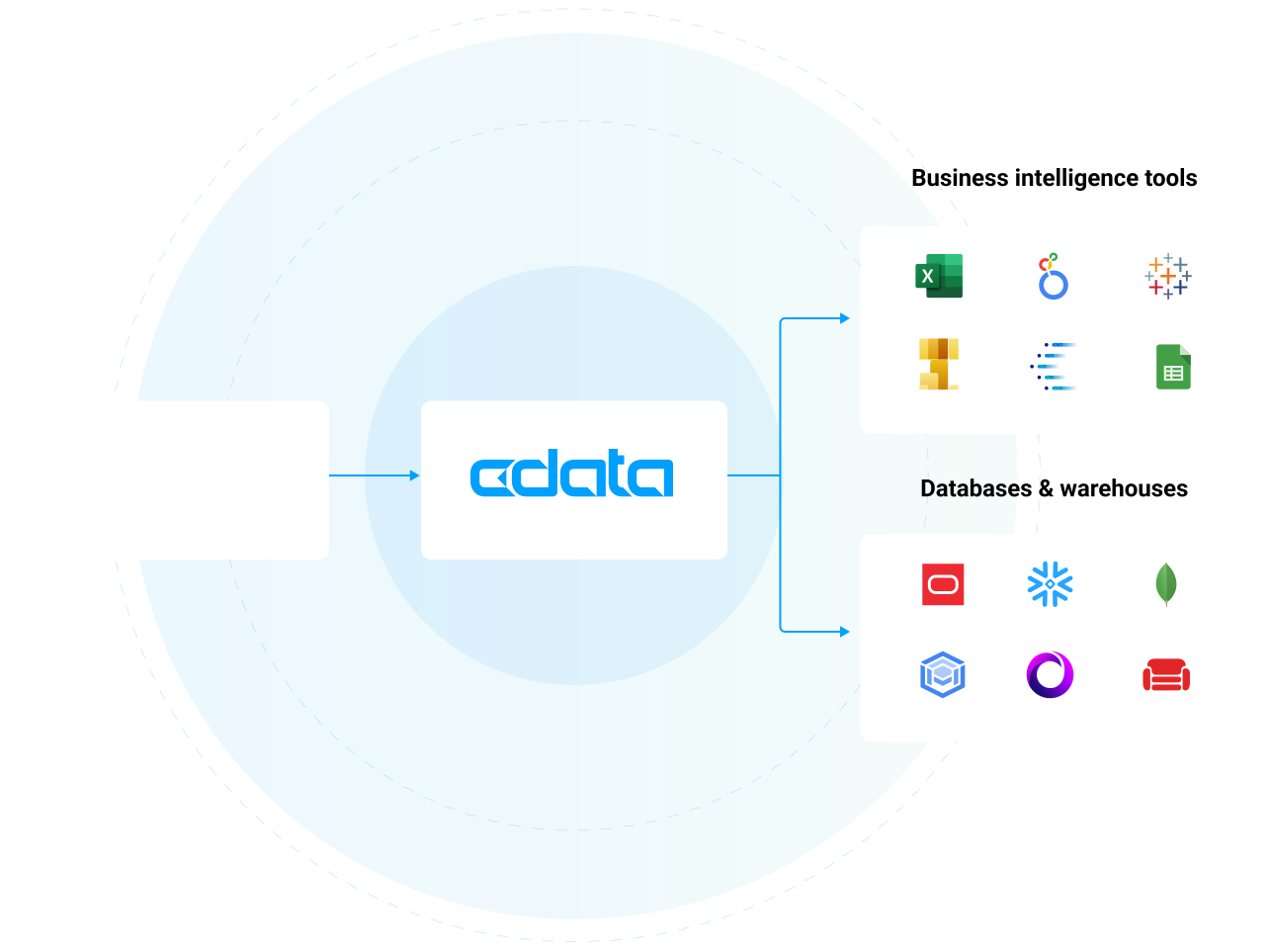
Access Databricks data in all of the systems you use every day, including BI & analytics tools, databases, data warehouses, and custom apps. Customers commonly use CData's Databricks connectivity to:
- Provide a logical data layer of abstraction that shields users from the complexity of data access and integration.
- Get blazing-fast access to data for BI, reporting, and data integration with highly optimized read/write performance.
- Securely explore tables, columns, keys, data, and full meta-data based on user identity.
Try CData Databricks Connectors
Trusted by Databricks Users Worldwide
Nintex Enhances Product Telemetry and Sales Reporting with CData Sync
“The one thing that Databricks hadn't solved yet was the ability to connect to different SaaS systems and to bring the data in, which is where CData comes in.”
— Siddarth Ranganathan
Senior Director of Data Science, BI & Analytics, Nintex
Read case study

The CData difference
Our standards-based approach to connectivity streamlines data access and insulates usrs from the complexities of integrating Databricks data.

Unparalleled Databricks Connectivity
Get full access to your Databricks data wherever you need it. CData is the undisputed leader in Databricks connectivity providing the most comprehensive access to live Databricks data anywhere. Thousands of customers and hundreds of leading data ISVs rely on our connectivity to make the most of their data.

Fastest time to value
Reduce reducing development cycles and accelerating the overall time to market. Our pre-built, optimized connectors eliminate the need for complex custom development, allowing for fast, secure access to Workday data.

Unbeatable price-performance
By standardizing and streamlining how systems interact with Databricks our products reduce development costs and timelines, slash architectural complexity.

Blazing data access
Our Databricks connectivity is fast — really fast. In fact, over twice as fast as other solutions. Our engineers have optimized our drivers for maximum performance all the way down to the socket level, delivering truly exceptional data access.

Future-proof integration
We continuously test against changes in the Databricks APIs & protocols used to connect, preventing downtime in your data and analytics processes.

Enterprise-class technical support
CData is dedicated to helping you find success with Databricks. We work as an extension of your team to help solve your toughest data challenges. Thousands of customers and hundreds of ISVs rely on our services to make the most of their data.
Databricks data for AI agents and assistants
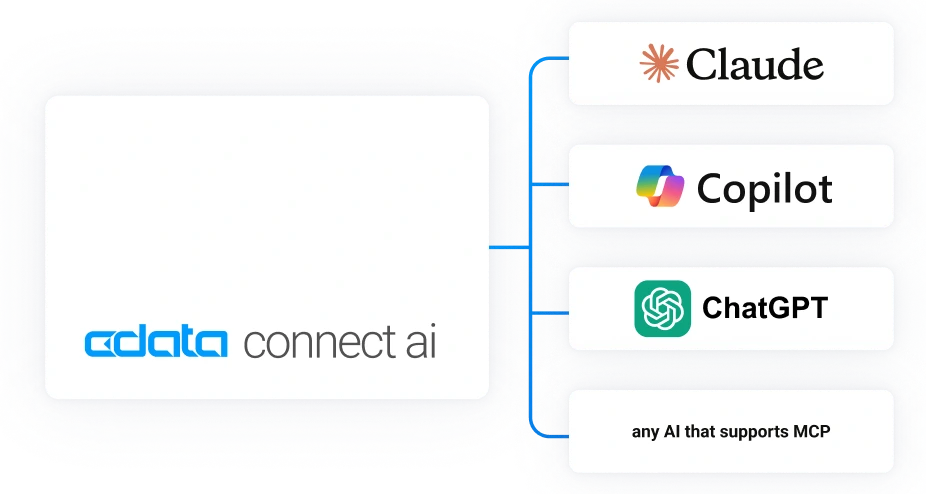
Databricks MCP server connectivity for AI
Enable AI agents, assistants, and workflows to access Databricks data to improve output, tailoring responses to your actual business data and reducing hallucinations.
- One MCP connection from Databricks to every AI agent, assistant, copilot, or LLM that could use it.
- Maintain security and user permissions with pass-through user-based access and read/write controls
- Platform solution to control and monitor user access via AI across your organization.
Learn more: Connect AI: the world's first managed Model Context Protocol (MCP) platform.
Databricks connectivity for BI & analytics
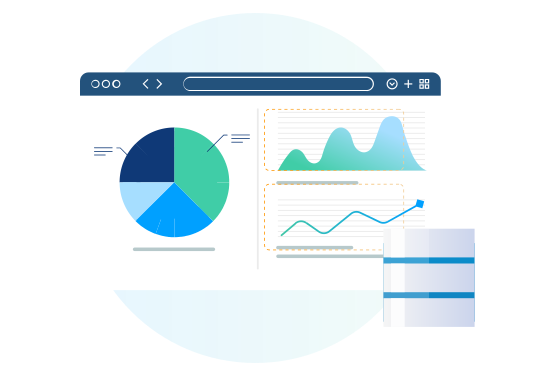
Live Databricks access for analytics
Access Databricks data in all of the systems you use every day, including BI & analytics tools, databases, data warehouses, and custom apps.
- Connect Databricks (and any other data source) to your favorite analytics, automation, or data management app without moving data
- Bi-directional Databricks connectivity through common data endpoints
- Enable Databricks governability and data privacy with user-level permissioning at the source level.
Databricks ETL, replication, & data warehousing
Automate Databricks data replication
CData Sync automatically replicates data from hundreds of on-premises and cloud data sources — like Databricks — to any modern database, data lake, or data warehouse.
- Create automated Databricks data flows in minutes with point-and-click data replication
- Facilitate reporting, business intelligence, and analytics for decision support
- Archive data for disaster recovery
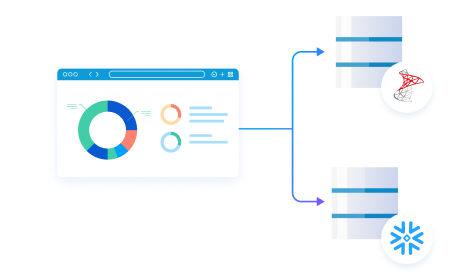
Consolidate Databricks data management
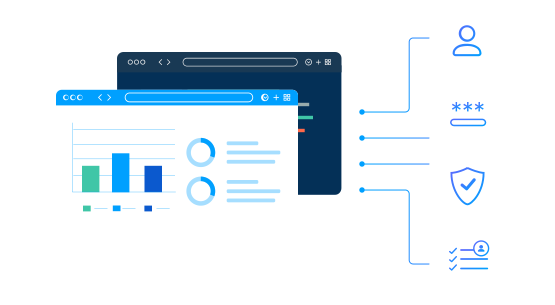
Data management integration enables organizations to better manage their human resources data, optimize decision-making, and ensure compliance with data governance policies. Technologies like ODBC, JDBC, and ADO easily connect with all kinds of popular data management applications.
Connect Databricks to data management systems to:
- Provide a single, accurate source of truth for employee and resource data.
- Ensure consistency, data quality, and integration across systems.
- Improve data discoverability, governance, and compliance, allowing for easy tracking, auditing, and efficient data use across the organization.
Connect to Databricks with no-code
Databricks is often at the center of a wide range of repetitive tasks. With low-code/no-code tools, users can automate these tasks reducing manual effort and errors.
- Customize Databricks and integrate it with other systems (like CRM, HR, or accounting software) without writing complex code.
- Create custom dashboards, reports, or data visualizations by integrating Databricks data with other systems.
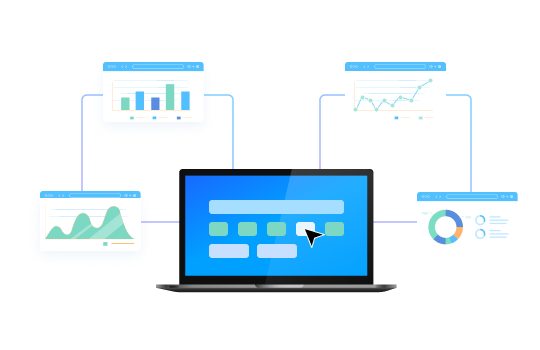
Build fully-integrated custom applications
From custom AI and analytics to performance managemement and learning platforms, developers are leveraging our drivers to power all kinds of real-time integrations with Databricks.
What is a Databricks driver?
A Databricks driver is a software library that enables applications to interact with Databricks as though it were a traditional database. These drivers simplify communication by abstracting API complexities, presenting Salesforce data in a structured, database-like format.
What is a Databricks connector?
A Databricks connector is a tailored integration designed to allow proprietary applications or unique systems to seamlessly interact with Databricks. Built on the same robust engine as our Databricks drivers, these connectors provide effortless real-time access to Databricks data for extended application functionality.
How is developing with a Databricks driver different?
Drivers streamline integration by abstracting Databricks APIs, allowing you to access its data through standard interfaces like SQL, making them perfect for data-focused applications.
- Pragmatic API Integration: from SDKs to Data Drivers
- Data APIs: Gateway to Data Driven Operation & Digital Transformation
Embedding CData Connectivity
Virtualize access to Databricks data
Data virtualization tools helps organizations achieve better data access, more agile decision-making, and greater efficiency in managing data across diverse systems.
Integrating Databricks with data virtualization tools allows organizations to combine this data with other sources like ERP systems, CRM platforms, or financial databases without physically moving or duplicating data. This unified access enables faster, more efficient decision-making.
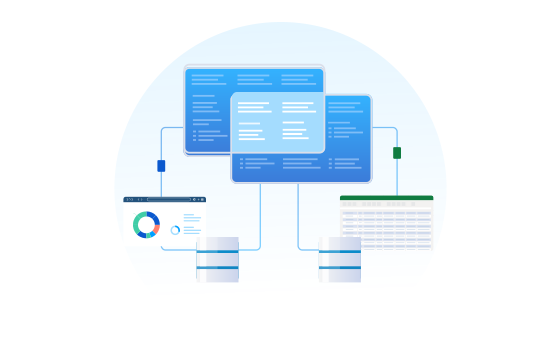
Connect to live Databricks data in spreadsheets
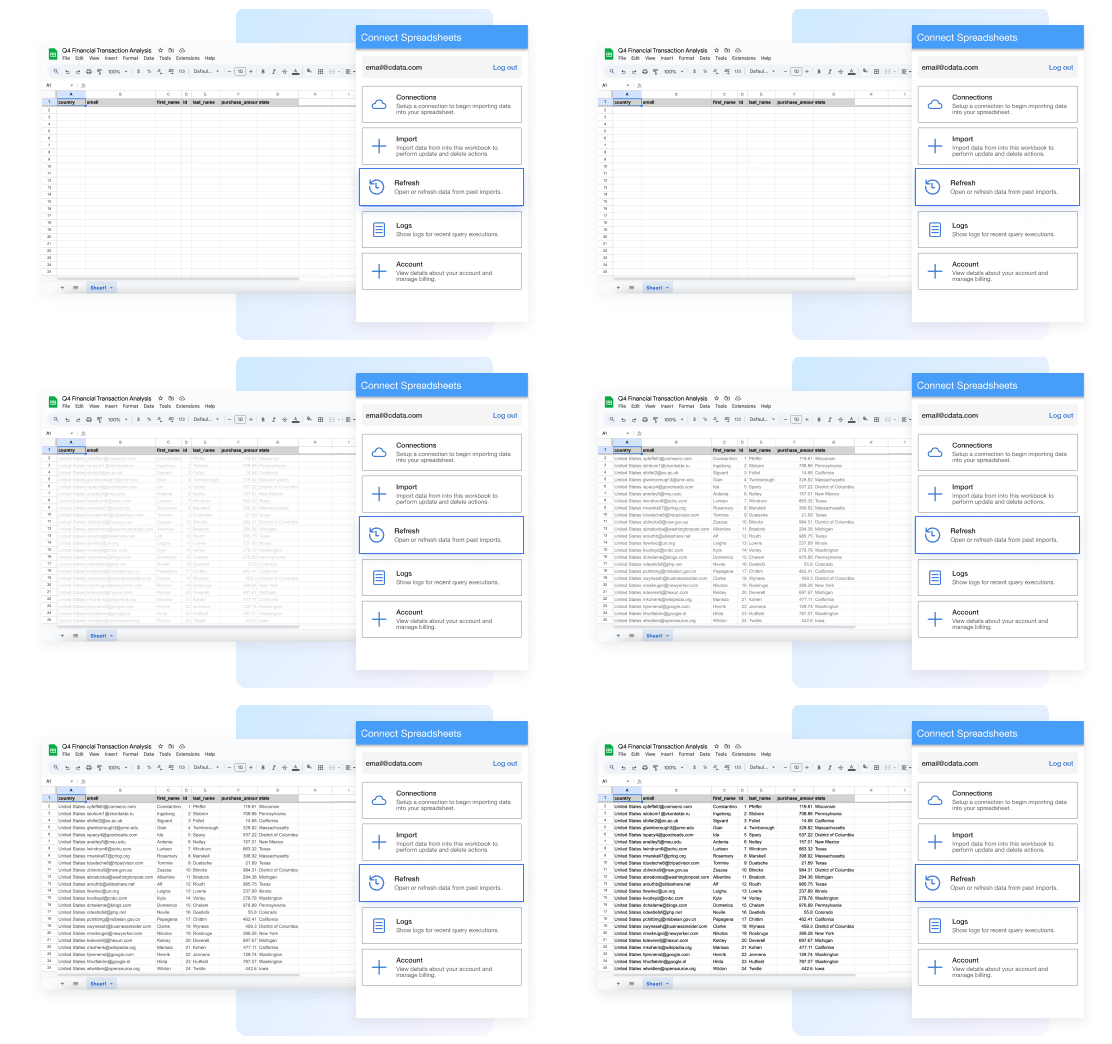
Work with live Databricks data seamlessly in Excel and Google Sheets.
- Always work with live Databricks data — no more downloading, copying, and pasting
- Filter and get just the attributes and data you actually need
- Refresh data with a click or set a schedule
- Update Databricks records right from your spreadsheet
Frequently asked Databricks integration questions
Common questions about Databricks drivers & connectors for data and analytics integration
How does the Databricks Driver work?
The Databricks driver acts like a bridge that facilitates communication between various applications and Databricks, allowing the application to read, write, and update data as if it were a relational database. The Databricks driver abstracts the complexities of Databricks APIs, authentication methods, and data types, making it simple for any application to connect to Databricks data in real-time via standard SQL queries.
How is using the Databricks Driver different than connecting to the Databricks API?
Working with a Databricks Driver is different than connecting with Databricks through other means. Databricks API integrations require technical experience from a software developer or IT resources. Additionally, due to the constant evolution of APIs and services, once you build your integration you have to constantly maintain Databricks integration code moving forward.
By comparison, our Databricks Drivers offer codeless access to live Databricks data for both technical and non-technical users alike. Any user can install our drivers and begin working with live Databricks data from any client application. Because our drivers conform to standard data interfaces like ODBC, JDBC, ADO.NET etc. they offer a consistent, maintenance-free interface to Databricks data. We manage all of the complexities of Databricks integration within each driver and deploy updated drivers as systems evolve so your applications continue to run seamlessly.
If you need truly zero-maintenance integration, check out connectivity to Databricks via CData Connect AI. With Connect AI you can configure all of your data connectivity in one place and connect to Databricks from any of the available Cloud Drivers and Client Applications. Connectivity to Databricks is managed in the cloud, and you never have to worry about installing new drivers when Databricks is updated.
How is a Databricks Driver different than a Databricks connector?
Many organizations draw attention to their library of connectors. After all, data connectivity is a core capability needed for applications to maximize their business value. However, it is essential to understand exactly what you are getting when evaluating connectivity. Some vendors are happy to offer connectors that implement basic proof-of-concept level connectivity. These connectors may highlight the possibilities of working with Databricks, but often only provide a fraction of capability. Finding real value from these connectors usually requires additional IT or development resources.
Unlike these POC-quality connectors, every CData Databricks driver offers full-featured Databricks data connectivity. The CData Databricks drivers support extensive Databricks integration, providing access to all of the Databricks data and meta-data needed by enterprise integration or analytics projects. Each driver contains a powerful embedded SQL engine that offers applications easy and high-performance access to all Databricks data. In addition, our drivers offer robust authentication and security capabilities, allowing users to connect securely across a wide range of enterprise configurations. Compare drivers and connectors to read more about some of the benefits of CData's driver connectivity.
Is Databricks SQL based?
With our drivers and connectors, every data source is essentially SQL-based. The CData Databricks driver contains a full SQL-92 compliant engine that translates standard SQL queries into Databricks API calls dynamically. Queries are parsed and optimized for each data source, pushing down as much of the request to Databricks as possible. Any logic that can not be pushed to Databricks is handled transparently client-side by the driver/connector engine. Ultimately, this means that Databricks looks and acts exactly like a database to any client application or tool. Users can integrate live Databricks connectivity with ANY software solution that can talk to a standard database.
What data can I access with the Databricks driver?
What does Databricks integrate with?
Using the CData Databricks drivers and connectors, Databricks can be easily integrated with almost any application. Any software or technology that can integrate with a database or connect with standards-based drivers like ODBC, JDBC, ADO.NET, etc., can use our drivers for live Databricks data connectivity. Explore some of the more popular Databricks data integrations online.
Additionally, since Databricks supported by CData Connect AI, we enable all kinds of new Databricks cloud integrations.
How can I enable Databricks Analytics?
Databricks Analytics and Databricks Cloud BI integration is universally supported for BI and data science. In addition, CData provides native client connectors for popular analytics applications like Power BI, Tableau, and Excel that simplify Databricks data integration. Additionally, native Python connectors are widely available for data science and data engineering projects that integrate seamlessly with popular tools like Pandas, SQLAlchemy, Dash, and Petl.
How can I support Databricks Data Integration?
Databricks data integration is typically enabled with CData Sync, a robust any-to-any data pipeline solution that is easy to set up, runs everywhere, and offers comprehensive enterprise-class features for data engineering. CData Sync makes it easy to replicate Databricks data any database or data warehouse, and maintain parity between systems with automated incremental Databricks replication. In addition, our Databricks drivers and connectors can be easily embedded into a wide range of data integration tools to augment existing solutions.
Does Databricks Integrate with Excel?
Absolutely. The best way to integrate Databricks with Excel is by using the CData Connect AI Excel Add-In. The Databricks Excel Add-In provides easy Databricks integration directly from Microsoft Excel Desktop, Mac, or Web (Excel 365). Our integration offers live bi-directional access to Databricks data directly from Excel. Simply configure your connection to Databricks from the easy-to-use cloud interface, and access Databricks just like you would another native Excel data source.
Using the Databricks drivers
- Databricks Integration Guides and Tutorials
- Visualize Databricks in TIBCO Spotfire through OData
- Create Databricks Reports on JasperReports Server
- Integrating Dataiku with Databricks via CData Connect AI
- How to Visualize Databricks Data in Python with pandas
- Automated Databricks Replication to Teradata
- Query Databricks through ODBC in Node.js
- Connect to Databricks in CloverDX (formerly CloverETL)
- Connect and Query Live Databricks Data in Databricks with CData Connect AI

Related Blog Articles
- Optimize Databricks for Customer 360: Accelerate Time-to-Value with No-Code Data Integration
- Why We're Partnering With Databricks to Power Enterprise AI Agents With Live Access to 350+ Business Systems
- Understanding Databricks ETL: A Quick Guide with Examples
- Easily Integrate Databricks with Your On-Premises Systems
- Insights from Databricks at CData Foundations 2025
- Catch Up With CData at the Databricks Data + AI Summit 2024
- Free Webinar: Integrate Your Enterprise Data with Databricks & CData Sync
- Upgrade Databricks for Financial Analytics with CData
- What Is Databricks Used For? 6 Use Cases
- Extend Databricks Connectivity with the CData JDBC Drivers
