






LINQ to Adobe Experience Manager Data

This article illustrates using LINQ to access tables within the Adobe Experience Manager via the CData ADO.NET Data Provider for Adobe Experience Manager. To achieve this, we will use LINQ to Entity Framework, which facilitates the generation of connections and can be seamlessly employed with any CData ADO.NET Data Providers to access data through LINQ.
See the help documentation for a guide to setting up an EF 6 project to use the provider.
- In a new project in Visual Studio, right-click on the project and choose to add a new item. Add an ADO.NET Entity Data Model.
- Choose EF Designer from Database and click Next.
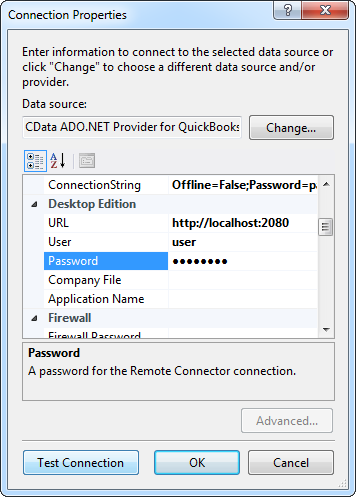
- Add a new Data Connection, and change your data source type to "CData Adobe Experience Manager Data Source".
Enter your data source connection information.
The driver connects to Adobe Experience Manager (AEM) instances that expose the JCR repository over WebDAV. It supports both on-premises AEM and AEM as a Cloud Service deployments.
To establish a connection, set the following properties:
- URL: The WebDAV-enabled JCR server URL.
- AEM as a Cloud Service: https://author-pXXXXX-eXXXXX.adobeaemcloud.com/crx/server
- Local development: http://localhost:4502/crx/server
- User: Your AEM username.
- Password: Your AEM password.
Note: Tables are dynamically generated based on the JCR repository structure. Ensure that the configured user has sufficient permissions to access the required content paths in the AEM repository.
Below is a typical connection string:
URL=https://author-p12345-e67890.adobeaemcloud.com/crx/server;User=admin;Password=admin;
- URL: The WebDAV-enabled JCR server URL.
- If saving your entity connection to App.Config, set an entity name. In this example we are setting AdobeExperienceManagerEntities as our entity connection in App.Config.
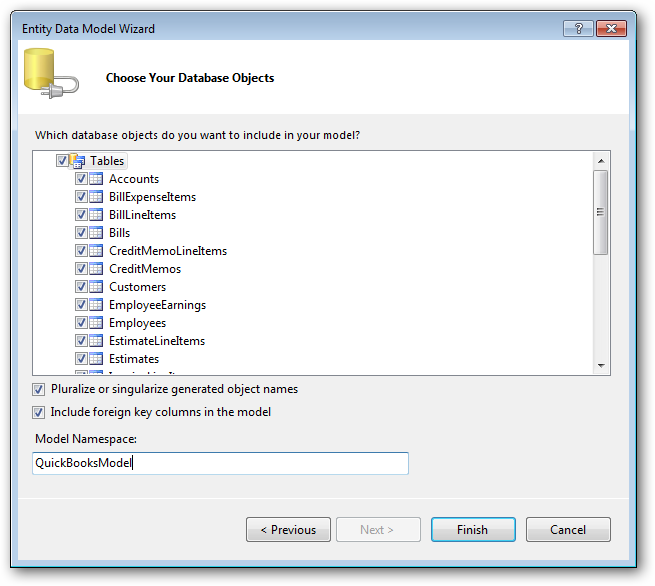
- Enter a model name and select any tables or views you would like to include in the model.
Using the entity you created, you can now perform select commands. For example:
AdobeExperienceManagerEntities context = new AdobeExperienceManagerEntities();

var contentQuery = from content in context.Content
  select content;

foreach (var result in contentQuery) {
  Console.WriteLine("{0} {1} ", result.Id, result.Id);
}
See "LINQ and Entity Framework" chapter in the help documentation for example queries of the supported LINQ.
Ready to get started?
Download a free trial of the Adobe Experience Manager Data Provider to get started:
Download NowLearn more:
 Adobe Experience Manager ADO.NET Provider
Rapidly create and deploy powerful .NET applications that integrate with Adobe Experience Manager.
