





Create Lakebase-Connected Applications in Appsmith

Appsmith is an open-source internal tool builder that allows teams to quickly and easily build a UI to help improve their business operations. When combined with CData Connect AI, you gain immediate access to Lakebase data for business applications. This article outlines the process of connecting to Lakebase using Connect AI and creating a basic application from Lakebase data within Appsmith.
CData Connect AI offers a pure SQL Server, cloud-to-cloud interface for Lakebase, enabling the creation of business applications directly from live Lakebase data within Appsmith, all without the need for data replication to a native database. As you build applications, Appsmith generates SQL queries to gather data. With its inherent optimized data processing capabilities, CData Connect AI efficiently channels all supported SQL operations, including filters and JOINs, directly to Lakebase. This leverages server-side processing to swiftly deliver the requested Lakebase data.
Configure Lakebase Connectivity for Appsmith
Connectivity to Lakebase from Appsmith is made possible through CData Connect AI. To work with Lakebase data from Appsmith, we start by creating and configuring a Lakebase connection.
- Log into Connect AI, click Sources, and then click Add Connection
- Select "Lakebase" from the Add Connection panel
-
Enter the necessary authentication properties to connect to Lakebase.
To connect to Databricks Lakebase, start by setting the following properties:
- DatabricksInstance: The Databricks instance or server hostname, provided in the format instance-abcdef12-3456-7890-abcd-abcdef123456.database.cloud.databricks.com.
- Server: The host name or IP address of the server hosting the Lakebase database.
- Port (optional): The port of the server hosting the Lakebase database, set to 5432 by default.
- Database (optional): The database to connect to after authenticating to the Lakebase Server, set to the authenticating user's default database by default.
OAuth Client Authentication
To authenicate using OAuth client credentials, you need to configure an OAuth client in your service principal. In short, you need to do the following:
- Create and configure a new service principal
- Assign permissions to the service principal
- Create an OAuth secret for the service principal
For more information, refer to the Setting Up OAuthClient Authentication section in the Help documentation.
OAuth PKCE Authentication
To authenticate using the OAuth code type with PKCE (Proof Key for Code Exchange), set the following properties:
- AuthScheme: OAuthPKCE.
- User: The authenticating user's user ID.
For more information, refer to the Help documentation.

- Click Save & Test
-
Navigate to the Permissions tab in the Add Lakebase Connection page and update the User-based permissions.



Add a Personal Access Token
When connecting to Connect AI through the REST API, the OData API, or the Virtual SQL Server, a Personal Access Token (PAT) is used to authenticate the connection to Connect AI. It is best practice to create a separate PAT for each service to maintain granularity of access.
- Click on the Gear icon () at the top right of the Connect AI app to open the settings page.
- On the Settings page, go to the Access Tokens section and click Create PAT.
-
Give the PAT a name and click Create.

- The personal access token is only visible at creation, so be sure to copy it and store it securely for future use.
With the connection configured and a PAT generated, we are ready to connect to Lakebase data from Appsmith.
Create an Appsmith Application from live Lakebase Data
To establish a connection from Appsmith to the CData Connect AI Virtual SQL Server, follow these steps:
Connect to Lakebase in Appsmith
- Log in to your Appsmith instance and create a new application.
-
In the new application, open the Data page and select Bring your data.
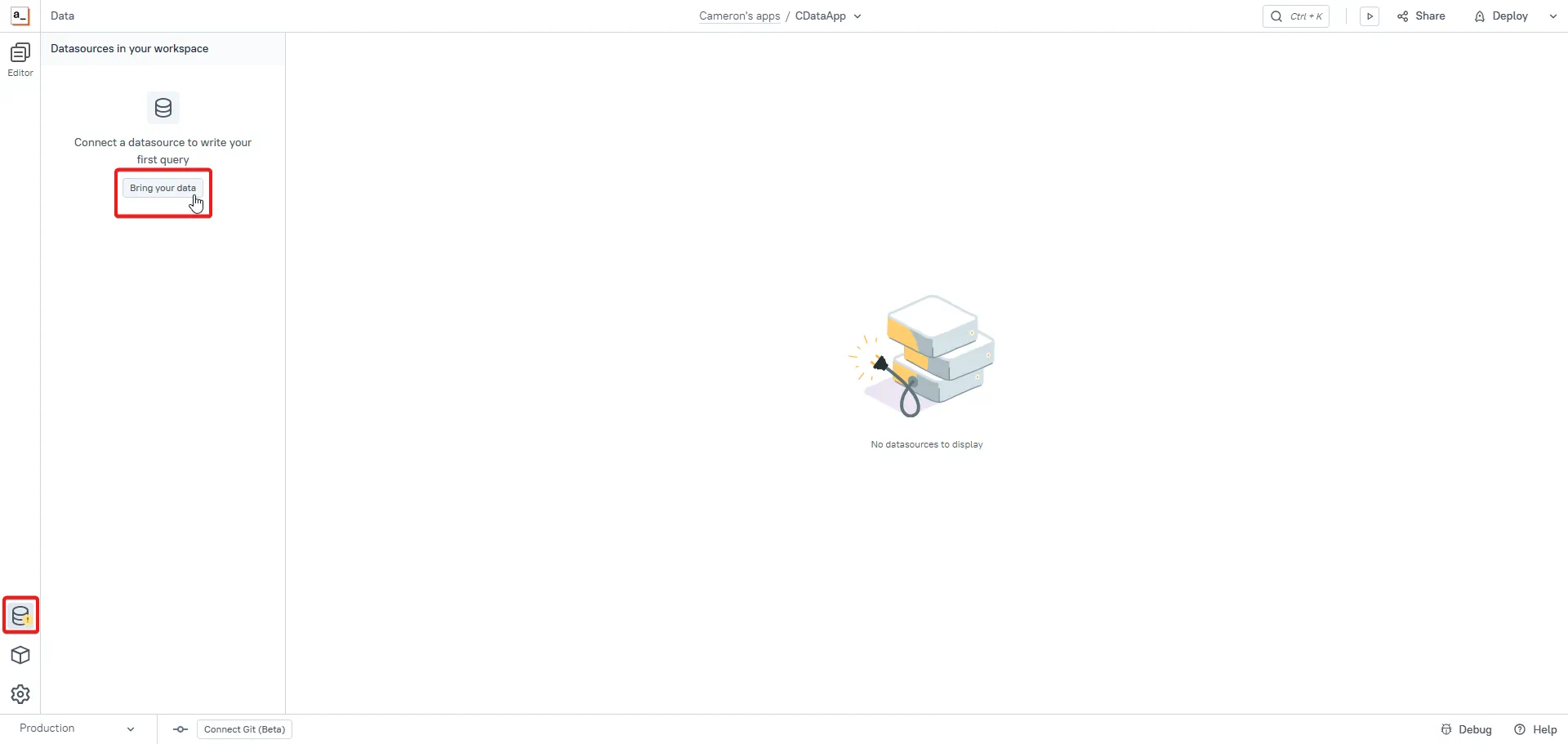
-
On this page, you can search for Microsoft SQL Server and select it as your data source.
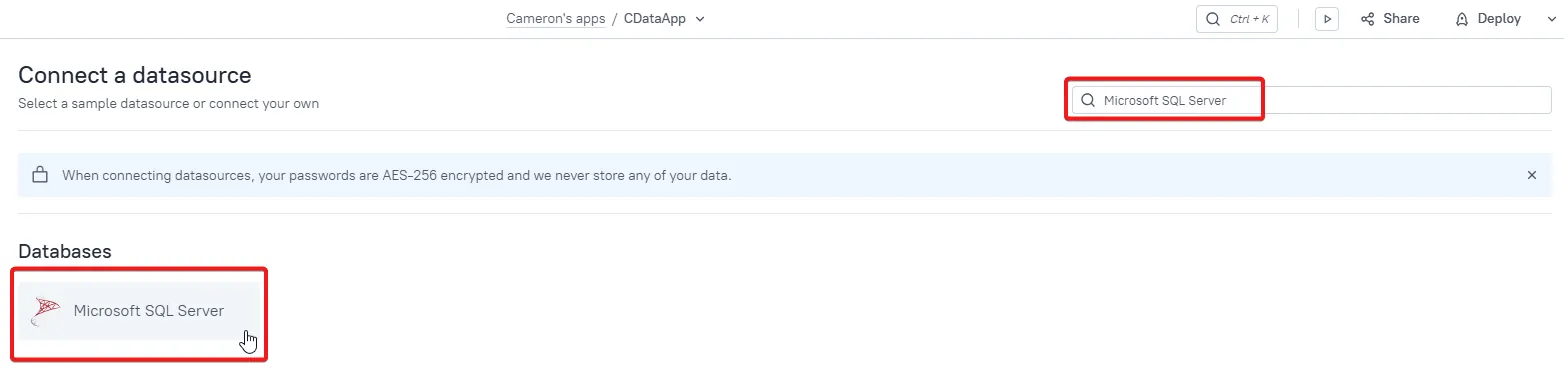
-
Enter a name for the new data source and then enter the following connection settings:
- Host address: tds.cdata.com
- Port: 14333
- Database name: enter the Connection Name of the CData Connect AI data source you want to connect to (for example, Lakebase1).
- Username: enter your CData Connect AI username. This is displayed in the top-right corner of the CData Connect AI interface. For example, [email protected].
- Password: enter the PAT you previously generated.
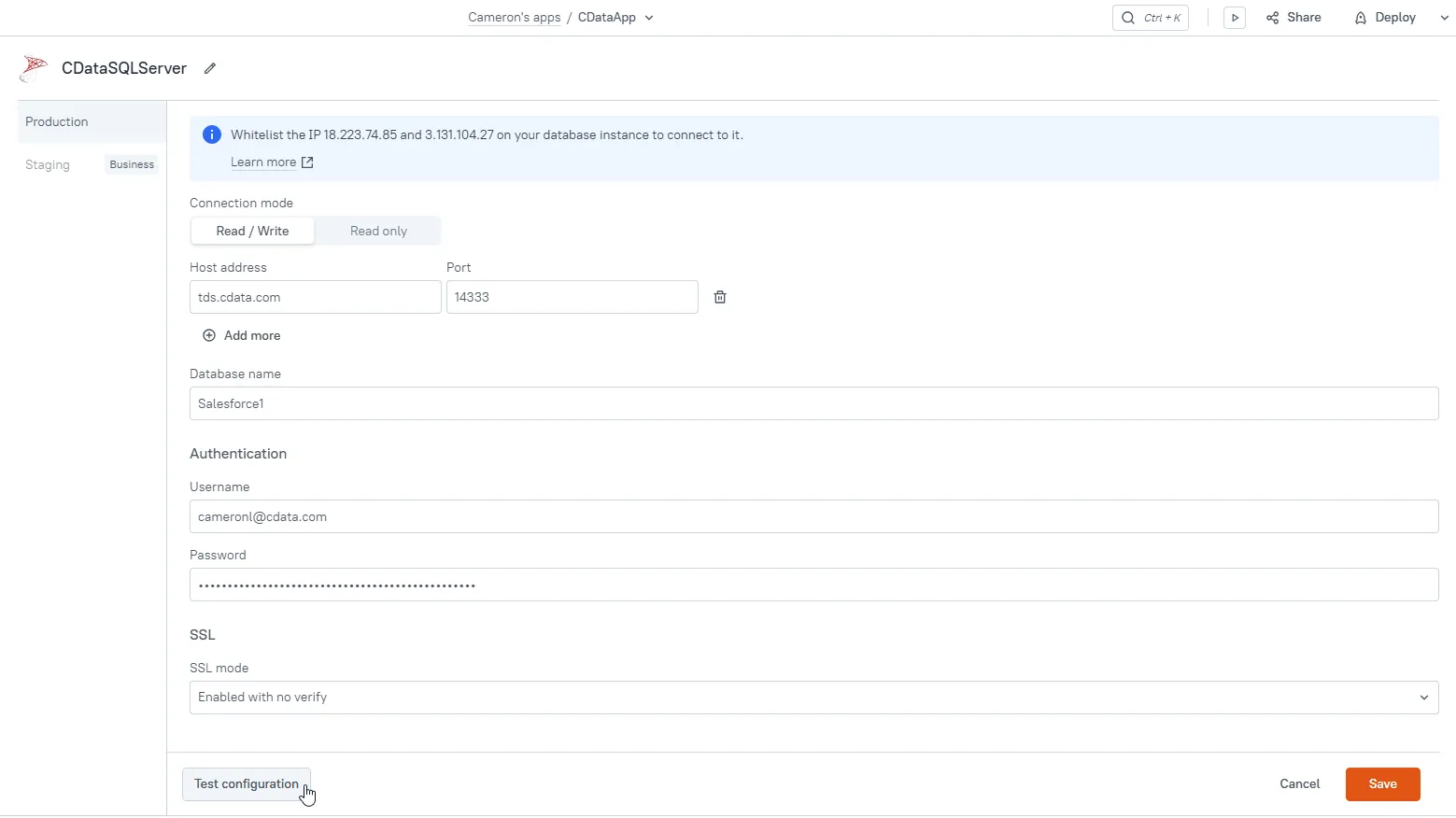
- Click Test configuration to confirm a successful connection, then click Save to save the datasource.
Create a new query
With a connection configured to a datasource, we can add a SQL query to actually retrieve data from the data source.
-
On the screen with the new data source, click New Query.

-
This opens the Query Editor to enter a SQL query to select data. To assist with specifying a SQL query, use the Explorer of CData Connect AI to preview the SQL queries and the data you want to retrieve.
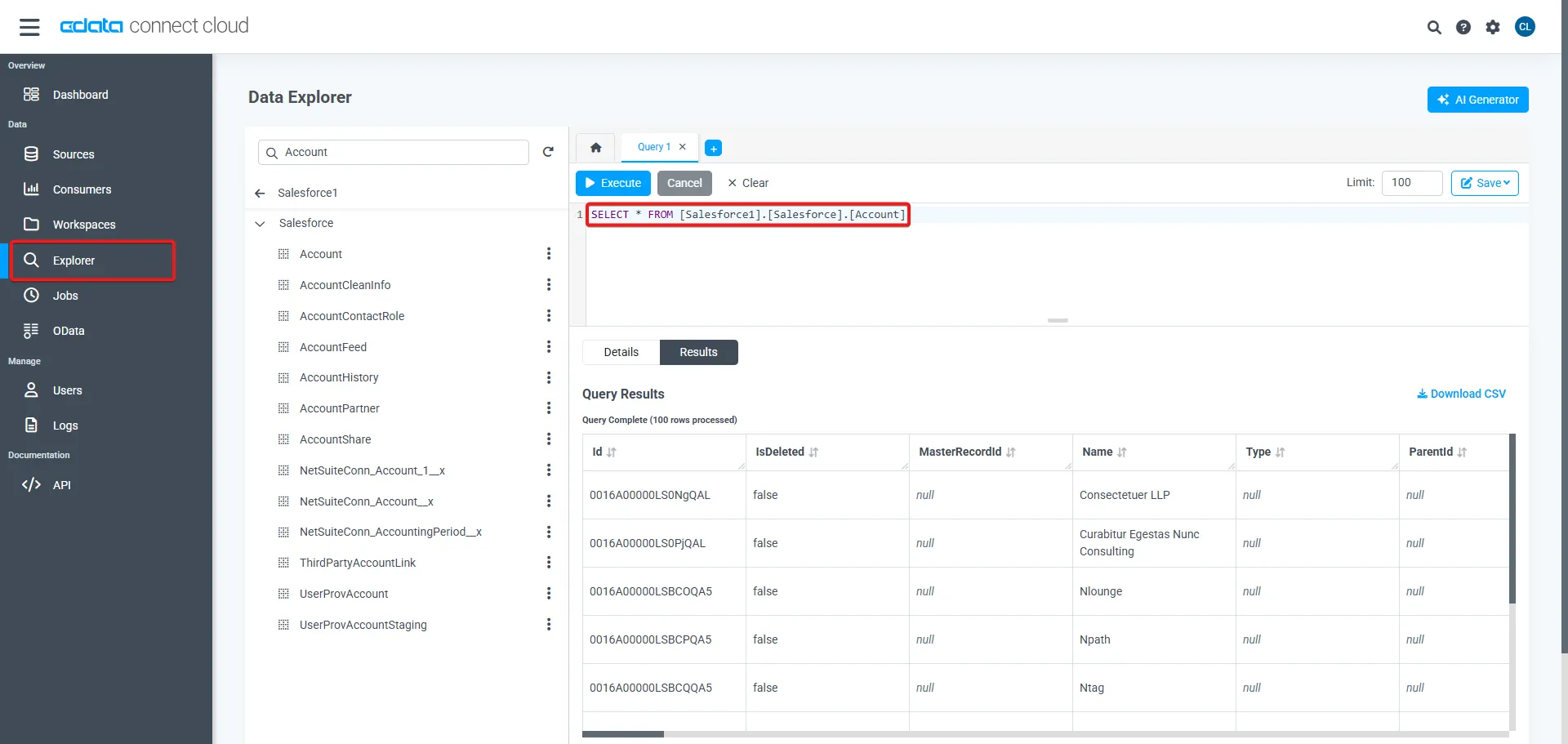
-
After creating the SQL query, return to the Query Editor in Appsmith and enter the SQL query, then click Run.
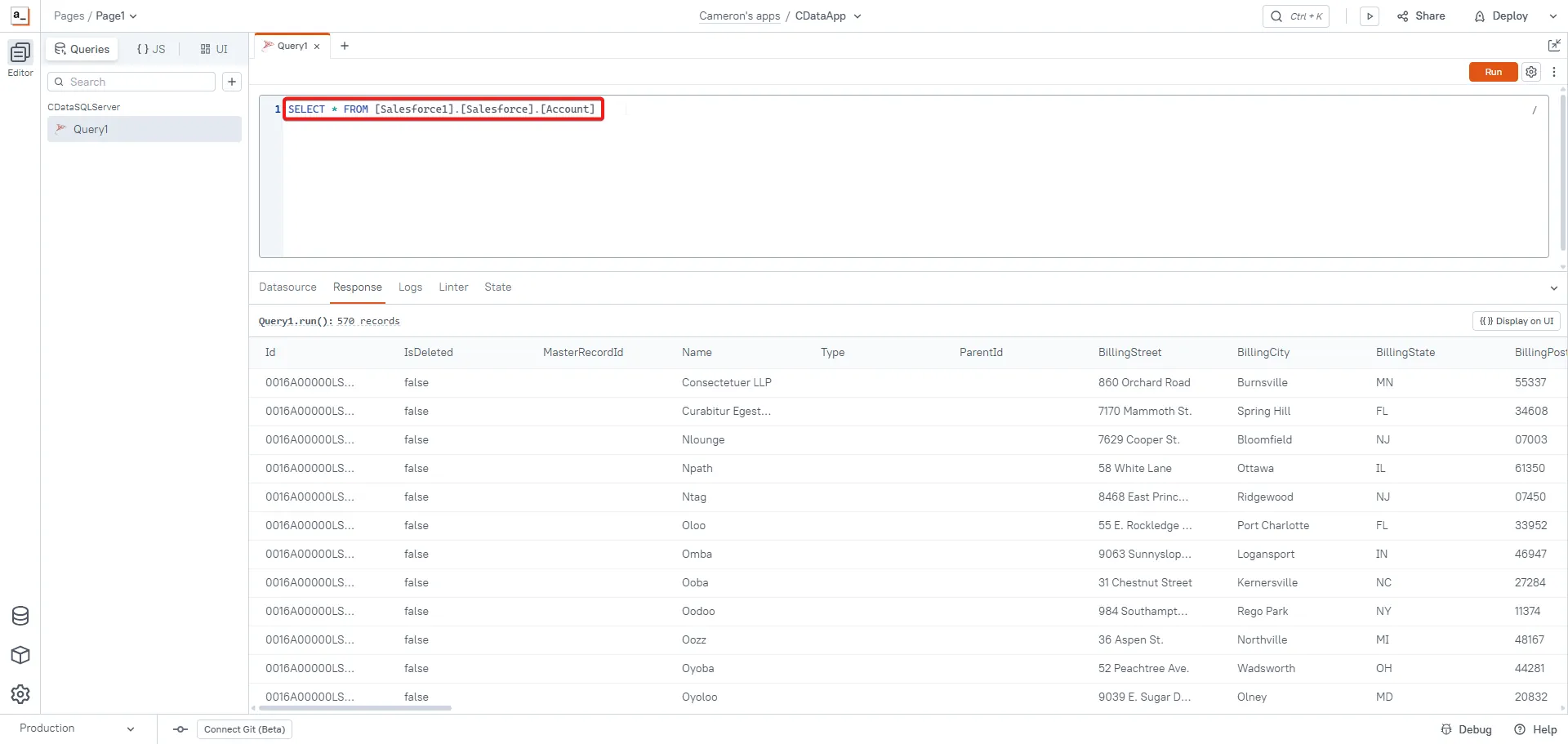
- Once the query successfully runs, all that remains is to set up the Page to display the data retrieved.
Display Lakebase data
-
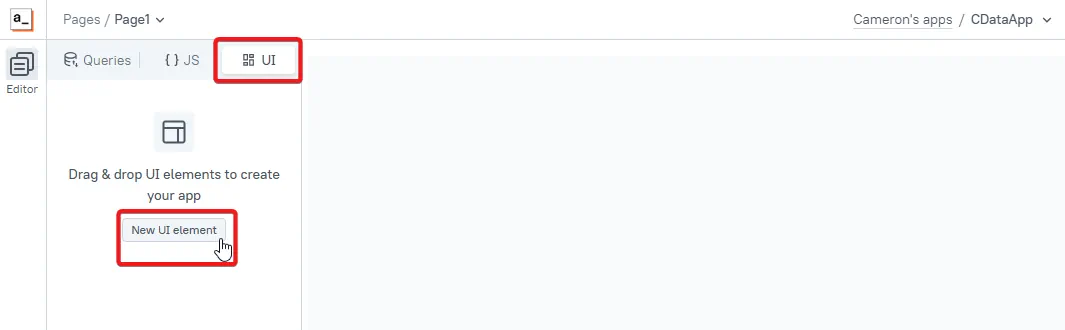
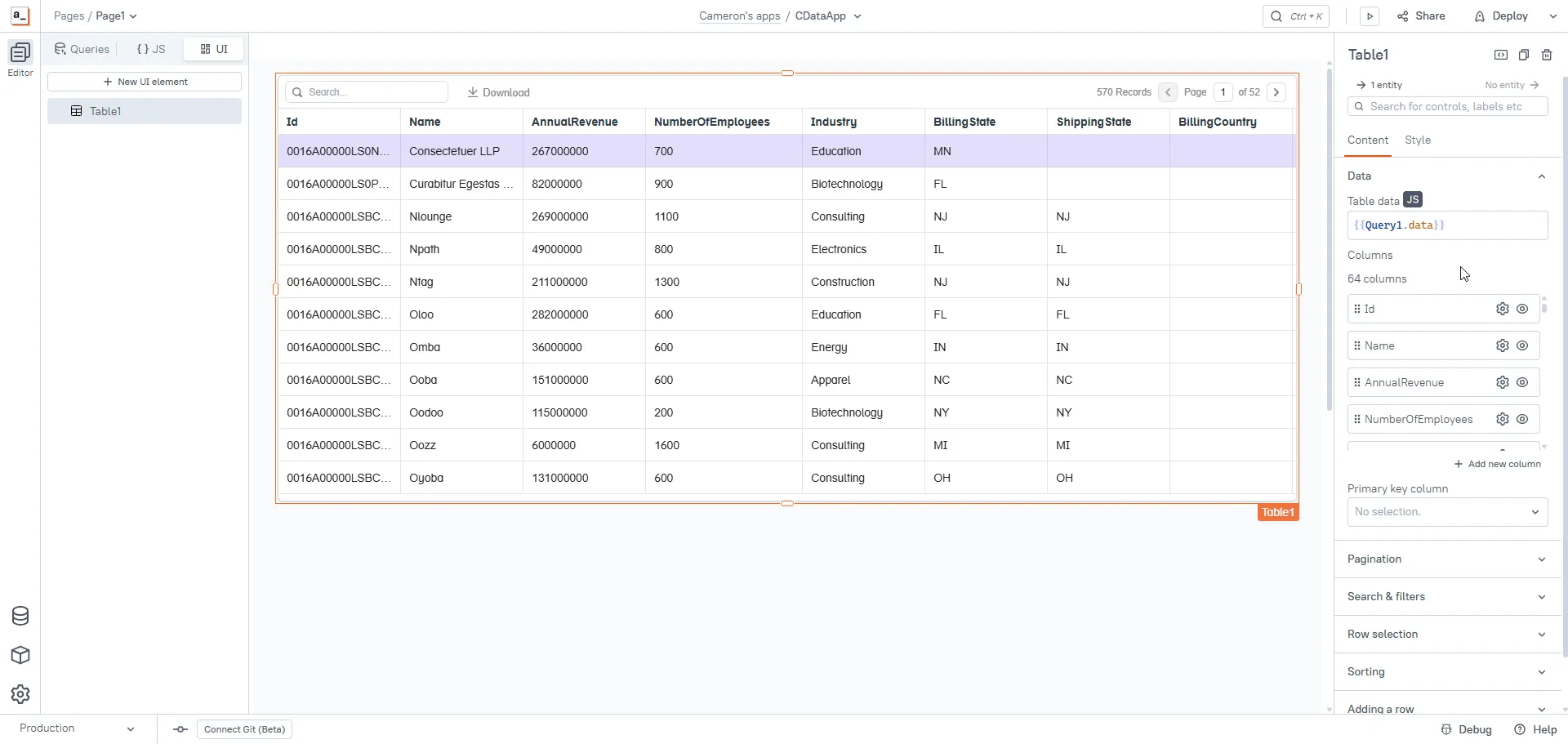
Open the UI tab and click New UI element.
-
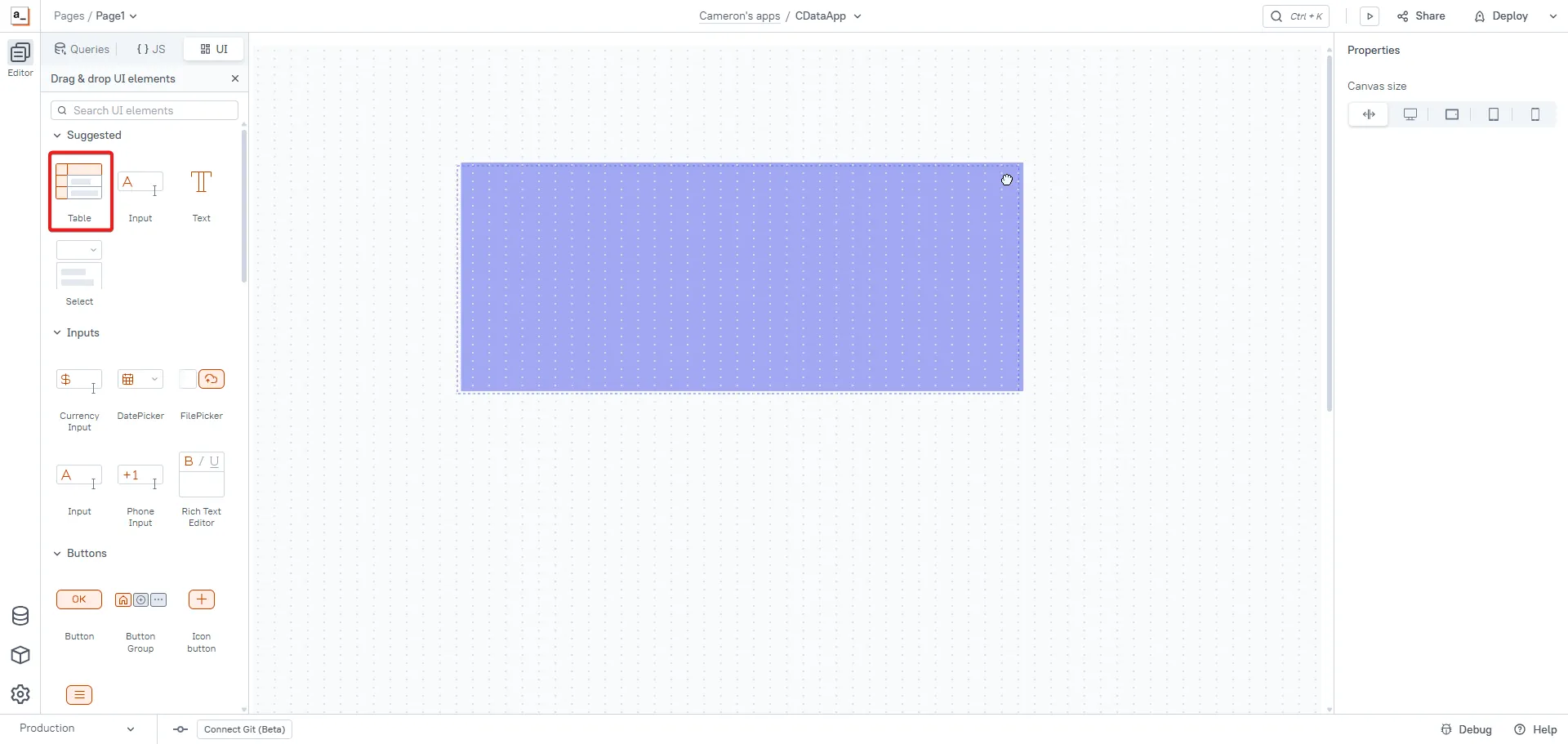
Choose a new UI element to grab, then drag and place the element on the page.
-
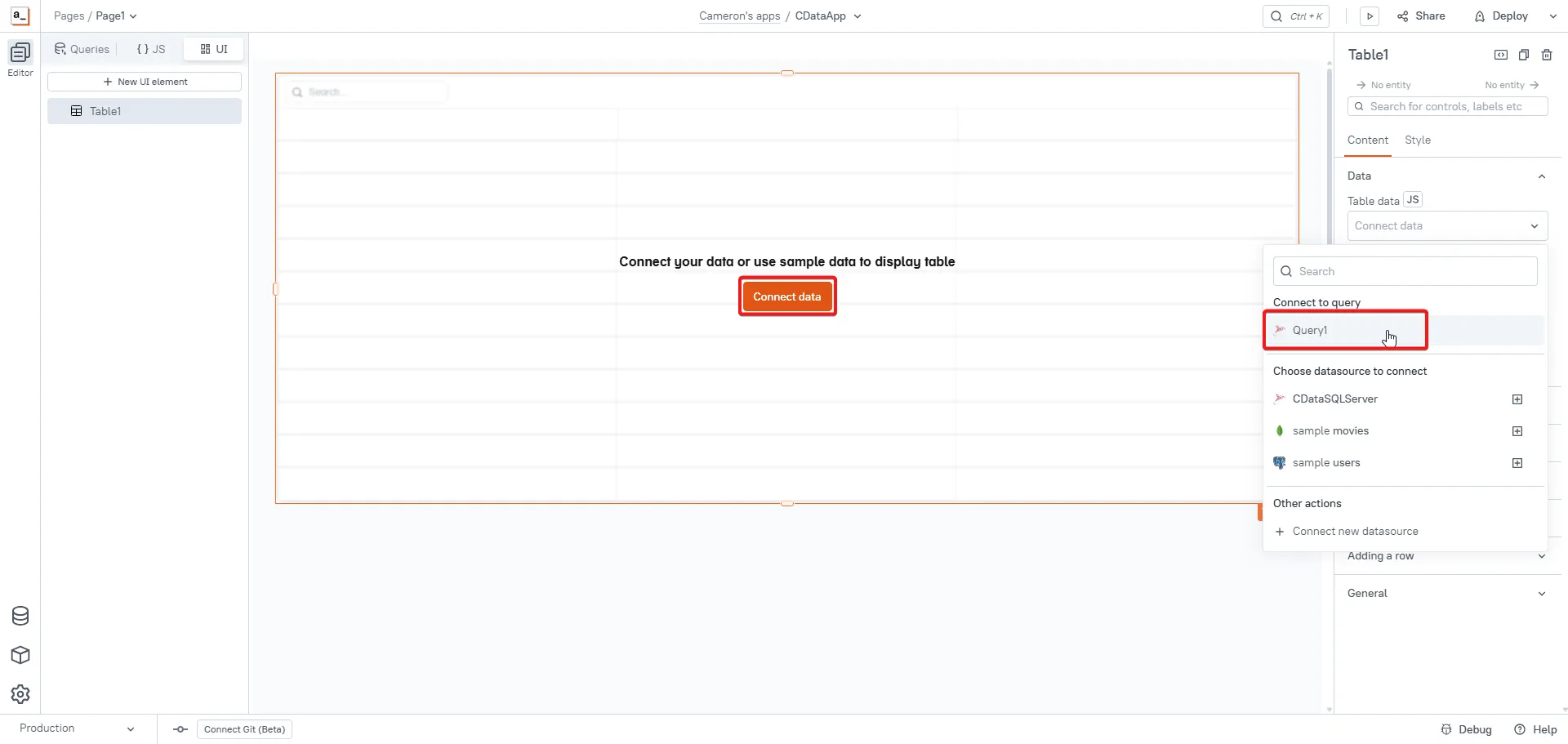
Click Connect data on the new UI element, then select the query previously created.
-
With the data connected, it is then displayed in the UI element.
Deploy the application
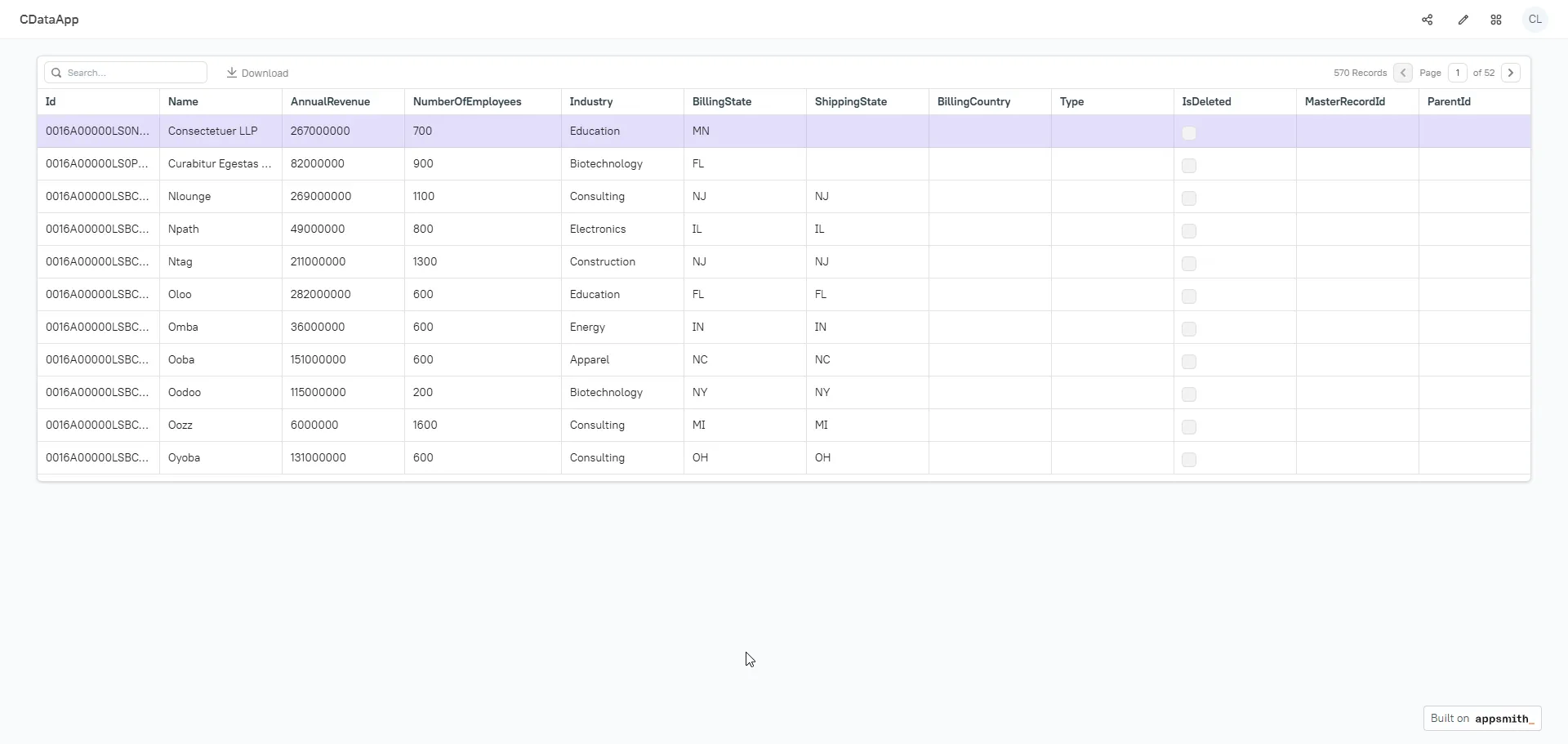
With the Lakebase data connected to the UI elements in the application, we can deploy the Application. To do this, click Deploy in the top-right corner of Appsmith, then the application is opened in a separate window displaying the Lakebase data.
Get CData Connect AI
To get live data access to 300+ SaaS, Big Data, and NoSQL sources directly from your cloud applications, try CData Connect AI today!