






Build Paylocity-Powered Applications in Claude Code with CData Code Assist MCP

Claude Code is an AI-powered command line tool that enables agentic coding workflows. With support for MCP, Claude Code can connect to local tools and enterprise data sources directly from your terminal, enabling natural language interaction with live systems without switching context.
Model Context Protocol (MCP) is an open standard for connecting LLM clients to external services through structured tool interfaces. MCP servers expose capabilities such as schema discovery and live querying, allowing AI agents to retrieve and reason over real-time data safely and consistently.
The following steps cover installing the CData Code Assist MCP for Paylocity, configuring the connection to Paylocity, connecting the Code Assist MCP add-on to Claude Code, and querying live Paylocity data from within the terminal.
Step 1: Download and install the CData Code Assist MCP for Paylocity
- To begin, download the CData Code Assist MCP for Paylocity
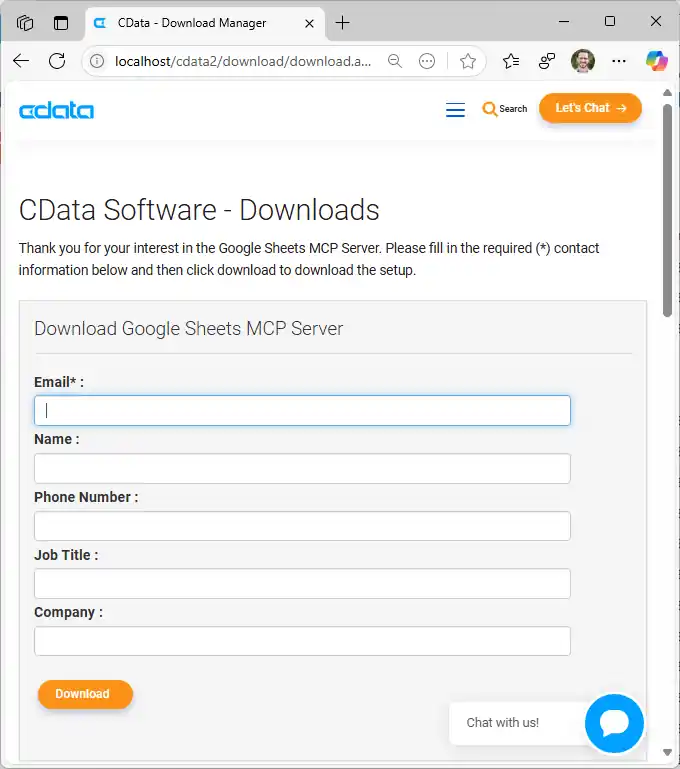
- Find and double-click the installer to begin the installation
- Run the installer and follow the prompts to complete the installation
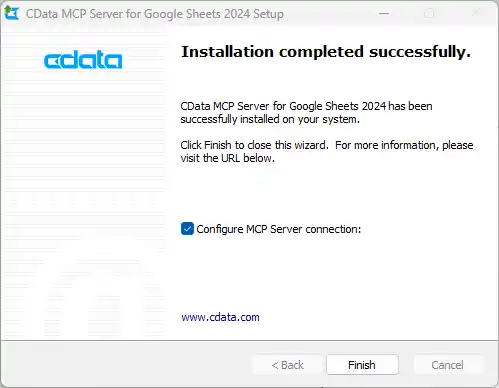
When the installation is complete, you are ready to configure your Code Assist MCP add-on by connecting to Paylocity.
Step 2: Configure the connection to Paylocity
- After installation, open the CData Code Assist MCP for Paylocity configuration wizard
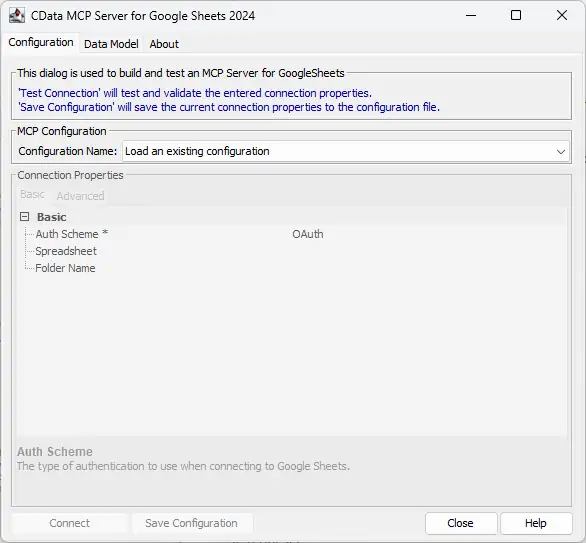
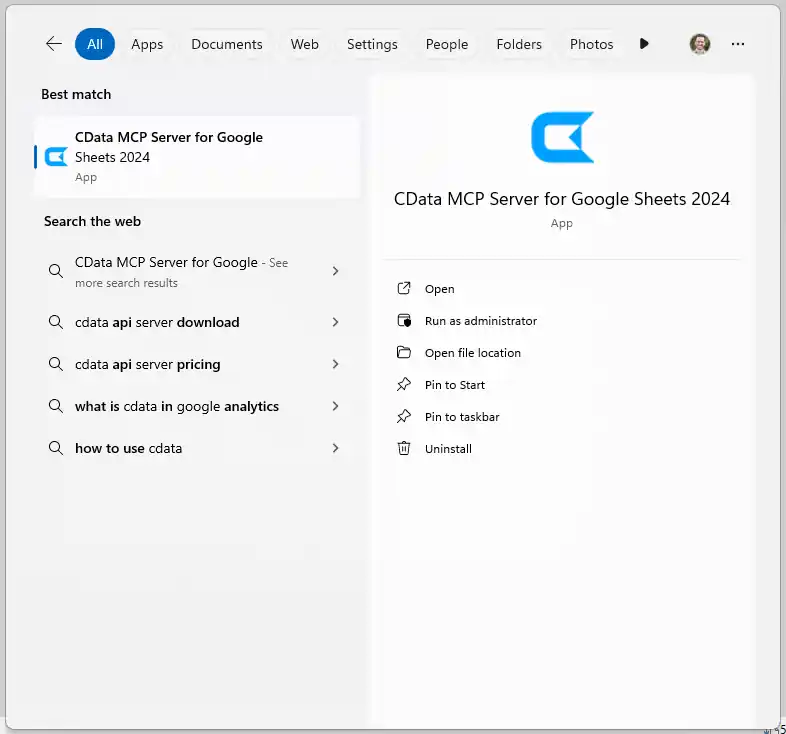
NOTE: If the wizard does not open automatically, search for "CData Code Assist MCP for Paylocity" in the Windows search bar and open the application.
- In MCP Configuration > Configuration Name, either select an existing configuration or choose
to create a new one 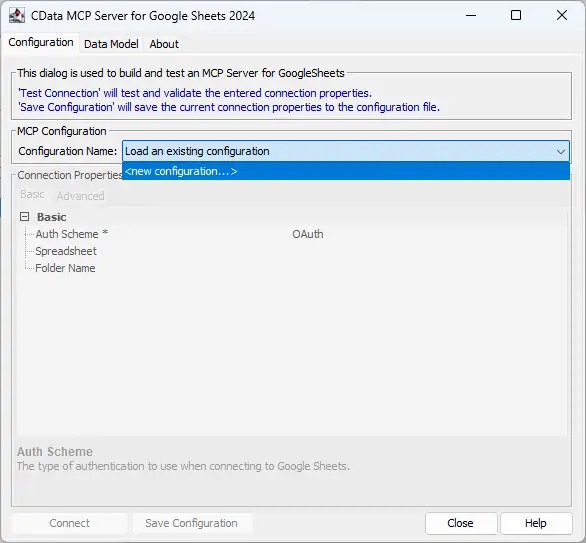
- Name the configuration (e.g. "cdata_paylocity") and click OK
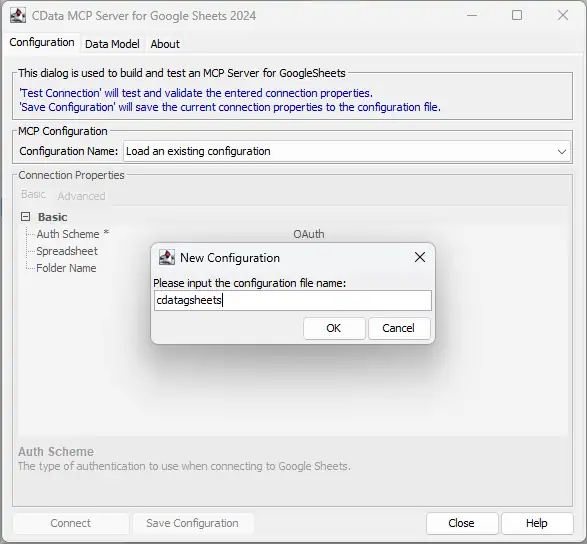
-
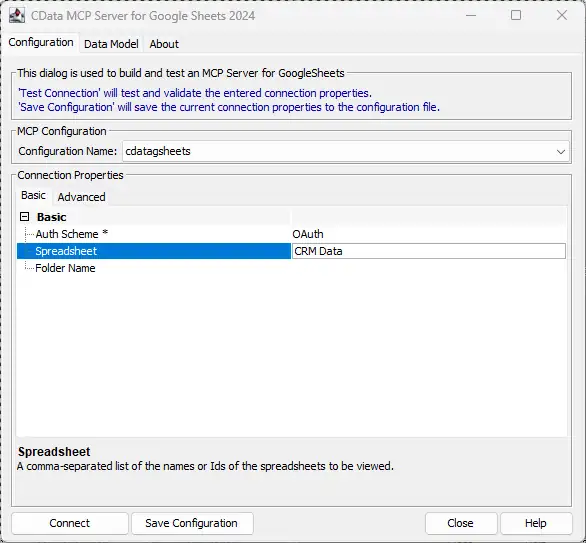
Enter the appropriate connection properties in the configuration wizard
Set the following to establish a connection to Paylocity:
- RSAPublicKey: Set this to the RSA Key associated with your Paylocity, if the RSA Encryption is enabled in the Paylocity account.
This property is required for executing Insert and Update statements, and it is not required if the feature is disabled.
- UseSandbox: Set to true if you are using sandbox account.
- CustomFieldsCategory: Set this to the Customfields category. This is required when IncludeCustomFields is set to true. The default value for this property is PayrollAndHR.
- Key: The AES symmetric key(base 64 encoded) encrypted with the Paylocity Public Key. It is the key used to encrypt the content.
Paylocity will decrypt the AES key using RSA decryption.
It is an optional property if the IV value not provided, The driver will generate a key internally. - IV: The AES IV (base 64 encoded) used when encrypting the content. It is an optional property if the Key value not provided, The driver will generate an IV internally.
Connect Using OAuth Authentication
You must use OAuth to authenticate with Paylocity. OAuth requires the authenticating user to interact with Paylocity using the browser. For more information, refer to the OAuth section in the Help documentation.
The Pay Entry API
The Pay Entry API is completely separate from the rest of the Paylocity API. It uses a separate Client ID and Secret, and must be explicitly requested from Paylocity for access to be granted for an account. The Pay Entry API allows you to automatically submit payroll information for individual employees, and little else. Due to the extremely limited nature of what is offered by the Pay Entry API, we have elected not to give it a separate schema, but it may be enabled via the UsePayEntryAPI connection property.
Please be aware that when setting UsePayEntryAPI to true, you may only use the CreatePayEntryImportBatch & MergePayEntryImportBatchgtable stored procedures, the InputTimeEntry table, and the OAuth stored procedures. Attempts to use other features of the product will result in an error. You must also store your OAuthAccessToken separately, which often means setting a different OAuthSettingsLocation when using this connection property.
- RSAPublicKey: Set this to the RSA Key associated with your Paylocity, if the RSA Encryption is enabled in the Paylocity account.
- Click Connect to authenticate with Paylocity through OAuth
- Then, click Save Configuration to save the Code Assist MCP add-on
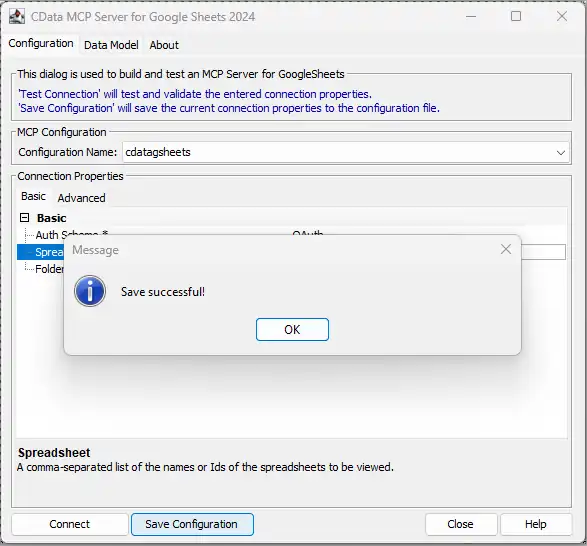
This process creates a .mcp configuration file that Claude Code will reference when launching the Code Assist MCP add-on. Now with your Code Assist MCP add-on configured, you are ready to connect it to Claude Code.
Step 3: Connect the Code Assist MCP add-on to Claude Code
- Install the Claude Code CLI using the terminal
- Open the Claude Code configuration file at ~/.config/claude-code/config.json (or the location shown after initialization)
Option 1: Manually add the MCP configuration
- Open the mcp.json file in your preferred editor
- Add the code shown below
{
"mcpServers" : {
  "cdata_paylocity" : {
    "type" : "stdio",
    "command" : "C:\Program Files\CData\CData Code Assist MCP for Paylocity\jre\bin\java.exe",
    "args" : [ "-Dfile.encoding=UTF-8", "-jar", "C:\Program Files\CData\CData Code Assist MCP for Paylocity/lib/cdata.mcp.paylocity.jar", "cdata_paylocity" ],
    "env" : {}
  }
}
}
NOTE: The command value should point to your Java 17+ java.exe executable, and the JAR path should point to the installed CData Code Assist MCP add-on .jar file. The final argument must match the MCP configuration name you saved in the CData configuration wizard (e.g. "cdata_paylocity").
Option 2: Copy the MCP configuration from the CData Code Assist MCP for Paylocity UI
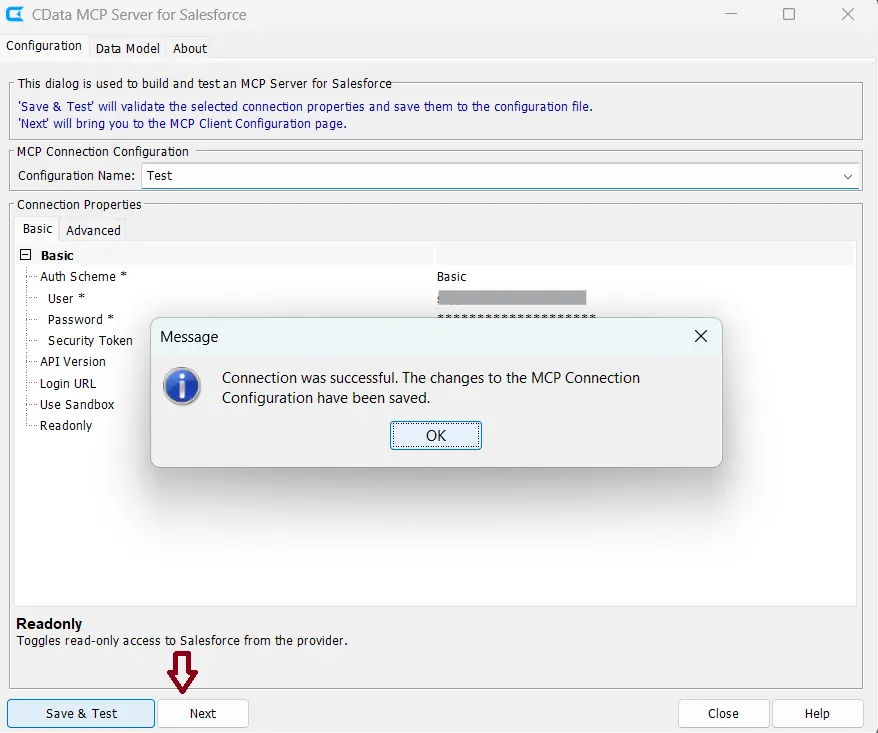
- After saving and testing your connection in the configuration wizard, click Next
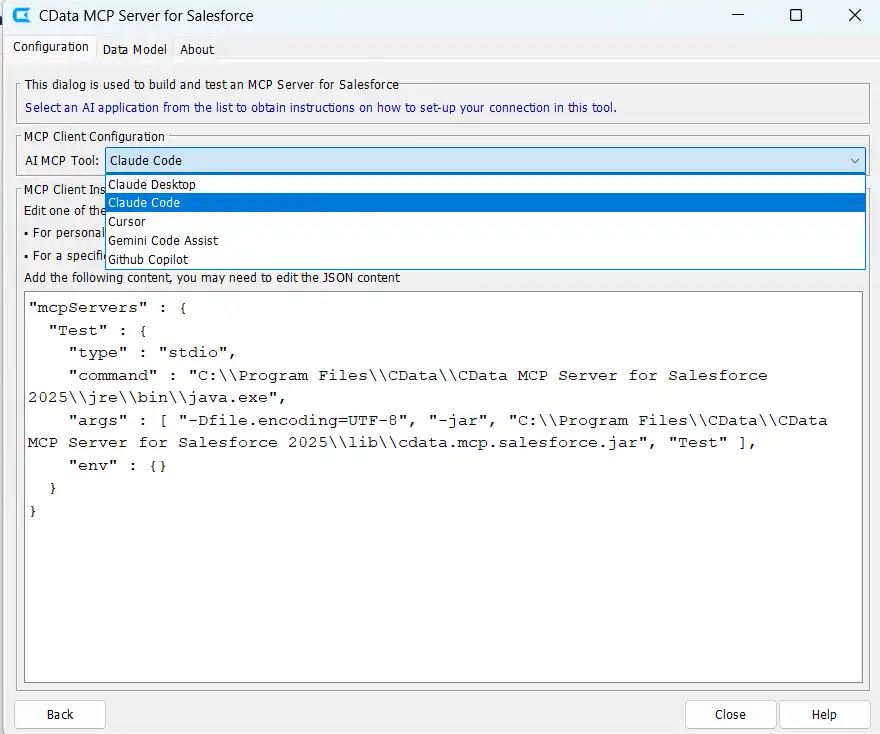
- Select Claude Code from the AI MCP Tool dropdown
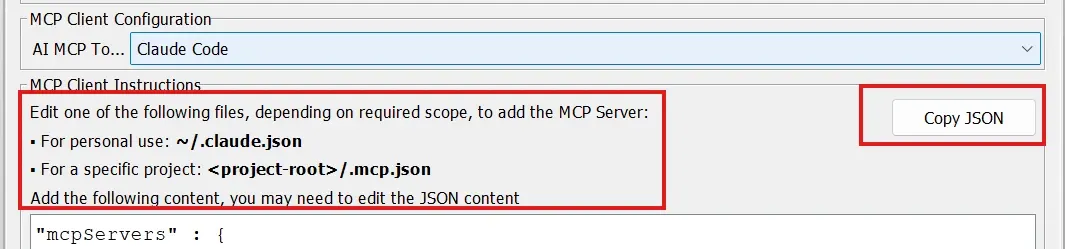
- Click Copy JSON to copy the generated MCP configuration to your clipboard
- Paste the copied JSON into the mcp.json file
Step 4: Verify connection in Claude Code
Claude Code provides tools to verify the connection is active before building.
- Open a terminal and navigate to your project directory. Run the command claude mcp list
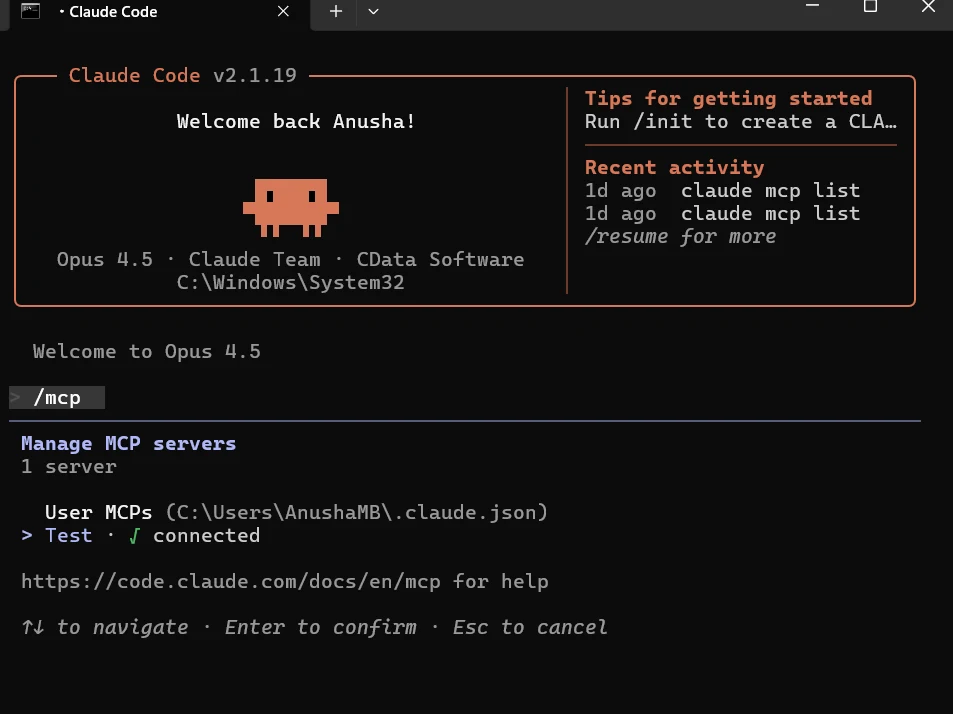
- Check that your configuration name appears with a Connected status
- Start Claude Code by running claude
- Inside the Claude Code session, type /mcp to view active servers

Step 5: Query live Paylocity data in Claude Code
With the connection verified, you can now use natural language prompts to query and work with live Paylocity data.
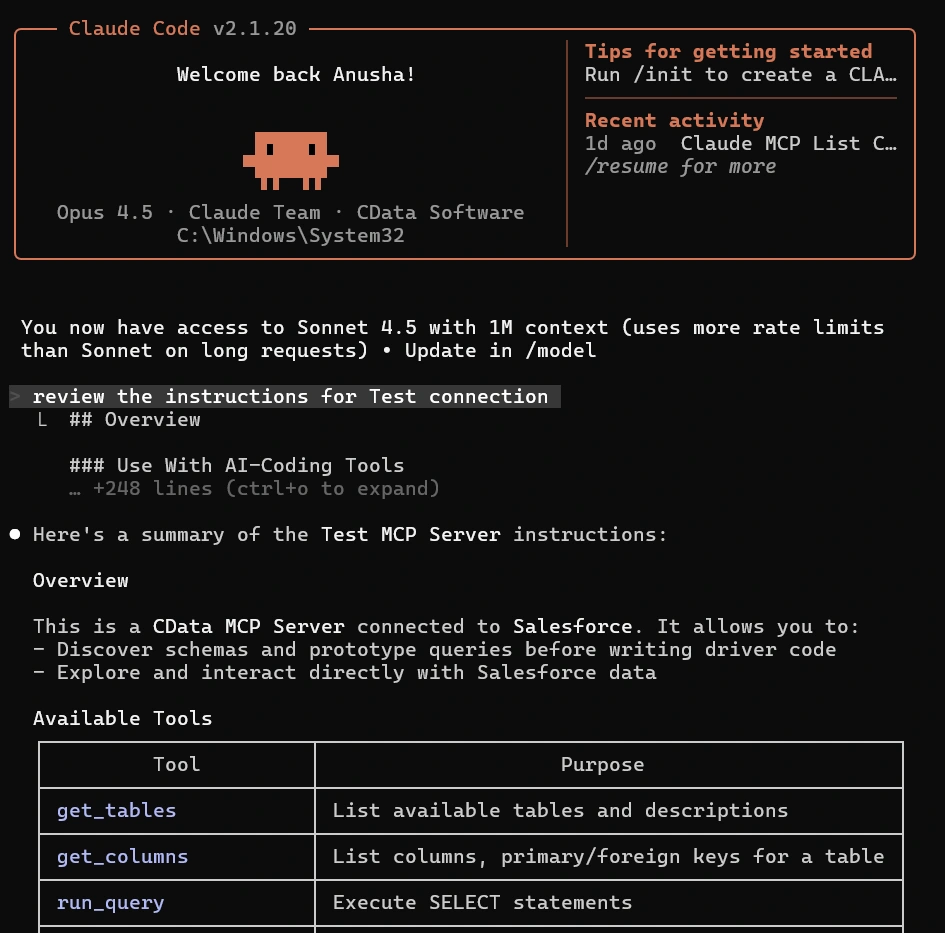
- Prompt Claude Code to review the instructions for your MCP connection to ensure it has all the appropriate context when writing code
- Start building with natural language prompts! For example:
For my project, data from the Employee is very important. Pull data from the most important columns like FirstName and LastName.
Claude Code will use the MCP add-on to connect to Paylocity, retrieve the requested data, and provide results directly in your terminal
Build with Code Assist MCP. Deploy with CData Drivers.
Download Code Assist MCP for free and give your AI tools schema-aware access to live Paylocity data during development. When you're ready to move to production, CData Paylocity Drivers deliver the same SQL-based access with enterprise-grade performance, security, and reliability.
Visit the CData Community to share insights, ask questions, and explore what's possible with MCP-powered AI workflows.
Ready to get started?
Download a free Paylocity Code Assist MCP to get started:
Download NowLearn more:
 Paylocity Code Assist MCP
The CData Code Assist MCP for Paylocity provides schema-aware context for AI-assisted code generation with live Paylocity data.
