





Build PingOne-Powered Applications in GitHub Copilot with CData Code Assist MCP

GitHub Copilot is an AI-powered coding assistant that integrates directly into Visual Studio Code and other IDEs. With support for MCP, GitHub Copilot can connect to local tools and enterprise data sources, enabling natural language interaction with live systems during development.
Model Context Protocol (MCP) is an open standard for connecting LLM clients to external services through structured tool interfaces. MCP servers expose capabilities such as schema discovery and live querying, allowing AI agents to retrieve and reason over real-time data safely and consistently.
In this article, we guide you through installing the CData Code Assist MCP for PingOne, configuring the connection to PingOne, connecting the Code Assist MCP add-on to GitHub Copilot, and querying live PingOne data from within Visual Studio Code.
Prerequisites
- Visual Studio Code is installed on your machine
- GitHub Copilot Chat extension is enabled in Visual Studio Code
- CData Code Assist MCP for PingOne has been installed
Step 1: Download and install the CData Code Assist MCP for PingOne
- To begin, download the CData Code Assist MCP for PingOne
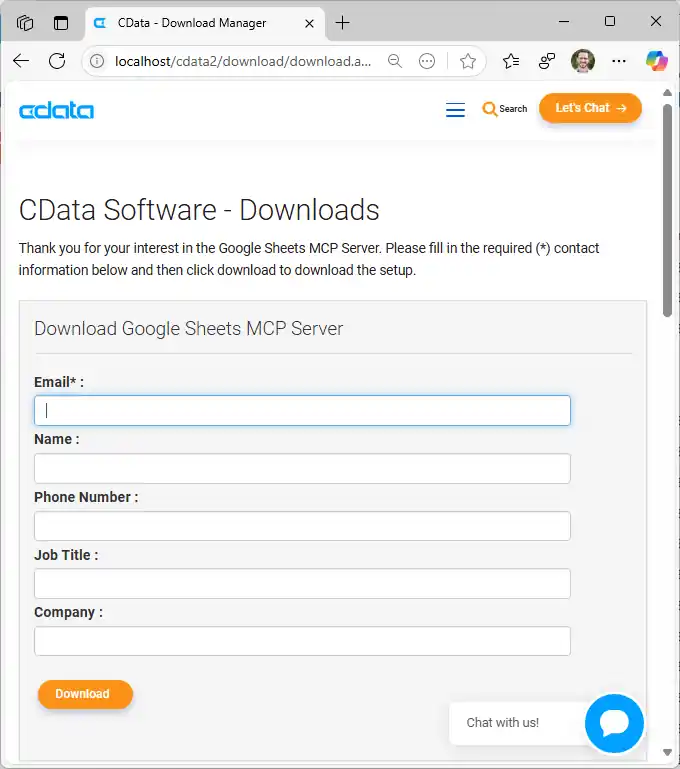
- Find and double-click the installer to begin the installation
- Run the installer and follow the prompts to complete the installation
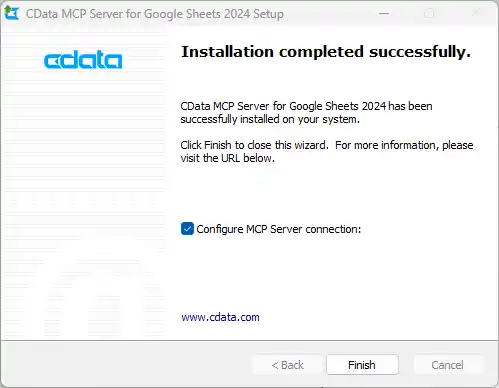
When the installation is complete, you are ready to configure your Code Assist MCP add-on by connecting to PingOne.
Step 2: Configure the connection to PingOne
- After installation, open the CData Code Assist MCP for PingOne configuration wizard
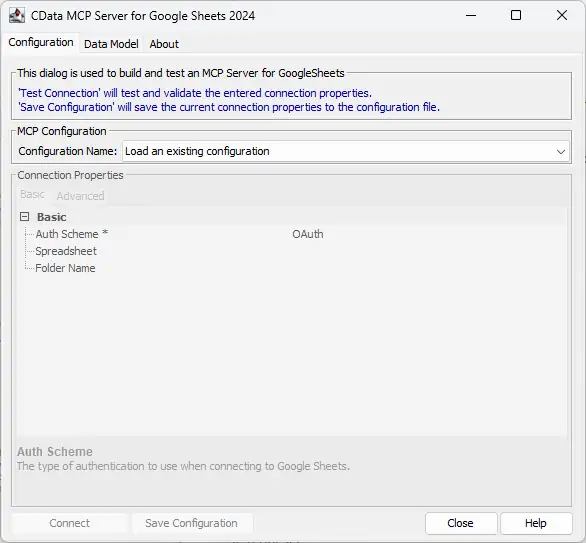
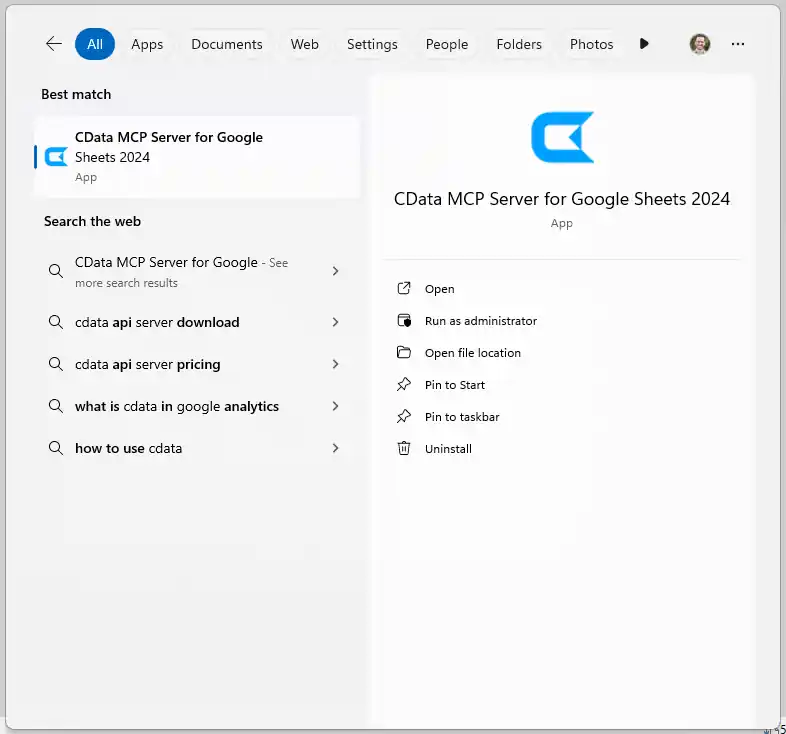
NOTE: If the wizard does not open automatically, search for "CData Code Assist MCP for PingOne" in the Windows search bar and open the application.
- In MCP Configuration > Configuration Name, either select an existing configuration or choose
to create a new one 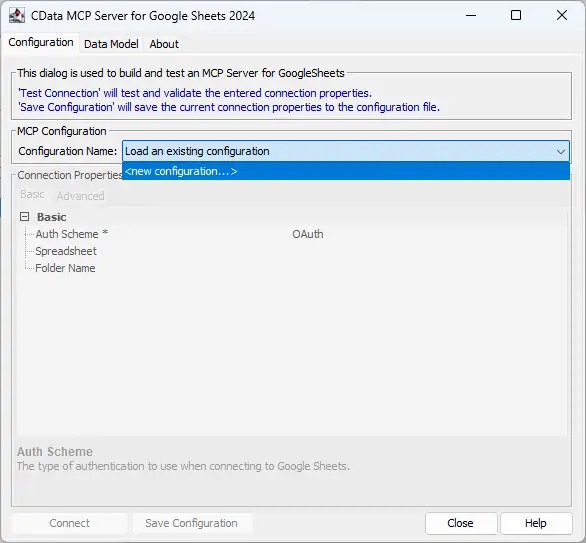
- Name the configuration (e.g. "cdata_pingone") and click OK
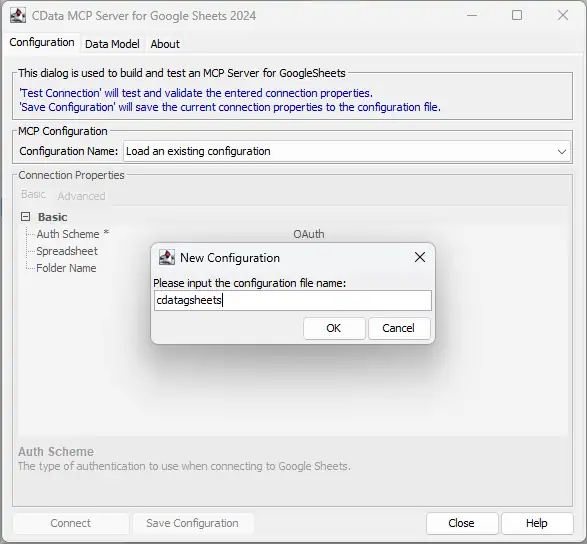
-
Enter the appropriate connection properties in the configuration wizard
To connect to PingOne, configure these properties:
- Region: The region where the data for your PingOne organization is being hosted.
- AuthScheme: The type of authentication to use when connecting to PingOne.
- Either WorkerAppEnvironmentId (required when using the default PingOne domain) or AuthorizationServerURL, configured as described below.
Configuring WorkerAppEnvironmentId
WorkerAppEnvironmentId is the ID of the PingOne environment in which your Worker application resides. This parameter is used only when the environment is using the default PingOne domain (auth.pingone). It is configured after you have created the custom OAuth application you will use to authenticate to PingOne, as described in Creating a Custom OAuth Application in the Help documentation.
First, find the value for this property:
- From the home page of your PingOne organization, move to the navigation sidebar and click Environments.
- Find the environment in which you have created your custom OAuth/Worker application (usually Administrators), and click Manage Environment. The environment's home page displays.
- In the environment's home page navigation sidebar, click Applications.
- Find your OAuth or Worker application details in the list.
-
Copy the value in the Environment ID field.
It should look similar to:
WorkerAppEnvironmentId='11e96fc7-aa4d-4a60-8196-9acf91424eca'
Now set WorkerAppEnvironmentId to the value of the Environment ID field.
Configuring AuthorizationServerURL
AuthorizationServerURL is the base URL of the PingOne authorization server for the environment where your application is located. This property is only used when you have set up a custom domain for the environment, as described in the PingOne platform API documentation. See Custom Domains.
Authenticating to PingOne with OAuth
PingOne supports both OAuth and OAuthClient authentication. In addition to performing the configuration steps described above, there are two more steps to complete to support OAuth or OAuthCliet authentication:
- Create and configure a custom OAuth application, as described in Creating a Custom OAuth Application in the Help documentation.
- To ensure that the driver can access the entities in Data Model, confirm that you have configured the correct roles for the admin user/worker application you will be using, as described in Administrator Roles in the Help documentation.
- Set the appropriate properties for the authscheme and authflow of your choice, as described in the following subsections.
OAuth (Authorization Code grant)
Set AuthScheme to OAuth.
Desktop Applications
Get and Refresh the OAuth Access Token
After setting the following, you are ready to connect:
- InitiateOAuth: GETANDREFRESH. To avoid the need to repeat the OAuth exchange and manually setting the OAuthAccessToken each time you connect, use InitiateOAuth.
- OAuthClientId: The Client ID you obtained when you created your custom OAuth application.
- OAuthClientSecret: The Client Secret you obtained when you created your custom OAuth application.
- CallbackURL: The redirect URI you defined when you registered your custom OAuth application. For example: https://localhost:3333
When you connect, the driver opens PingOne's OAuth endpoint in your default browser. Log in and grant permissions to the application. The driver then completes the OAuth process:
- The driver obtains an access token from PingOne and uses it to request data.
- The OAuth values are saved in the location specified in OAuthSettingsLocation, to be persisted across connections.
The driver refreshes the access token automatically when it expires.
For other OAuth methods, including Web Applications, Headless Machines, or Client Credentials Grant, refer to the Help documentation.
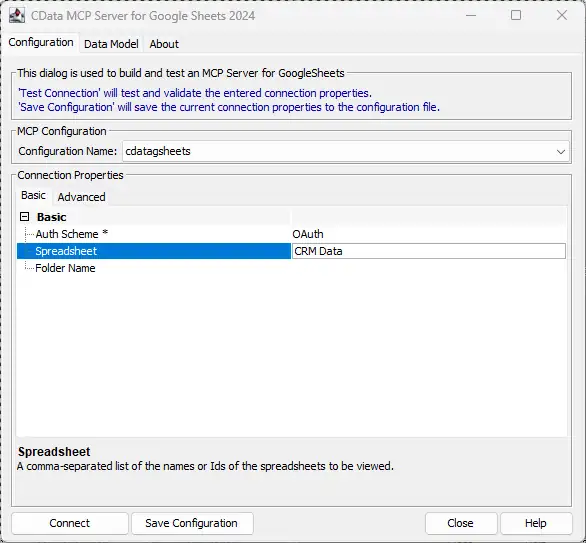
- Click Connect to authenticate with PingOne through OAuth
- Click Save & Test to finalize the connection
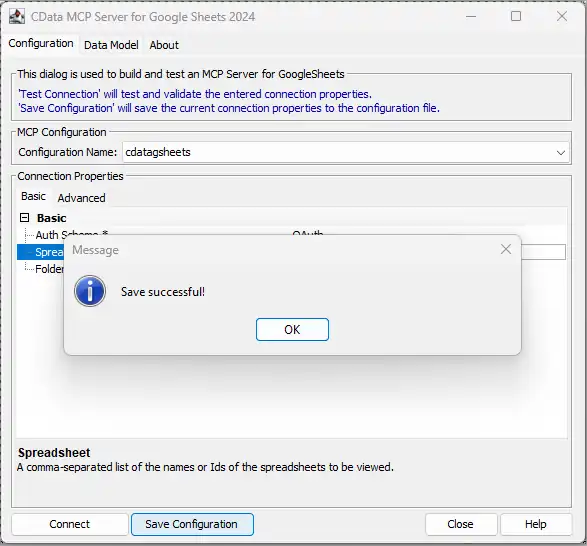
This process creates a .mcp configuration file that GitHub Copilot will reference when launching the Code Assist MCP add-on. Now with your Code Assist MCP add-on configured, you are ready to connect it to GitHub Copilot.
Step 3: Connect the Code Assist MCP add-on to GitHub Copilot
- Download and install Visual Studio Code and enable the GitHub Copilot Chat extension
- Open or create the mcp.json file:
- For global configuration: %%APPDATA%%/Roaming/Code/User/mcp.json
- For project-specific configuration:
/.vscode/mcp.json
- Add the JSON code shown below and save the file
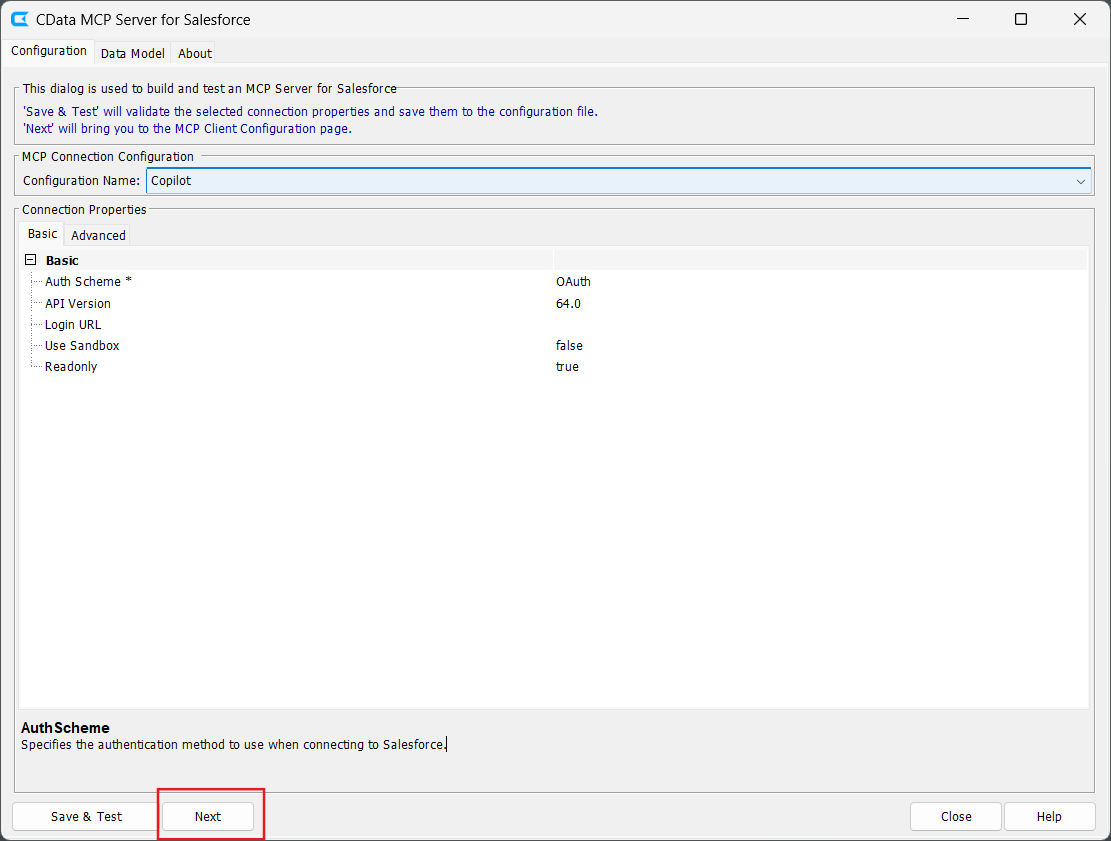
- After saving and testing your connection in the configuration wizard, click Next
- Select Github Copilot from the AI MCP Tool dropdown
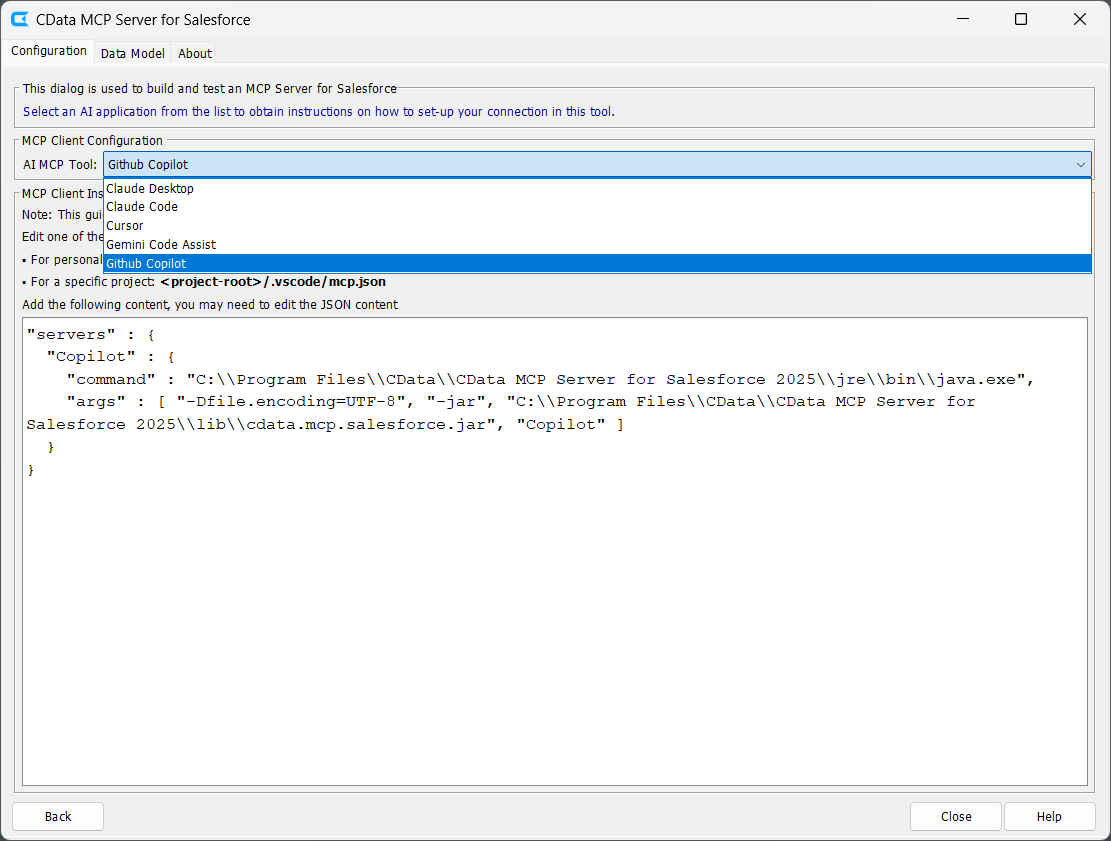
- Follow the MCP Client Instructions to create the required configuration file
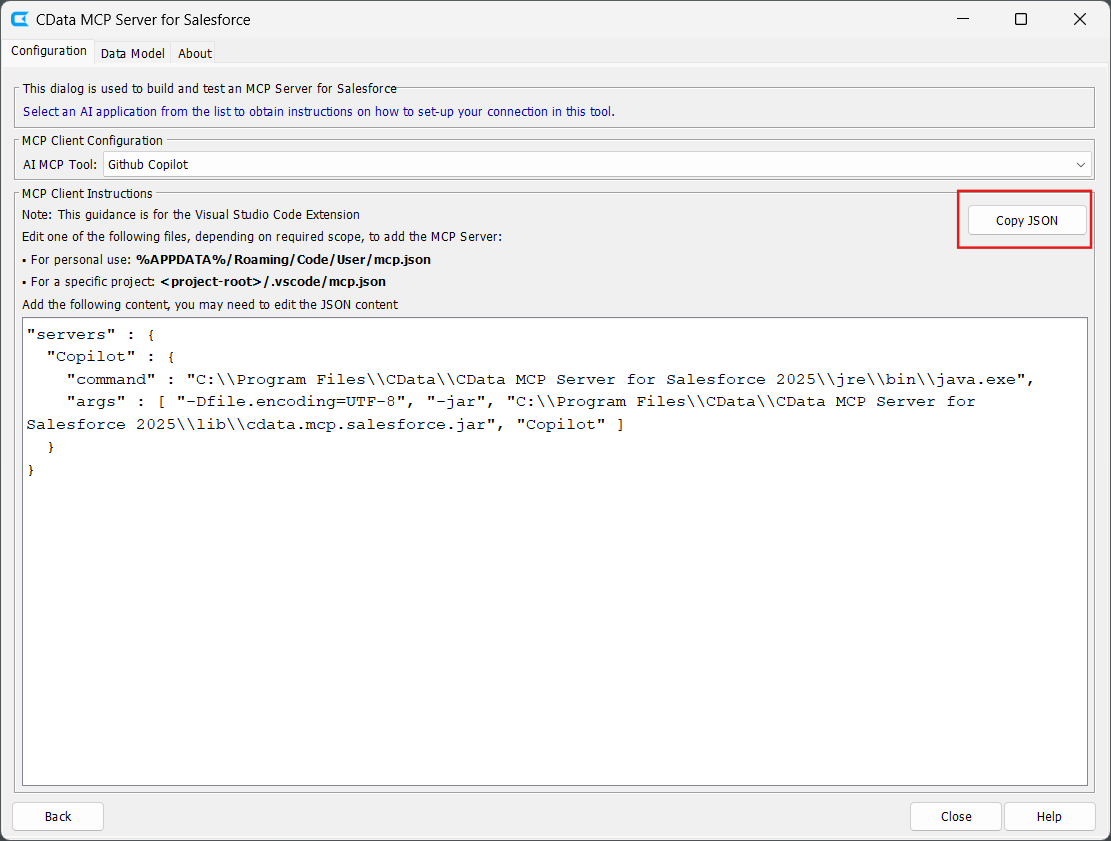
- Copy the displayed JSON code and paste it into your configuration file
Option 1: Manually add the MCP configuration
{
  "servers": {
    "cdata_pingone": {
      "command": "C:\Program Files\CData\CData Code Assist MCP for PingOne\jre\bin\java.exe",
      "args": [
        "-Dfile.encoding=UTF-8",
        "-jar",
        "C:\Program Files\CData\CData Code Assist MCP for PingOne\lib\cdata.mcp.pingone.jar",
        "cdata_pingone"
      ]
    }
  }
}
NOTE: The command value should point to your Java 17+ java.exe executable, and the JAR path should point to the installed CData Code Assist MCP add-on .jar file. The final argument must match the MCP configuration name you saved in the CData configuration wizard (e.g. "cdata_pingone").
Option 2: Copy the MCP configuration from the CData Code Assist MCP for PingOne UI
Step 4: Query live PingOne data in GitHub Copilot
- Launch Visual Studio Code and open the GitHub Copilot Chat interface. Select the tool icon to enable the configured Code Assist MCP add-on
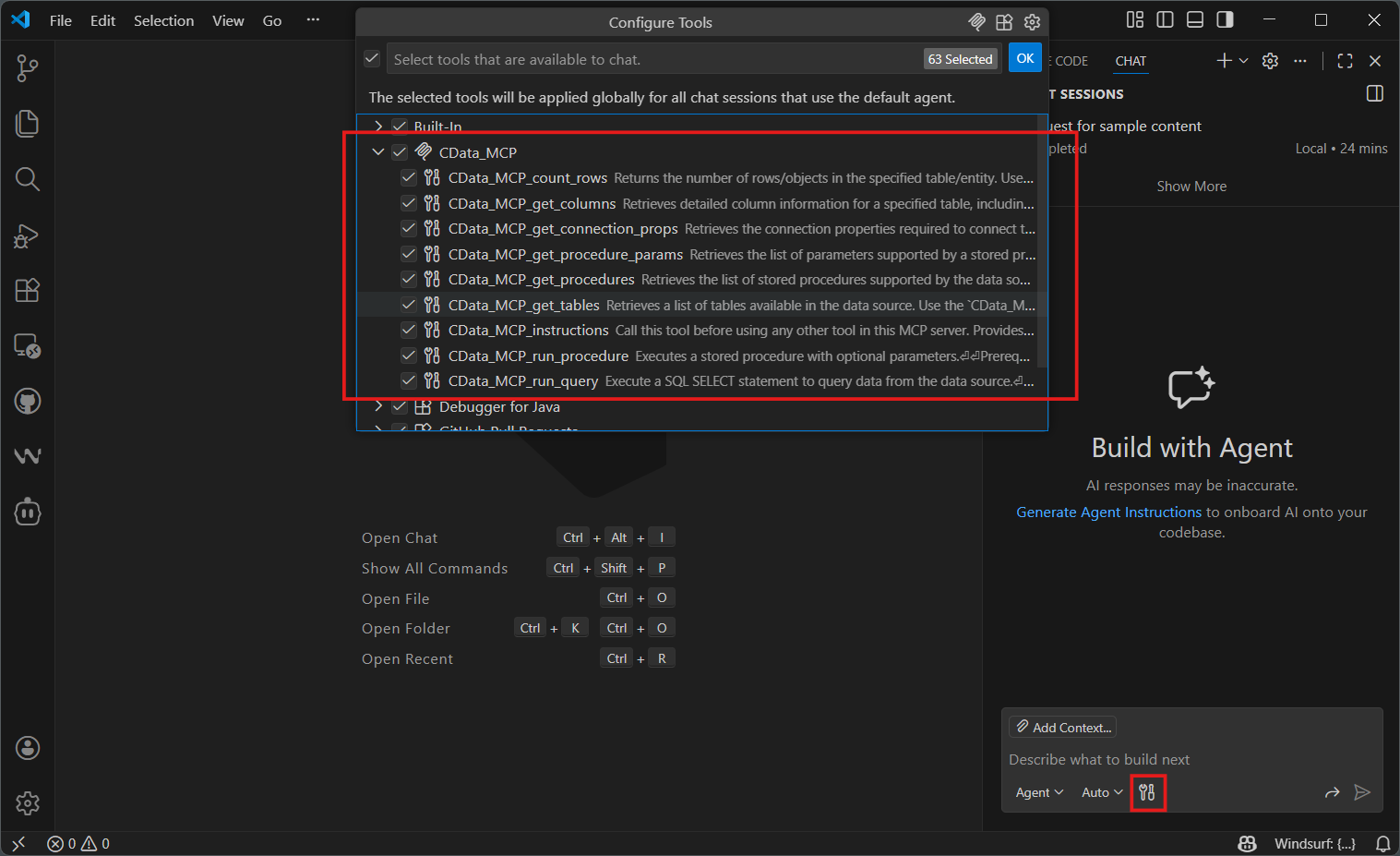
- Ask questions about your PingOne data using natural language. For example:
"List all tables available in my PingOne data data connection."
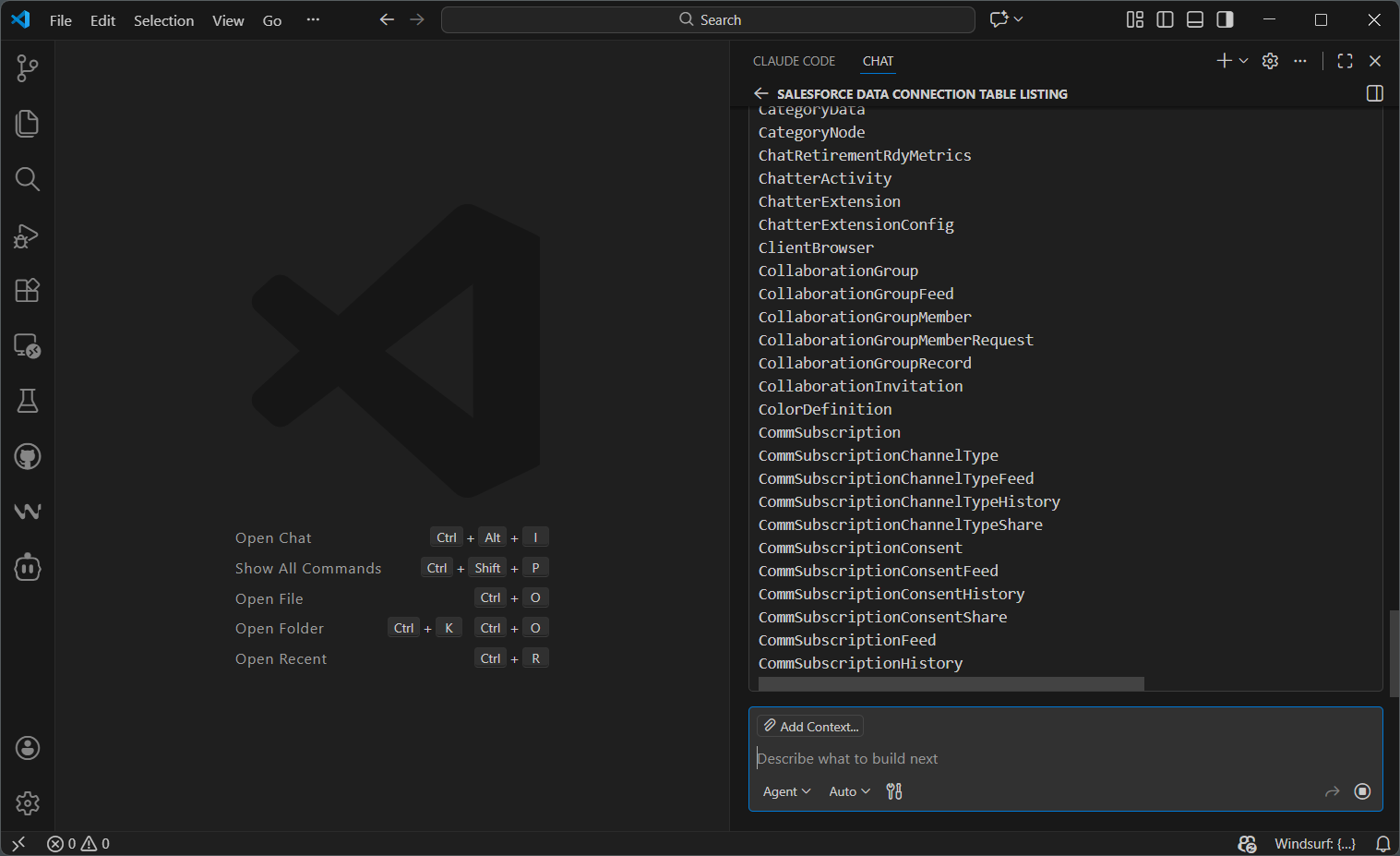
- Start building with natural language prompts:
For my project, data from the [CData].[Administrators].Users is very important. Pull data from the most important columns like Id and Username.
GitHub Copilot is now fully integrated with CData Code Assist MCP for PingOne and can use the MCP tools to explore schemas and execute live queries against PingOne.
Build with Code Assist MCP. Deploy with CData Drivers.
Download Code Assist MCP for free and give your AI tools schema-aware access to live PingOne data during development. When you're ready to move to production, CData PingOne Drivers deliver the same SQL-based access with enterprise-grade performance, security, and reliability.
Visit the CData Community to share insights, ask questions, and explore what's possible with MCP-powered AI workflows.
Ready to get started?
Download a free PingOne Code Assist MCP to get started:
Download NowLearn more:
 PingOne Code Assist MCP
The CData Code Assist MCP for PingOne provides schema-aware context for AI-assisted code generation with live PingOne data.