






How to Query Live SQL Analysis Services Data in Perplexity MacOS Desktop

Perplexity is an AI-powered research and answer engine that allows users to combine web search, structured data, and connected tools through a unified conversational interface. With Perplexity Desktop for macOS, users can bring local tools and data sources directly into their workflow using MCP, enabling fast, context-aware insights powered by live data.
Model Context Protocol (MCP) is an emerging, open-source standard for connecting LLMs with external services and enterprise data sources. Using MCP Servers, AI clients such as Perplexity Desktop can securely interact with applications and data, performing actions, retrieving live information, and enabling natural language access to data.
In this article, we guide you through installing the CData MCP Server for SQL Analysis Services, configuring the connection to SQL Analysis Services, and interacting with your live SQL Analysis Services data from Perplexity Desktop.
Step 1: Download and install the CData MCP Server for SQL Analysis Services
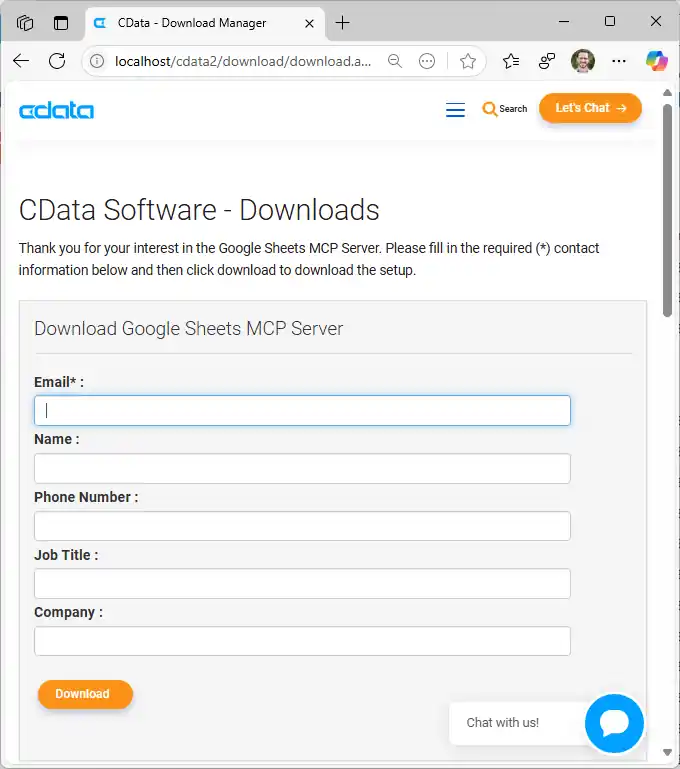
- To begin, download the CData MCP Server for SQL Analysis Services
- Find and double-click the installer to begin the installation
- Drag the CData MCP Server app into the Applications folder
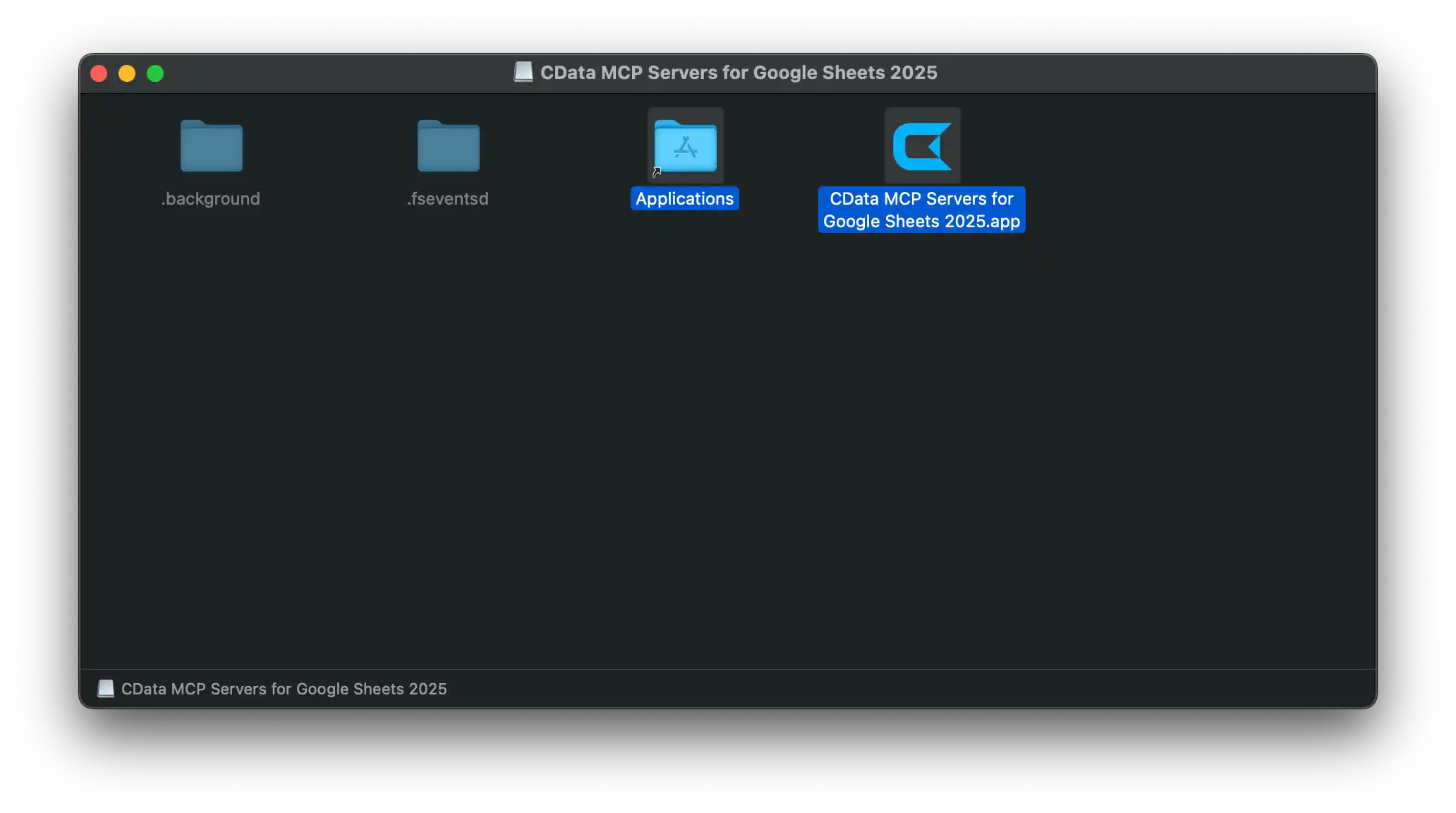
When the installation is complete, you are ready to configure your MCP Server by connecting to SQL Analysis Services.
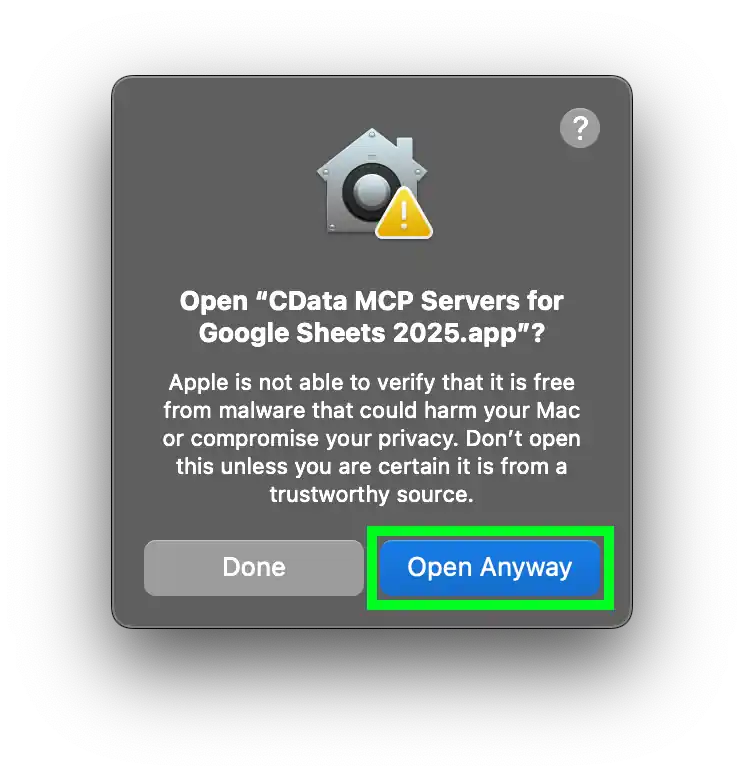
NOTE: Since you downloaded the application from the internet and not the Apple App Store, you may see a warning that the application was not opened because Apple could not verify its security. You may continue with the installation.
Installing a trusted, unverified App
CData's solutions are trusted across the globe by some of the largest software vendors in the world. That said, if you have any concerns about continuing, please consult with your IT and/or security team.
- In the warning message that pops up, click "Done"
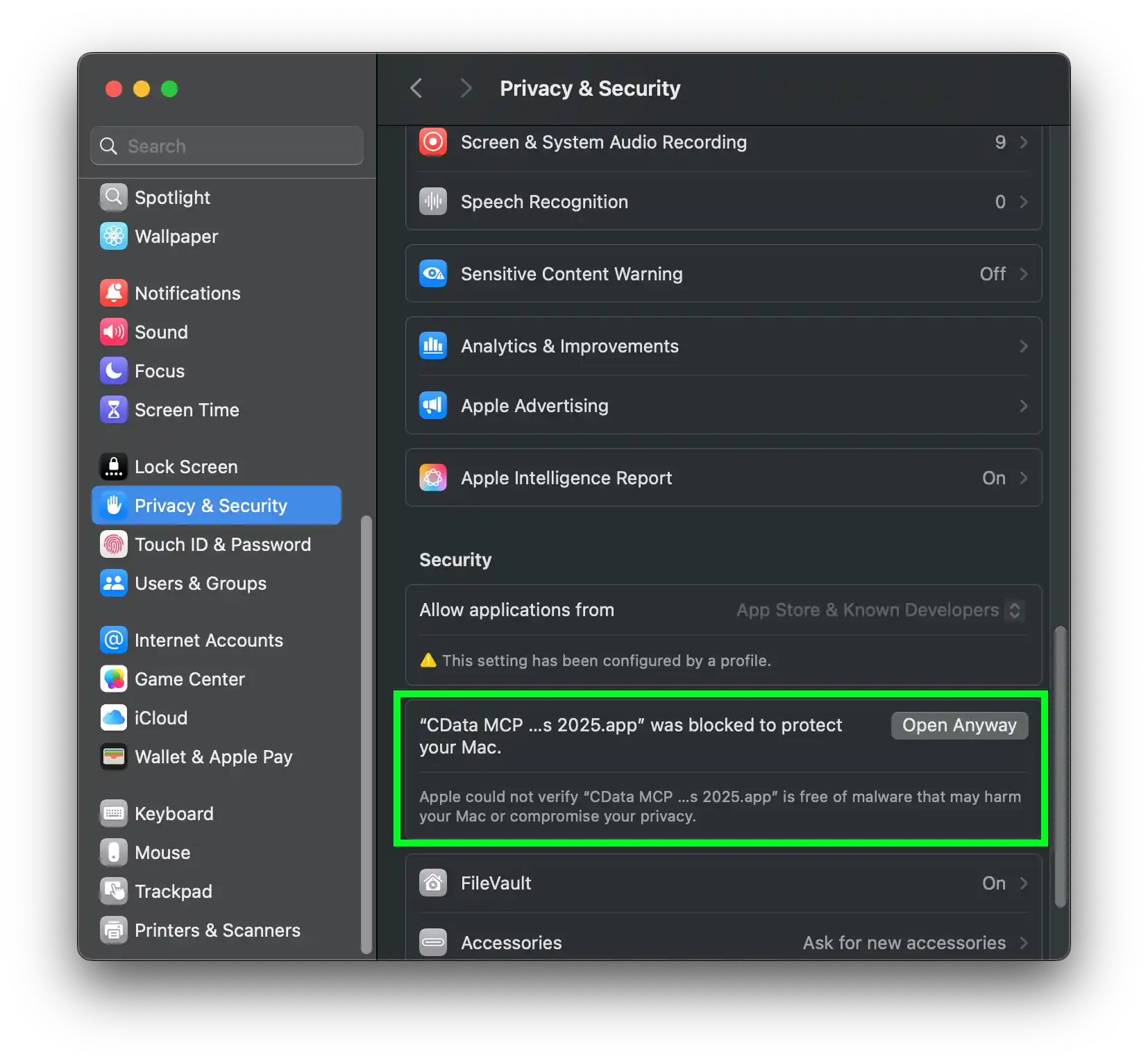
- Open "System Settings" on your machine and navigate to the "Privacy & Security" page
- Scroll down to the "Security" section and click "Open Anyway"
- Authorize the installation (passkey or password)

Step 2: Configure the Connection to SQL Analysis Services
-
After installation, you can open the CData MCP Server for SQL Analysis Services from the Applications folder on your mac
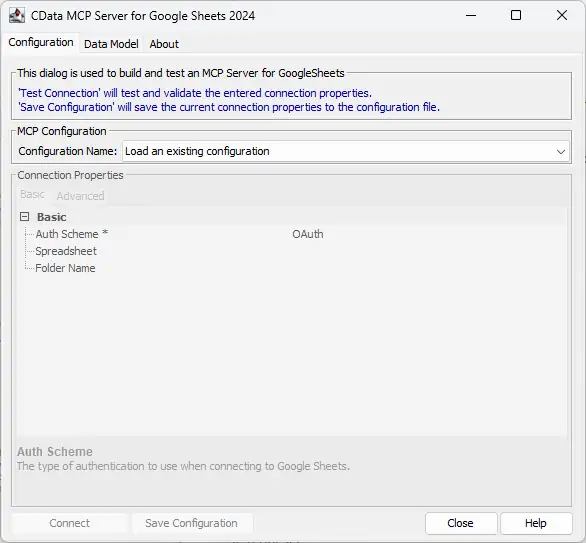
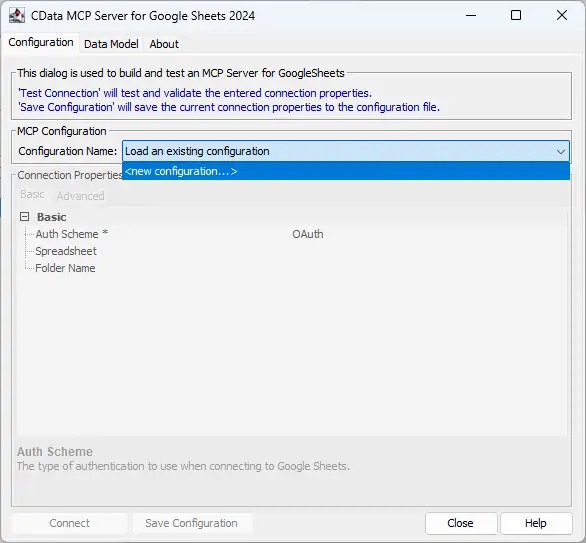
- Click the dropdown menu in MCP Configuration > Configuration Name and select "new configuration"
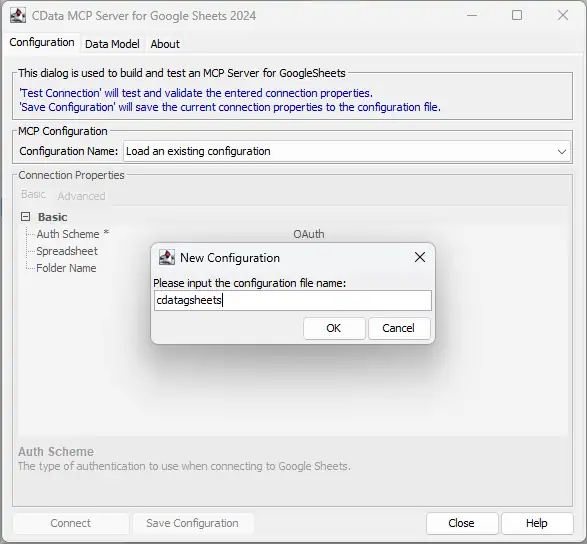
- Name the configuration (e.g. "cdata_ssas") and click "OK"
-
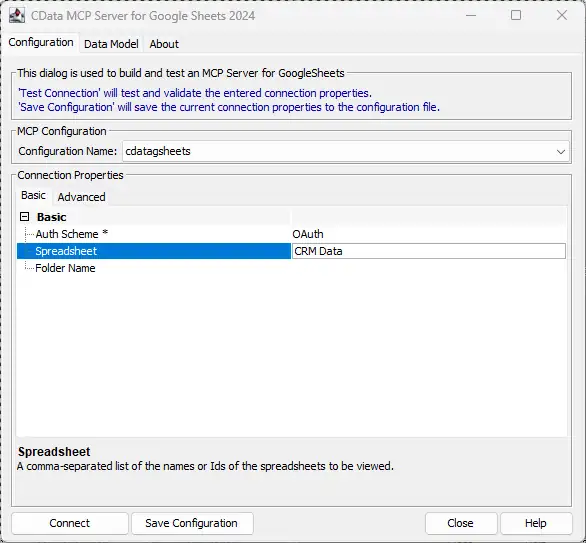
Enter the appropriate connection properties in the configuration wizard.
To connect, provide authentication and set the Url property to a valid SQL Server Analysis Services endpoint. You can connect to SQL Server Analysis Services instances hosted over HTTP with XMLA access. See the Microsoft documentation to configure HTTP access to SQL Server Analysis Services.
To secure connections and authenticate, set the corresponding connection properties, below. The data provider supports the major authentication schemes, including HTTP and Windows, as well as SSL/TLS.
-
HTTP Authentication
Set AuthScheme to "Basic" or "Digest" and set User and Password. Specify other authentication values in CustomHeaders.
-
Windows (NTLM)
Set the Windows User and Password and set AuthScheme to "NTLM".
-
Kerberos and Kerberos Delegation
To authenticate with Kerberos, set AuthScheme to NEGOTIATE. To use Kerberos delegation, set AuthScheme to KERBEROSDELEGATION. If needed, provide the User, Password, and KerberosSPN. By default, the data provider attempts to communicate with the SPN at the specified Url.
-
SSL/TLS:
By default, the data provider attempts to negotiate SSL/TLS by checking the server's certificate against the system's trusted certificate store. To specify another certificate, see the SSLServerCert property for the available formats.
You can then access any cube as a relational table: When you connect the data provider retrieves SSAS metadata and dynamically updates the table schemas. Instead of retrieving metadata every connection, you can set the CacheLocation property to automatically cache to a simple file-based store.
See the Getting Started section of the CData documentation, under Retrieving Analysis Services Data, to execute SQL-92 queries to the cubes.
-
HTTP Authentication
- Click "Connect" to authenticate with SQL Analysis Services.
- Click "Save Configuration" to save the MCP server
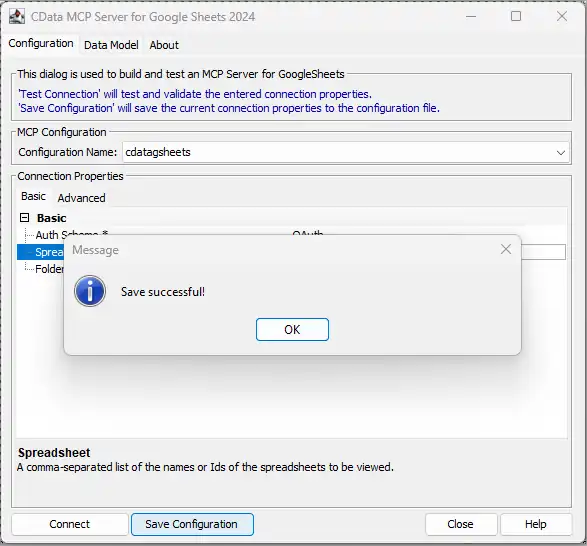
With your MCP Server configured, you are ready to connect it to Perplexity Desktop.
Step 3: Connect the MCP Server to Perplexity Desktop
- Download the Perplexity Desktop application for macOS and sign in with your Pro or Premium account
- Open Settings > Connectors.
If the Perplexity Helper App is not installed, you will be prompted to download it.
Install the Helper App, then restart Perplexity Desktop
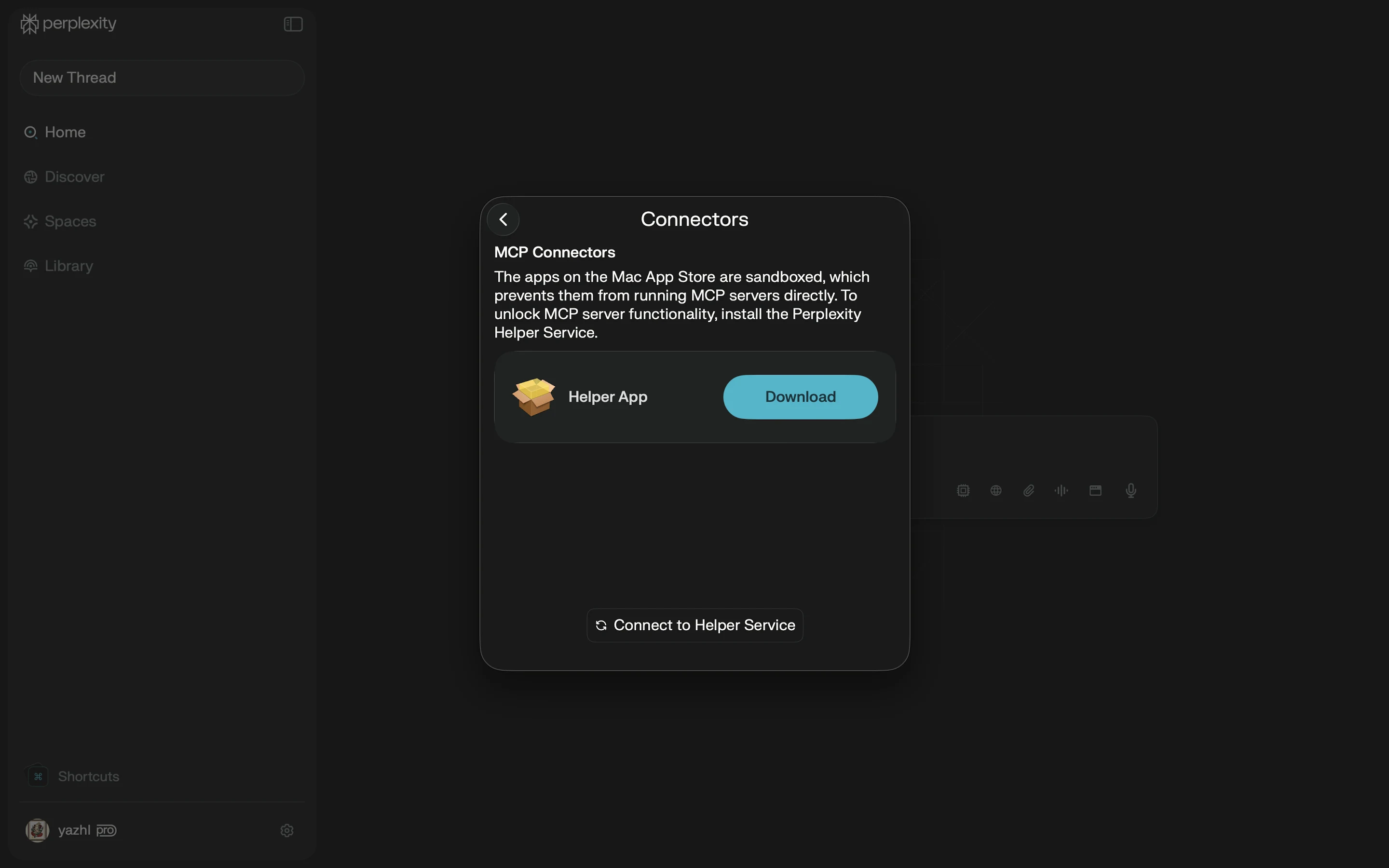
- After restarting, return to Settings > Connectors and click Add Connector
- Select the Simple tab and assign a name for the connector (e.g., "CData SQL Analysis Services MCP").
In the Command box, enter the absolute path to your MCP Server executable.
For example:
	/Applications/CData MCP Server for SQL Analysis Services.app/Contents/Payload/jre/Contents/Home/bin/java \
	-jar /Applications/CData MCP Server for SQL Analysis Services.app/Contents/Payload/lib/cdata.mcp.ssas.jar \
	cdata_ssas
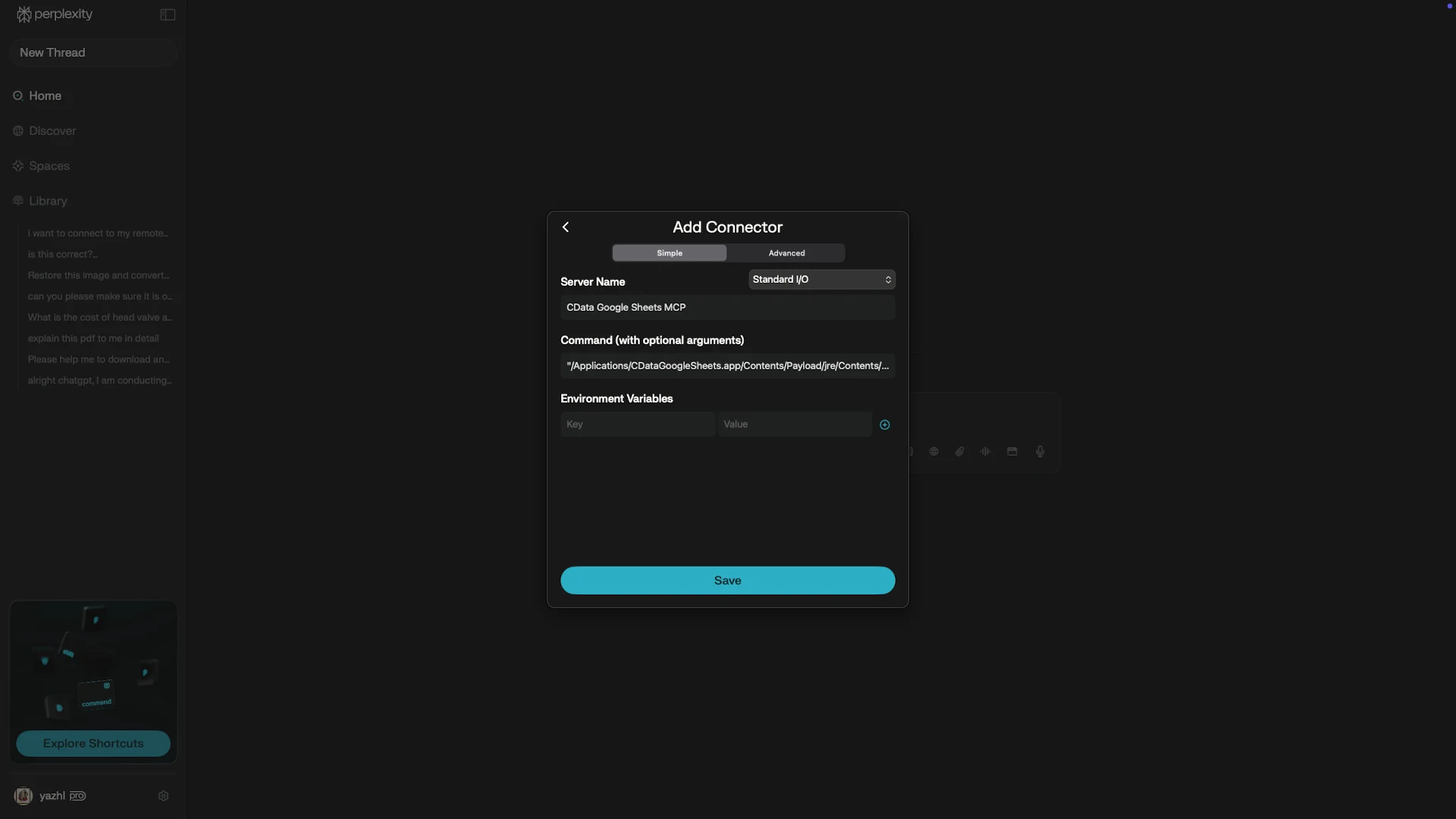
- Click Save.
Your MCP Server should now appear in the connector list with a "Running" status
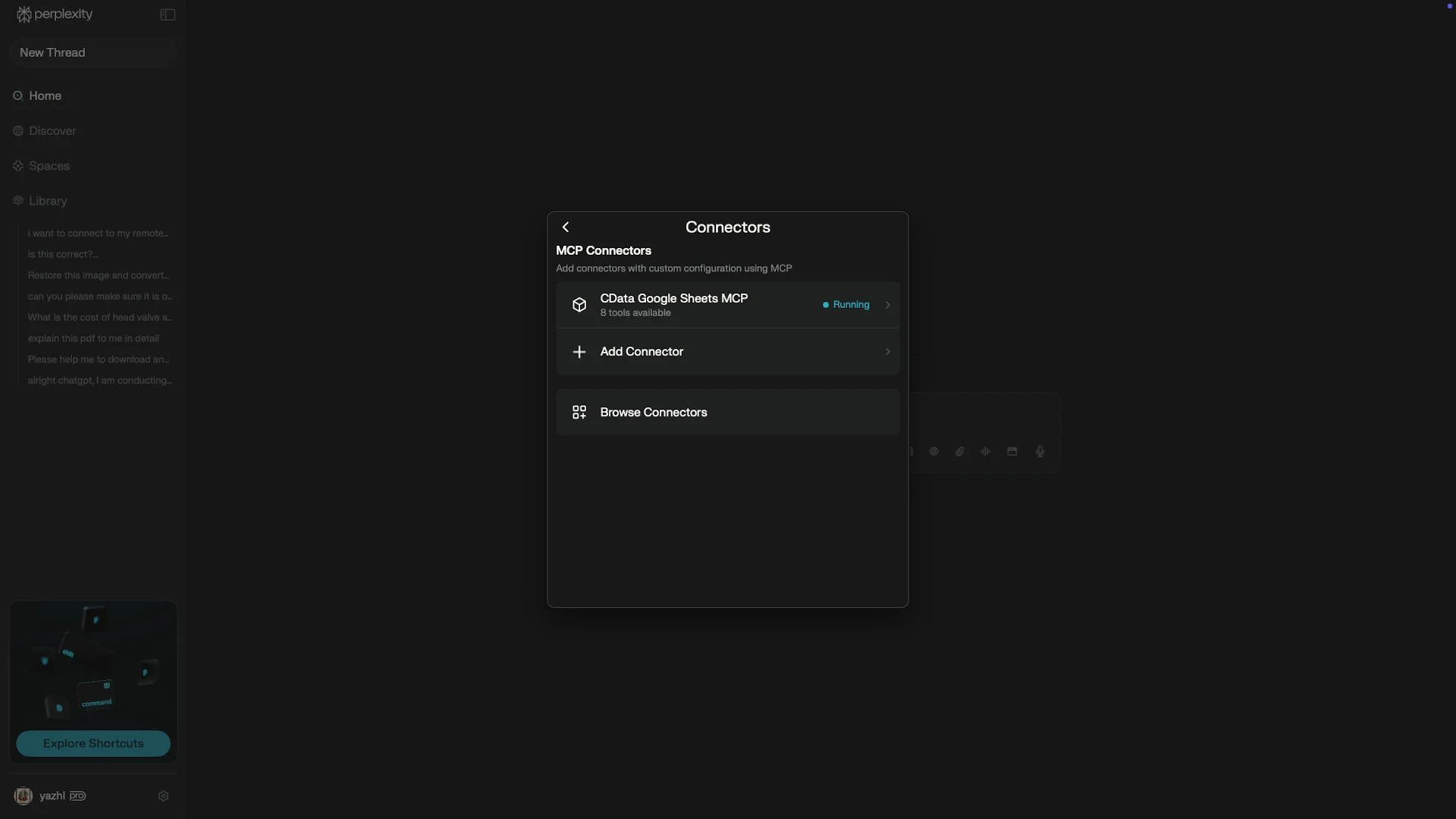
Step 4: Query Your Live SQL Analysis Services data in Perplexity Desktop
- Open a new chat in Perplexity Desktop.
Click the Sources toggle and enable your MCP Server
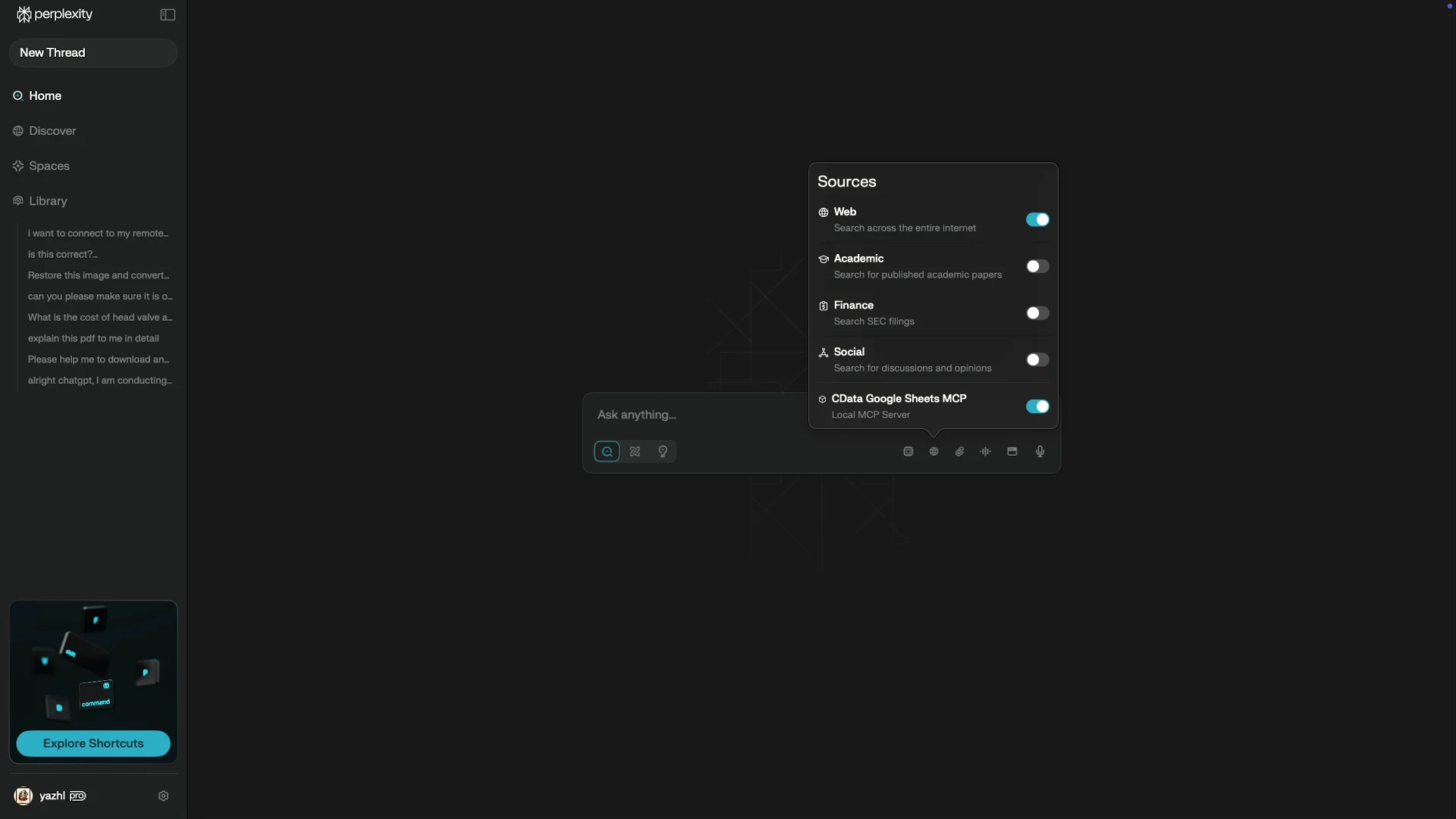
- Start asking questions about your SQL Analysis Services data.
For example:
"List all the tables available in my SQL Analysis Services data connection."
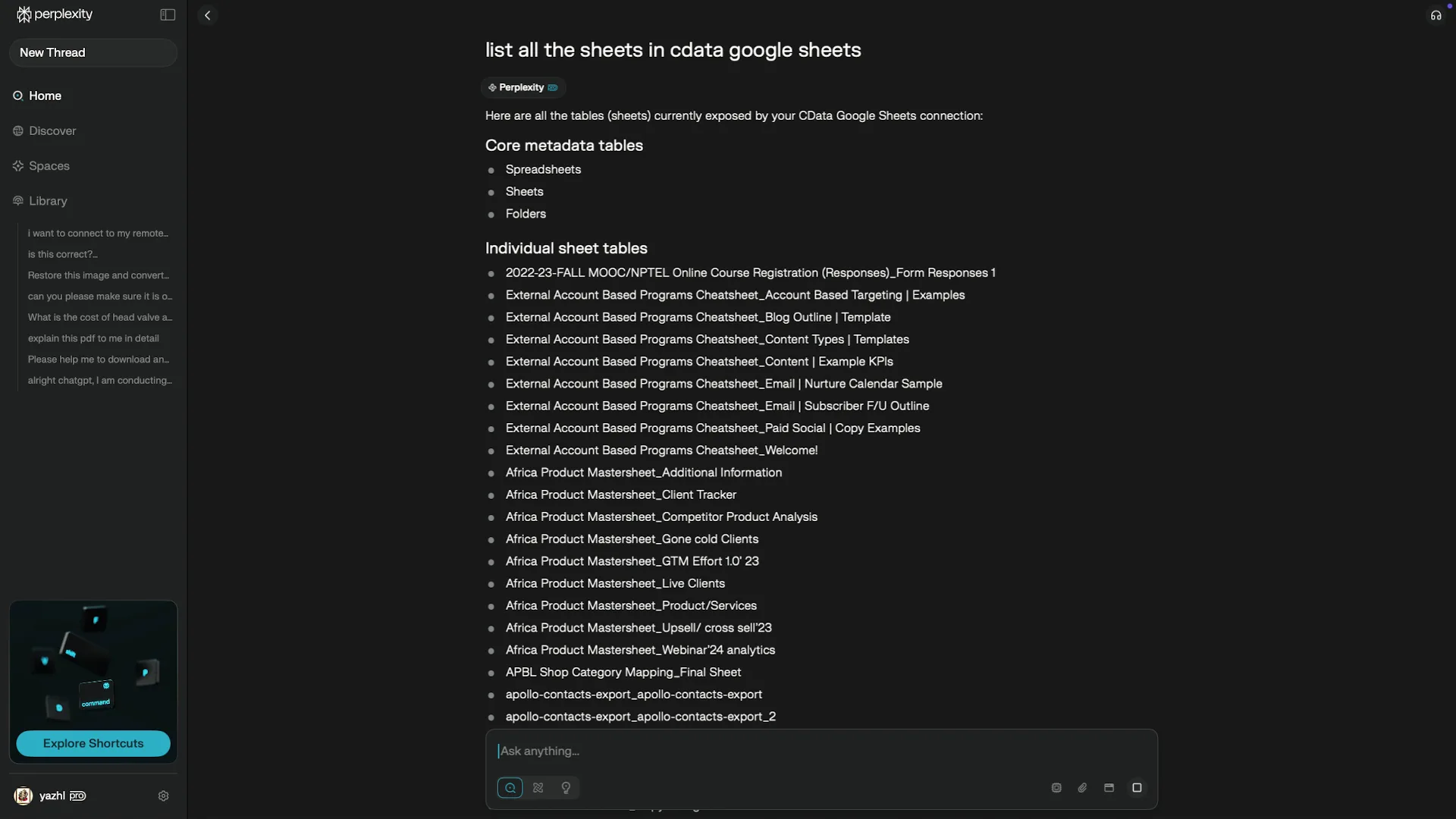
Connect your AI to your SQL Analysis Services data today!
CData MCP Servers make it simple to connect Perplexity and other LLM clients to real-time enterprise data. Download a free, 30-day trial and join the CData Community to share insights, ask questions, and help shape the future of enterprise-ready AI.
Ready to get started?
Download a free SQL Analysis Services MCP Server to get started:
Download NowLearn more:
 SQL Analysis Services MCP Server
The CData MCP Server for SQL Server Analysis Services allows you to connect with live SQL Server Analysis Services data, directly from LLMs that support MCP.
