




DB2 for i to Google AlloyDB Data Integration
The leading hybrid-cloud solution for Google AlloyDB integration. Automated continuous ETL/ELT data replication from DB2 for i to Google AlloyDB.
Whether you're managing operational reporting, connecting data for analytics, or ensuring disaster recovery, CData Sync's no-code approach to data integration simplifies the process of putting DB2 for i data to work.



DB2 for i:
IBM Db2 for i is the database management system built into the IBM i platform on IBM Power Systems (formerly known as AS/400 and iSeries). Tightly integrated with the operating system, it provides robust transaction processing, strong data integrity, and standards-based SQL access to business-critical data. It is widely used by enterprises running ERP and line-of-business applications on IBM i.

Google AlloyDB:
Google AlloyDB is a distributed relational database management system designed for high availability and scalability. It is built on top of Google Cloud Spanner and offers features such as ACID transactions, SQL support, and automatic sharding. AlloyDB is ideal for organizations that require a robust and reliable database solution for their applications.
Integrate DB2 for i and Google AlloyDB with CData Sync
CData Sync provides a straightforward way to continuously pipeline your DB2 for i data to any database, data lake, or data warehouse, making it easily available to analytics, reporting, AI, and machine learning.
- Synchronize data with a wide range of traditional and emerging databases including Google AlloyDB.
- Replicate DB2 for i data to database's and data warehouse systems to facilitate operational reporting, BI, and analytics.
- Offload queries from DB2 for i to reduce load and increase performance.
- Connect DB2 for i to business analytics for BI and decision support.
- Archive DB2 for i data for disaster recovery.
Integrate DB2 for i with Google AlloyDB
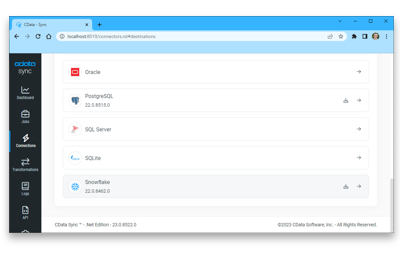
DB2 for i Data Integration Features
Ditch the code and complex setups to move more data in less time. Connect DB2 for i to any destination with drag-and-drop ease.
Incremental updates and automatic schema replication eliminate the headaches of DB2 for i data integration, ensuring Google AlloyDB always has the latest data.
Replicate all the data that matters with predictable, transparent pricing. Unlimited replication between DB2 for i and Google AlloyDB.
Other DB2 for i Data Integration Tools
Easily create data pipelines that integrate and replicate data from DB2 for i to any supported data store, including:


