





DB2 for i to Azure Data Lake Data Integration
The leading hybrid-cloud solution for Azure Data Lake integration. Automated continuous ETL/ELT data replication from DB2 for i to Azure Data Lake.
Whether you're managing operational reporting, connecting data for analytics, or ensuring disaster recovery, CData Sync's no-code approach to data integration simplifies the process of putting DB2 for i data to work.



DB2 for i:
IBM Db2 for i is the database management system built into the IBM i platform on IBM Power Systems (formerly known as AS/400 and iSeries). Tightly integrated with the operating system, it provides robust transaction processing, strong data integrity, and standards-based SQL access to business-critical data. It is widely used by enterprises running ERP and line-of-business applications on IBM i.

Azure Data Lake:
Azure Data Lake is a cloud-based storage and analytics service that allows organizations to store and analyze massive amounts of data in a secure and scalable environment. It provides a centralized repository for structured and unstructured data, enabling users to easily process, analyze, and gain insights from their data.
Integrate DB2 for i and Azure Data Lake with CData Sync
CData Sync provides a straightforward way to continuously pipeline your DB2 for i data to any database, data lake, or data warehouse, making it easily available to analytics, reporting, AI, and machine learning.
- Synchronize data with a wide range of traditional and emerging databases including Azure Data Lake.
- Replicate DB2 for i data to database's and data warehouse systems to facilitate operational reporting, BI, and analytics.
- Offload queries from DB2 for i to reduce load and increase performance.
- Connect DB2 for i to business analytics for BI and decision support.
- Archive DB2 for i data for disaster recovery.
Integrate DB2 for i with Azure Data Lake
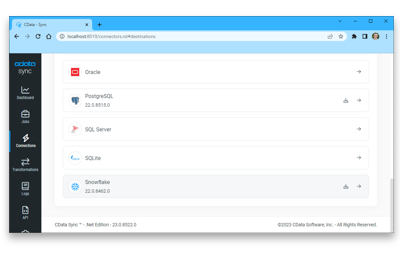
DB2 for i Data Integration Features
Ditch the code and complex setups to move more data in less time. Connect DB2 for i to any destination with drag-and-drop ease.
Incremental updates and automatic schema replication eliminate the headaches of DB2 for i data integration, ensuring Azure Data Lake always has the latest data.
Replicate all the data that matters with predictable, transparent pricing. Unlimited replication between DB2 for i and Azure Data Lake.
Other DB2 for i Data Integration Tools
Easily create data pipelines that integrate and replicate data from DB2 for i to any supported data store, including:


