




Control over every action
CData gives IT and security teams policy enforcement and real-time observability over every AI-to-data interaction.










Fit Check
Will this actually work in my environment?
Access control, audit, and observability that plug into the identity providers and security tooling your teams already run.
RBAC • ABAC • Time-windowed access • Custom business rules • Agent service accounts
Okta • Azure AD • Ping Identity • SCIM 2.0
Query-level logs • SIEM-ready export • Real-time dashboard
Cloud • Hybrid
The Problem
Most enterprise AI deployments create governance gaps fast.
Shared service accounts let AI access whatever the account can see—not what the requesting user should see.
Logs may show something ran—not what was queried, what was returned, or who was behind it.
Without granular controls, incident response becomes an all-or-nothing shutdown.
How It Works
One control plane for governed AI access.
Every interaction is controlled, logged, and observable — without separate governance workflows or delayed enforcement.
A user or AI agent sends a request through CData.
CData evaluates the request against access policies and user identity before it reaches the source.
Identity is resolved at the identity & access layer. CData then evaluates the request against governance policies before execution.
The interaction executes under governance, and query-level audit details are captured.
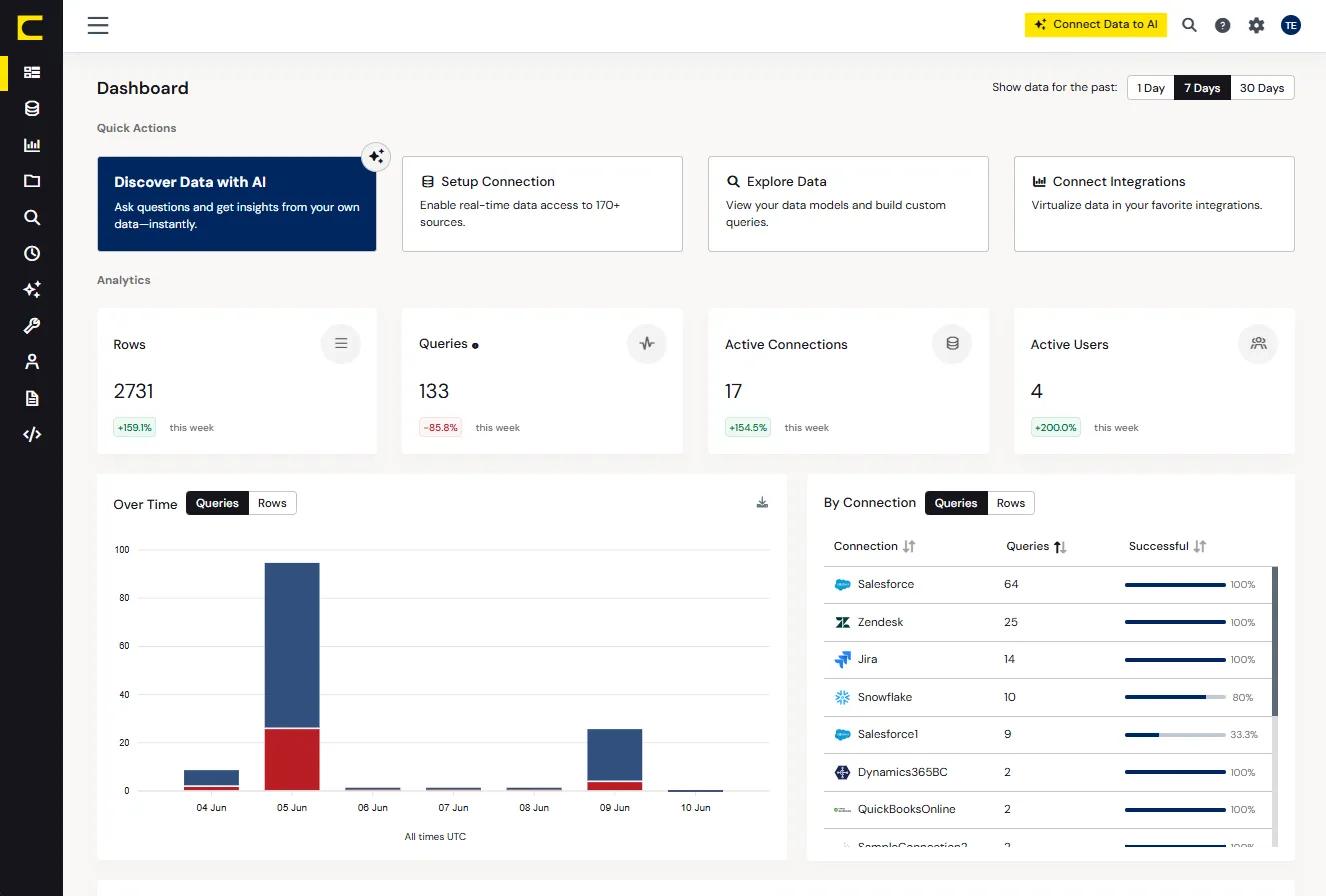
Real-time observability reflects the interaction immediately, including query activity, system health, and available control actions.
Control, audit, and observe — every AI interaction, in one place.
Key Capabilities
Control, visibility, and response, built in.
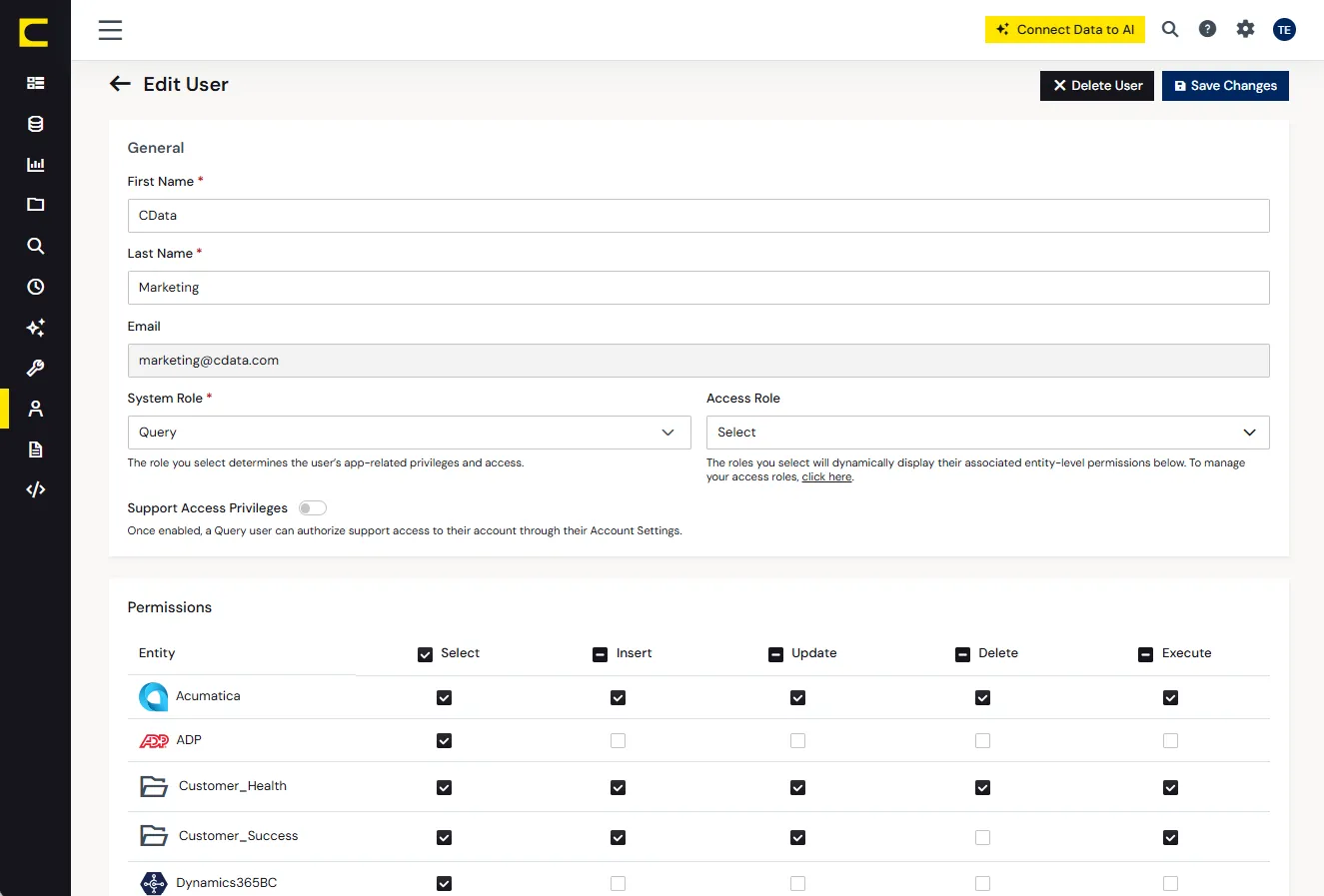
Access boundaries
AI stays inside approved access boundaries
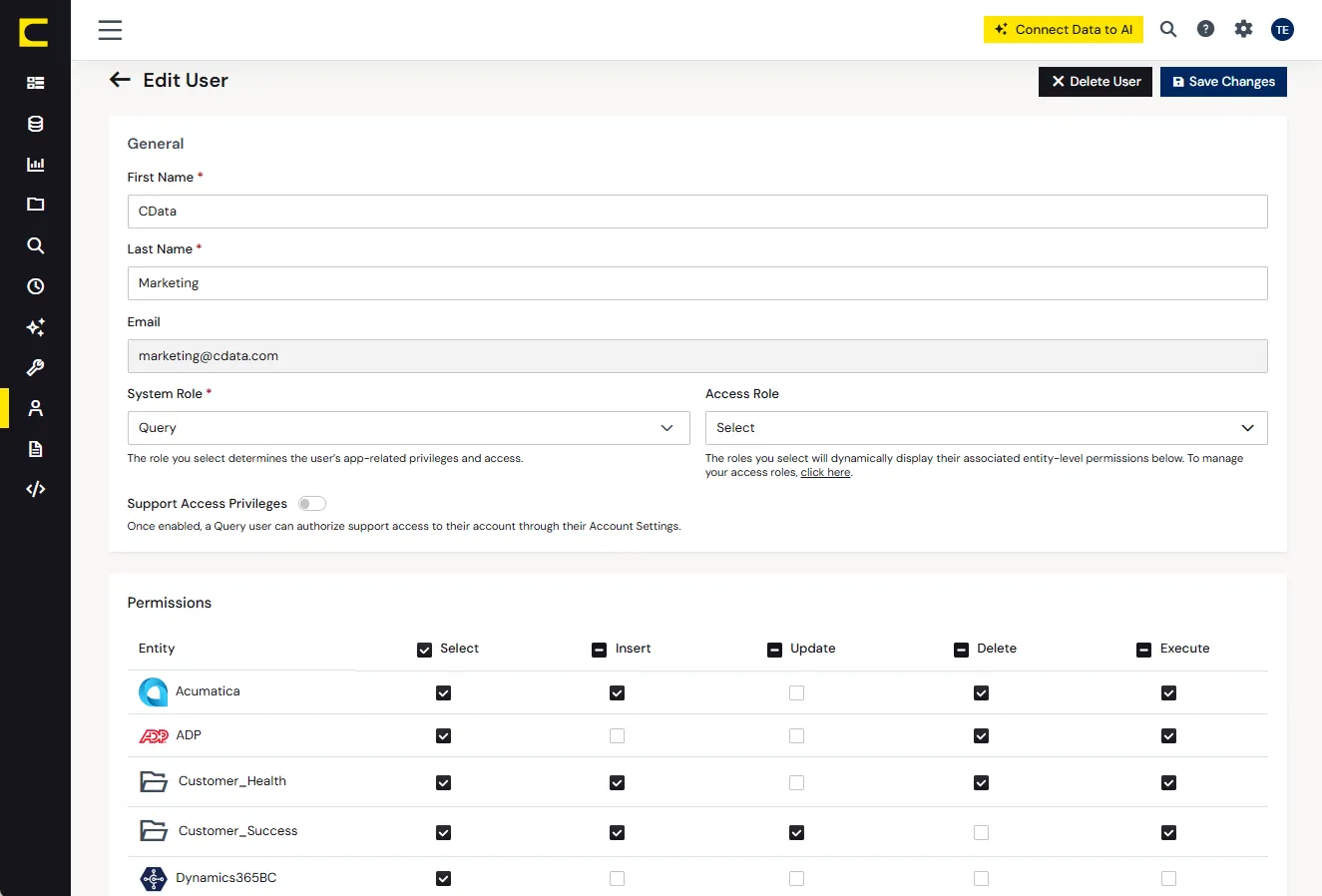
Apply RBAC, ABAC, time-based controls, and business rules so AI requests stay within defined policy.
Real-time monitoring
Monitor production AI in real time
See and take action on query volume, success rate, connection health, and anomalous behavior from one dashboard.
Audit trail
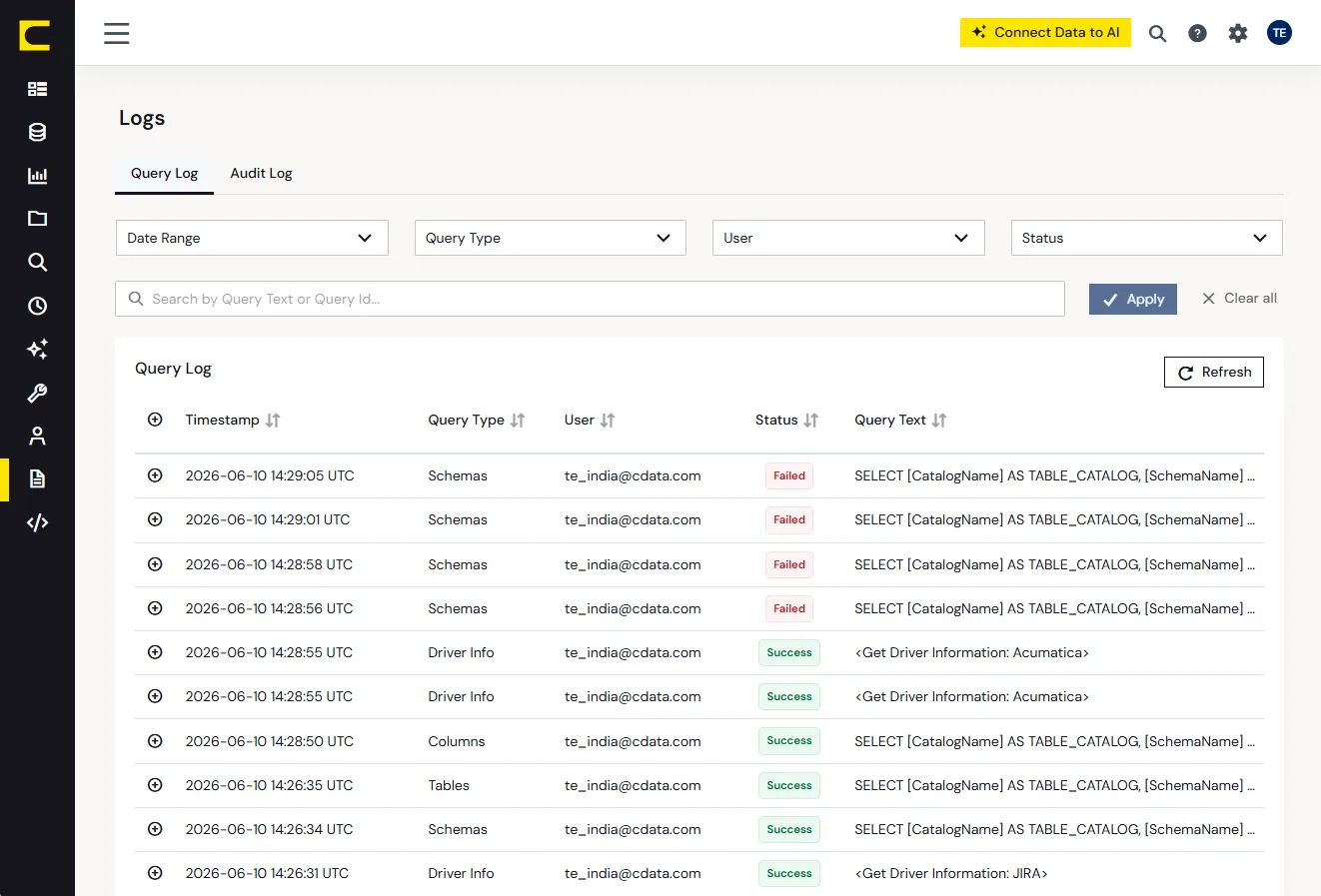
Every AI interaction is auditable
Query-level logs capture who initiated the request, what ran, which agent was involved, and what data was returned.
Instant kill switch
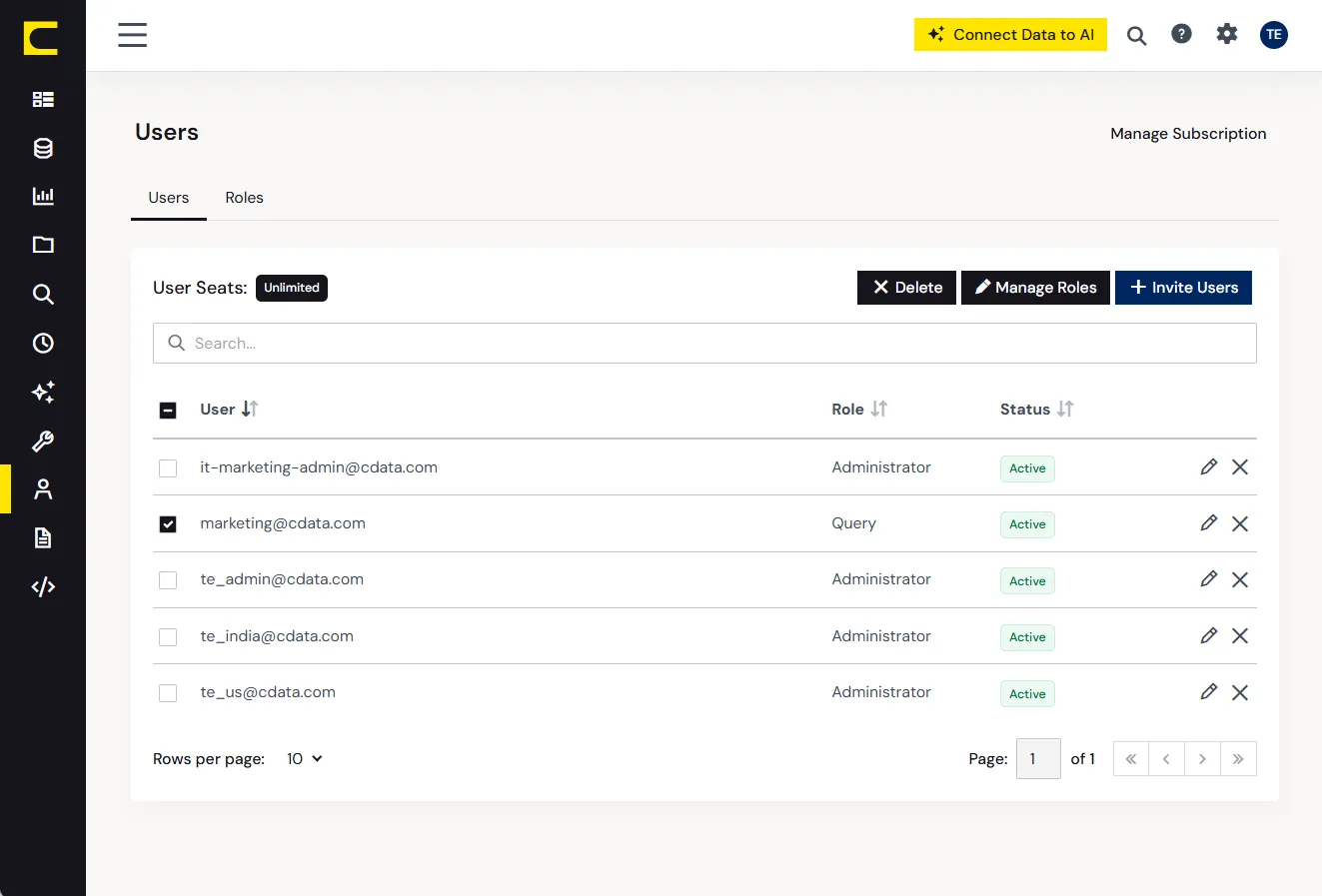
You can shut down access instantly
Revoke one user, disable one connection, suspend one workspace, or lock down the full account in seconds.
Layered controls
Layer access controls on top of the source system
RBAC and ABAC rules enforced on top of source system permissions — IT can restrict AI access further without needing to touch the source system.
Everywhere
The same governance model works everywhere
Apply the same controls and visibility across cloud, on-prem, and hybrid systems without governance gaps.
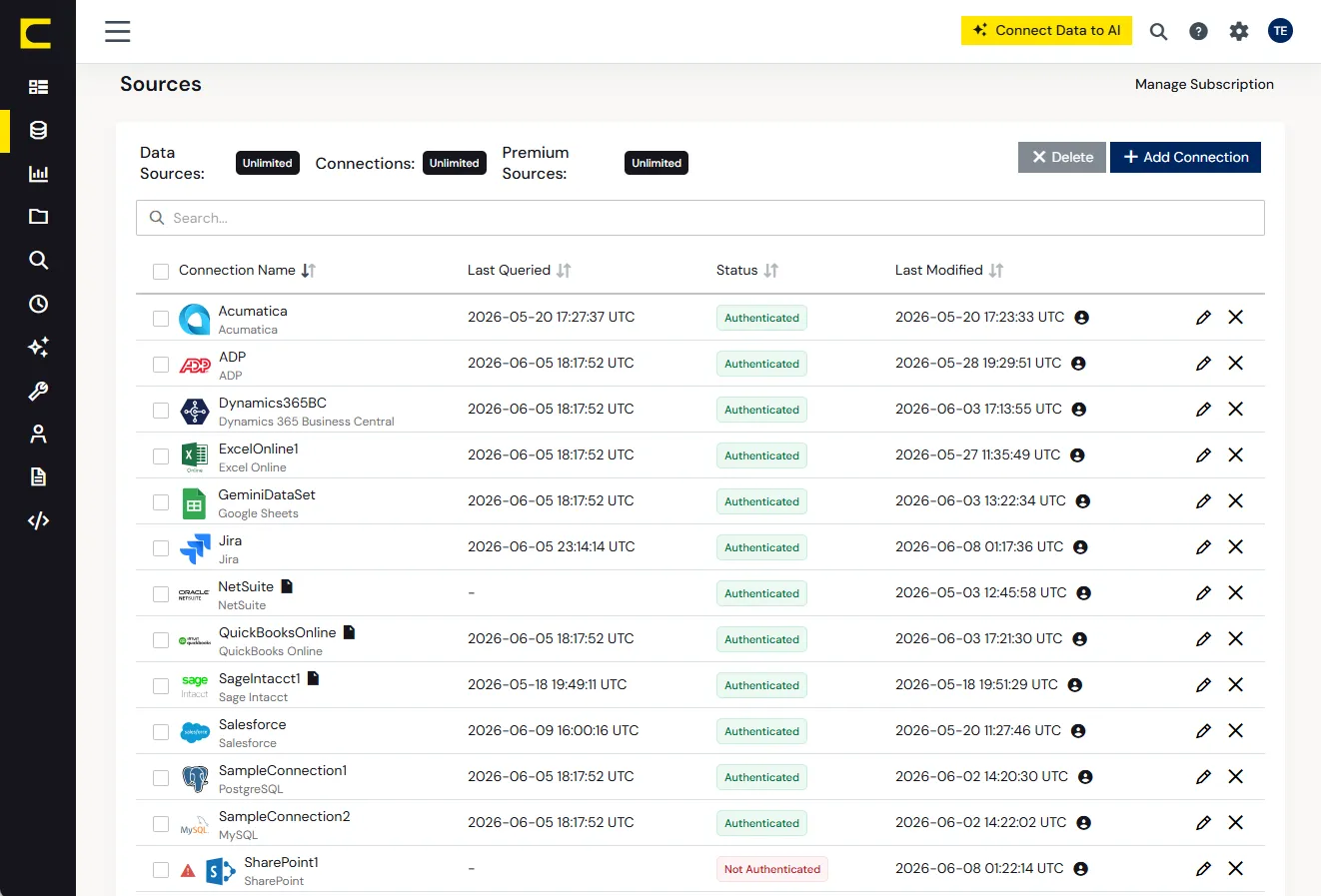
Governance and observability in action
Director of IT, HighRes BioSolutions
Implementation Path
Implement your policies and track adherence
Govern & log
Connect the first data source and activate passthrough identity and baseline audit logging.
Milestone: AI queries are governed by source-system permissions, with first audit activity visible immediately.
Policy & SIEM
Add policy controls and connect audit logs into your security workflow.
Milestone: Fine-grained access controls are active, and audit logs are flowing into existing security operations processes.
Observe & test
Configure observability thresholds, policy alerts, and incident-response testing. (Identity lifecycle is configured on Day 3 of the Identity & Access rollout path.)
Milestone: Identity updates are automated, observability is live, and incident-response controls are tested and operational.
Security & compliance
Governed from the first query to the final action.
- No data movement — data queried in place; no intermediate copies created.
- Zero-trust compatible — passthrough identity enforces least privilege by default; no standing access for AI agents.
- SIEM-ready audit logs — export to Splunk, Datadog, or your security platform of choice.
- GDPR support — data minimization, in-place access, comprehensive audit capabilities.
- PII detection and control — configurable warn, redact, or block policies enforced at the MCP/API tool-call boundary—inbound and outbound
- Enterprise key vaults — credentials stay in your own infrastructure under your own access controls and rotation schedules
- Centralized audit logging — immutable, per-account audit storage with a full-text searchable API and no record cap
- SOC 2 Type II — Completed.
- ISO/IEC 27001:2022 — Completed.
- Third-party pen testing — conducted regularly; independent findings available under NDA.
- AES-256 at rest — exceeds Federal compliance minimums.
- TLS 1.3 in transit — all data in transit protected.
FAQ
Questions teams ask first.
- How is query-level logging different from what our workflow automation tool already logs?
- Can we export audit logs to our SIEM?
- How quickly do access control changes take effect?
- Does governance apply the same way across cloud and on-prem sources?
- What's the difference between workspace-level and account-level controls?
Get AI under control before it becomes a governance problem.
Talk to our team about access controls, audit requirements, and observability for your environment. Or explore how Governance & Observability fits into the broader CData platform.