


Build Data Flows from Abyssale to SQL Server using SSIS

Using SQL Server as a backup for critical business data provides an essential safety net against loss. Backing up data to SQL Server enables business users to more easily connect that data with features like reporting, analytics, and more.
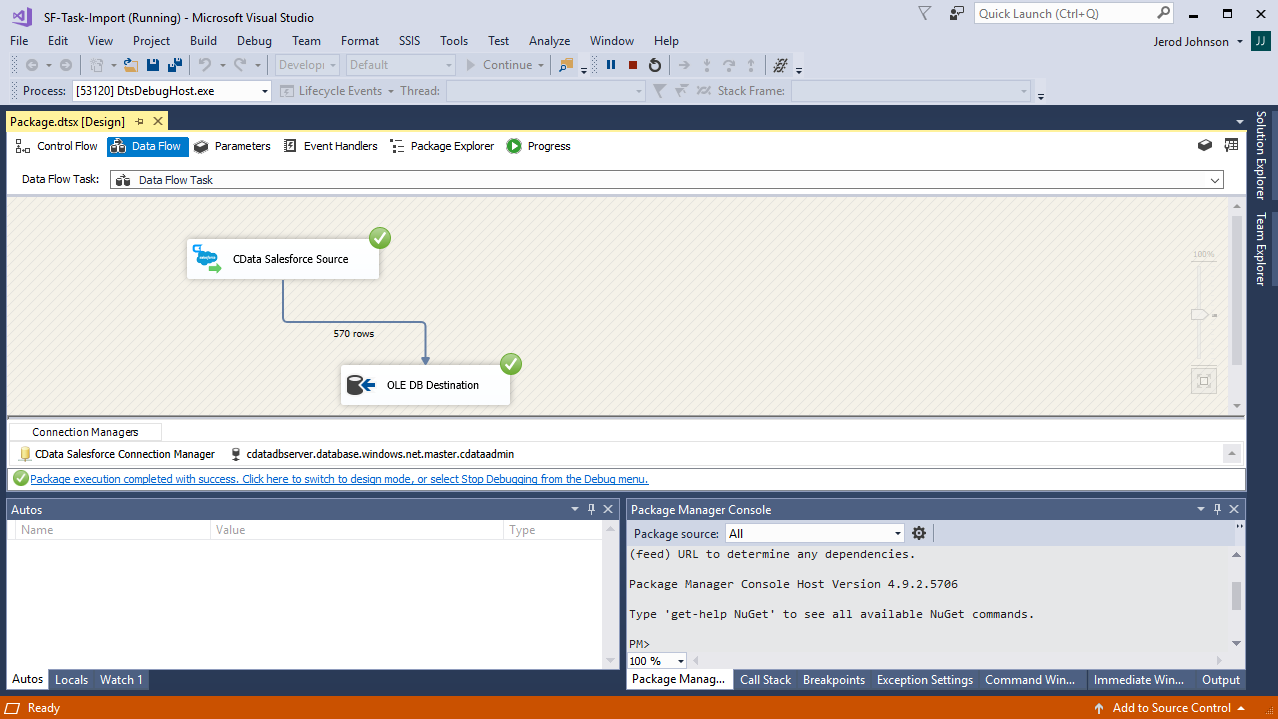
This example demonstrates how to use the CData SSIS Tasks for Abyssale inside of a SQL Server SSIS workflow to transfer Abyssale data into a Microsoft SQL Server database.
Add the Components
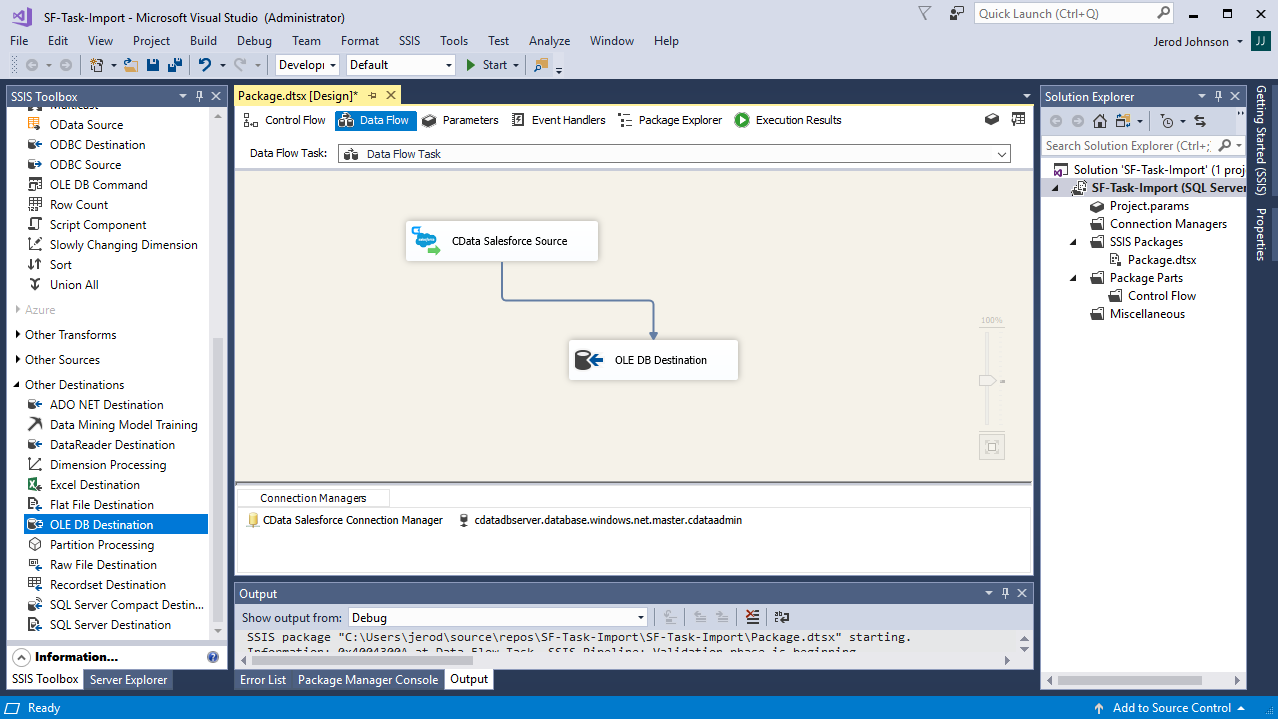
To get started, add a new Abyssale source and SQL Server ADO.NET destination to a new data flow task.
Create a New Connection Manager
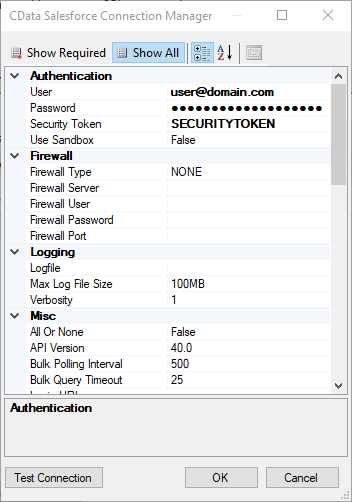
Follow the steps below to save Abyssale connection properties in a connection manager.
- In the Connection Manager window, right-click and then click New Connection. The Add SSIS Connection Manager dialog is displayed.
- In the Connection Manager type menu, select API. The CData Abyssale Connection Manager is displayed.
- Configure connection properties.
Start by setting the Profile connection property to the location of the Abyssale Profile on disk (e.g. C:\profiles\Abyssale.apip). Next, set the ProfileSettings connection property to the connection string for Abyssale (see below).
Abyssale API Profile Settings
Abyssale uses API Key authentication. Your Abyssale API Key is sent as the x-api-key request header. You can generate or view your API Key in the Abyssale dashboard under Settings > API.
After setting the following connection properties, you are ready to connect:
- AuthScheme: Set this to APIKey.
- APIKey: Set this to your Abyssale API Key.
Configure the Abyssale Source
Follow the steps below to specify the query to be used to extract Abyssale data.
- Double-click the Abyssale source to open the source component editor.
- In the Connection Manager menu, select the connection manager previously created.
- Specify the query to use for the data extraction. For example:
SELECT Id, Name FROM Designs WHERE Type = 'static'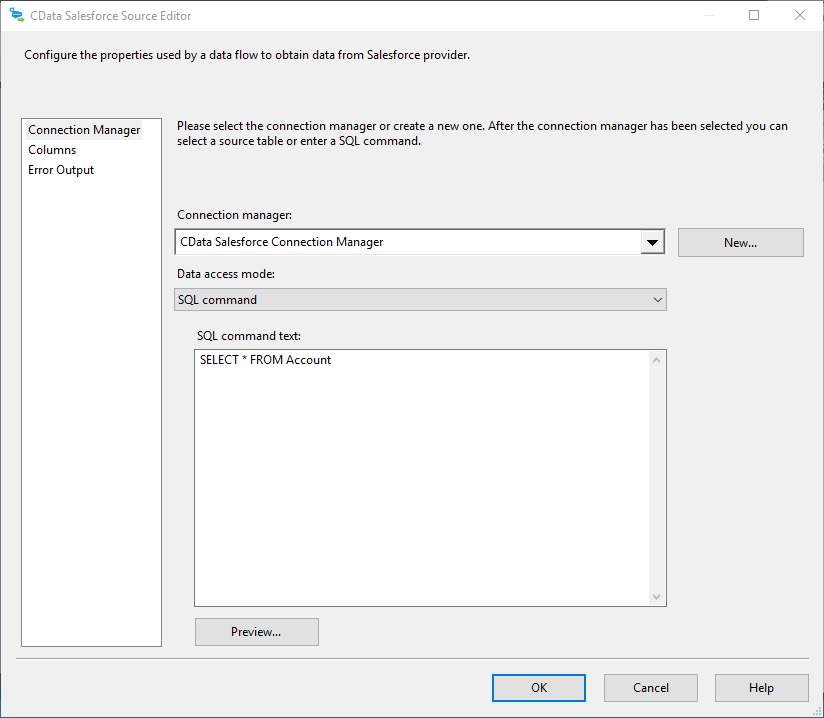
- Close the Abyssale Source control and connect it to the ADO.NET Destination.
Configure the SQL Server Destination
Follow the steps below to specify the SQL server table to load the Abyssale data into.
- Open the ADO.NET Destination and add a New Connection. Enter your server and database information here.
- In the Data access mode menu, select "table or view".
- In the Table Or View menu, select the table or view to populate.
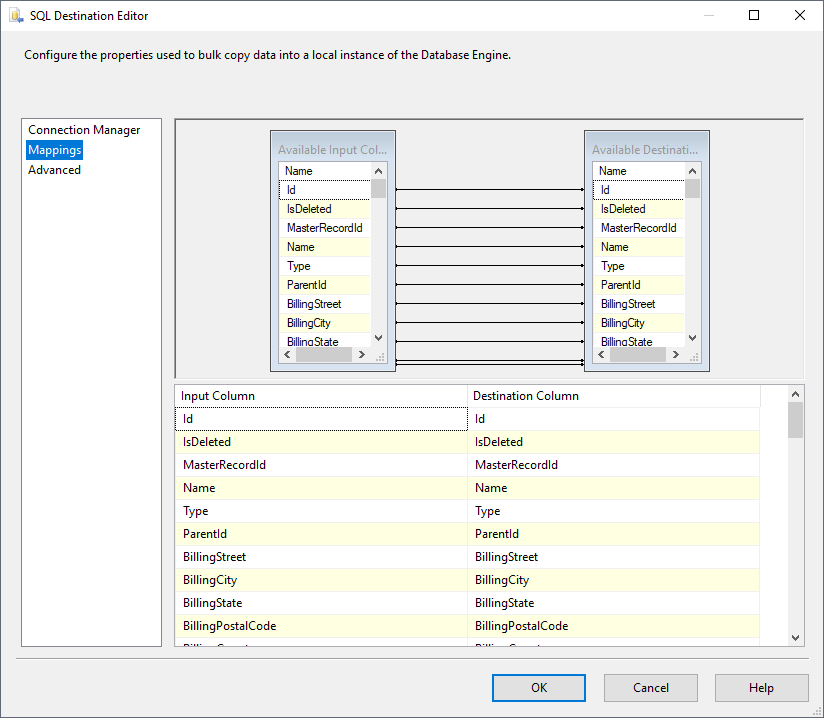
- Configure any properties you wish to on the Mappings screen.
Run the Project
You can now run the project. After the SSIS Task has finished executing, your database will be populated with Abyssale data.