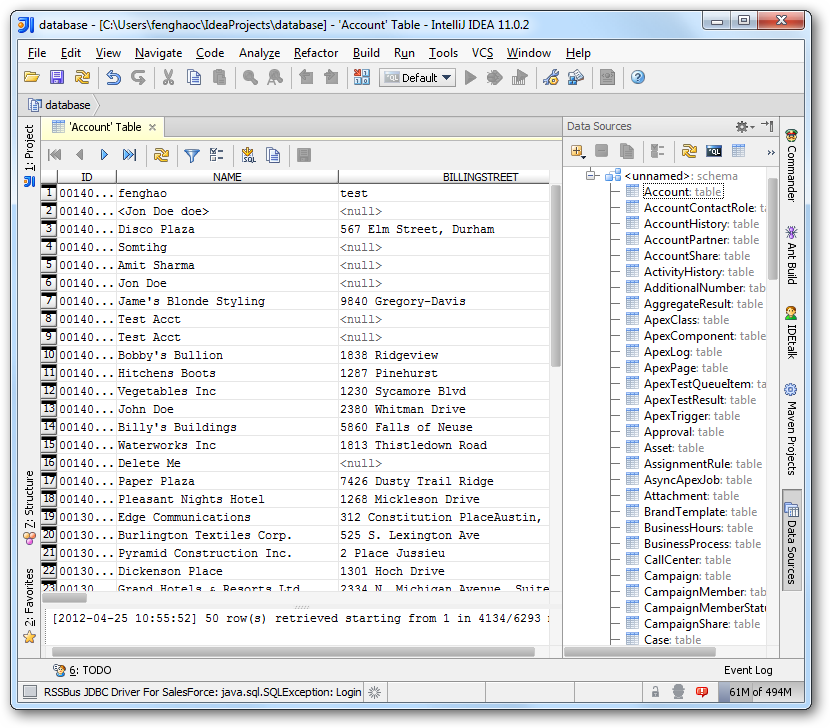
How to connect to AgileCRM Data from IntelliJ

The CData JDBC Driver for AgileCRM enables you to access AgileCRM as a JDBC data source, providing integration with rapid development tools in IDEs. This article shows how to use the data source configuration wizard to connect to AgileCRM data in IntelliJ.
Create a JBDC Data Source for AgileCRM
Follow the steps below to add the driver JAR and define connection properties required to connect to AgileCRM data.
- In the Data Sources window, right-click and then click Add Data Source -> DB Data Source.
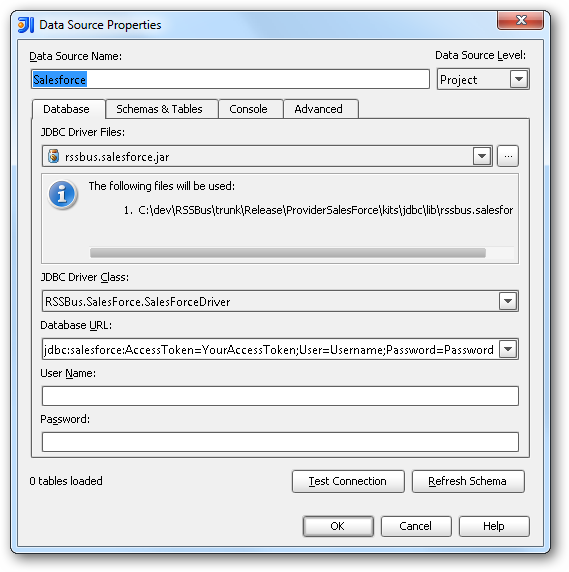
In the Data Source Properties dialog that appears, the following properties are required:
- JDBC Driver Files: Click the button next to this menu to add the JDBC Driver file cdata.jdbc.api.jar, located in the installation directory.
- JDBC Driver Class: In this menu, select cdata.jdbc.api.APIDriver from the list.
Database URL: Enter the connection URL in the JDBC URL property. The URL must start with jdbc:api: and includes connection properties separated with semicolons.
Start by setting the Profile connection property to the location of the AgileCRM Profile on disk (e.g. C:\profiles\Agilecrm.apip). Next, set the ProfileSettings connection property to the connection string for AgileCRM (see below).
AgileCRM API Profile Settings
Log in to AgileCRM and go to Admin Settings > Developers & API > REST API to find your API key. Your domain is the subdomain from your AgileCRM account URL.
Built-in Connection String Designer
For assistance in constructing the JDBC URL, use the connection string designer built into the AgileCRM JDBC Driver. Either double-click the JAR file or execute the jar file from the command-line.
java -jar cdata.jdbc.api.jar
Fill in the connection properties and copy the connection string to the clipboard.

A typical JDBC URL is the following:
jdbc:api:Profile=C:\profiles\Agilecrm.apip;ProfileSettings='APIKey=your_api_key;Domain=your_domain;User=your_email';
Edit and Save AgileCRM Data
To discover schema information, right-click the data source you just created and click Refresh Tables. To query a table, right-click it and then click Open Tables Editor.