




Connect to AlloyDB Data in ACL Analytics

ACL Analytics, part of Diligent HighBond, is a powerful data analysis software primarily used for audit, risk management, and compliance. It enables professionals to examine and analyze large volumes of data to identify anomalies, trends, and potential risks or fraudulent activities.
CData Connect AI offers a dedicated cloud-to-cloud interface for AlloyDB, enabling analytics directly from live AlloyDB data within ACL Analytics, all without the need for data replication to a native database. With its inherent optimized data processing capabilities, CData Connect AI efficiently channels all supported SQL operations, including filters and JOINs, directly to AlloyDB. This leverages server-side processing to swiftly deliver the requested AlloyDB data.
Configure AlloyDB Connectivity for ACL Analytics
Connectivity to AlloyDB from ACL Analytics is made possible through CData Connect AI. To work with AlloyDB data from ACL Analytics, we start by creating and configuring a AlloyDB connection in CData Connect AI.
- Log into Connect AI, click Sources, and then click Add Connection
- Select "AlloyDB" from the Add Connection panel
- Enter the necessary authentication properties to connect to AlloyDB.
Enter the necessary authentication properties to connect to AlloyDB.
The following connection properties are usually required in order to connect to AlloyDB.
- Server: The host name or IP of the server hosting the AlloyDB database.
- User: The user which will be used to authenticate with the AlloyDB server.
- Password: The password which will be used to authenticate with the AlloyDB server.
You can also optionally set the following:
- Database: The database to connect to when connecting to the AlloyDB Server. If this is not set, the user's default database will be used.
- Port: The port of the server hosting the AlloyDB database. This property is set to 5432 by default.
Authenticating with Standard Authentication
Standard authentication (using the user/password combination supplied earlier) is the default form of authentication.
No further action is required to leverage Standard Authentication to connect.
Authenticating with pg_hba.conf Auth Schemes
There are additional methods of authentication available which must be enabled in the pg_hba.conf file on the AlloyDB server.
Find instructions about authentication setup on the AlloyDB Server here.
Authenticating with MD5 Authentication
This authentication method must be enabled by setting the auth-method in the pg_hba.conf file to md5.
Authenticating with SASL Authentication
This authentication method must be enabled by setting the auth-method in the pg_hba.conf file to scram-sha-256.
Authenticating with Kerberos
The authentication with Kerberos is initiated by AlloyDB Server when the ∏ is trying to connect to it. You should set up Kerberos on the AlloyDB Server to activate this authentication method. Once you have Kerberos authentication set up on the AlloyDB Server, see the Kerberos section of the help documentation for details on how to authenticate with Kerberos.

- Click Save & Test
-
Navigate to the Permissions tab in the Add AlloyDB Connection page and update the User-based permissions.



Add a Personal Access Token
When connecting to Connect AI through the REST API, the OData API, or the Virtual SQL Server, a Personal Access Token (PAT) is used to authenticate the connection to Connect AI. It is best practice to create a separate PAT for each service to maintain granularity of access.
- Click on the Gear icon () at the top right of the Connect AI app to open the settings page.
- On the Settings page, go to the Access Tokens section and click Create PAT.
-
Give the PAT a name and click Create.

- The personal access token is only visible at creation, so be sure to copy it and store it securely for future use.
With the connection configured and a PAT generated, you are ready to connect to AlloyDB data from ACL Analytics.
Connect to AlloyDB from ACL Analytics
The steps below outline connecting to CData Connect AI from ACL Analytics to create a new AlloyDB data source. The CData Connect AI Virtual SQL Server allows you to establish a connection to your data from integration tools that support connections to SQL servers. The Virtual SQL Server mimics the behavior of a traditional SQL server, and it supports a range of query options.
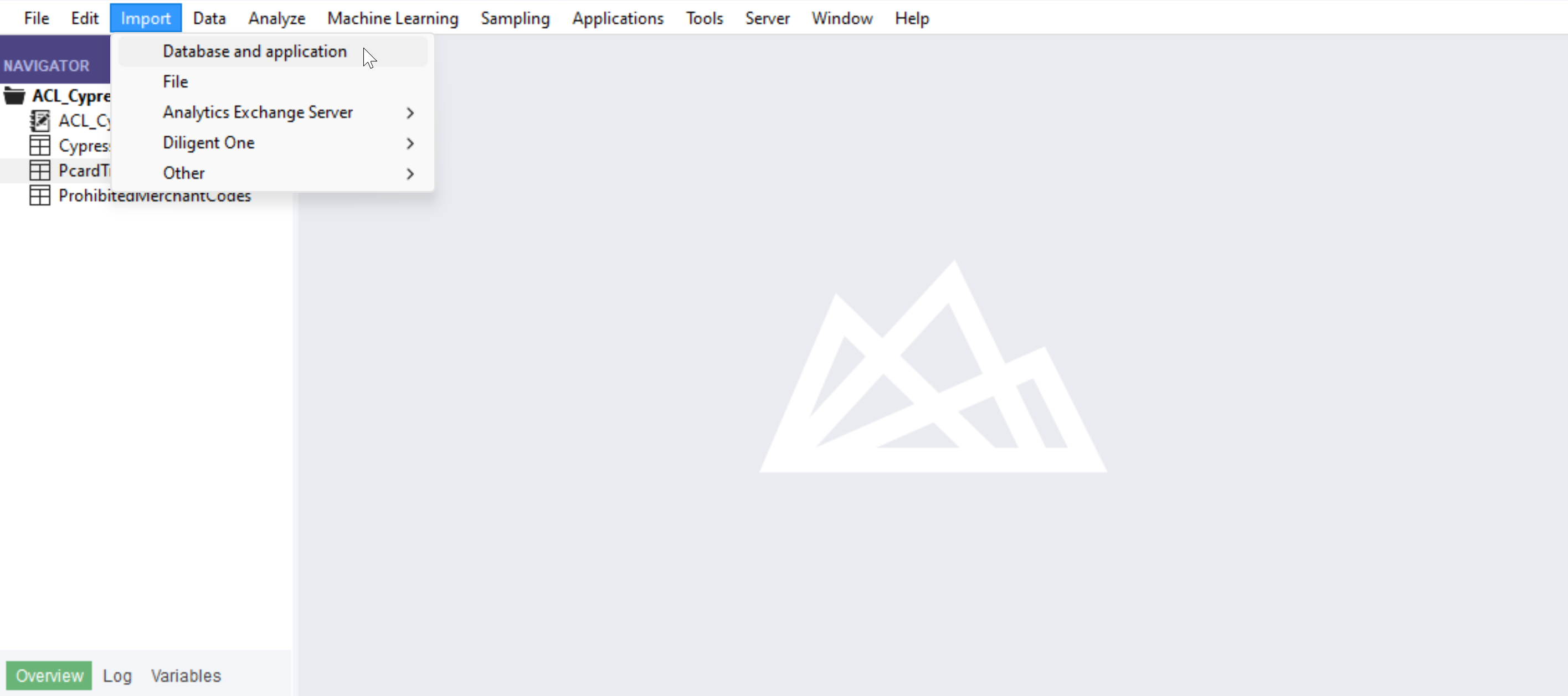
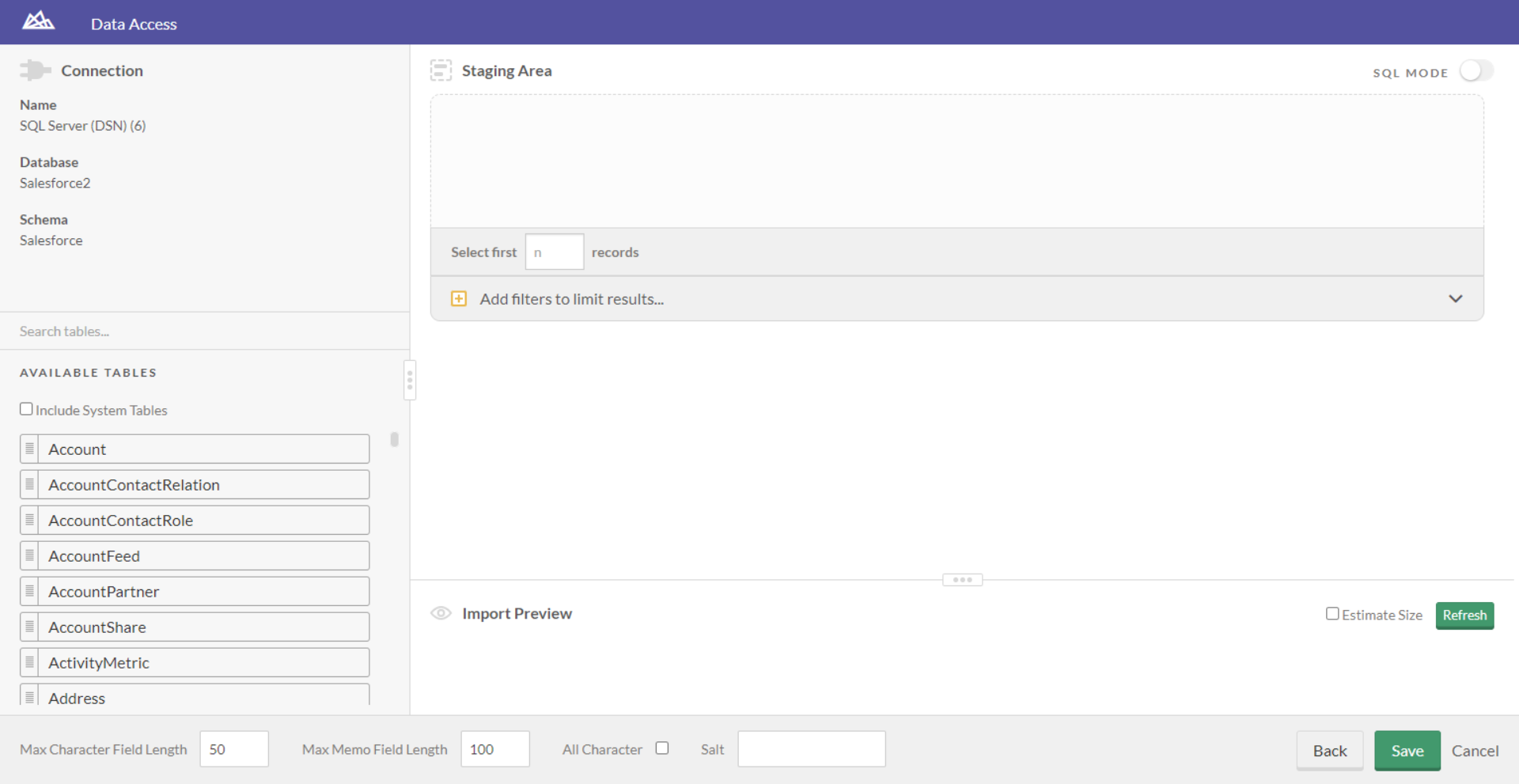
- With your Analytics File open, select 'Import' --> 'Database and application'
- Create a new SQL Server connection
- Set the connection information
- Server: tds.cdata.com
- Port: 14333
- Auth Scheme: Password
- Username: a Connect AI user, for example, [email protected]
- Password: the PAT for the above Connect AI user
- Database: the name of your AlloyDB connection, for example, AlloyDB1
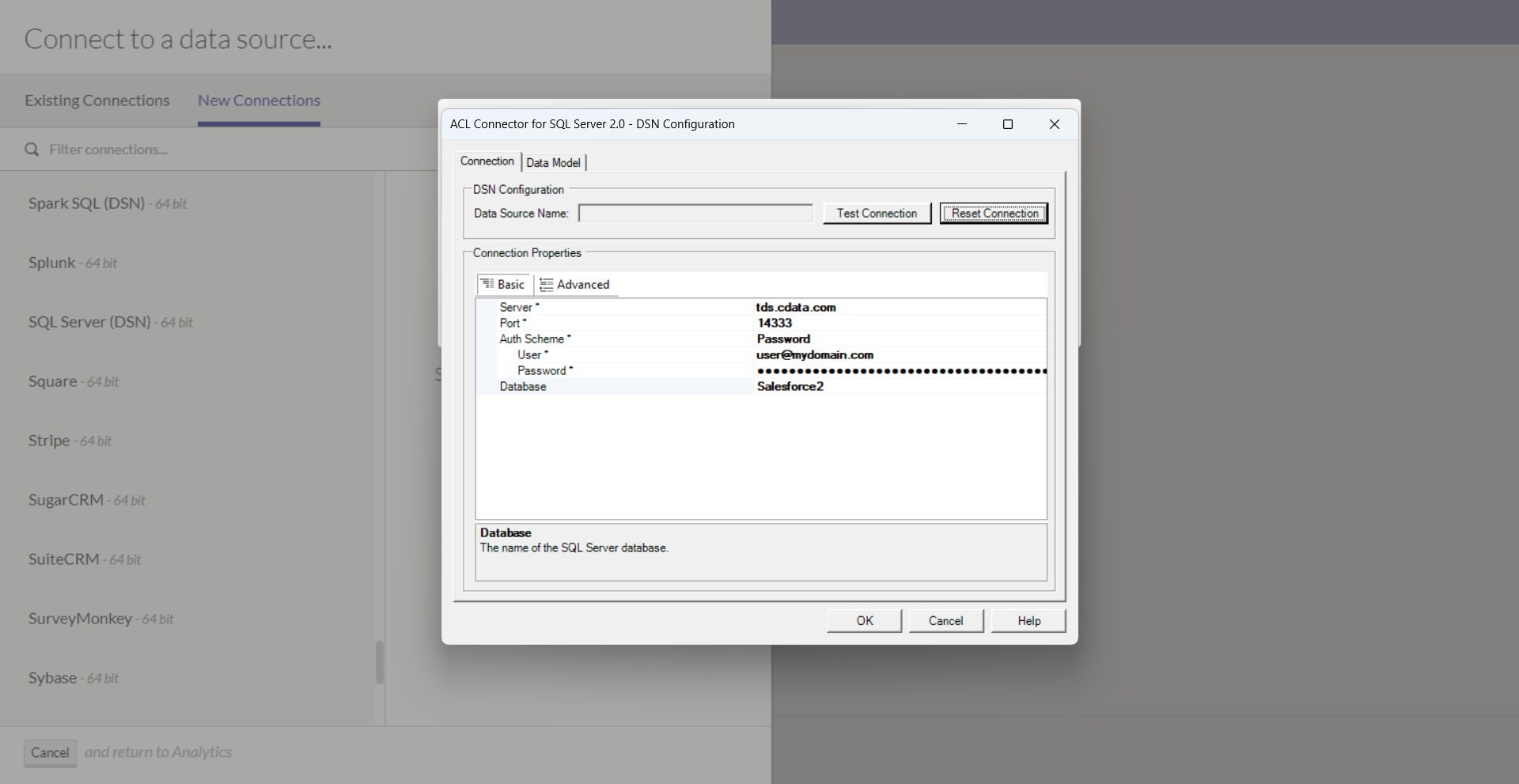
- Click "Test Connection"
- Click "OK"
- You are now ready to work with your AlloyDB data in ACL Analytics!
Live connections to AlloyDB data from your applications
ACL Analytics can now connect to live AlloyDB data directly through Connect AI, allowing you to analyze AlloyDB data without duplicating it.
To get live data access to 300+ SaaS, Big Data, and NoSQL sources directly from your applications, try CData Connect AI today!
