






Integrating Gumloop with AlloyDB Data via CData Connect AI

Gumloop is a visual automation platform designed to create AI-powered workflows by combining triggers, AI nodes, APIs, and data connectors. By integrating Gumloop with CData Connect AI through the built-in MCP (Model Context Protocol) Server, workflows can seamlessly access and interact with live AlloyDB data.
The platform provides a low-code environment, making it easier to orchestrate complex processes without heavy development effort. Its flexibility allows integration across multiple business applications, enabling end-to-end automation with live data.
This article outlines the steps required to configure AlloyDB connectivity in Connect AI, register the MCP server in Gumloop, and build a workflow that queries AlloyDB data.
Step 1: Configure AlloyDB Connectivity for Gumloop
Connectivity to AlloyDB from Gumloop is made possible through CData Connect AI's Remote MCP Server. To interact with AlloyDB data from Gumloop, we start by creating and configuring a AlloyDB connection in CData Connect AI.
- Log into Connect AI, click Sources, and then click Add Connection
- Select "AlloyDB" from the Add Connection panel
-
Enter the necessary authentication properties to connect to AlloyDB.
The following connection properties are usually required in order to connect to AlloyDB.
- Server: The host name or IP of the server hosting the AlloyDB database.
- User: The user which will be used to authenticate with the AlloyDB server.
- Password: The password which will be used to authenticate with the AlloyDB server.
You can also optionally set the following:
- Database: The database to connect to when connecting to the AlloyDB Server. If this is not set, the user's default database will be used.
- Port: The port of the server hosting the AlloyDB database. This property is set to 5432 by default.
Authenticating with Standard Authentication
Standard authentication (using the user/password combination supplied earlier) is the default form of authentication.
No further action is required to leverage Standard Authentication to connect.
Authenticating with pg_hba.conf Auth Schemes
There are additional methods of authentication available which must be enabled in the pg_hba.conf file on the AlloyDB server.
Find instructions about authentication setup on the AlloyDB Server here.
Authenticating with MD5 Authentication
This authentication method must be enabled by setting the auth-method in the pg_hba.conf file to md5.
Authenticating with SASL Authentication
This authentication method must be enabled by setting the auth-method in the pg_hba.conf file to scram-sha-256.
Authenticating with Kerberos
The authentication with Kerberos is initiated by AlloyDB Server when the ∏ is trying to connect to it. You should set up Kerberos on the AlloyDB Server to activate this authentication method. Once you have Kerberos authentication set up on the AlloyDB Server, see the Kerberos section of the help documentation for details on how to authenticate with Kerberos.

- Click Save & Test
-
Navigate to the Permissions tab in the Add AlloyDB Connection page and update the User-based permissions.



Add a Personal Access Token
A Personal Access Token (PAT) is used to authenticate the connection to Connect AI from Gumloop. It is best practice to create a separate PAT for each service to maintain granularity of access.
- Click on the Gear icon () at the top right of the Connect AI app to open the settings page.
- On the Settings page, go to the Access Tokens section and click Create PAT.
-
Give the PAT a name and click Create.

- The personal access token is only visible at creation, so be sure to copy it and store it securely for future use.
With the AlloyDB connection configured and a PAT generated, Gumloop is prepared to connect to AlloyDB data through the CData MCP server.
Step 2: Connect to the MCP server in Gumloop
The MCP server endpoint and authentication values from Connect AI must be added to Gumloop credentials.
- Sign in to Gumloop and create an account
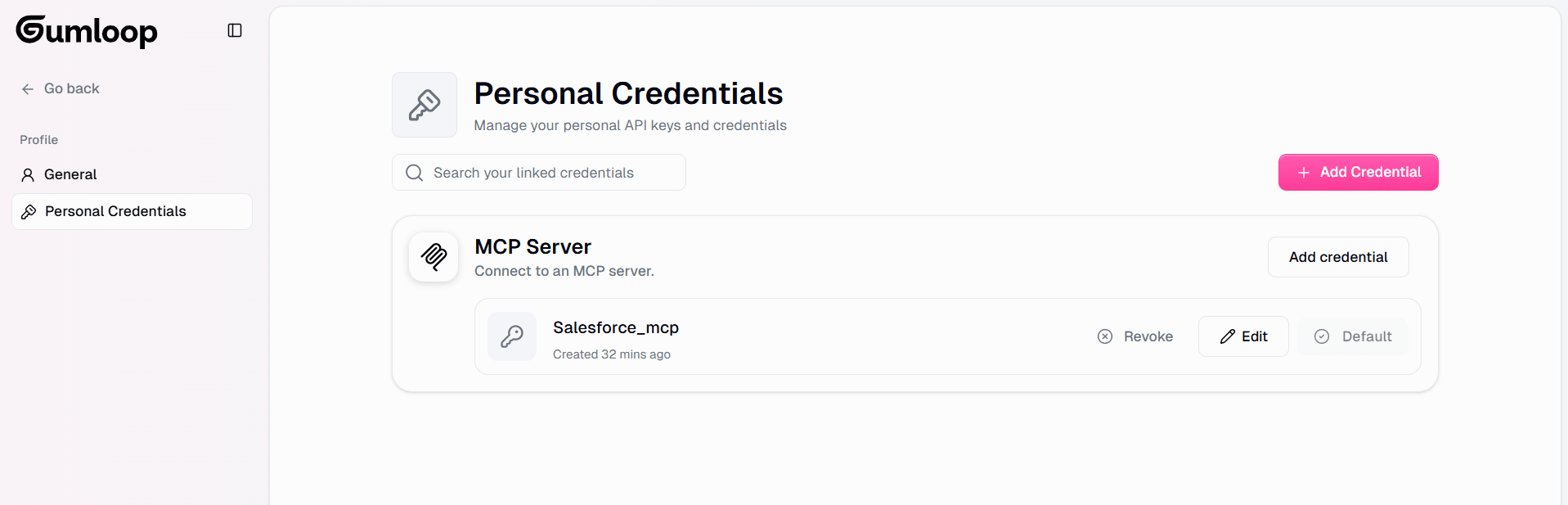
- Visit the Gumloop Credentials page to configure MCP server
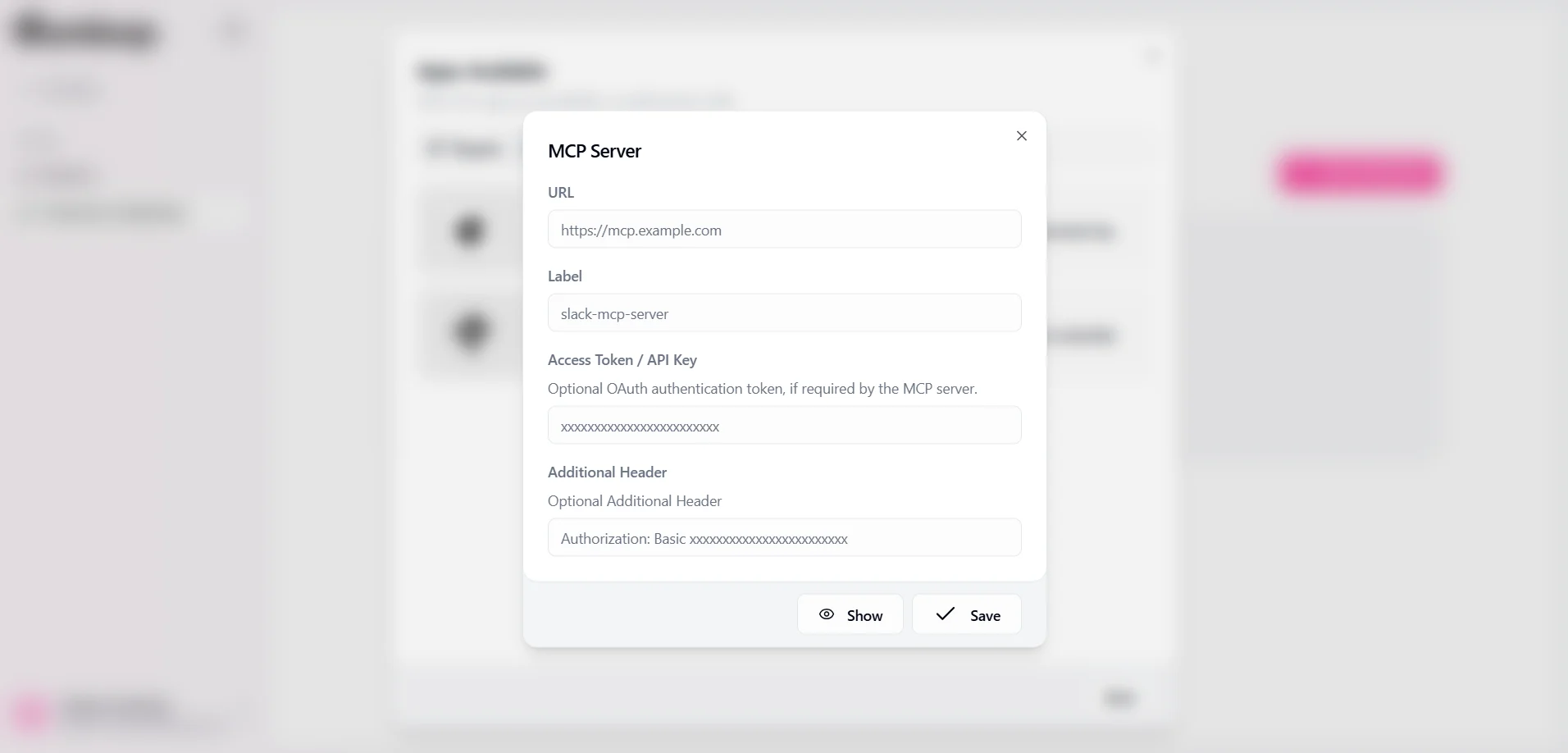
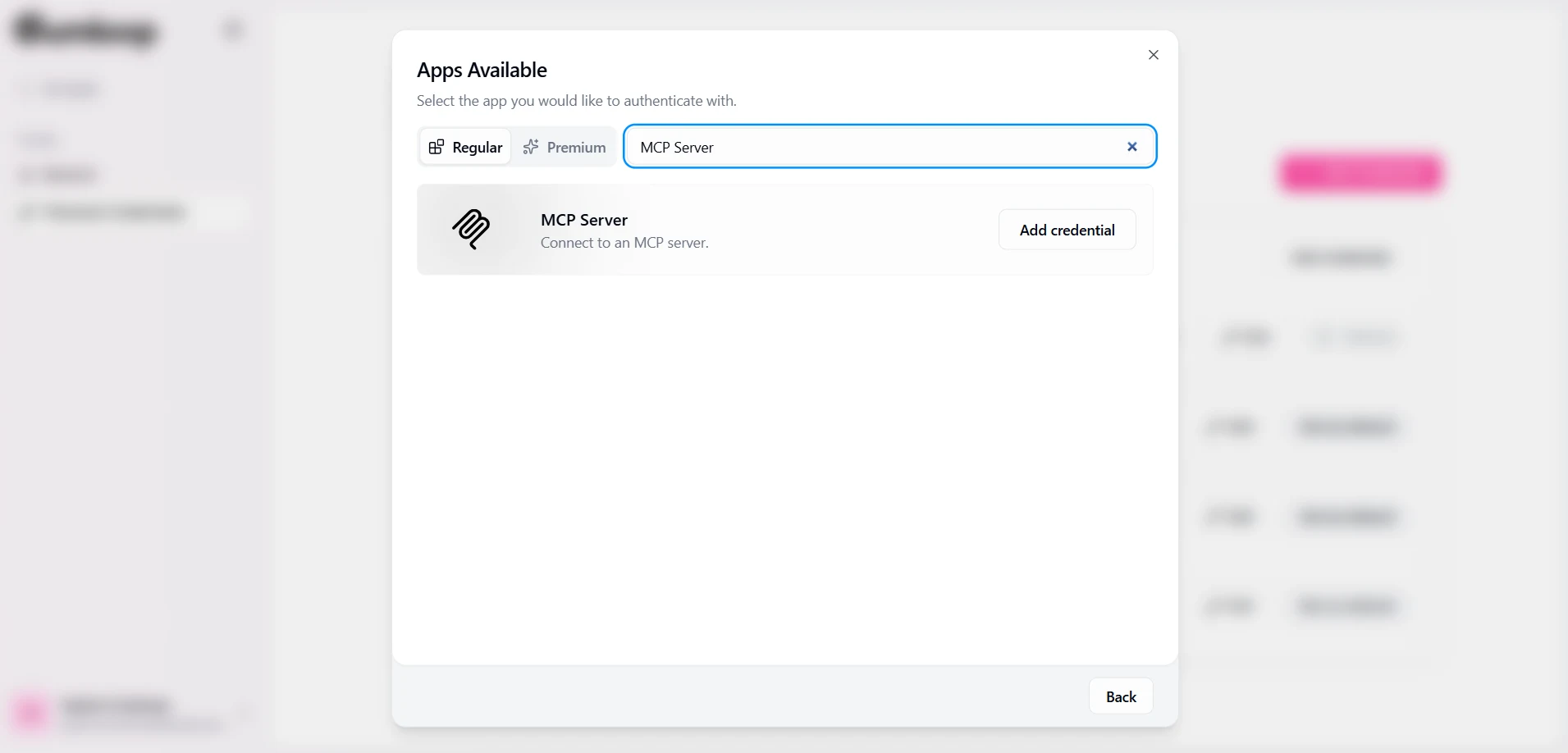
- Click on Add Credentials and search and select MCP Server
- Provide the following details:
- URL: https://mcp.cloud.cdata.com/mcp
- Label: A descriptive name such as AlloyDB-mcp-server
- Access Token / API Key: leave blank
- Additional Header: Authorization: Basic YOUR EMAIL:YOUR PAT
- Save the credentials

The MCP server is now available to build workflows in Gumloop.
Step 3: Build a workflow and explore live AlloyDB data with Gumloop
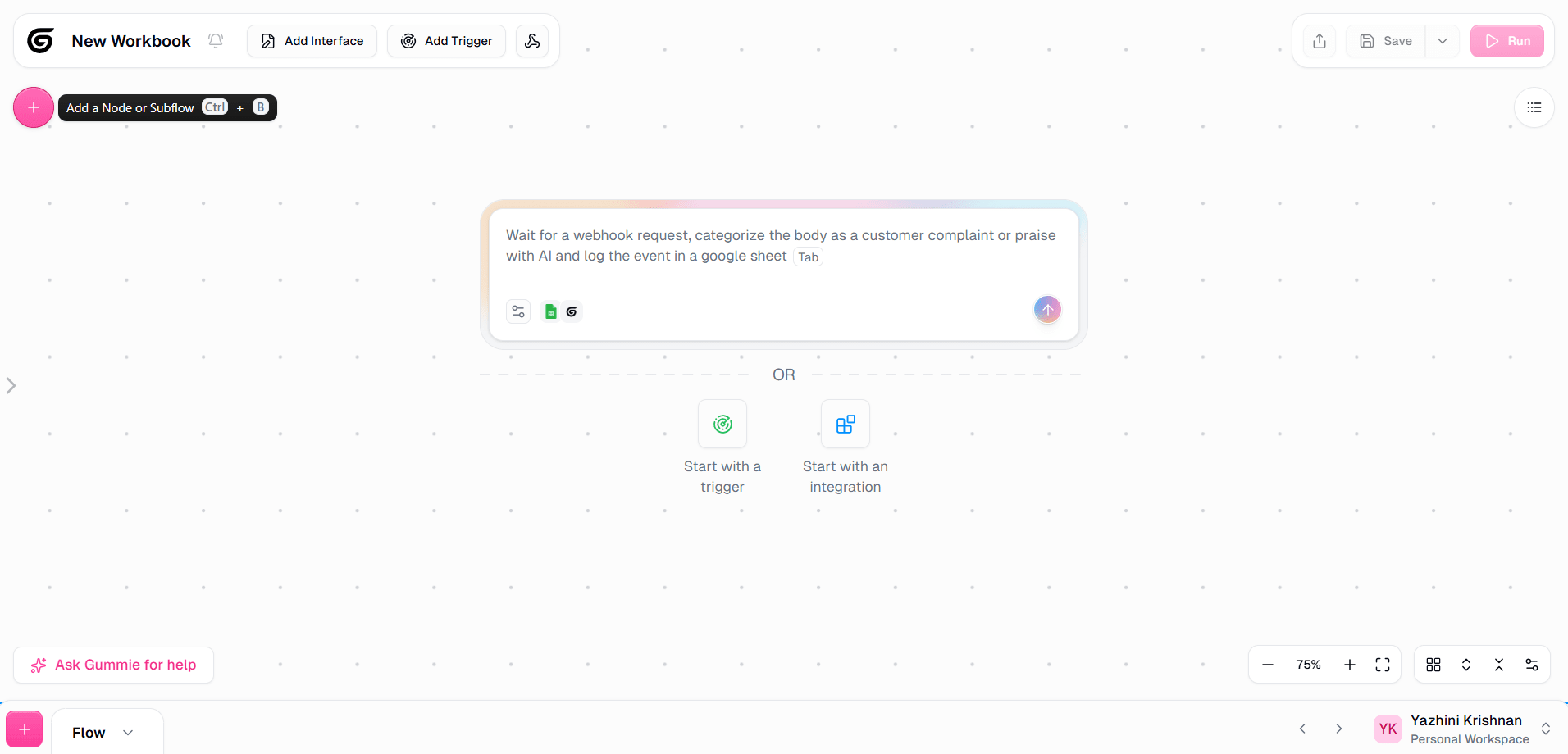
- Visit Gumloop Personal workspace and click on the Create Flow
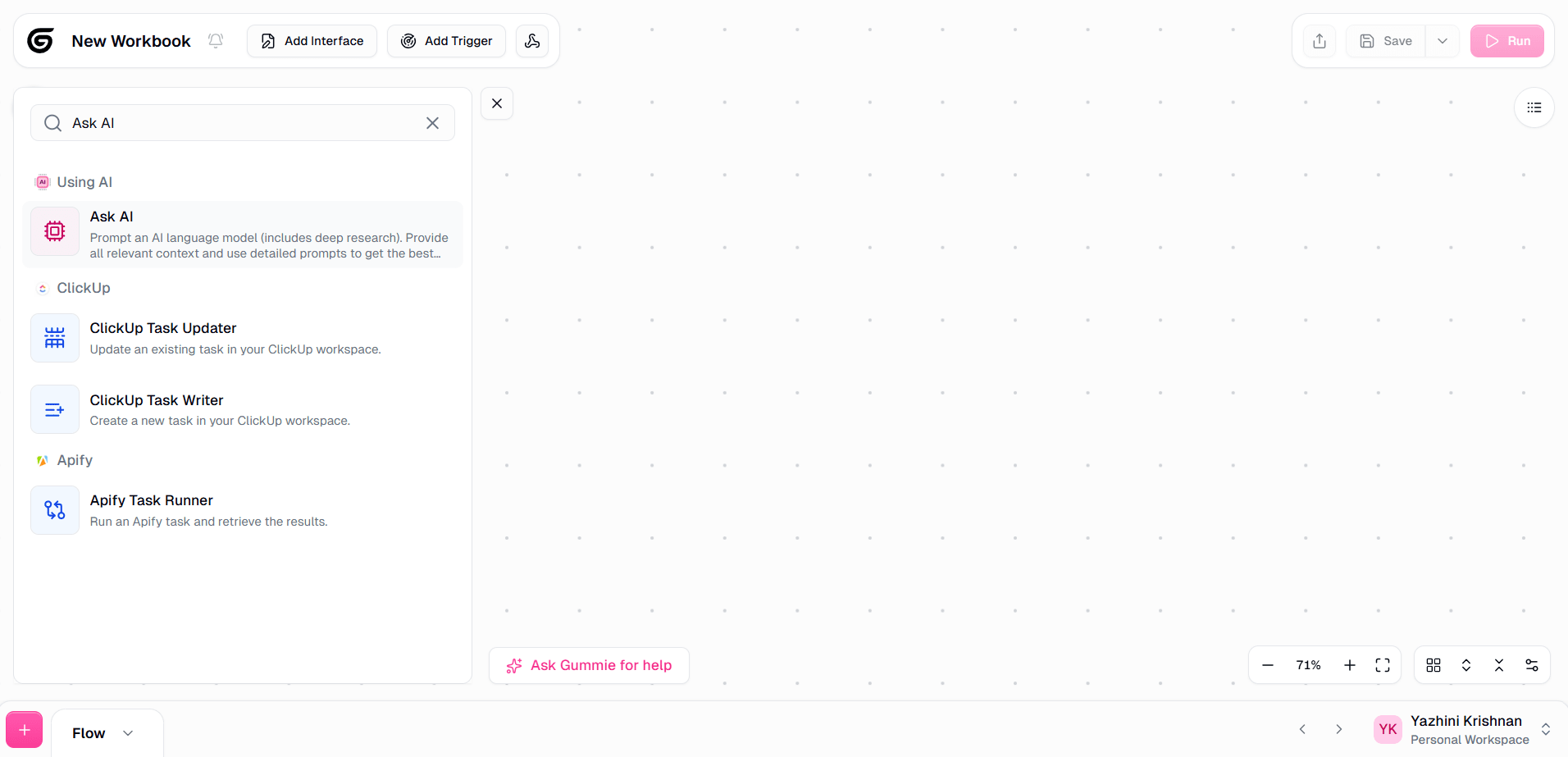
- Select the icon or press Ctrl + B to add a node or a subflow
- Search for Ask AI and select it
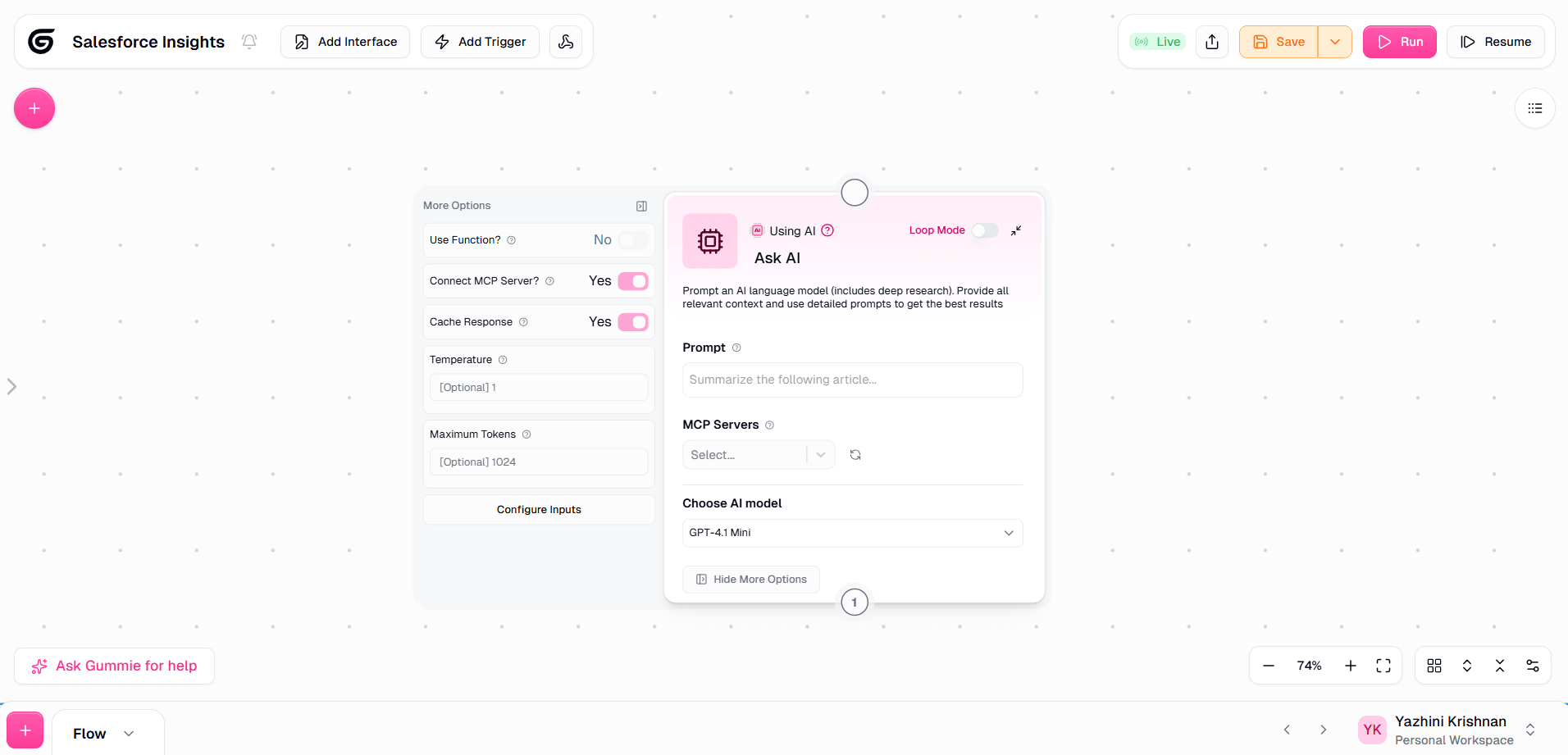
- Click Show More Options and enable the Connect MCP Server? option
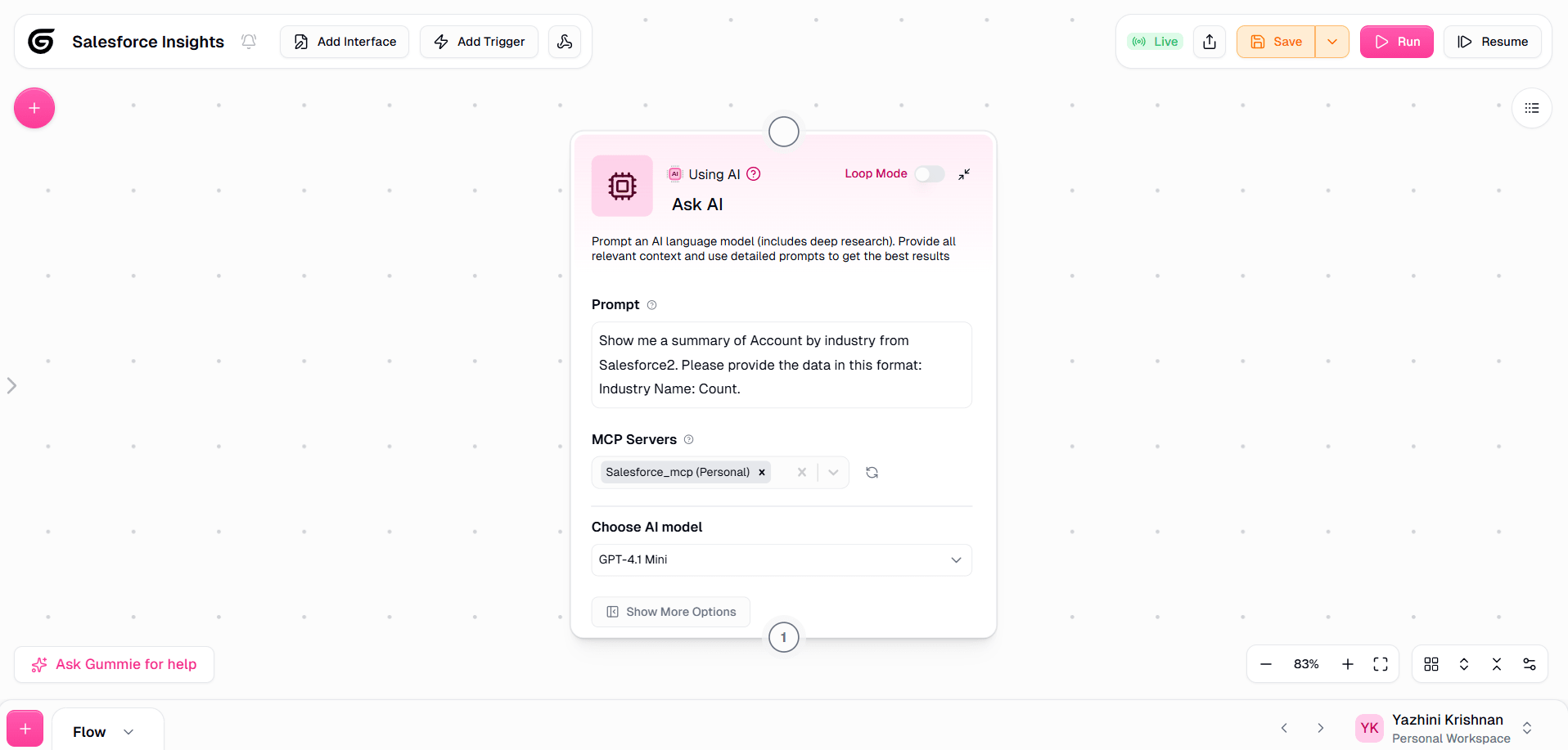
- From the MCP Servers dropdown, choose the saved MCP credential
- Add a Prompt and Choose an AI Model according to your requirements
- After configuring the required details, Click Run to run the pipeline
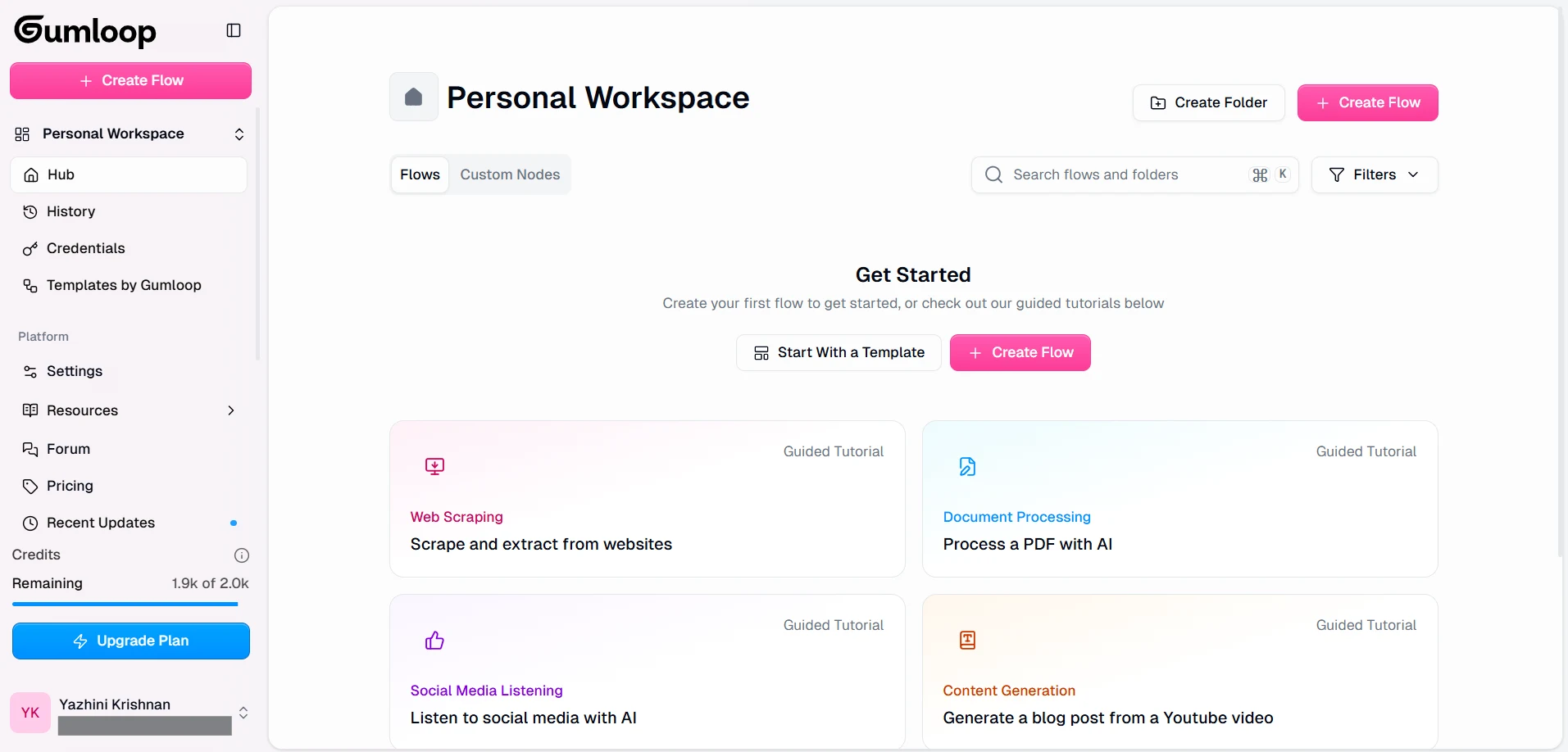
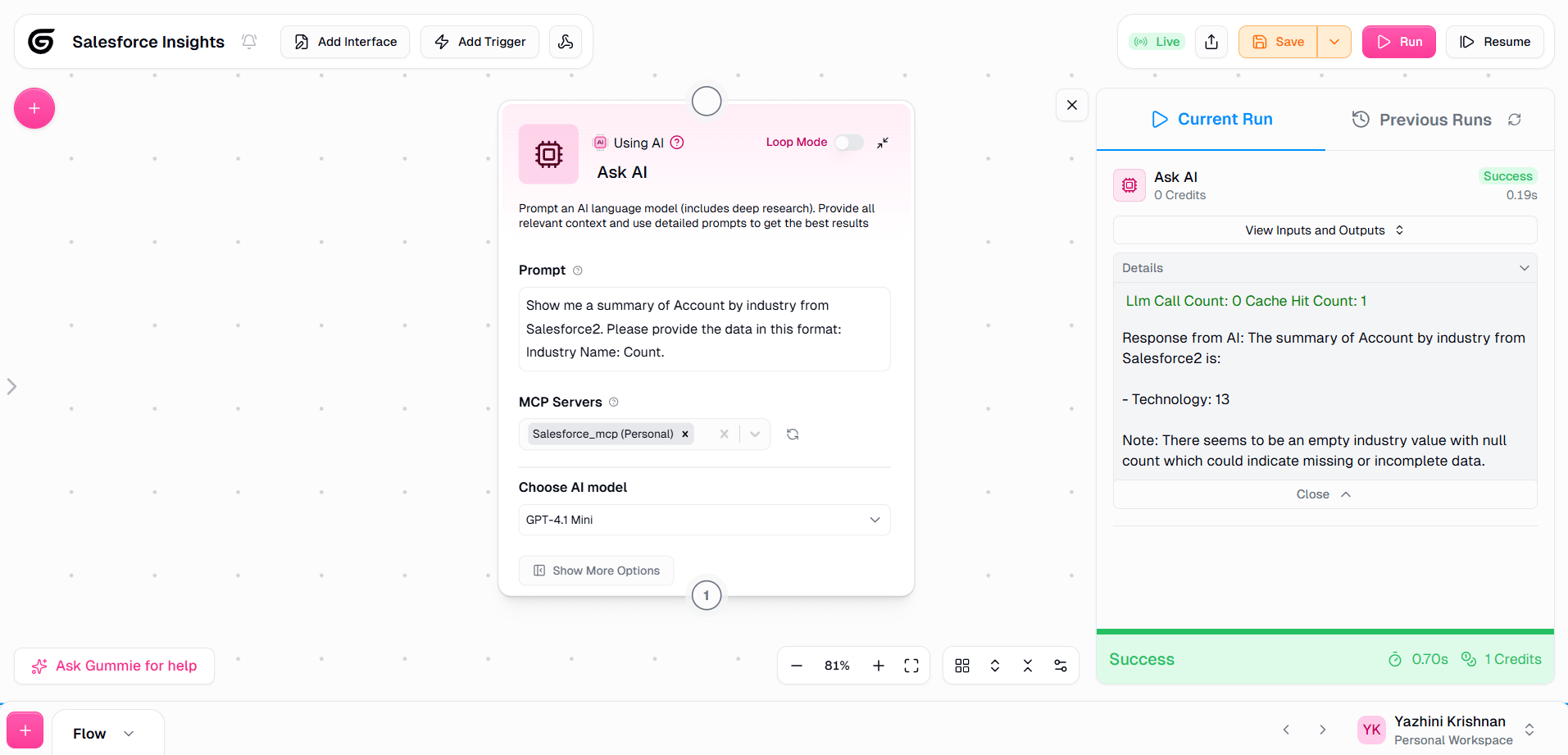
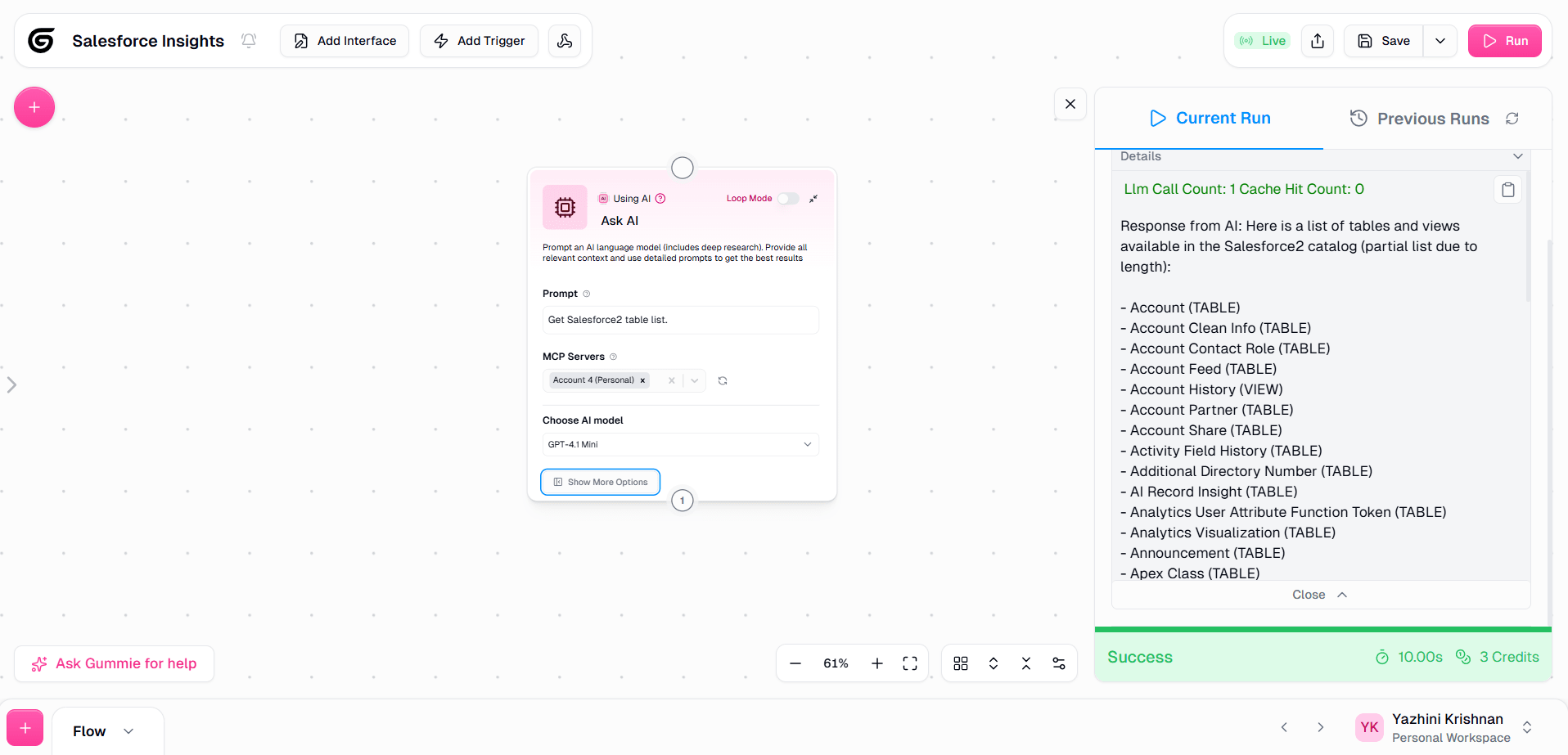
With the workflow run completed, Gumloop demonstrates successful retrieval of AlloyDB data through the CData Connect AI MCP server, with the MCP Client node providing the ability to ask questions, retrieve records, and perform actions on the data.
Get CData Connect AI
To get live data access to 300+ SaaS, Big Data, and NoSQL sources directly from your cloud applications, try CData Connect AI today!
