




Integrate ApprovalMax with External Services using SnapLogic

SnapLogic is an integration platform-as-a-service (iPaaS) that allows users to create data integration flows with no code. When paired with the CData JDBC Drivers, users get access to live data from more than 250+ SaaS, Big Data and NoSQL sources, including ApprovalMax, in their SnapLogic workflows.
With built-in optimized data processing, the CData JDBC Driver offers unmatched performance for interacting with live ApprovalMax data. When platforms issue complex SQL queries to ApprovalMax, the driver pushes supported SQL operations, like filters and aggregations, directly to ApprovalMax and utilizes the embedded SQL engine to process unsupported operations client-side (often SQL functions and JOIN operations). Its built-in dynamic metadata querying lets you work with ApprovalMax data using native data types.
Connect to ApprovalMax in SnapLogic
To connect to ApprovalMax data in SnapLogic, download and install the CData ApprovalMax JDBC Driver. Follow the installation dialog. When the installation is complete, the JAR file can be found in the installation directory (C:/Program Files/CData/CData API Driver for JDBC/lib by default).
Upload the ApprovalMax JDBC Driver
After installation, upload the JDBC JAR file to a location in SnapLogic (for example, projects/Jerod Johnson) from the Manager tab.
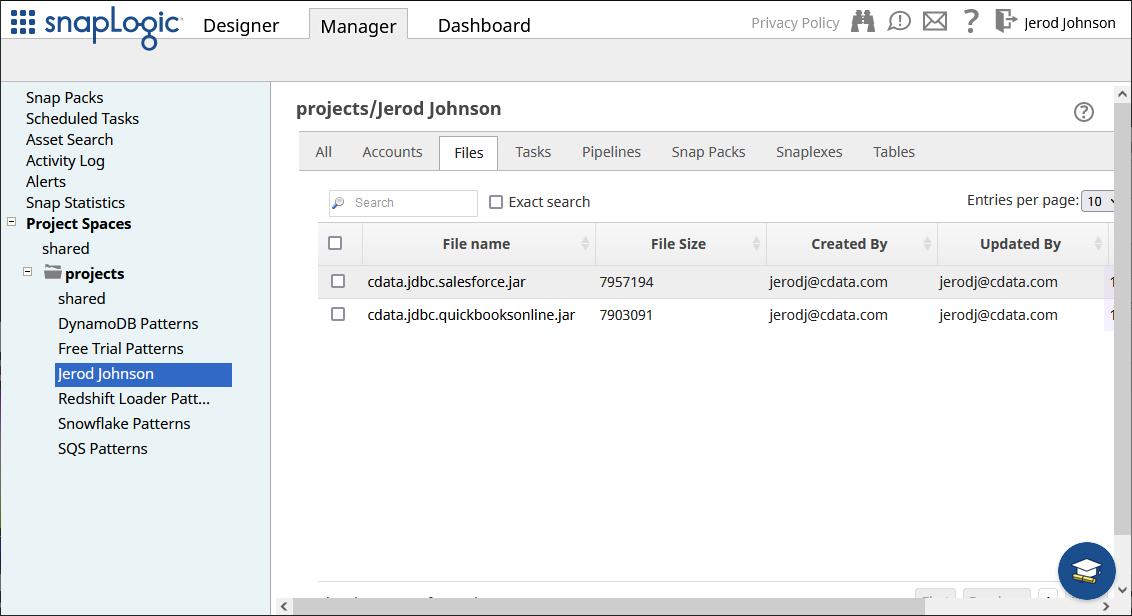
Configure the Connection
Once the JDBC Driver is uploaded, we can create the connection to ApprovalMax.
- Navigate to the Designer tab
- Expand "JDBC" from Snaps and drag a "Generic JDBC - Select" snap onto the designer
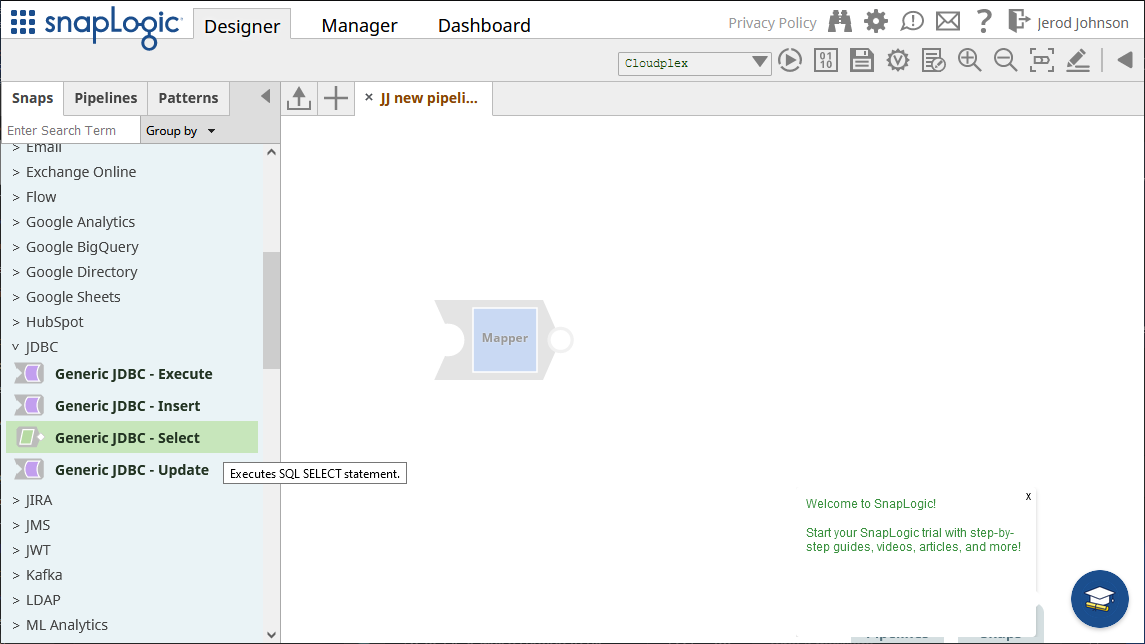
- Click Add Account (or select an existing one) and click "Continue"
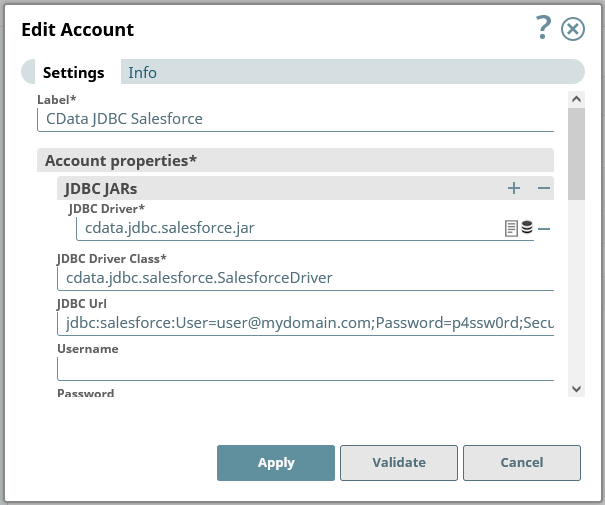
- In the next form, configure the JDBC connection properties:
- Under JDBC JARs, add the JAR file we previously uploaded
- Set JDBC Driver Class to cdata.jdbc.api.APIDriver
Set JDBC URL to a JDBC connection string for the ApprovalMax JDBC Driver, for example:
jdbc:api:Profile=C:\profiles\ApprovalMax.apip;AuthScheme=OAuth;InitiateOAuth=GETANDREFRESH;OAuthClientId=your_client_id;OAuthClientSecret=your_client_secret;CallbackURL=your_callback_url;RTK=XXXXXX;
NOTE: RTK is a trial or full key. Contact our Support team for more information.
Built-In Connection String Designer
For assistance in constructing the JDBC URL, use the connection string designer built into the ApprovalMax JDBC Driver. Either double-click the JAR file or execute the jar file from the command-line.
java -jar cdata.jdbc.api.jar
Fill in the connection properties and copy the connection string to the clipboard.
Start by setting the Profile connection property to the location of the ApprovalMax Profile on disk (e.g. C:\profiles\ApprovalMax.apip). Next, set the ProfileSettings connection property to the connection string for ApprovalMax (see below).
ApprovalMax API Profile Settings
To authenticate to ApprovalMax and connect to your own data or to allow other users to connect to their data, the ApprovalMax Public API requires the OAuth 2.0 authorization code flow.
First, you will need to register an OAuth application with ApprovalMax. Sign in to the ApprovalMax Developer Portal (https://developer.approvalmax.com/applications) and create a new application. Your OAuth application will be assigned a Client ID and a Client Secret, and you must register at least one Redirect URI (Callback URL).
A Premium ApprovalMax subscription (or active trial) is required to use the Public API.
After setting the following connection properties, you are ready to connect:
- AuthScheme: Set this to OAuth.
- InitiateOAuth: Set this to GETANDREFRESH. You can use InitiateOAuth to manage the process to obtain the OAuthAccessToken.
- OAuthClientId: Set this to the Client ID that is shown in your application settings on the ApprovalMax Developer Portal.
- OAuthClientSecret: Set this to the Client Secret that is shown in your application settings on the ApprovalMax Developer Portal.
- CallbackURL: Set this to the Redirect URI that is registered in your application settings.
- Scope: (Optional) Override the default OAuth scopes. The default value openid offline_access https://www.approvalmax.com/scopes/public_api/read grants read-only access to all tables in this profile and enables refresh tokens. Use the principle of least privilege when narrowing this scope.
The OAuth Authorization URL is https://identity.approvalmax.com/connect/authorize and the Token URL is https://identity.approvalmax.com/connect/token. Both authorization_code and refresh_token grant types are supported.

- After entering the connection properties, click "Validate" and "Apply"
Read ApprovalMax Data
In the form that opens after validating and applying the connection, configure your query.
- Set Schema name to "API"
- Set Table name to a table for ApprovalMax using the schema name, for example: "API"."UserProfiles" (use the drop-down to see the full list of available tables)
- Add Output fields for each item you wish to work with from the table
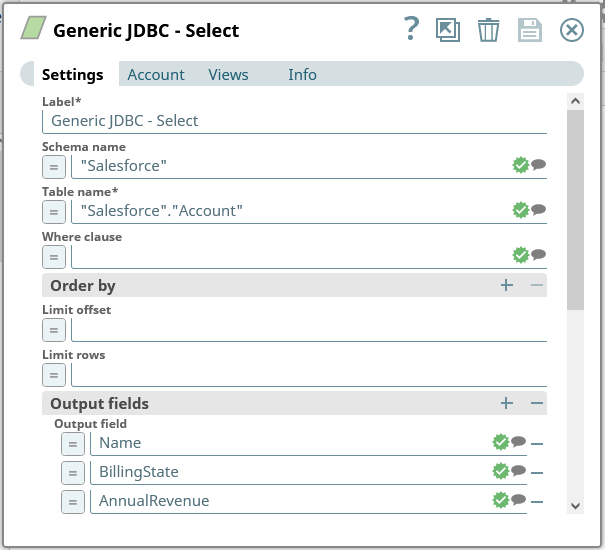
Save the Generic JDBC - Select snap.
With connection and query configured, click the end of the snap to preview the data (highlighted below).
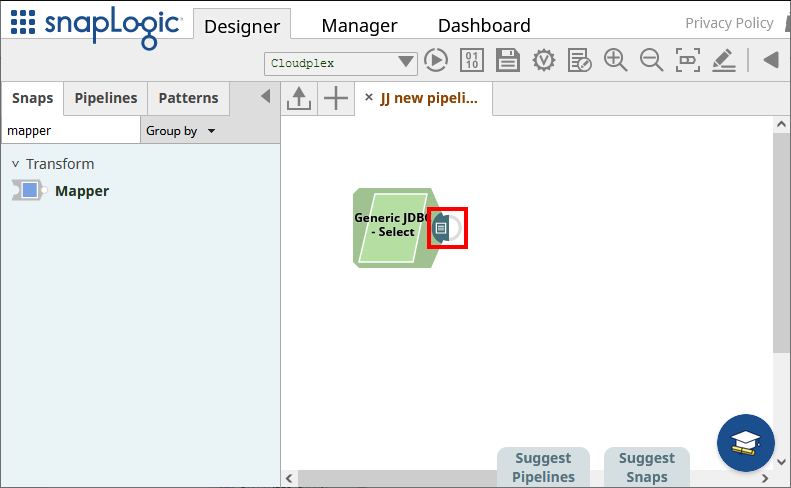
Once you confirm the results are what you expect, you can add additional snaps to funnel your ApprovalMax data to another endpoint.
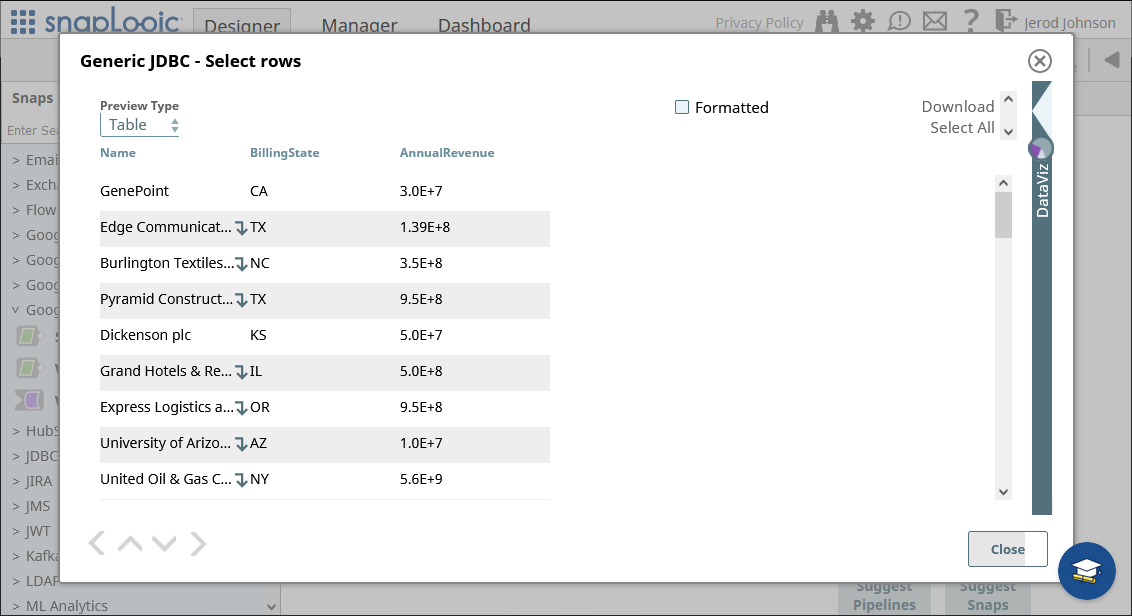
Piping ApprovalMax Data to External Services
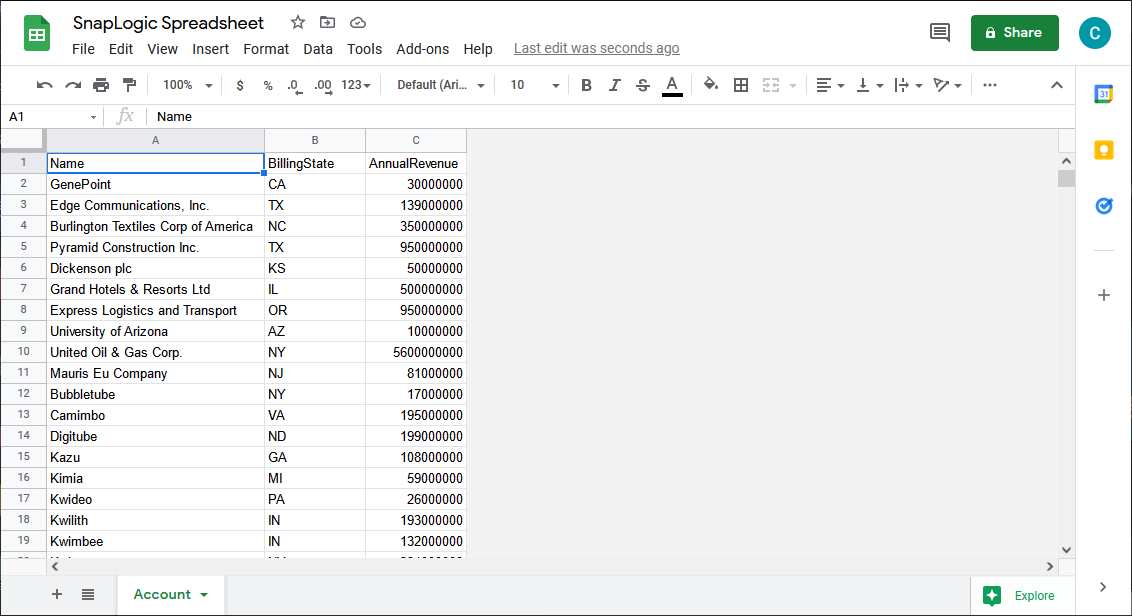
For this article, we will load data in a Google Spreadsheet. You can use any of the supported snaps, or even use a Generic JDBC snap with another CData JDBC Driver, to move data into an external service.
- Start by dropping a "Worksheet Writer" snap onto the end of the "Generic JDBC - Select" snap.
- Add an account to connect to Google Sheets
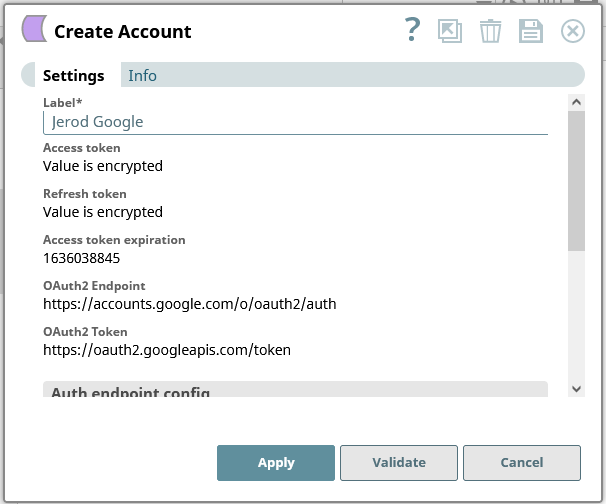
- Configure the Worksheet Writer snap to write your ApprovalMax data to a Google Spreadsheet
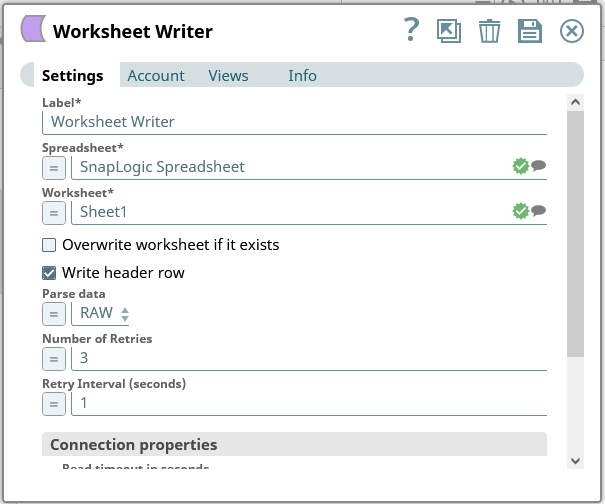
You can now execute the fully configured pipeline to extract data from ApprovalMax and push it into a Google Spreadsheet.
More Information & Free Trial
Using the CData API Driver for JDBC you can create a pipeline in SnapLogic for integrating ApprovalMax data with external services. For more information about connecting to ApprovalMax, check at our CData API Driver for JDBC page. Download a free, 30 day trial of the CData API Driver for JDBC and get started today.