






Integrating Cursor CLI with Azure Data Catalog Data via CData CLI

Cursor is an AI editor and coding agent built by Anysphere that plans, writes, and reviews code using agents that understand your entire codebase. Cursor CLI brings these agentic capabilities natively to the terminal, allowing developers to run agents in any terminal, script, or editor without switching context. Its support for integrations and custom agent rules makes Cursor CLI well-suited for structured, multi-step workflows, making it a natural fit for connecting to external data sources through tools like CData CLI. By describing your data goals in plain language, Cursor's agent handles the full setup process from driver configuration to query execution without manual intervention at each step.
This article details step-by-step directions for how to connect Azure Data Catalog to Cursor CLI through CData CLI.
Prerequisites
- Cursor CLI installed
- CData CLI installed
- Access to Azure Data Catalog
Step 1: Download the skill (one-time setup)
Always use CData CLI with the official skill.
-
The official CData CLI Skill on GitHub can be downloaded using npx skills through the terminal:
npx skills add CDataSoftware/cli-skills
-
Follow the prompts in the terminal to install for Cursor CLI.
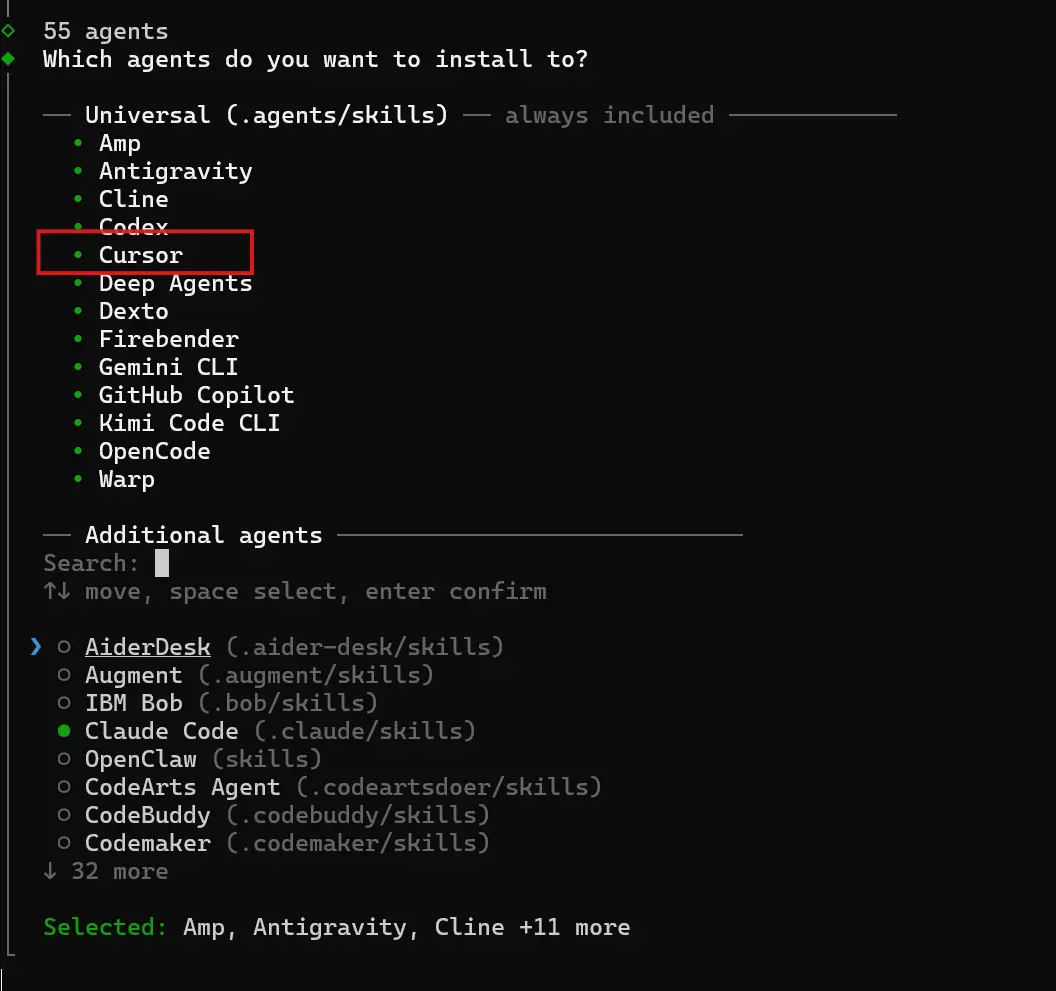
Step 2: Set up the project directory
Create a project directory to contain all project files.
-
Navigate to your desired directory in the terminal and start a session with the agent command.
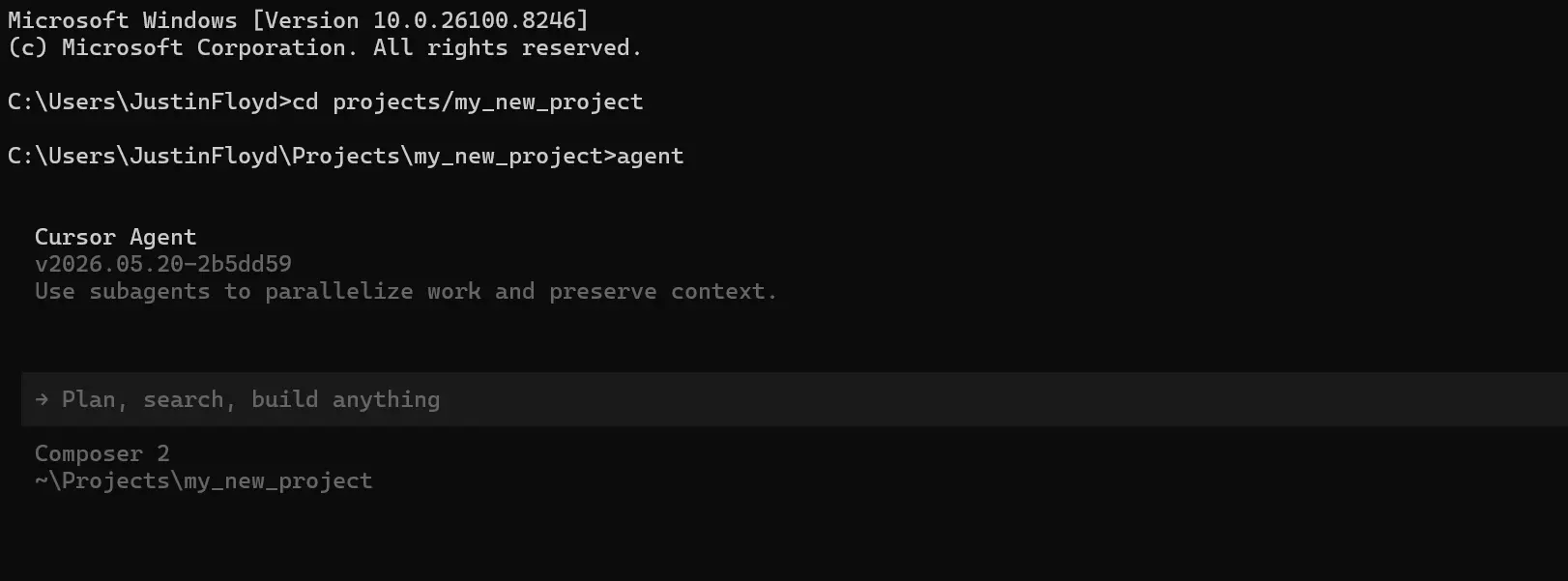
Step 3: Establish the driver and connection
Describe what you want to accomplish in this session with the CLI and Azure Data Catalog data.
I would like to build a command line app that connects to Azure Data Catalog and checks for updates from Tables. Make sure to include data from important columns like DslAddressDatabase and Type.
This prompt automatically loads the skill and kicks off the following process. You can always manually prompt the agent for each of the following steps.
- Driver setup: Cursor CLI checks for an existing CData Azure Data Catalog driver, or searches and downloads a new one:
cdatacli drivers list
cdatacli drivers search Azure Data Catalog
cdatacli drivers download --artifact-id <artifact-id>
- Activation: Activate the Azure Data Catalog driver with a single command for a trial or full license:
cdatacli drivers activate Azure Data Catalog --name "<name>" --email "<email>" --trial
cdatacli drivers activate Azure Data Catalog --name "<name>" --email "<email>" --key "<product-key>"
- Establish the connection: Check for existing Azure Data Catalog connections or create a new one:
cdatacli connection list
cdatacli drivers activate Azure Data Catalog --name "<name>" --email "<email>" --trial
- Create a Azure Data Catalog skill (if applicable): CData provides driver instructions for popular sources that can be used to create a source-specific skill to guide the agent through best practices for the driver.
- Run the following command to generate a skill file and save the output to your skills directory. You can choose to save the skill either at the project level or globally. (Note: If "No instructions available for Azure Data Catalog data" error is returned, no driver instructions exist and you can continue to use main driver skill)
cdatacli drivers skill Azure Data Catalog > ~/skills/cdata-Azure Data Catalog/SKILL.md
Step 4: Query Azure Data Catalog data
With the CData driver fully configured, your agent can now execute queries and write code against live Azure Data Catalog data:
cdatacli query sql --connection <my_Azure Data Catalog_connection> --sql <SELECT * FROM table>
Query Azure Data Catalog data directly from your terminal with CData CLI
Cursor CLI and CData CLI together give your AI coding agent a direct path to live Azure Data Catalog data without custom middleware, scheduled syncs, or manual setup at each step. Describe your goal, and the agent handles driver configuration, connection setup, and query execution from start to finish in the terminal.
Download the free CData CLI and start a free, 30-day trial of the CData JDBC Driver for Azure Data Catalog today.
Ready to get started?
Download a free trial of the Azure Data Catalog Driver to get started:
Download NowLearn more:
 Azure Data Catalog JDBC Driver
Rapidly create and deploy powerful Java applications that integrate with Azure Data Catalog.