




Connect Bullhorn CRM to IBM WebSphere Using the CData JDBC Driver

IBM WebSphere is a powerful application server that runs many enterprise level Java applications and services. When paired with the CData JDBC Driver for Bullhorn CRM, IBM WebSphere applications can connect to Bullhorn CRM and work with data using standard SQL queries instead of complex APIs. This simplifies integration, reduces development effort, and provides secure, real-time access to critical business data.
Prerequisites
- Access to a Bullhorn CRM account (with API permissions)
- IBM WebSphere Application Server (configured and running)
- CData JDBC Driver for Bullhorn CRM
- Java Servlet WAR application ready for deployment
Note: This article uses Salesforce as a demonstration data source, but the same steps can be followed to connect to any of the 250+ JDBC Drivers available in our portfolio.
Getting Started
Step 1: Download and install the CData JDBC Driver for Bullhorn CRM
Download and install the CData JDBC Driver for Bullhorn CRM, which provides a .jar file: cdata.jdbc.bullhorncrm.jar
Step 2: Install and configure IBM Websphere
- Create an account in IBM WebSphere using the official IBM site.
- Install and configure the IBM Websphere Application server in the local system using the documentation: IBM Websphere Application Server
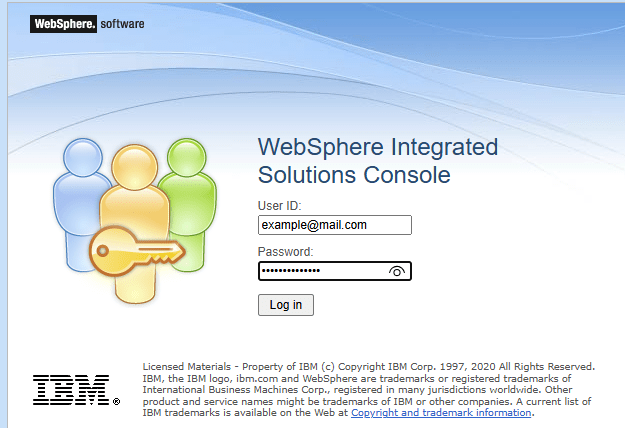
- Once the application server is installed, start the WebSphere Server using the Admin Console in your browser: https://your-server:9043/ibm/console
Step 3: Set up the JDBC provider and data source for Bullhorn CRM
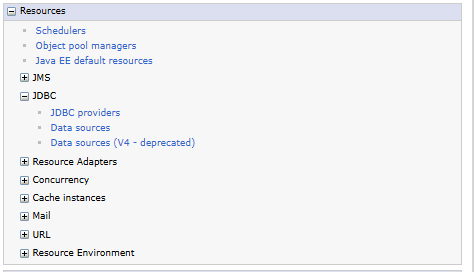
- Go to Resources, expand the JDBC section, and then select JDBC providers to create a new provider
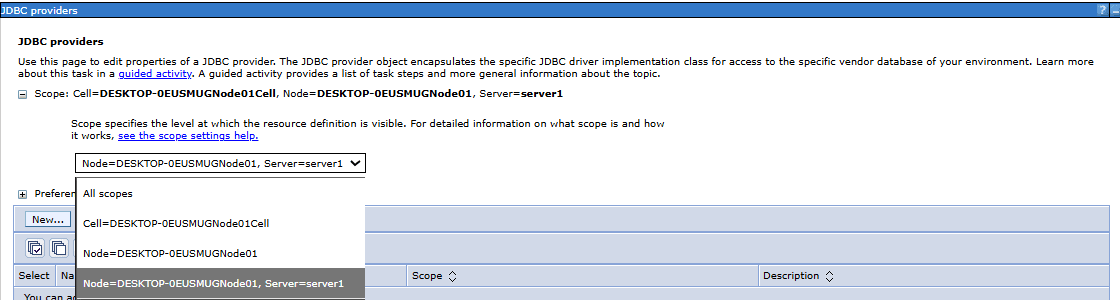
- Select the appropriate scope from the drop down menu
- Click New to add a JDBC provider
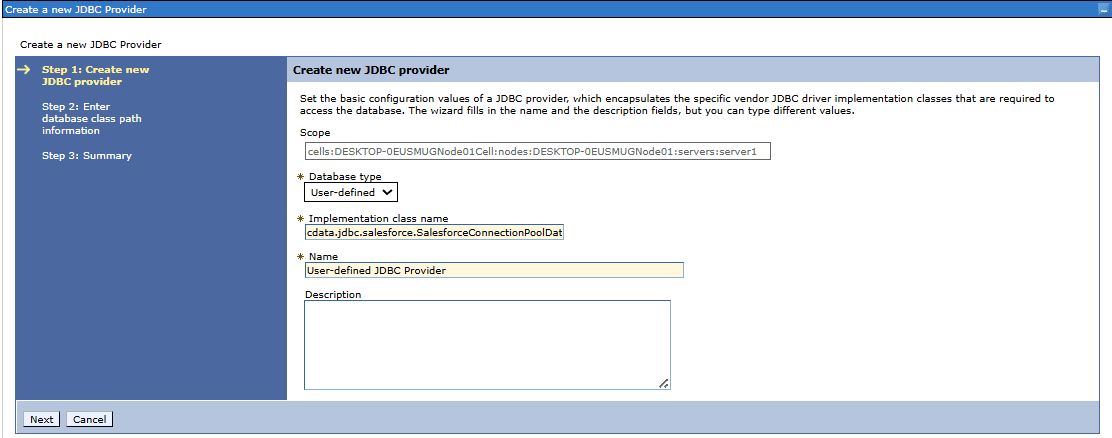
- Choose User defined as the database type
- Enter cdata.jdbc.bullhorncrm.BullhornCRMConnectionPoolDataSource as the implementation class name
- Type a name for the provider, for example User defined JDBC Provider
- Enter the full path of the JDBC driver JAR file in the classpath field
- Click Next, then Finish, and save the changes to the master configuration.
- Once the JDBC provider is created, add a JDBC data source.
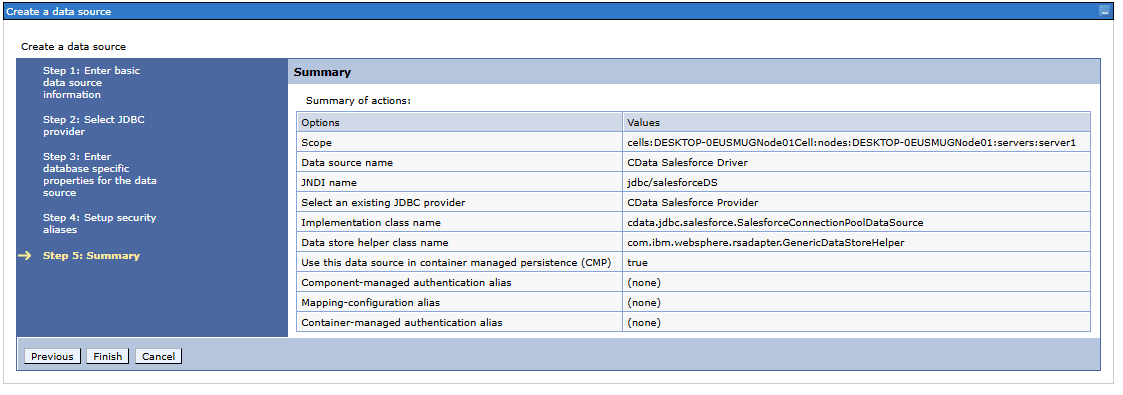
- Enter the basic details such as Data Source Name and JNDI name
- Select the existing JDBC provider created earlier (e.g., CData Bullhorn CRM Provider)
- Provide the Implementation class name: cdata.jdbc.bullhorncrm.BullhornCRMConnectionPoolDataSource
- Add the Data Store Helper Class Name: com.ibm.websphere.rsadapter.GenericDataStoreHelper
- Configure security by setting authentication aliases if required
- Review the Summary page to verify all details and click Finish to complete the data source creation
- Select the newly created data source from the list and open Custom properties
-
Add the JDBC connection string under the URL property and press OK. For example:
jdbc:bullhorncrm:RTK=5246...;DataCenterCode=CLS33;OAuthClientId=myoauthclientid;OAuthClientSecret=myoauthclientsecret;InitiateOAuth=GETANDREFRESH;
Begin by providing your Bullhorn CRM account credentials in the following:
- DataCenterCode: Set this to the data center code which responds to your data center. Refer to the list of data-center-specific Bullhorn API URLs: https://bullhorn.github.io/Data-Center-URLs/
If you are uncertain about your data center code, codes like CLS2, CLS21, etc. are cluster IDs that are contained in a user's browser URL (address bar) once they are logged in.
Example: https://cls21.bullhornstaffing.com/BullhornSTAFFING/MainFrame.jsp?#no-ba... indicates that the logged in user is on CLS21.
Authenticating with OAuth
Bullhorn CRM uses the OAuth 2.0 authentication standard. To authenticate using OAuth, create and configure a custom OAuth app. See the Help documentation for more information.
Built-in Connection String Designer
For assistance in constructing the JDBC URL, use the connection string designer built into the Bullhorn CRM JDBC Driver. Either double-click the JAR file or execute the jar file from the command-line.
java -jar cdata.jdbc.bullhorncrm.jarFill in the connection properties and copy the connection string to the clipboard.

Note: If the URL property is not available, create it and then add the JDBC connection string.
Tip: Always test the connection string with the driver before entering it in the URL property.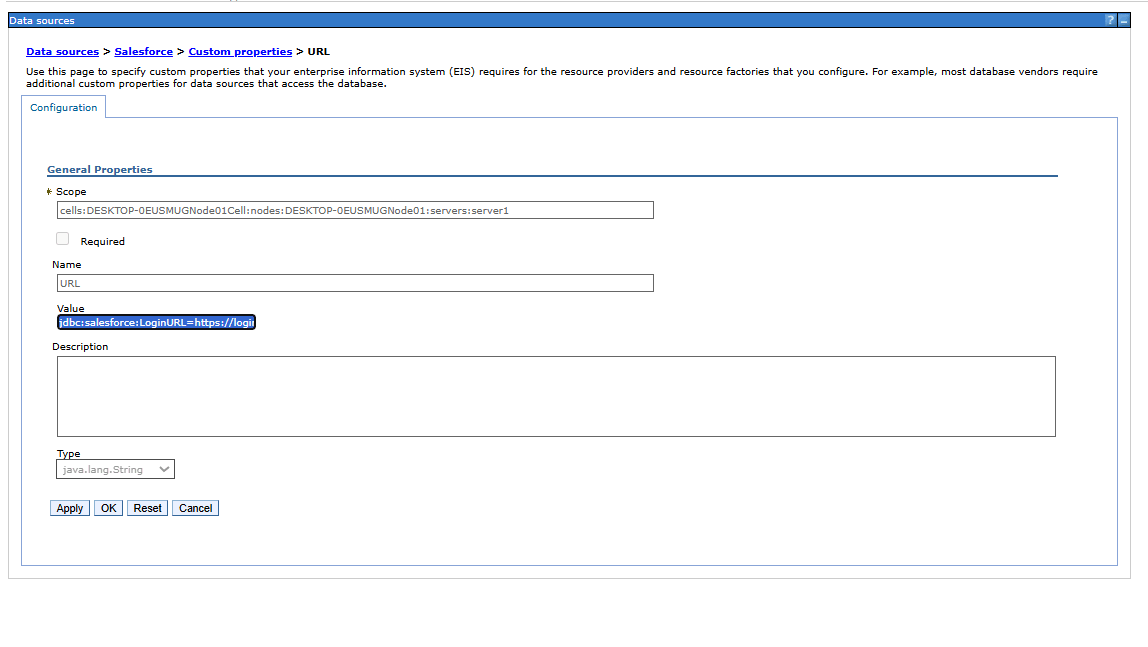
- Now open the data source and choose Test Connection
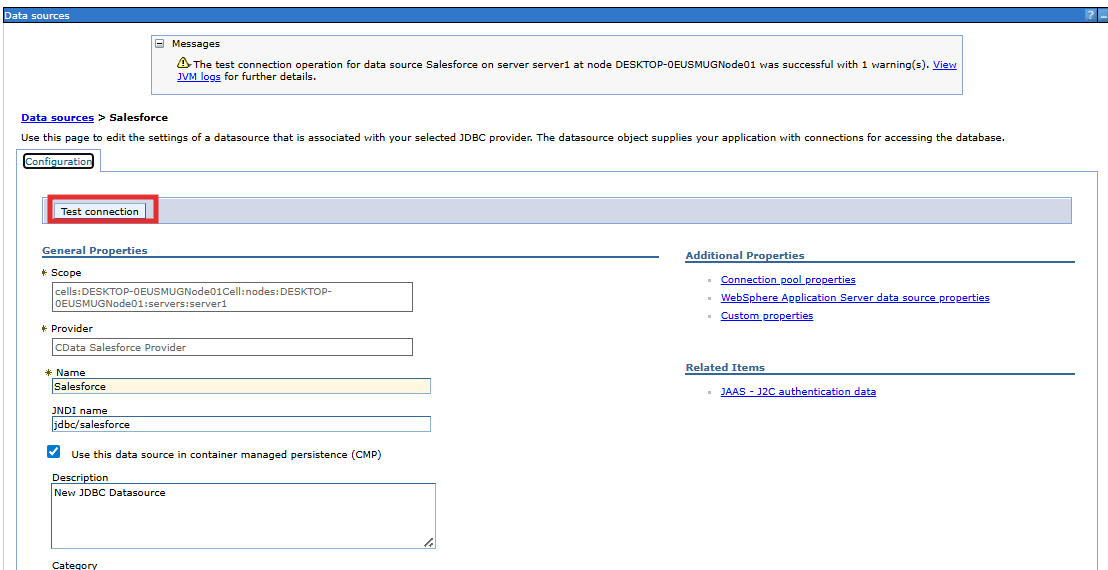
Step 4: Build the web application
- Build the web application using preferred Java framework (Servlet, JSP, or Spring). The resulting .war file will typically follow a structure like this:
- Define the data access logic using JDBC or JPA, referencing the data source through a JNDI name
- This article walks through JDBC connection setup and deploying a Java Servlet application
- Package the project as a WAR (Web Application Archive) or EAR (Enterprise Archive) file for deployment
- In a terminal compile the java file using the command:
cd webcontent jar cvf ..\Bullhorn CRMServletApp.war *
		Bullhorn CRMServletApp.war
		|--webcontent
		|  |--index.jsp                 -- JSP page (entry point)
		|  |
		|  |--WEB-INF/                  --Hidden from direct browser access
		|     |--web.xml                 -- Deployment descriptor
		|     |
		|     |--classes/                  --Compiled .class files
		|       |--com/example/Bullhorn CRM/
		|          |--Bullhorn CRMServlet.class
		|
		|--lib/                      --Dependency JARs
		|--cdata.jdbc.bullhorncrm.jar
Step 5: Deploy the Bullhorn CRM application in WebSphere
- In the WebSphere admin console, go to Applications and select Install New Application
- Browse and upload the WAR file, then continue with the installation wizard.
Step 6: Retrieve Bullhorn CRM data through WebSphere
- Access the application using its context root: http://hostname:port/context-root/page
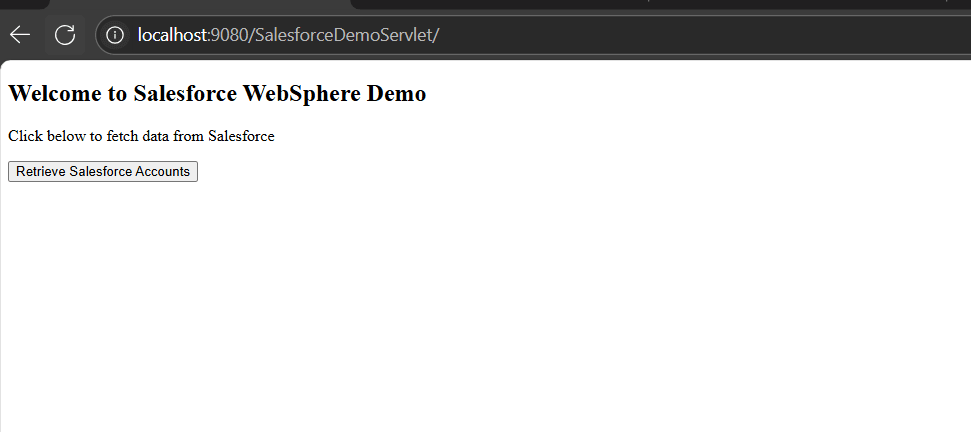 Note: Ensure the deployed application is started before opening it in the browser.
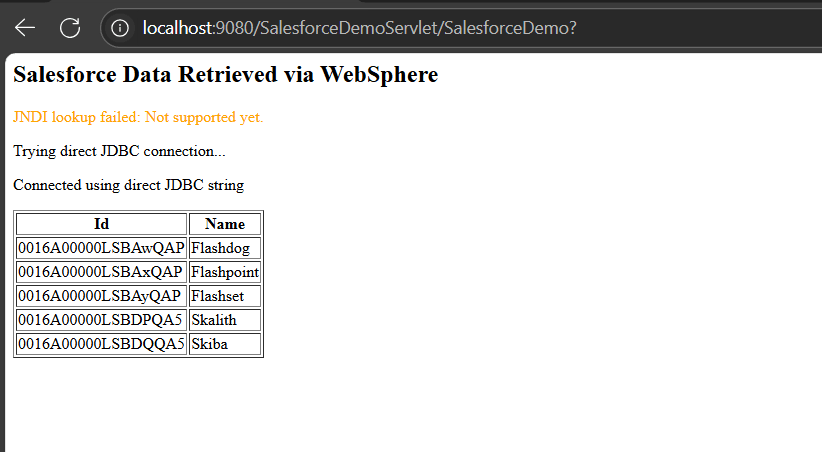
We can now view the retrieved data from the source. The data is accessible directly through IBM WebSphere. This setup demonstrates how a servlet can be deployed in WebSphere to retrieve Bullhorn CRM data using the JDBC driver, creating a strong foundation for building advanced Bullhorn CRM powered enterprise applications.
Get Started with Connecting Bullhorn CRM to IBM WebSphere
Start connecting Bullhorn CRM to IBM WebSphere with the CData JDBC Connector today. Download the free 30-day trial and explore how easy it is to enable secure, real-time data access for your applications. As always, our world-class Support Team is available to help with any questions you may have.
Ready to get started?
Download a free trial of the Bullhorn CRM Driver to get started:
Download NowLearn more:
 Bullhorn CRM JDBC Driver
Rapidly create and deploy powerful Java applications that integrate with Bullhorn CRM.
