




Create a Data Access Object for Carbone Data using JDBI

JDBI is a SQL convenience library for Java that exposes two different style APIs, a fluent style and a SQL object style. The CData JDBC Driver for Carbone integrates connectivity to live Carbone data in Java applications. By pairing these technologies, you gain simple, programmatic access to Carbone data. This article explains how to build a basic Data Access Object (DAO) and the accompanying code to read Carbone data.
Create a DAO for the Carbone Templates Entity
The interface below declares the desired behavior for the SQL object to create a single method for each SQL statement to be implemented.
public interface MyTemplatesDAO {
  //request specific data from Carbone (String type is used for simplicity)
  @SqlQuery("SELECT Name FROM Templates WHERE Category = :category")
  String findNameByCategory(@Bind("category") String category);

  /*
   * close with no args is used to close the connection
   */
  void close();
}
Open a Connection to Carbone
Collect the necessary connection properties and construct the appropriate JDBC URL for connecting to Carbone.
Start by setting the Profile connection property to the location of the Carbone Profile on disk (e.g. C:\profiles\Carbone.apip). Next, set the ProfileSettings connection property to the connection string for Carbone (see below).
Carbone API Profile Settings
Carbone uses API key authentication via a Bearer token in the Authorization header. To obtain an API key:
- Log in to your Carbone account at https://account.carbone.io
- Copy the API key shown on the account home page
After obtaining your API key, set the following connection properties:
- AuthScheme: Set this to APIKey.
- APIKey: Set this to your Carbone API key (Bearer token).
- CarboneVersion: (Optional) The major version of the Carbone API to target via the carbone-version request header. Defaults to 5. Accepted values: 5, 4, 3, staging.
Built-in Connection String Designer
For assistance in constructing the JDBC URL, use the connection string designer built into the Carbone JDBC Driver. Either double-click the JAR file or execute the jar file from the command-line.
java -jar cdata.jdbc.api.jar
Fill in the connection properties and copy the connection string to the clipboard.
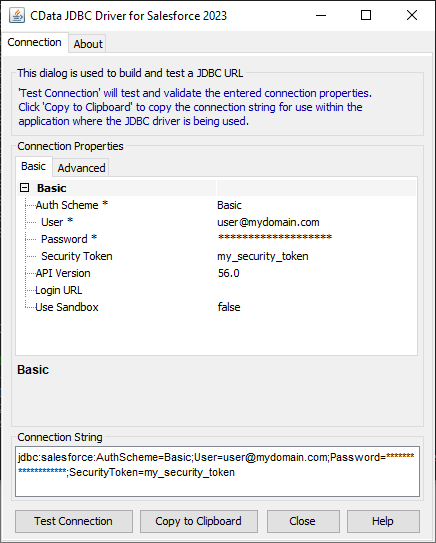
A connection string for Carbone will typically look like the following:
jdbc:api:Profile=C:\profiles\Carbone.apip;AuthScheme=APIKey;APIKey=your_api_key;
Use the configured JDBC URL to obtain an instance of the DAO interface. The particular method shown below will open a handle bound to the instance, so the instance needs to be closed explicitly to release the handle and the bound JDBC connection.
DBI dbi = new DBI("jdbc:api:Profile=C:\profiles\Carbone.apip;AuthScheme=APIKey;APIKey=your_api_key;");
MyTemplatesDAO dao = dbi.open(MyTemplatesDAO.class);

//do stuff with the DAO

dao.close();
Read Carbone Data
With the connection open to Carbone, simply call the previously defined method to retrieve data from the Templates entity in Carbone.
//disply the result of our 'find' method
String name = dao.findNameByCategory("Invoices");
System.out.println(name);
Since the JDBI library is able to work with JDBC connections, you can easily produce a SQL Object API for Carbone by integrating with the CData JDBC Driver for Carbone. Download a free trial and work with live Carbone data in custom Java applications today.