






Connect to Chargebee Data in HULFT Integrate

HULFT Integrate is a modern data integration platform that provides a drag-and-drop user interface to create cooperation flows, data conversion, and processing so that complex data connections are easier than ever to execute. When paired with the CData API Driver for JDBC, HULFT Integrate can work with live Chargebee data. This article explains how to connect to Chargebee and move the data into a CSV file.
With built-in optimized data processing, the CData JDBC driver offers unmatched performance for interacting with live Chargebee data. When you issue complex SQL queries to Chargebee, the driver pushes supported SQL operations, like filters and aggregations, directly to Chargebee and utilizes the embedded SQL engine to process unsupported operations client-side (often SQL functions and JOIN operations). Its built-in dynamic metadata querying allows you to work with and analyze Chargebee data using native data types.
Enable Access to Chargebee
To enable access to Chargebee data from HULFT Integrate projects:
- Copy the CData JDBC Driver JAR file (and license file if it exists), cdata.jdbc.api.jar (and cdata.jdbc.api.lic), to the jdbc_adapter subfolder for the Integrate Server
- Restart the HULFT Integrate Server and launch HULFT Integrate Studio
Build a Project with Access to Chargebee Data
Once you copy the JAR files, you can create a project with access to Chargebee data. Start by opening Integrate Studio and creating a new project.
- Name the project
- Ensure the "Create script" checkbox is checked
- Click Next
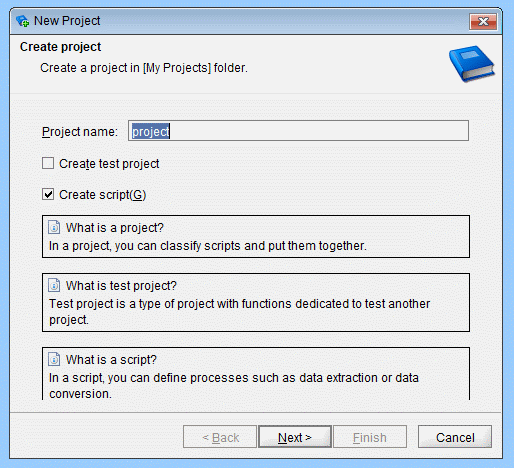
- Name the script (e.g.: APItoCSV)
Once you create the project, add components to the script to copy Chargebee data to a CSV file.
Configure an Execute Select SQL Component
Drag an "Execute Select SQL" component from the Tool Palette (Database -> JDBC) into the Script workspace.
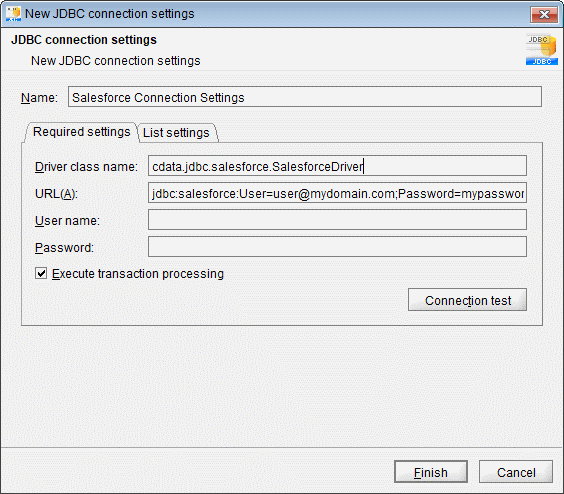
- In the "Required settings" tab for the Destination, click "Add" to create a new connection for Chargebee. Set the following properties:
- Name: Chargebee Connection Settings
- Driver class name: cdata.jdbc.api.APIDriver
- URL: jdbc:api:Profile=C:\profiles\Chargebee.apip;ProfileSettings='APIKey=your_api_key;Site=your_site_name';
Built-in Connection String Designer
For assistance constructing the JDBC URL, use the connection string designer built into the Chargebee JDBC Driver. Either double-click the JAR file or execute the JAR file from the command-line.
java -jar cdata.jdbc.api.jar
Fill in the connection properties and copy the connection string to the clipboard.
Start by setting the Profile connection property to the location of the Chargebee Profile on disk (e.g. C:\profiles\Chargebee.apip). Next, set the ProfileSettings connection property to the connection string for Chargebee (see below).
Chargebee API Profile Settings
Generate an API Key from your Chargebee account via Settings > Configure Chargebee > API Keys and Webhooks. Your site name is the subdomain from your Chargebee account URL.

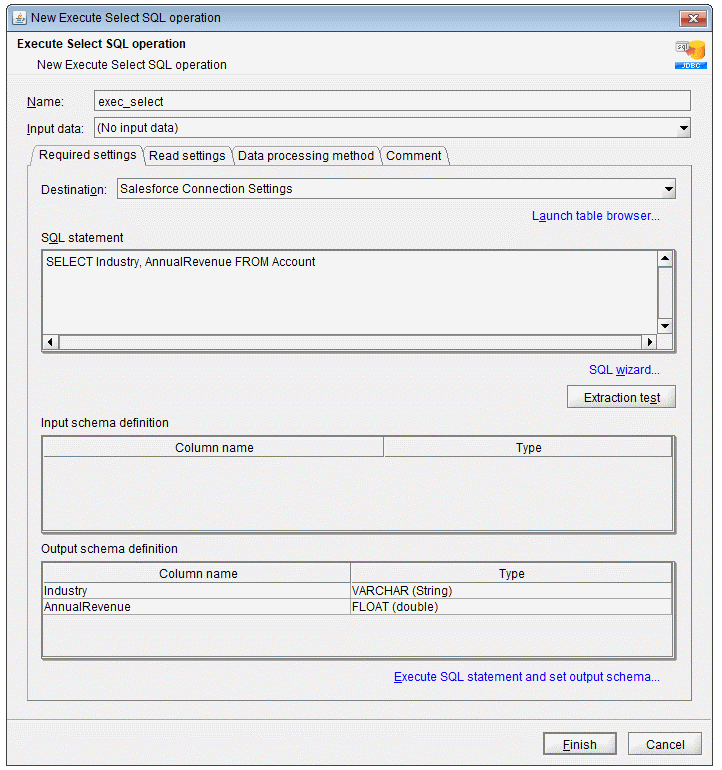
- Write your SQL statement. For example:
SELECT Id, Name FROM Addons
- Click "Extraction test" to ensure the connection and query are configured properly
- Click "Execute SQL statement and set output schema"
- Click "Finish"
Configure a Write CSV File Component
Drag a "Write CSV File" component from the Tool Palette (File -> CSV) onto the workspace.
- Set a file to write the query results to (e.g. Addons.csv)
- Set "Input data" to the "Select SQL" component
- Add columns for each field selected in the SQL query
- In the "Write settings" tab, check the checkbox to "Insert column names into first row"
- Click "Finish"
Map Chargebee Fields to the CSV Columns
Map each column from the "Select" component to the corresponding column for the "CSV" component.
Finish the Script
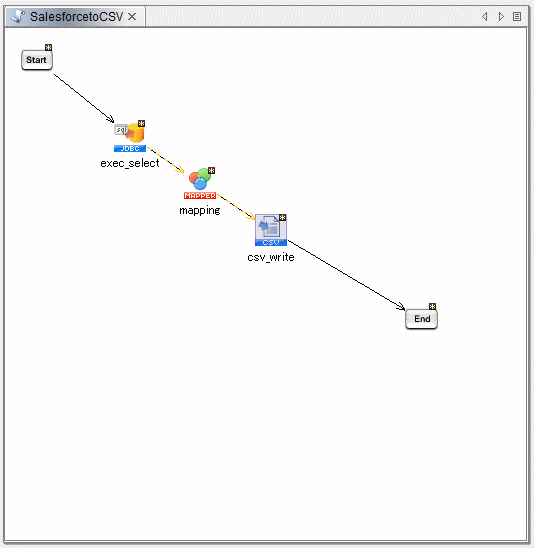
Drag the "Start" component onto the "Select" component and the "CSV" component onto the "End" component. Build the script and run the script to move Chargebee data into a CSV file.
Download a free, 30-day trial of the CData API Driver for JDBC and start working with your live Chargebee data in HULFT Integrate. Reach out to our Support Team if you have any questions.