




Connect to Claude Compliance Data from Crystal Reports

Crystal Reports is a business intelligence application by SAP designed to help you analyze your data with well-formatted, pixel-perfect, and multi-page reports. When paired with CData Connect AI, Crystal Reports gets access to live Claude Compliance data. This article demonstrates how to connect to Claude Compliance using Connect AI and report on Claude Compliance data in Crystal Reports.
CData Connect AI provides a pure SQL Server interface for Claude Compliance, allowing you to query data from Claude Compliance without replicating the data to a natively supported database. Using optimized data processing out of the box, CData Connect AI pushes all supported SQL operations (filters, JOINs, etc.) directly to Claude Compliance, leveraging server-side processing to return the requested Claude Compliance data quickly.
Configure Claude Compliance Connectivity for Crystal Reports
Connectivity to Claude Compliance from Crystal Reports is made possible through CData Connect AI. To work with Claude Compliance data from Crystal Reports, we start by creating and configuring a Claude Compliance connection.
- Log into Connect AI, click Sources, and then click Add Connection
- Select "Claude Compliance" from the Add Connection panel
-
Enter the necessary authentication properties to connect to Claude Compliance.
The driver connects to Claude Compliance using a Compliance Access Key, the only supported authentication method. Set the following connection property:
- APIKey: The Compliance Access Key you created.
Creating a Compliance Access Key
- Enable the Compliance API for your organization.
- Sign in to claude.ai as a primary owner or organization owner and open Organization settings > API > Keys.
- Select Create Key and assign only the scopes your integration needs:
- read:compliance_activities for Activities and the typed activity views.
- read:compliance_org_data for organizations, roles, groups, and settings.
- read:compliance_user_data for users, chats, files, projects, and downloads.
- delete:compliance_user_data for the explicit Delete stored procedures.
- Create the key and copy it when it appears. The key starts with sk-ant-api01- and is shown only once.
Optionally, set OrganizationUUID to limit organization-scoped views (such as OrganizationUsers and ComplianceRoles) to a single linked organization. If it is left empty, those views default to the first available organization and do not include data from all linked organizations.
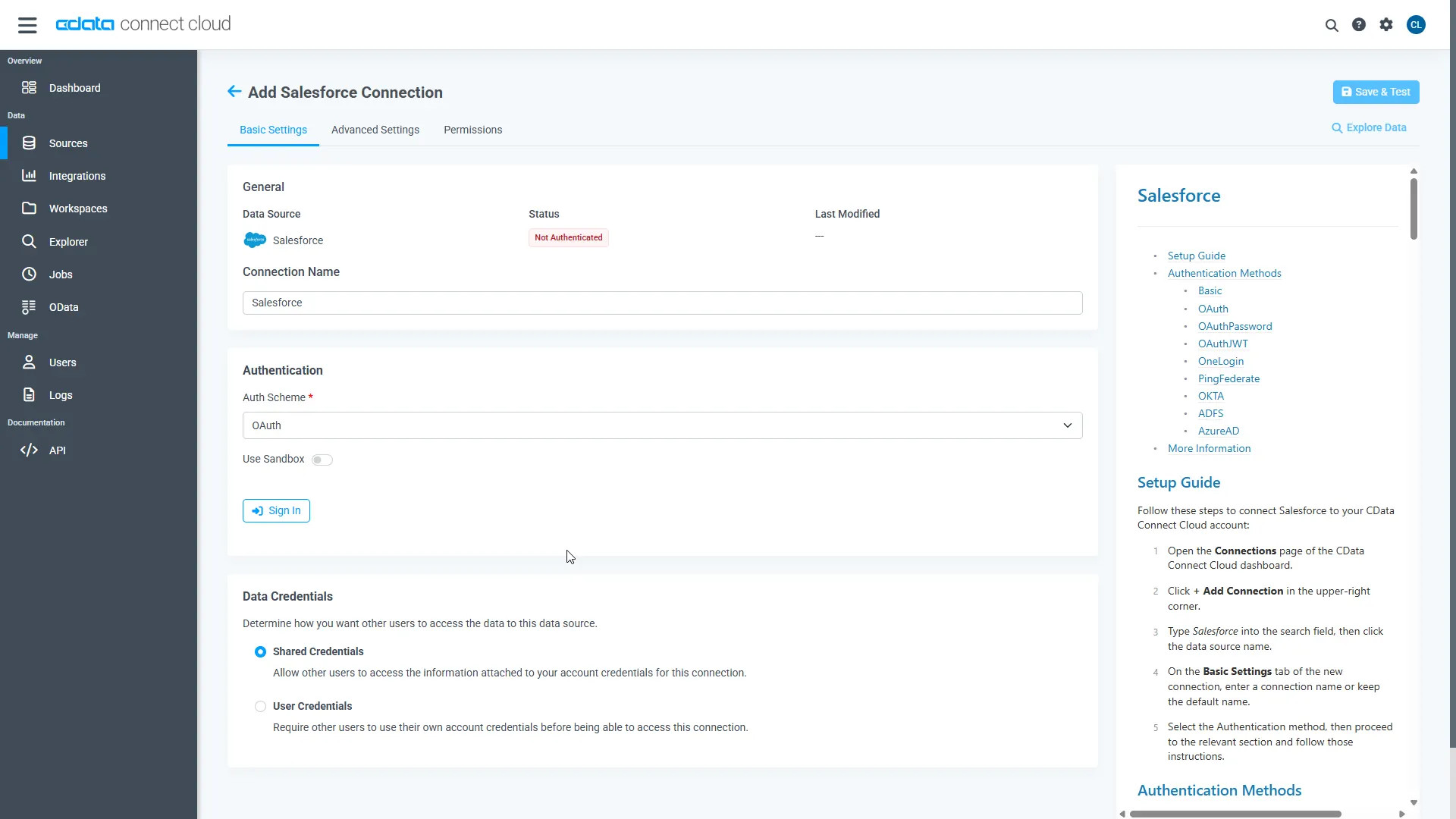
- Click Save & Test
-
Navigate to the Permissions tab in the Add Claude Compliance Connection page and update the User-based permissions.



Add a Personal Access Token
When connecting to Connect AI through the REST API, the OData API, or the Virtual SQL Server, a Personal Access Token (PAT) is used to authenticate the connection to Connect AI. It is best practice to create a separate PAT for each service to maintain granularity of access.
- Click on the Gear icon () at the top right of the Connect AI app to open the settings page.
- On the Settings page, go to the Access Tokens section and click Create PAT.
-
Give the PAT a name and click Create.

- The personal access token is only visible at creation, so be sure to copy it and store it securely for future use.
With the connection configured and a PAT generated, you are ready to connect to Claude Compliance data from Crystal Reports.
Connect to Claude Compliance from Crystal Reports using Connect AI
To establish a connection from Crystal Reports to CData Connect AI, you will need to download the JDBC driver.
- Open the Client Tools page of CData Connect AI.
- Search for and select JDBC.
- Download and run the setup file.
- When the installation is complete, locate the JDBC Connect JAR file in the JDBC driver's installation directory, for example, C:\Program Files\CData\JDBC Driver for CData Connect\lib.
- Copy the JDBC Connect JAR file (cdata.jdbc.connect.jar).
After copying the JDBC CData Connect JAR file, you will need to paste it into the Crystal Reports installation location and configure the connection to Connect AI.
- Find the installation directory for Crystal Reports, for example, C:\Program Files (x86)\SAP BusinessObjects\SAP BusinessObjects Enterprise XI 4.0\java\lib
- Paste the JDBC Connect JAR file into the Crystal Reports installation directory.
- Go to the parent java folder. For example, C:\Program Files (x86)\SAP BusinessObjects\SAP BusinessObjects Enterprise XI 4.0\java This folder should contain a CRConfig file.
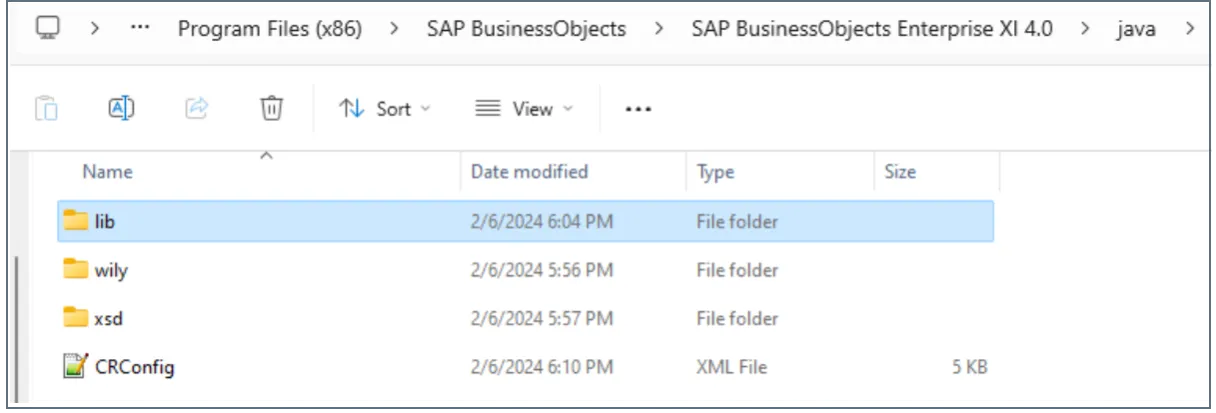
- Open CRConfig in a text editor.
- Add the path to the JDBC CData Connect JAR file in the
of the CRConfig file, for example, C:\Program Files (x86)\SAP BusinessObjects\SAP BusinessObjects Enterprise XI 4.0\java\lib 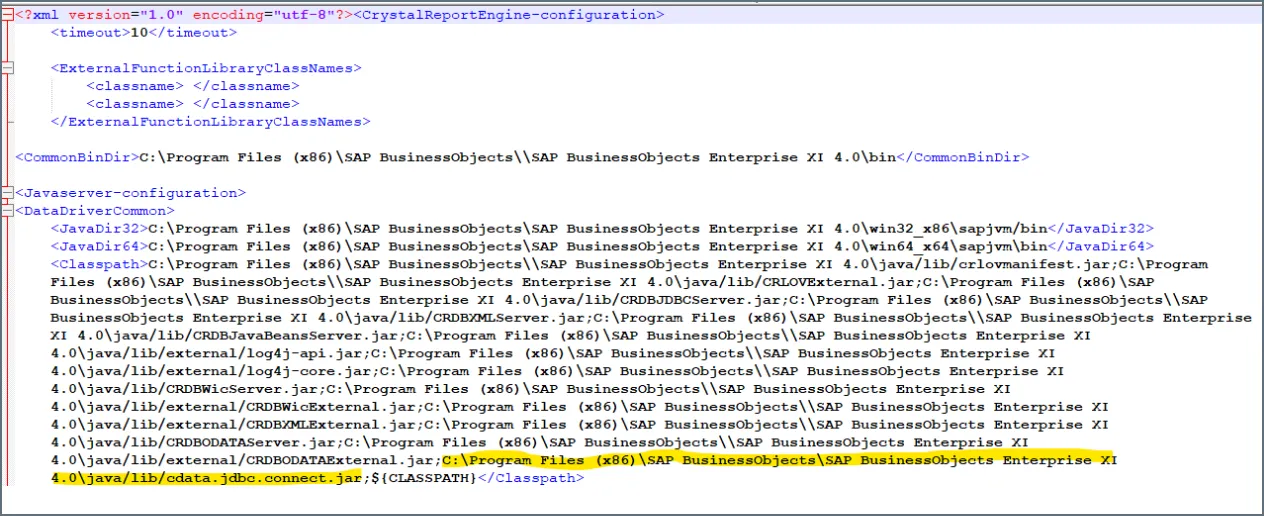
- Log into Crystal Reports and start a blank report.
- In the Database Expert dialog, click Create New Connection.
- Select the JDBC data source and the tables you want to add. Click OK.
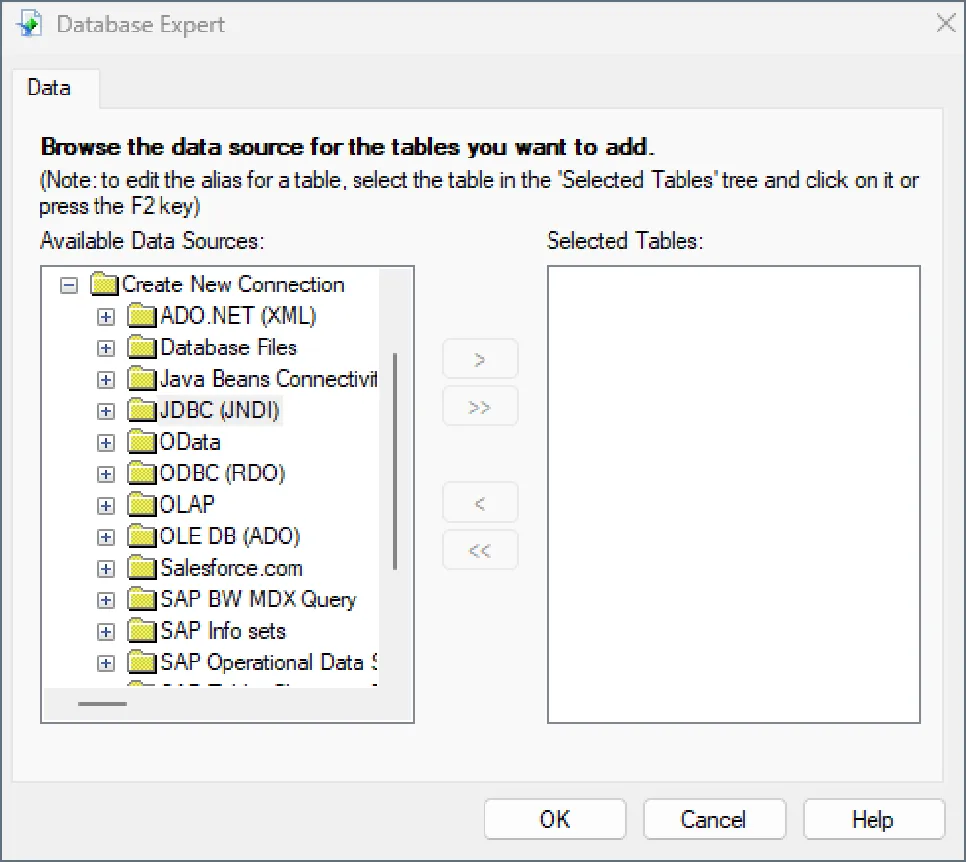
- In the Connection dialog, enter the Connection URL (e.g. jdbc:connect:AuthScheme=Basic;user=username;password=PAT;) and Database Classname (e.g. cdata.jdbc.connect.ConnectDriver).
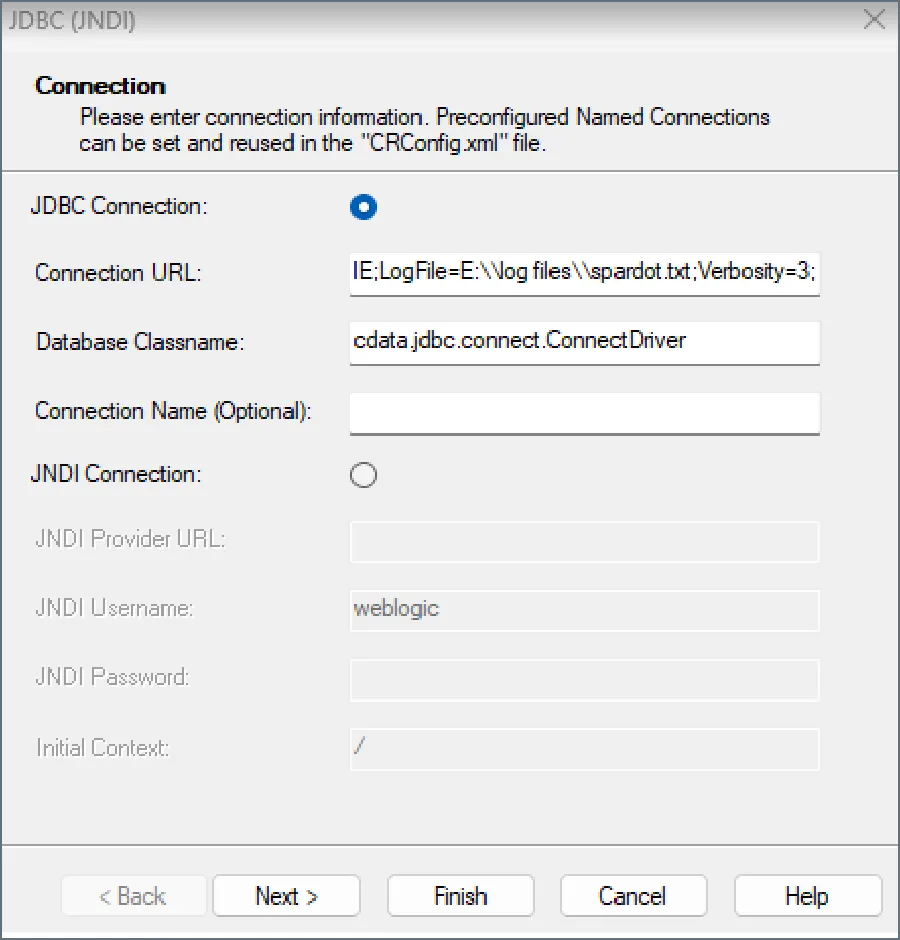
- Click Finish. The Database Expert dialog displays all available connections.
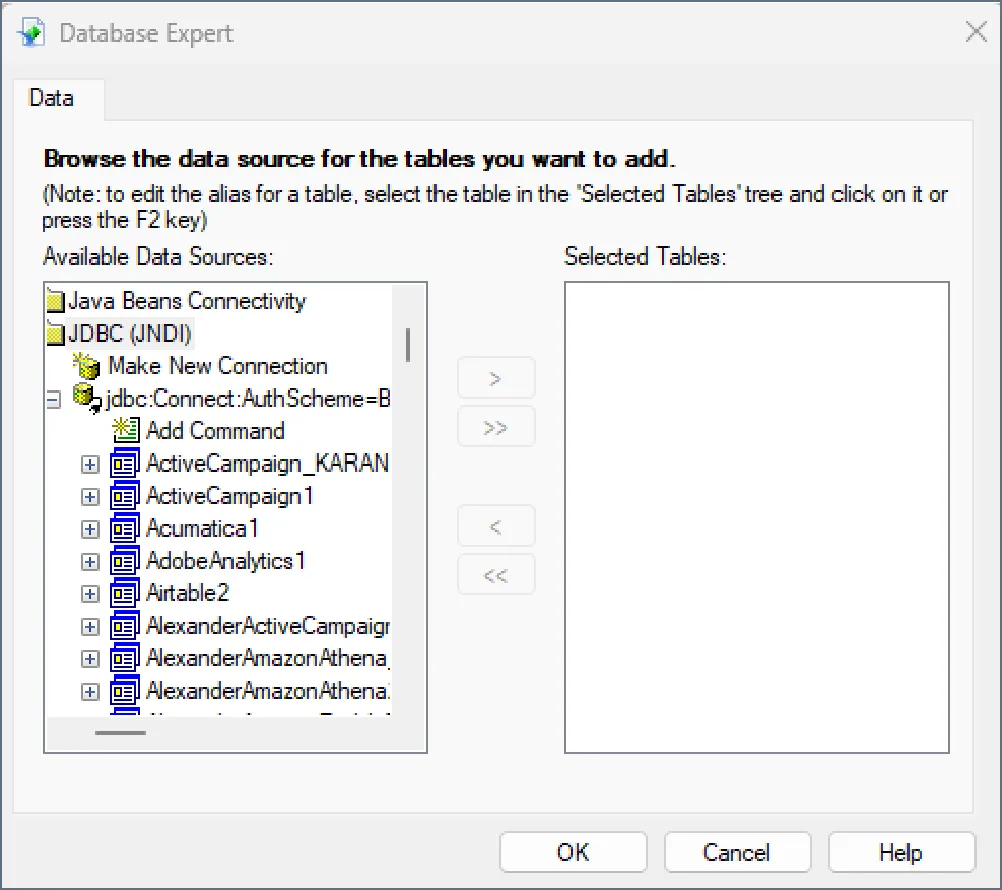
You can now create reports with the connected data.
Get CData Connect AI
To get live data access to hundreds of SaaS, Big Data, and NoSQL sources directly from Crystal Reports, try CData Connect AI today!