



Getting Started with the CData SSIS Components for CSV
This guide explains everything you need to get started with the CData SSIS Components for CSV. You'll learn how to install the components, activate your license, configure your first SSIS connection manager, and build a data flow task to move and transform CSV data in your SQL Server Integration Services workflows.
Installation & Licensing
System Requirements
- Windows: Windows 10/11 or Windows Server 2016+
- Visual Studio: Visual Studio 2015 or later
- SQL Server: SQL Server 2014, 2016, 2017, 2019, or 2022
Installing the SSIS Components
- Download the SSIS Components installer for CSV from your CData account or the evaluation download page
- Run the installer and follow the installation wizard
- The installer automatically registers the Connection Manager, Source, and Destination components with Visual Studio
- When prompted, activate your license using the product key sent to you by the CData Orders Team:
XXXX-XXXX-XXXX-XXXX-XXXX- Note: To run a trial, choose the Trial Key option.
Enabling SSIS in Visual Studio 2022
If you are using Visual Studio 2022, the SQL Server Integration Services Projects extension must be installed.
- In Visual Studio, select Extensions > Manage Extensions
- Search for SQL Server Integration Services Projects 2022
- Click Install
- Close Visual Studio and run the downloaded Microsoft.DataTools.IntegrationServices.exe installer
- Reopen Visual Studio. The Integration Services Project template will now appear when creating a new project
Activating Your License
During installation, you are prompted to activate the SSIS Component license. If you need to update or change activation:
License Activation
The installer automatically prompts you to add your license. During installation, you can choose to:
- Use your existing subscription license key, or
- Enter your trial license
To activate a full subscription license, contact the CData Orders Team and request your product key at [email protected].
Enter the license key in the installer when prompted. Once activated, the components will be licensed and ready to use inside Visual Studio without any additional steps.
Runtime Licensing
When deploying SSIS packages, a Runtime Key (RTK) can also be used:
- Set the RTK property in the Connection Manager before deployment
Common Licensing Questions
Can I use my license on multiple machines?
Yes, depending on your subscription tier. Contact [email protected] for details.
I lost my license key. How do I retrieve it?
Email [email protected] with your order number, and we'll resend your license key.
How do I transfer my license to another machine?
Yes. When transferring the license to a different machine, you will need to submit a License Transfer Request on our site linked below:
https://www.cdata.com/lic/transfer/After the License Transfer Request is submitted and successfully processed, an activation will be added to your Product Key and you will be able to activate the full license on the other machine. Once this process is finished, the license on the previous machine will be invalid.
You may also view and upgrade licenses in the self-service portal at portal.cdata.com.
Connection Configuration
Once the components are installed and licensed, you can configure a connection to CSV using an SSIS Connection Manager. This Connection Manager stores all authentication and connection properties used by the Source and Destination components.
Creating a Connection Manager
- In the bottom Connection Managers panel of your SSIS package, right-click and select New Connection
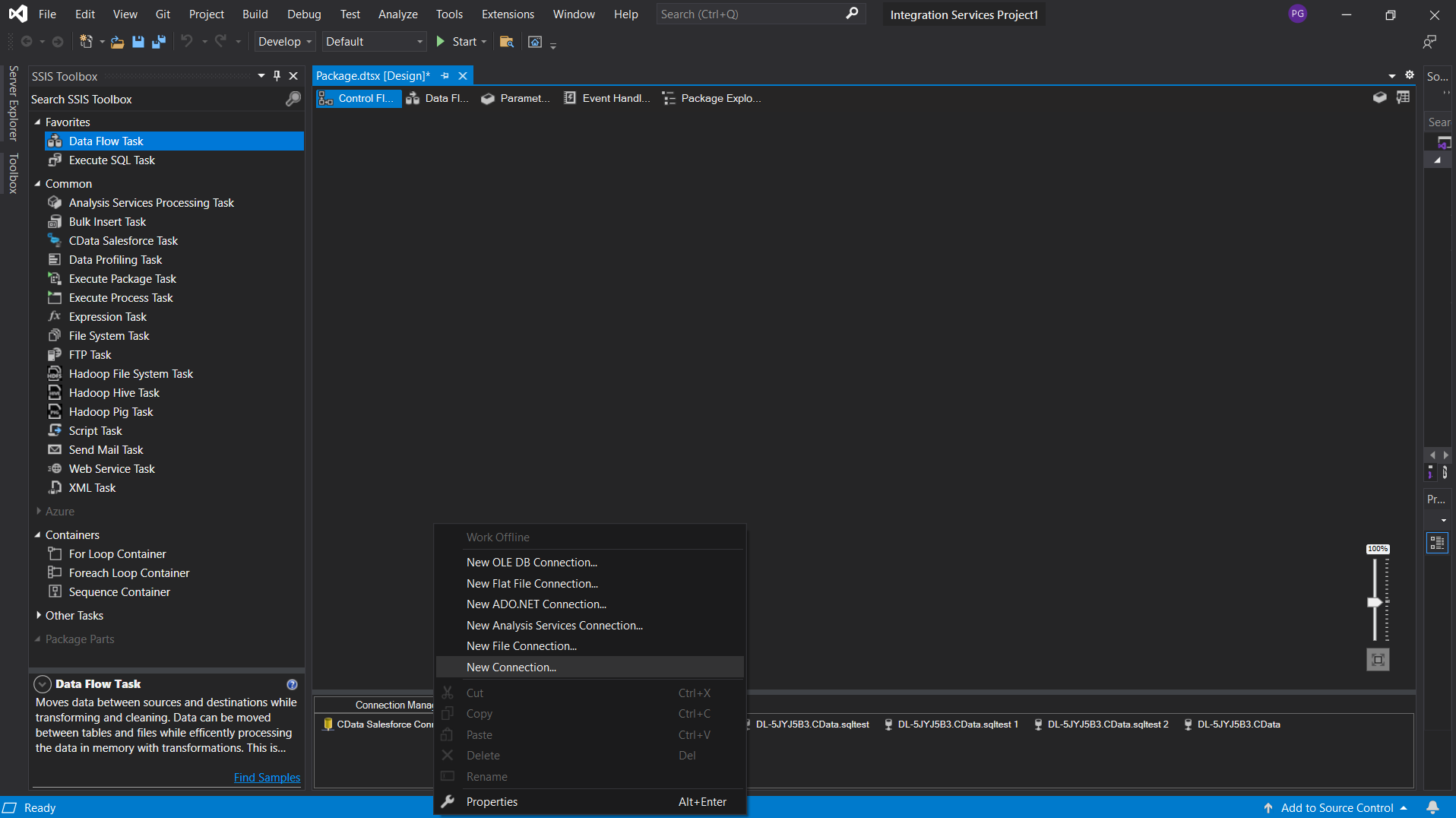
- Select CData SSIS Components for CSV from the list
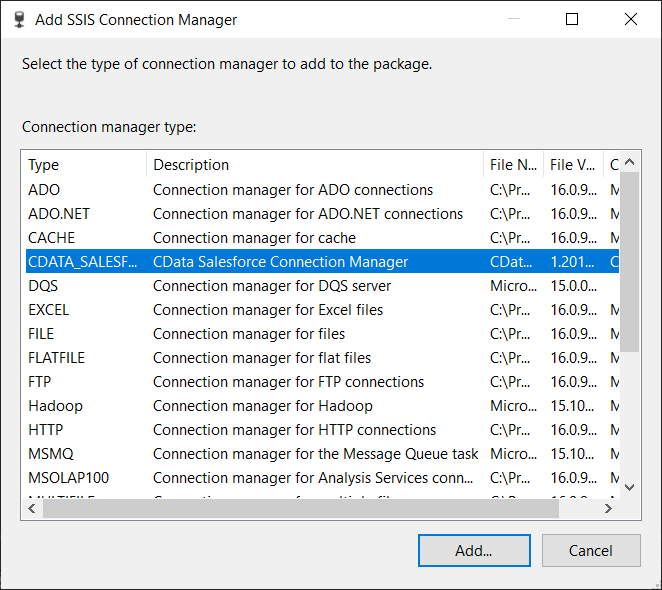
- Click Add to open the Connection Manager UI
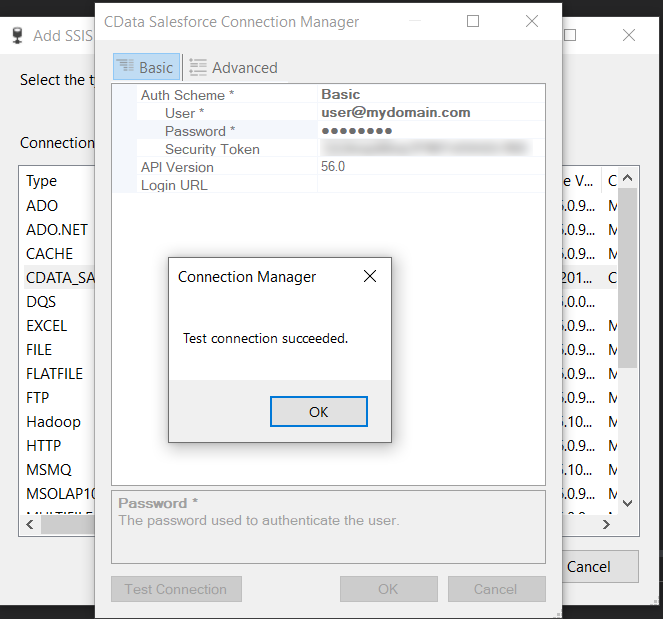
- Enter the required authentication properties (OAuth, API token, client credentials, etc.) depending on your CSV
- AWSAccessKey: AWS Access Key (username)
- AWSSecretKey: AWS Secret Key
- Click Test Connection to confirm connectivity
Configuring Connection Properties
Connecting to Local or Cloud-Stored (Box, Google Drive, Amazon S3, SharePoint) CSV Files
CData Drivers let you work with CSV files stored locally and stored in cloud storage services like Box, Amazon S3, Google Drive, or SharePoint, right where they are.
Setting connection properties for local files
Set the URI property to local folder path.
Setting connection properties for files stored in Amazon S3
To connect to CSV file(s) within Amazon S3, set the URI property to the URI of the Bucket and Folder where the intended CSV files exist. In addition, at least set these properties:
Setting connection properties for files stored in Box
To connect to CSV file(s) within Box, set the URI property to the URI of the folder that includes the intended CSV file(s). Use the OAuth authentication method to connect to Box.
Dropbox
To connect to CSV file(s) within Dropbox, set the URI proprerty to the URI of the folder that includes the intended CSV file(s). Use the OAuth authentication method to connect to Dropbox. Either User Account or Service Account can be used to authenticate.
SharePoint Online (SOAP)
To connect to CSV file(s) within SharePoint with SOAP Schema, set the URI proprerty to the URI of the document library that includes the intended CSV file. Set User, Password, and StorageBaseURL.
SharePoint Online REST
To connect to CSV file(s) within SharePoint with REST Schema, set the URI proprerty to the URI of the document library that includes the intended CSV file. StorageBaseURL is optional. If not set, the driver will use the root drive. OAuth is used to authenticate.
Google Drive
To connect to CSV file(s) within Google Drive, set the URI property to the URI of the folder that includes the intended CSV file(s). Use the OAuth authentication method to connect and set InitiateOAuth to GETANDREFRESH.
Building an SSIS Data Flow
With a Connection Manager created, you can now pull data from CSV or push data into it using SSIS data flow tasks.
Creating a Data Flow Task
- In the Control Flow tab, drag a Data Flow Task onto the design surface
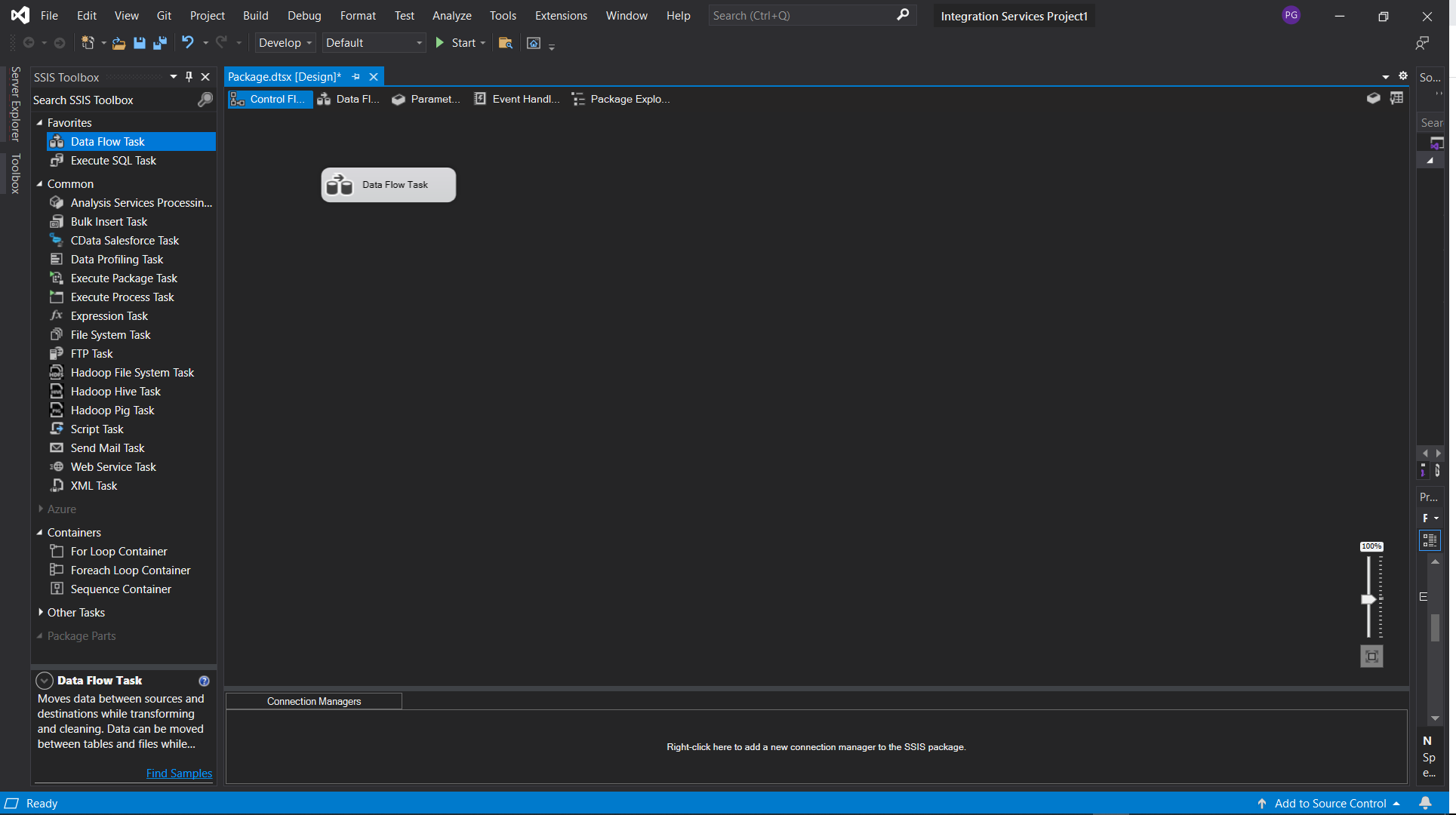
- Double-click the task to open the Data Flow workspace
Using the Source Component
- In the SSIS Toolbox, drag the CData CSV Source component into the Data Flow
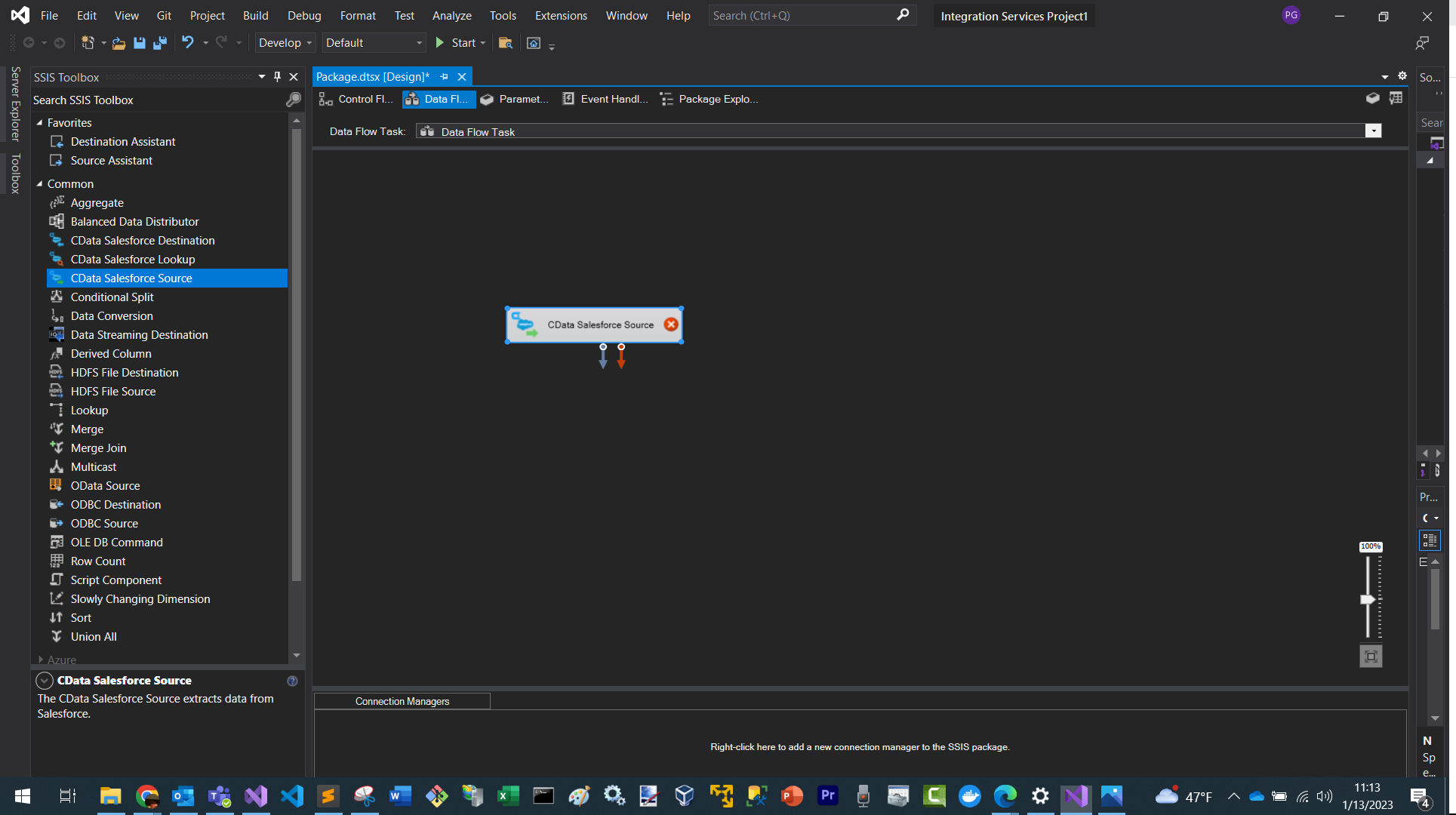
- Double-click it to open the Source Editor
- Select the CData CSV Connection Manager you created
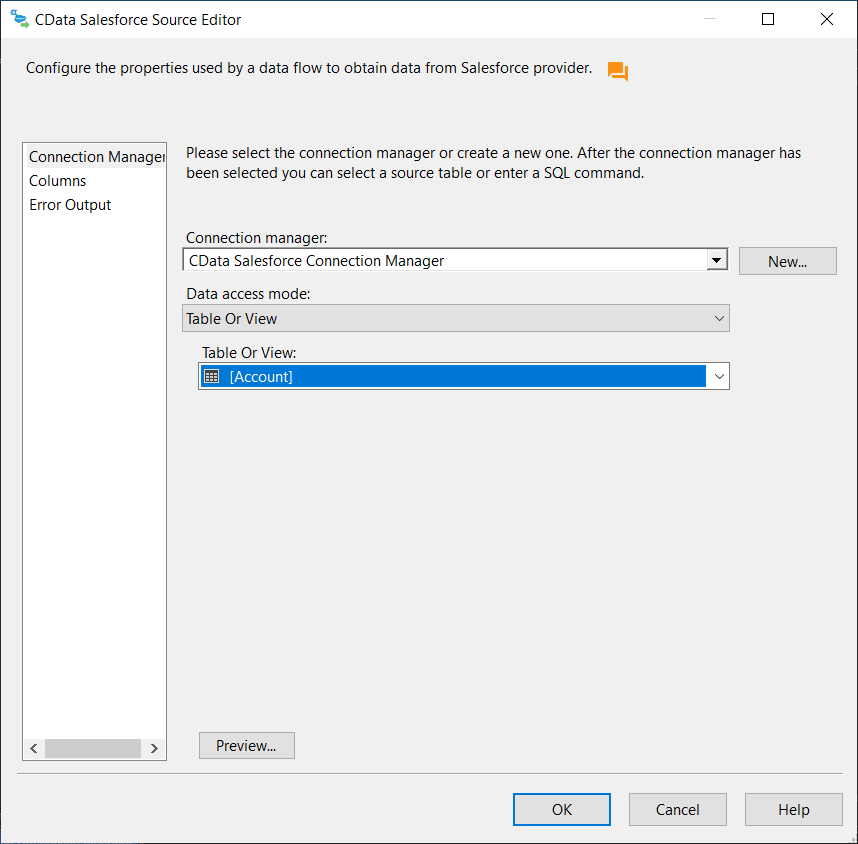
- Choose a table or view to extract records from
- Click OK to save your configuration
Using the Destination Component
- Drag a SQL Server Destination onto the canvas
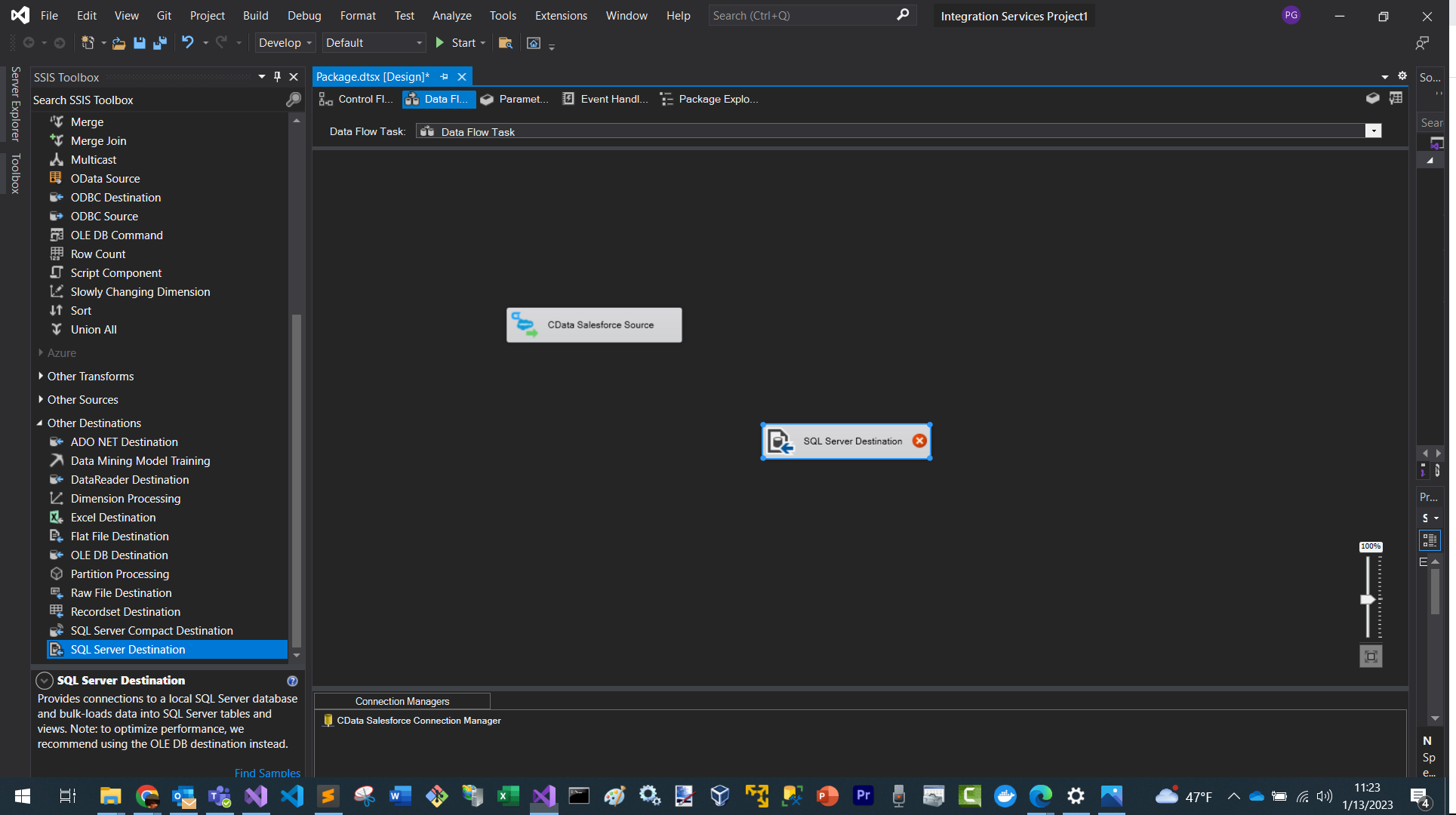
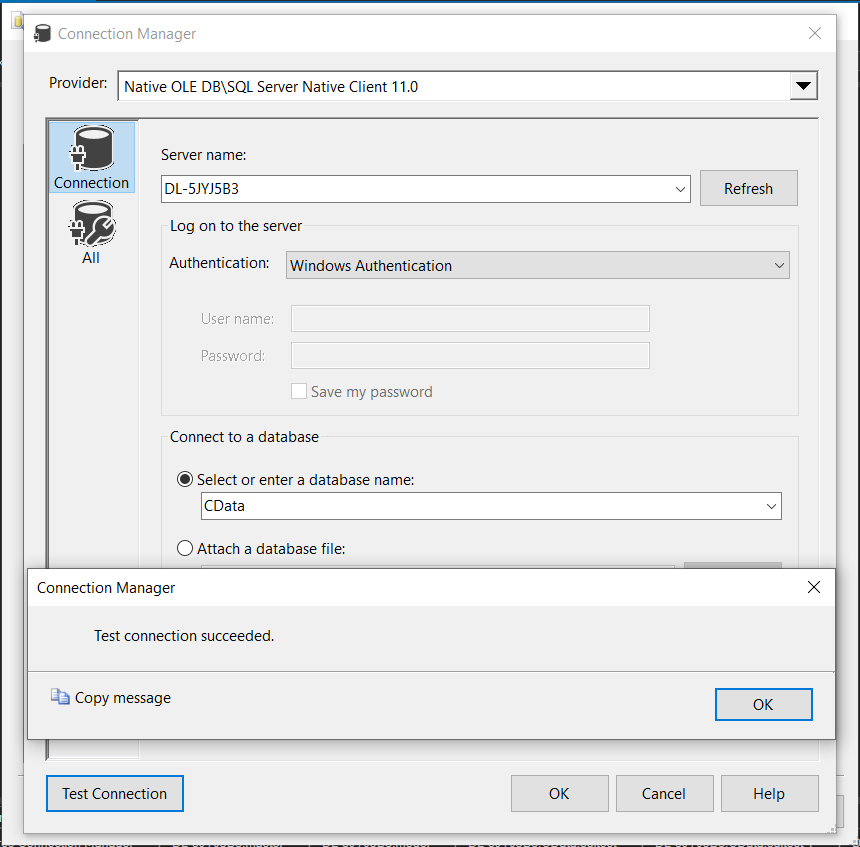
- Double-click it to open the Destination Editor
- Select an existing table or click New to auto-generate a table based on the Source schema
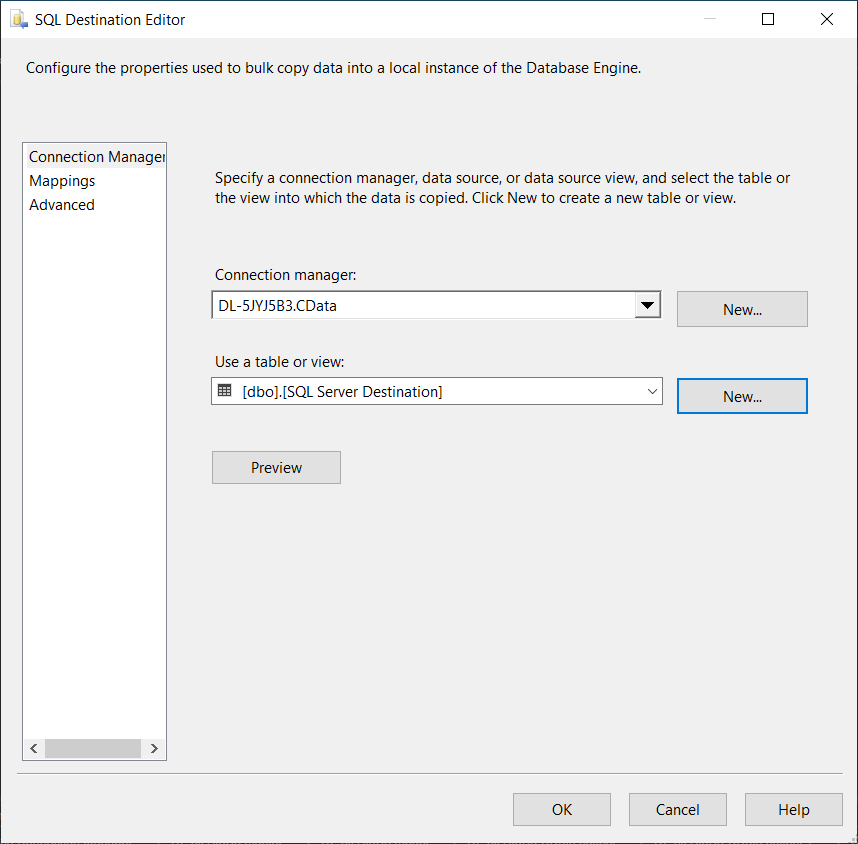
- Connect the Source output to the Destination input and map the columns as needed
- At this point you have created a data flow task for replicating your CSV data to a SQL Server database
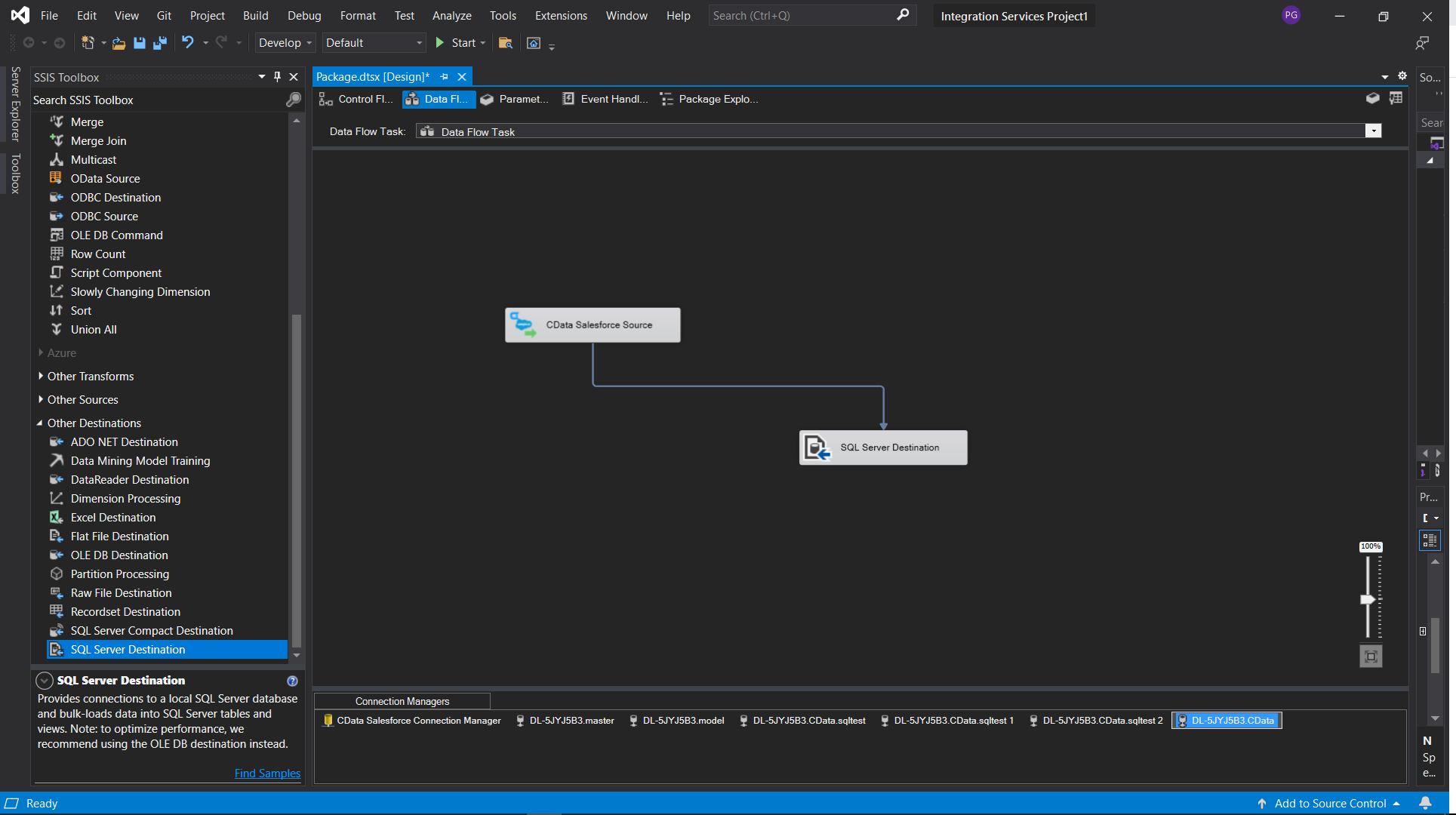
Testing Your Data Flow
- Return to the Control Flow tab
- Click Start Debugging
- Monitor the progress indicators
- Review row counts and ensure data is loading as expected
Common Connection Issues
Authentication Failed
Solution: Verify OAuth settings, client IDs, secrets, or token permissions for your CSV. Contact [email protected] for OAuth troubleshooting.
Cannot Reach Server
Solution: Check firewall, proxy, and VPN configurations. Contact [email protected] for specific port requirements.
Table Not Found
Solution: Confirm you selected the correct schema or database when querying CSV.
What's Next
Now that you have installed, licensed, and configured the SSIS Components, here are scenarios you can use to explore our SSIS tools:
| SSIS Component | Article Title |
|---|---|
| BIML | Use Biml to Build SSIS Tasks to Replicate CSV to SQL Server |
| SSIS Import | Import CSV Data into SQL Server using SSIS |
Get Support
If you need assistance at any point:
- Technical Support: [email protected]
- Community Forum: CData Community Site
- Help Documentation: Installed locally and available online
FAQs
Installation & Licensing
- Do I need administrator rights to install the SSIS Components?
Yes, administrator rights are required to install components for use across Visual Studio. - Do I need an RTK to deploy to Azure Data Factory?
Yes. Set the RTK property in the Connection Manager before publishing.
Connecting
- Can I use multiple CSV accounts?
Create separate Connection Managers for each account. - Can I connect through a proxy?
Yes. Configure proxy settings in the Connection Manager properties. - How do I test my connection?
Click Test Connection in the Connection Manager UI.
Performance & Troubleshooting
- Why is my data flow slow?
Add filters, limit rows, and ensure batching settings are configured in the Source component. - How do I enable logging?
Add the following to your connection manager:- Logfile: /path/to/logfile.log
- Verbosity: 3
Be prepared to securely upload the log file upon request when reaching out to [email protected] for troubleshooting analysis.
For questions not covered in this FAQ, contact [email protected].
Ready to get started?
Download a free trial of the CSV SSIS Component to get started:
Download NowLearn more:
 CSV SSIS Components
Powerful SSIS Source & Destination Components that allow you to easily connect SQL Server with delimited data (CSV/TSV files) through SSIS Workflows.
Use the CSV Data Flow Components to synchronize with flat-file documents. Perfect for data synchronization, local back-ups, workflow automation, and more!
