






Integrate Databricks with JetBrains RubyMine using CData JDBC Drivers

CData JDBC Driver for Databricks offer standardized JDBC connectivity to 200+ data sources, allowing developers to treat SaaS and cloud APIs as relational databases. By integrating these drivers into JetBrains RubyMine, user can connect IDE directly to external systems like CRM or ERP platforms, enabling SQL based data access and real-time querying.
RubyMine is a advanced IDE for Ruby and Rails development that offers advanced coding assistance, debugging, and database tools. Through CData JDBC integration, developers can link RubyMine with Databricks for easy access to live Databricks data.
Overview
Here is a quick overview of the integration process:
- Set Up Environment: Configure the Ruby interpreter in RubyMine
- Install JDBC Driver: Add the CData JDBC Driver for Databricks to RubyMine's database configuration
- Connect: Establish a live connection to Databricks and begin querying Databricks data
About Databricks Data Integration
Accessing and integrating live data from Databricks has never been easier with CData. Customers rely on CData connectivity to:
- Access all versions of Databricks from Runtime Versions 9.1 - 13.X to both the Pro and Classic Databricks SQL versions.
- Leave Databricks in their preferred environment thanks to compatibility with any hosting solution.
- Secure authenticate in a variety of ways, including personal access token, Azure Service Principal, and Azure AD.
- Upload data to Databricks using Databricks File System, Azure Blog Storage, and AWS S3 Storage.
While many customers are using CData's solutions to migrate data from different systems into their Databricks data lakehouse, several customers use our live connectivity solutions to federate connectivity between their databases and Databricks. These customers are using SQL Server Linked Servers or Polybase to get live access to Databricks from within their existing RDBMs.
Read more about common Databricks use-cases and how CData's solutions help solve data problems in our blog: What is Databricks Used For? 6 Use Cases.
Getting Started
Configure the Ruby Interpreter in RubyMine
After installing the Ruby interpreter, open RubyMine and configure the environment.
- Create a New Empty Project
- Select the interpreter for example, C:\Ruby34-x64\bin uby.exe
- Click Create to initialize the project
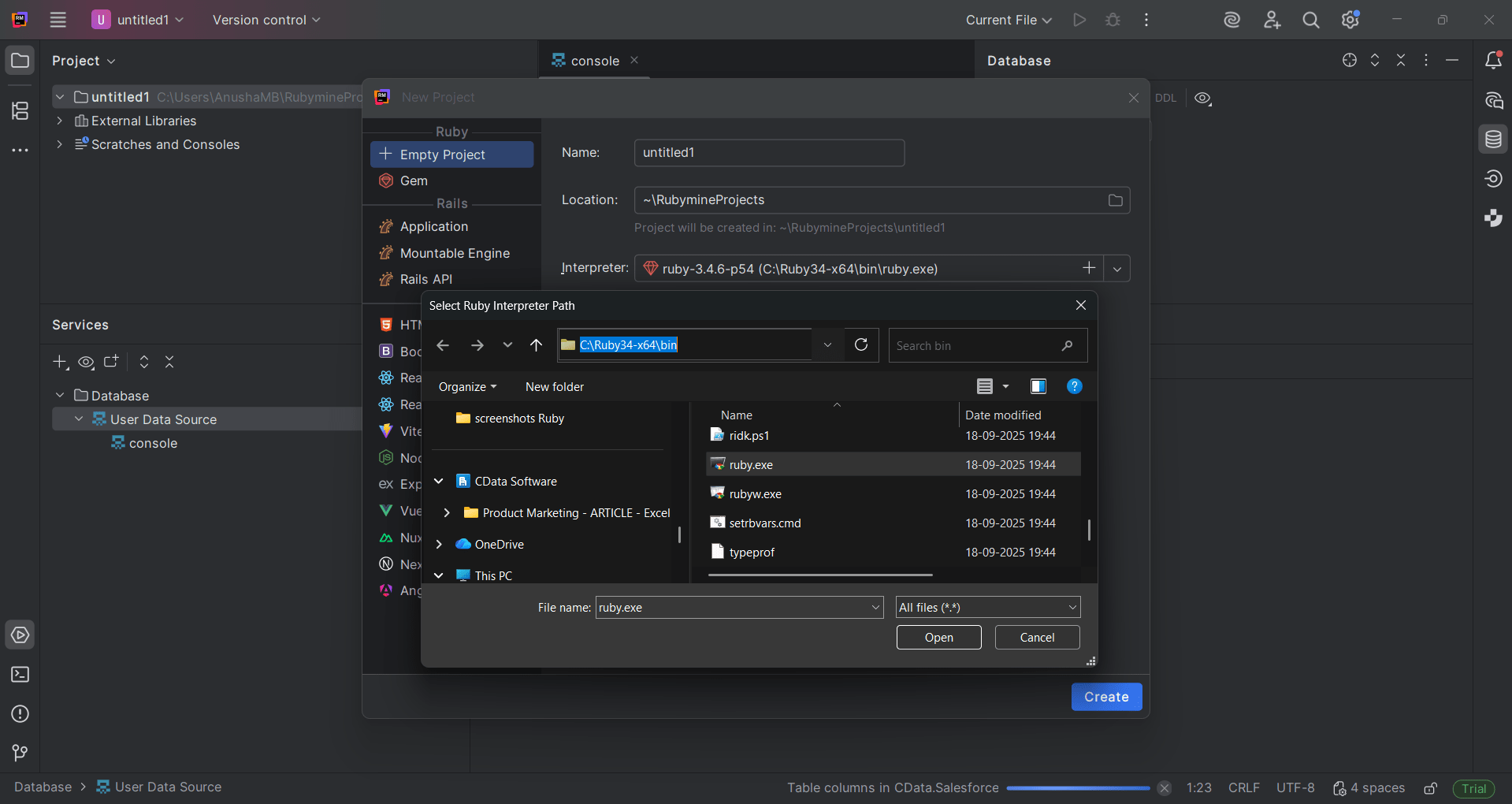
Add the CData JDBC Driver for Databricks
Next, configure the CData JDBC Driver for Databricks within RubyMine.
- Go to View, select Tool Windows and click Database to open the database panel
- Click the "+" icon and choose Driver from the dropdown
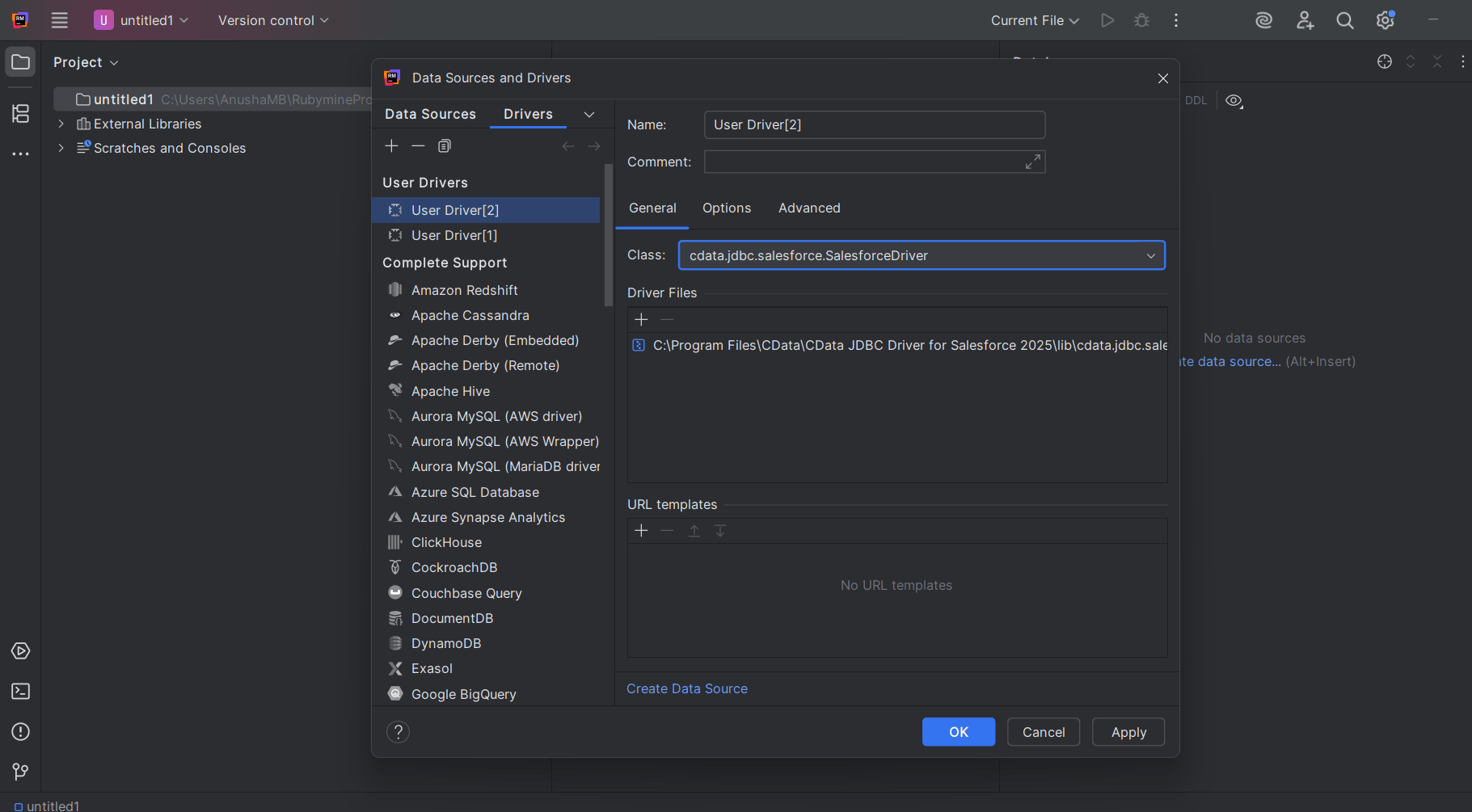
- In the Data Sources and Drivers window:
- Provide a Name for the driver (e.g., CData Databricks JDBC)
- Click "+" in the Driver Files section and select Custom JARs
- Locate and open the cdata.jdbc.databricks.jar file
- Set the Class to cdata.jdbc.databricks.DatabricksDriver
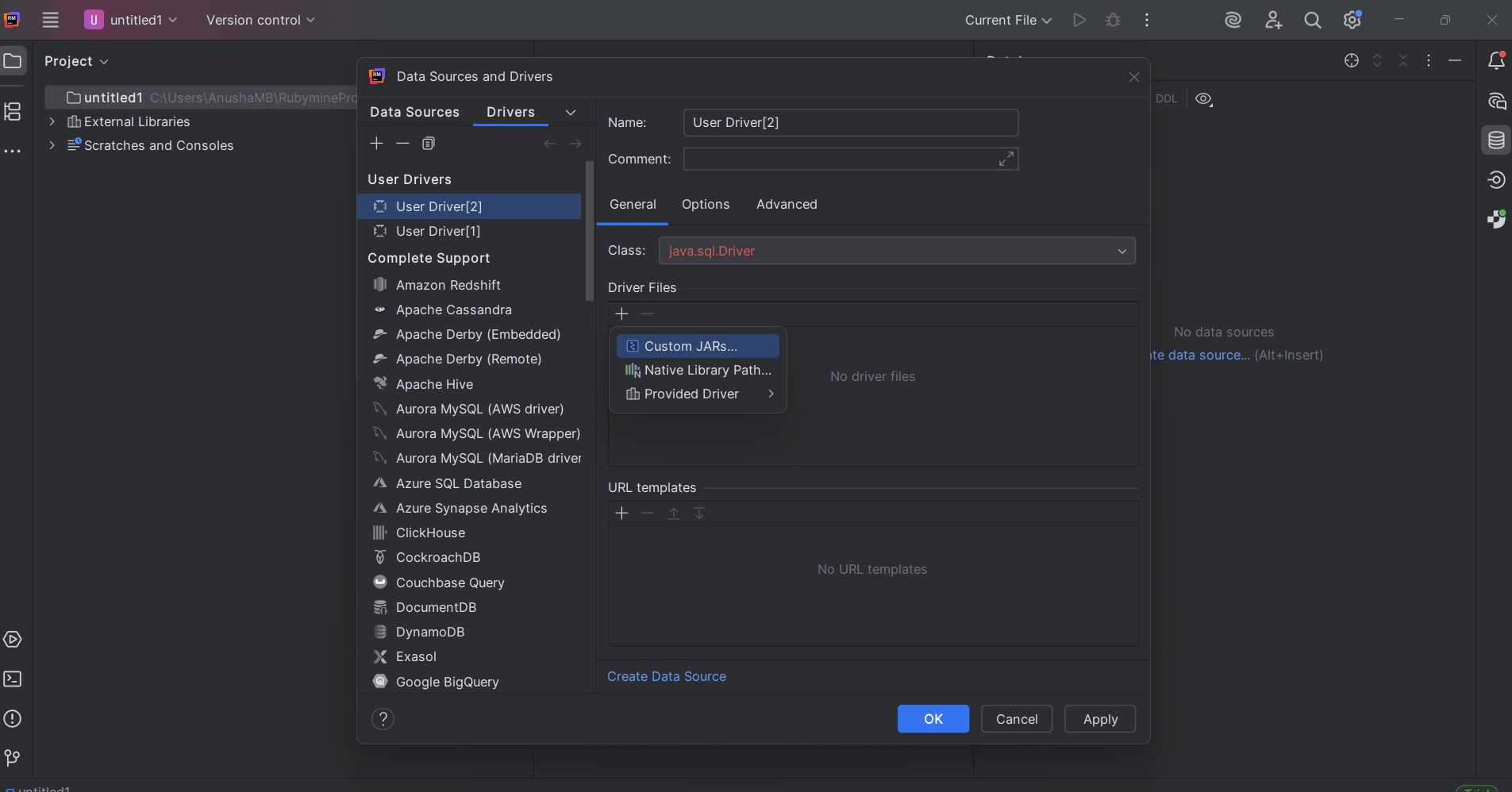
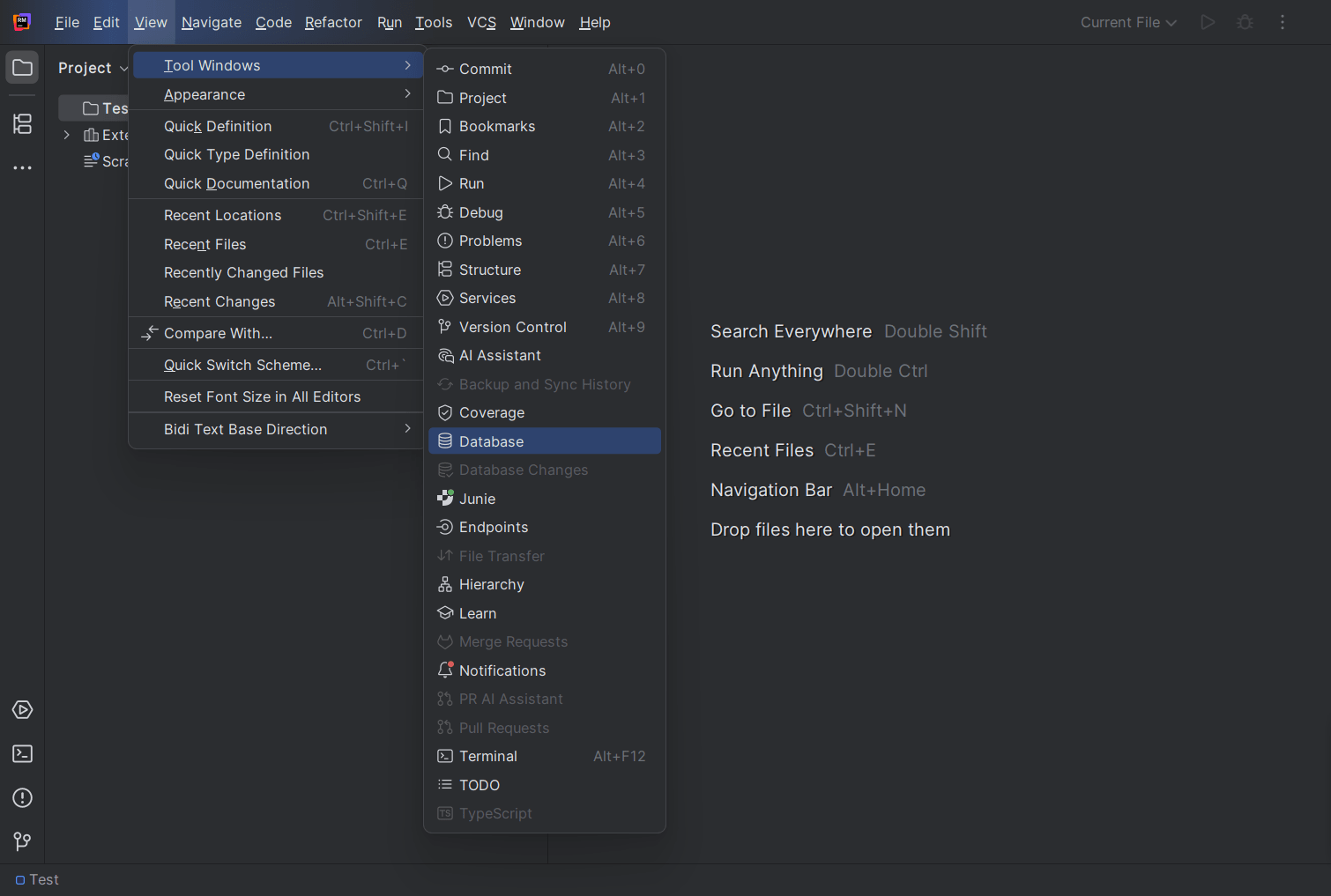
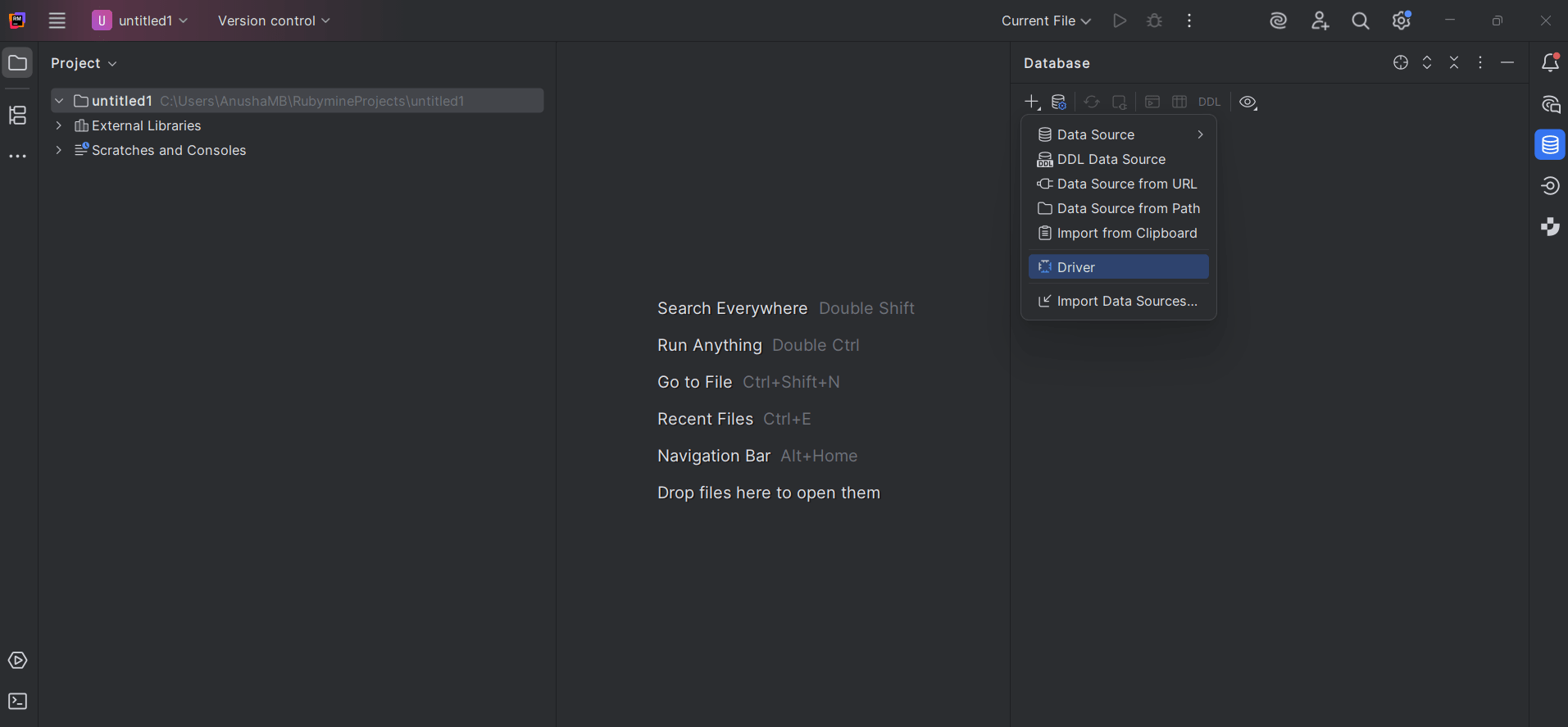
Create the Databricks data source
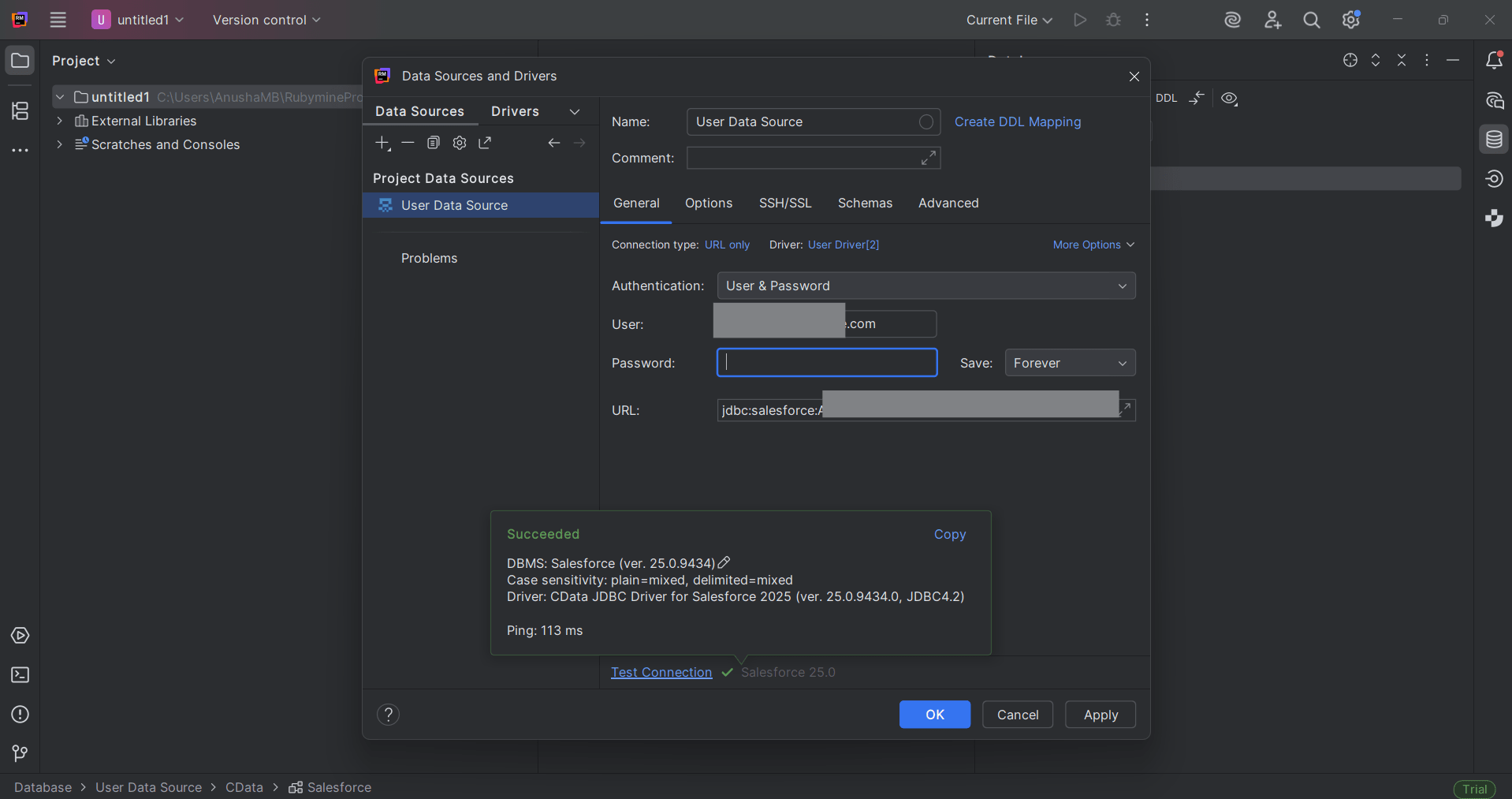
- Click Create Data Source and choose the newly created driver
- In the connection window, confirm that the selected driver is correct
- Enter your connection details:
- Name: Databricks Connection
- URL: jdbc:databricks:User=username;Password=password;
- Username and Password: User Databricks credentials
- Click Test Connection. If successful, click OK to save

Query live Databricks data
Once the connection is established, you can query live Databricks data directly within RubyMine.
- Open the Database Console
- Run SQL queries, for example:
SELECT * FROM Databricks data_Table LIMIT 10;
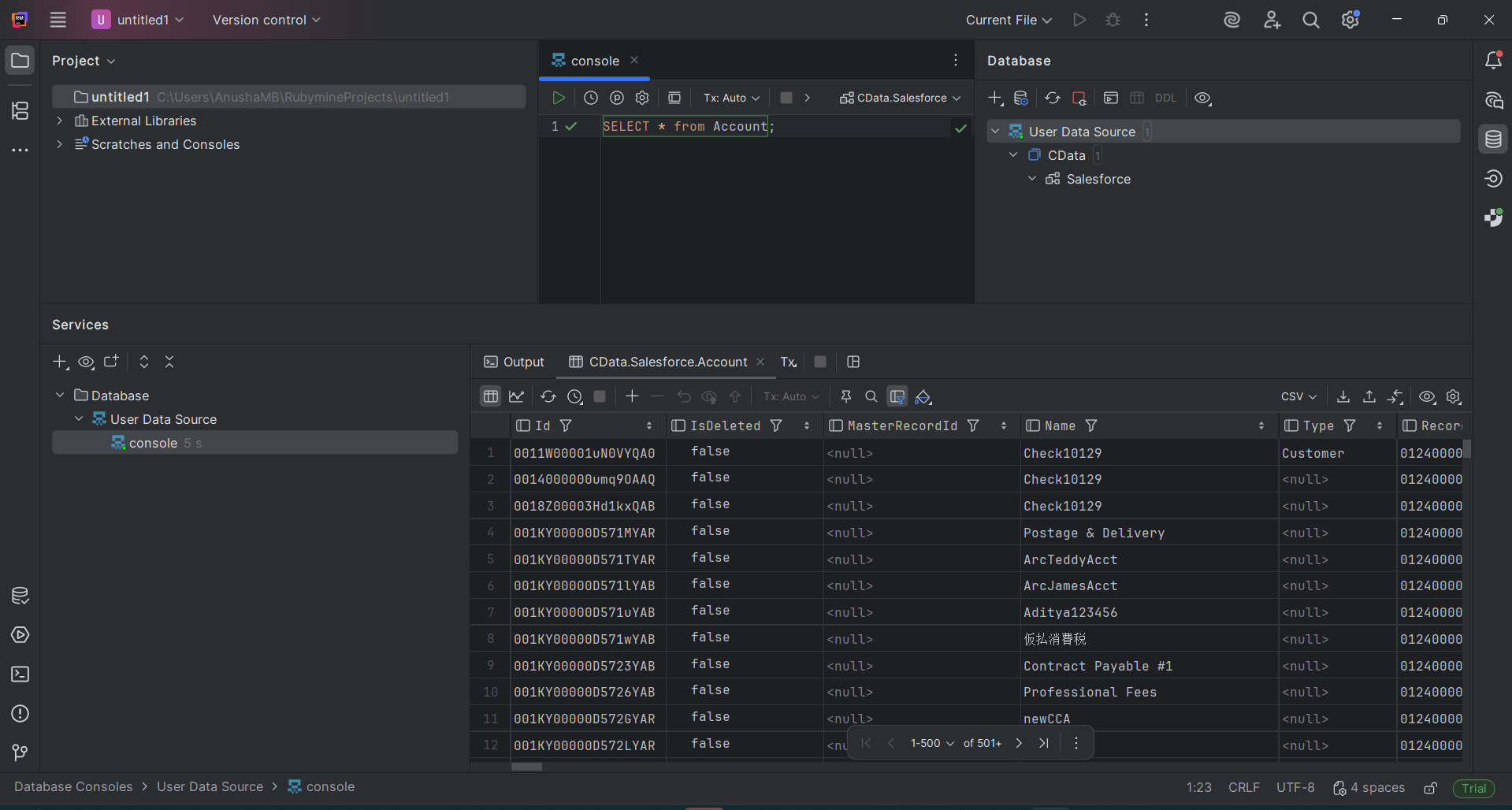
Developers can now easily access and manipulate Databricks data using SQL inside RubyMine bridging code development and live data access in one unified environment.
Connect RubyMine to 300+ Data Sources with CData
CData JDBC Drivers bring real time data connectivity to your development environment. With support for over 300+ sources, including CRM, ERP, analytics, and cloud APIs, developers can query, visualize, and build data driven applications without leaving their IDE.
Start your 30-day free trial to experience the full potential of live data connectivity.
Ready to get started?
Download a free trial of the Databricks Driver to get started:
Download NowLearn more:
 Databricks JDBC Driver
Rapidly create and deploy powerful Java applications that integrate with Databricks.
