



How to Connect Flowise AI Agents to Live Microsoft Dataverse Data via CData Connect AI
Flowise AI is an open-source, no-code tool for building AI workflows and custom agents visually. Its drag-and-drop interface allows you to integrate large language models (LLMs) with APIs, databases, and external systems effortlessly.
CData Connect AI enables real-time connectivity to over 350+ enterprise data sources. Through its Model Context Protocol (MCP) server, CData Connect AI bridges Flowise agents with live Microsoft Dataverse securely and efficiently, no data replication required. By combining Flowise AI's intuitive agent builder with CData's MCP integration, users can create agents capable of fetching, analyzing, and acting upon live Microsoft Dataverse data directly within Flowise AI workflows.
This guide shows you how to connect Flowise AI to CData Connect AI MCP, set up credentials, and enable your agents to query live Microsoft Dataverse data in real time.
About Microsoft Dataverse Data Integration
CData provides the easiest way to access and integrate live data from Microsoft Dataverse (formerly the Common Data Service). Customers use CData connectivity to:
- Access both Dataverse Entities and Dataverse system tables to work with exactly the data they need.
- Authenticate securely with Microsoft Dataverse in a variety of ways, including Azure Active Directory, Azure Managed Service Identity credentials, and Azure Service Principal using either a client secret or a certificate.
- Use SQL stored procedures to manage Microsoft Dataverse entities - listing, creating, and removing associations between entities.
CData customers use our Dataverse connectivity solutions for a variety of reasons, whether they're looking to replicate their data into a data warehouse (alongside other data sources)or analyze live Dataverse data from their preferred data tools inside the Microsoft ecosystem (Power BI, Excel, etc.) or with external tools (Tableau, Looker, etc.).
Getting Started
Step 1: Configure Microsoft Dataverse Connectivity for Flowise
Connectivity to Microsoft Dataverse from Flowise AI is made possible through CData Connect AI's Remote MCP Server. To interact with Microsoft Dataverse data from Flowise AI, we start by creating and configuring a Microsoft Dataverse connection in CData Connect AI.
- Log into Connect AI, click Sources, and then click Add Connection
- Select Microsoft Dataverse from the Add Connection panel
-
Enter the necessary authentication properties to connect to Microsoft Dataverse.
You can connect without setting any connection properties for your user credentials. Below are the minimum connection properties required to connect.
- InitiateOAuth: Set this to GETANDREFRESH. You can use InitiateOAuth to avoid repeating the OAuth exchange and manually setting the OAuthAccessToken.
- OrganizationUrl: Set this to the organization URL you are connecting to, such as https://myorganization.crm.dynamics.com.
- Tenant (optional): Set this if you wish to authenticate to a different tenant than your default. This is required to work with an organization not on your default Tenant.
When you connect the Common Data Service OAuth endpoint opens in your default browser. Log in and grant permissions. The OAuth process completes automatically.
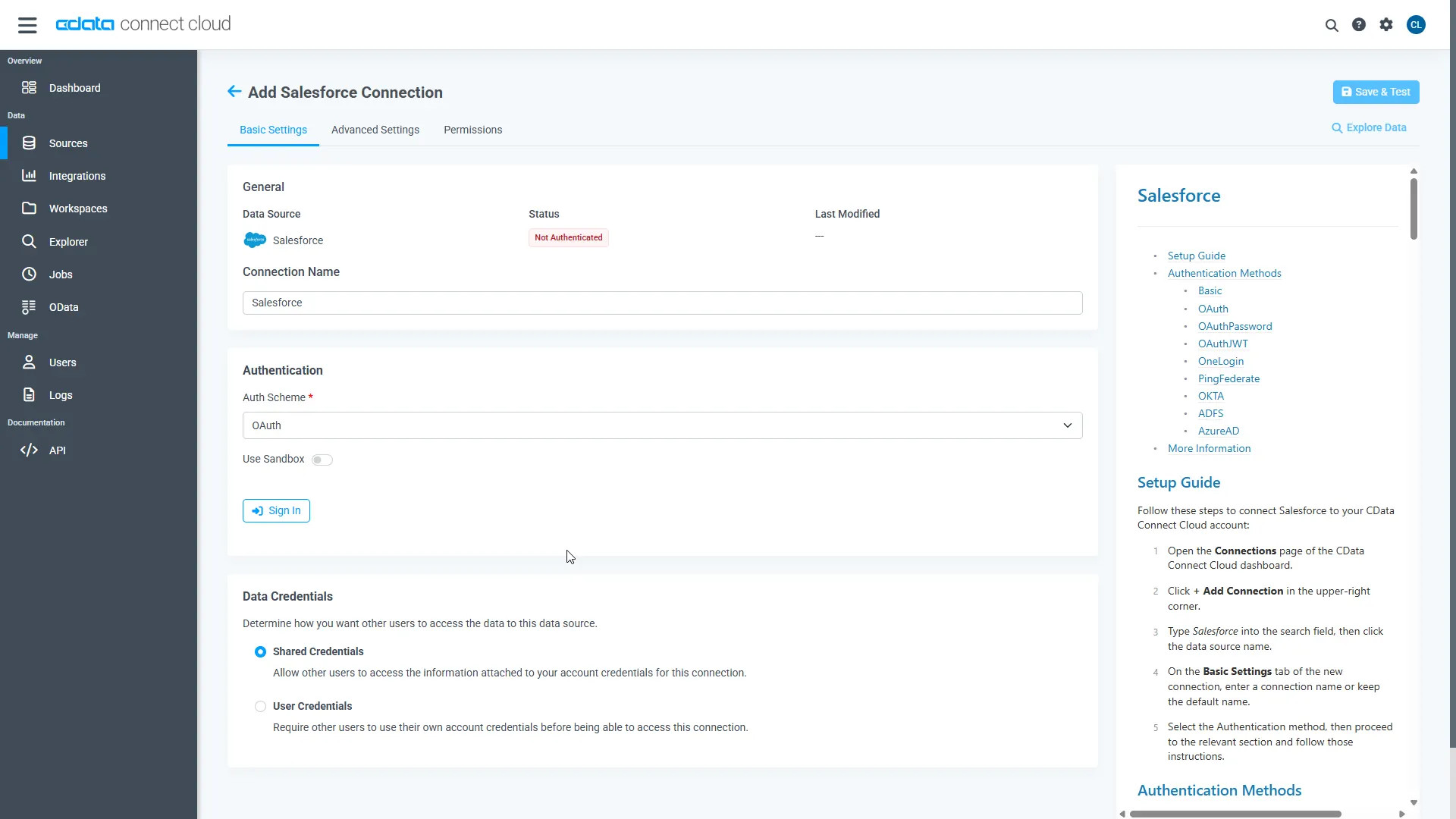
- Click Save & Test
- Navigate to the Permissions tab and update user-based permissions



Once the connection is established, Microsoft Dataverse data is now accessible in CData Connect AI and ready to be used with MCP enabled tools.
Add a Personal Access Token
A Personal Access Token (PAT) is used to authenticate the connection to Connect AI from Flowise AI. It is best practice to create a separate PAT for each integration to maintain granular access control.
- Click the gear icon () at the top right of the Connect AI app to open Settings
- On the Settings page, go to the Access Tokens section and click Create PAT
- Give the PAT a descriptive name and click Create
- Copy the token when displayed and store it securely. It will not be shown again

With the Microsoft Dataverse connection configured and a PAT generated, Flowise AI can now connect to Microsoft Dataverse data through the CData MCP Server.
Step 2: Configure Connect AI credentials in Flowise AI
Log in to Flowise AI workspace to set up the integration.
Add OpenAI credentials
- Navigate to Credentials and choose Add Credential
- Select OpenAI API from the dropdown
- Provide a name (e.g., OpenAI_Key) and paste the API key


Add the PAT variable
- Navigate to Variables and Add Variable
- Set Variable Name (e.g., PAT), choose Static as type, and set the Value to Base64-encoded username:PAT
- Click Add to save the variable


Step 3: Build the agent in Flowise AI
- Go to Agent Flows, select Add New
- Click the "+" icon to add a new node and choose Agent and drag the agent to the workflow
- Connect the Start node to the Agent node


Configure agent settings
Double-click on the Agent node and fill in the details:
- Model: select ChatOpenAI or preferred model (e.g., gpt-4o-mini)
- Connect Credential: Select OpenAI API key credential which was created earlier
- Streaming: Enabled

Add the custom MCP tool
- Under Tools, click Add Tool and choose Custom MCP
- Fill in the JSON parameters as shown below:
{
  "url": "https://mcp.cloud.cdata.com/mcp",
  "headers": {
    "Authorization": "Basic {{$vars.PAT}}"
  }
}

Click the refresh icon to load available MCP actions. Once actions are listed, now Flowise agent is successfully connected to CData Connect AI MCP.
Step 4: Test and query live Microsoft Dataverse data in Flowise
- Open the Chat tab in Flowise
- Type a query such as "Show top 10 records from Microsoft Dataverse data table"
- Observe that responses are fetched in real time via the CData Connect AI MCP connection

With the workflow run completed, Flowise demonstrates successful retrieval of Salesforce data through the CData Connect AI MCP server, with the MCP Client node providing the ability to ask questions, retrieve records, and perform actions on the data.
Get CData Connect AI
To access 300+ SaaS, Big Data, and NoSQL sources directly from your cloud applications, try CData Connect AI today!
