






How to Query Live Oracle Eloqua Reporting Data in Claude Desktop

Model Context Protocol (MCP) is an emerging, open-source standard for connecting LLMs with external services and data sources. Through MCP Servers, AI clients can perform actions like opening Jira tickets, posting Slack messages, committing GitHub branches and more. With CData MCP Servers, these capabilities expand exponentially.
In this article, we guide the reader through installing the CData MCP Server for Oracle Eloqua Reporting, configuring the connection to Oracle Eloqua Reporting, and asking questions of the data in Claude Desktop.
Prerequisites
You need to download Claude Desktop (download) and create an account before continuing.
Overview
Here's a quick overview of the steps:
- Download and install the CData MCP Server for Oracle Eloqua Reporting
- Configure the connection to Oracle Eloqua Reporting
- Ask questions about the data in Claude Desktop
Step 1: Download and install the CData MCP Server
- To begin, navigate to https://www.cdata.com/solutions/mcp/connectors and download the CData MCP Server for Oracle Eloqua Reporting.
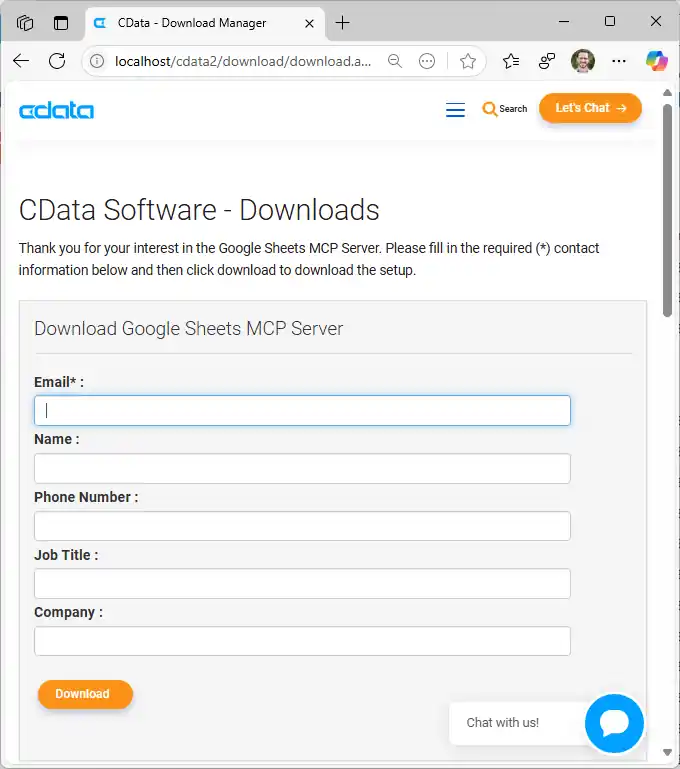
- Find and double-click the installer to begin the installation.
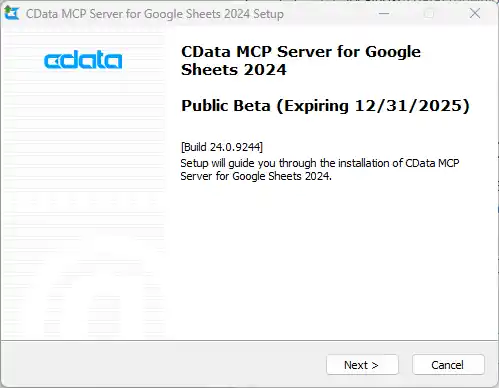
- Follow the prompts to complete the installation.
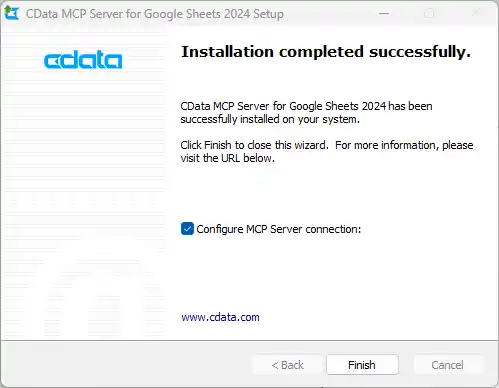
When the installation is complete, you are ready to configure your MCP Server by connecting to Oracle Eloqua Reporting.
Step 2: Configure the connection to Oracle Eloqua Reporting
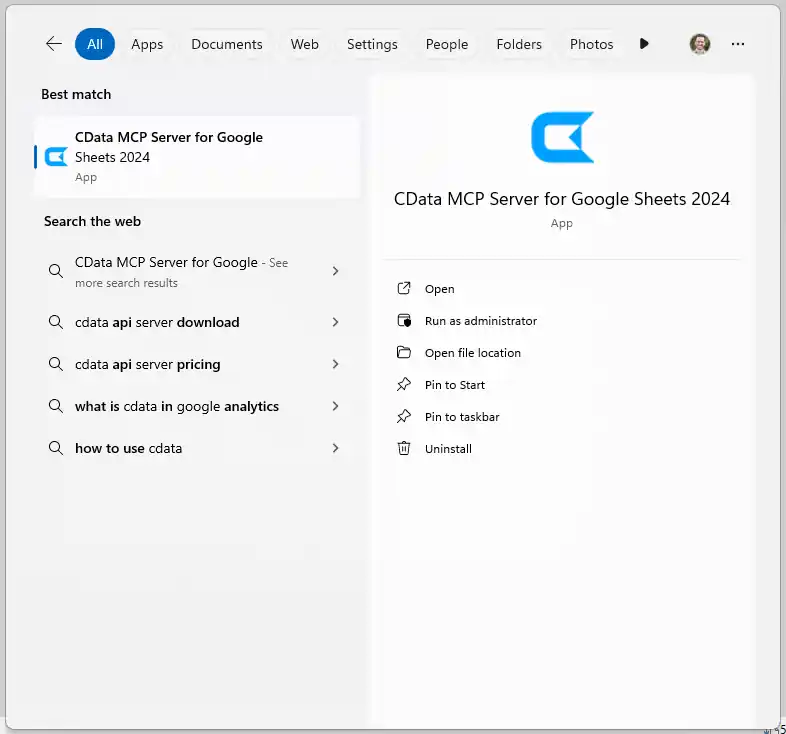
- After installation, the CData MCP Server configuration wizard should open automatically.
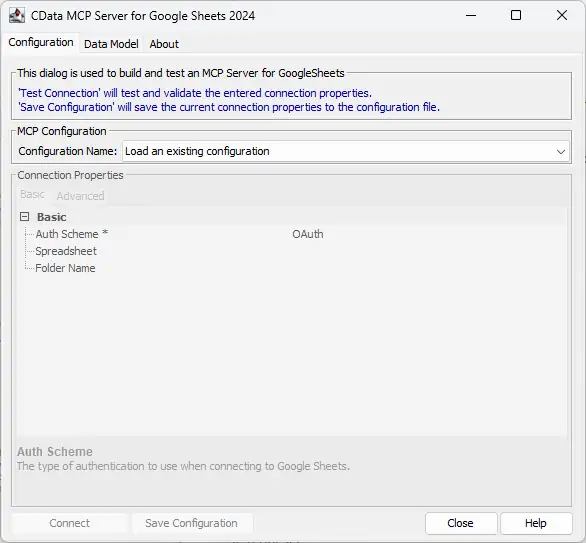
NOTE: If the wizard does not open automatically, search for "CData MCP Server" in the Windows search bar and double-click the application.
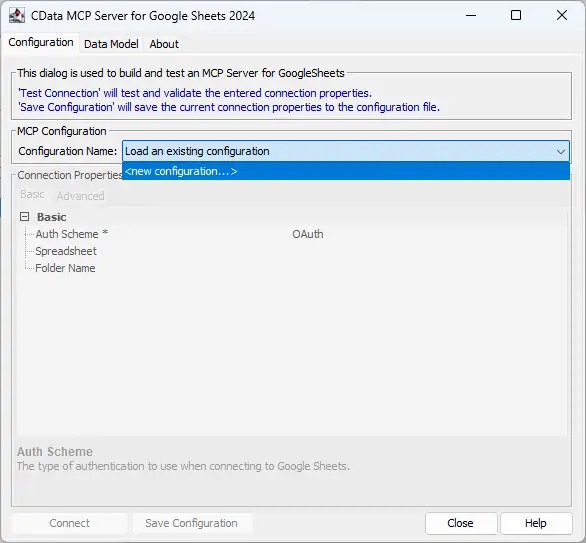
- Click the dropdown menu in MCP Configuration > Configuration Name and select "
" 
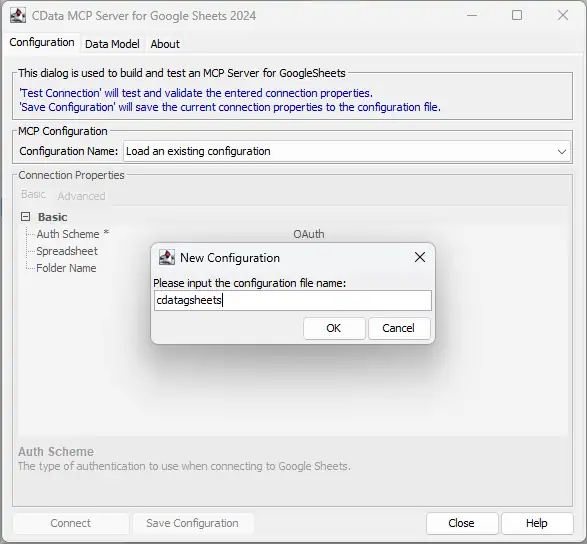
- Name the configuration (e.g. "cdataoracleeloquareporting") and click "OK."
NOTE: This name is used as the name for the MCP server and as the prefix for all of the MCP Server's tools.
Connecting to Oracle Eloqua Reporting
Oracle Eloqua Reporting supports the following authentication methods:
- Basic authentication (User and Password)
- OAuth 2.0 code grant flow
- OAuth 2.0 password grant flow
Basic Authentication (User and Password)
To perform authentication with a user and password, specify these properties:
- AuthScheme: Basic.
- Company: The company name associated with your Oracle Eloqua Reporting account.
- User: Your login account name.
- Password: Your login password.
OAuth Authentication (Code Grant Flow)
To authenticate with the OAuth code grant flow, you must set AuthScheme to OAuth and create a custom OAuth application. For information about how to create a custom OAuth application, see the Help documentation.
Then set the following properties:
- InitiateOAuth: GETANDREFRESH. Used to automatically get and refresh the OAuthAccessToken.
- OAuthClientId: The client Id assigned when you registered your application.
- OAuthClientSecret: The client secret that was assigned when you registered your application.
- CallbackURL: The redirect URI that was defined when you registered your application.
When you connect, the driver opens Oracle Eloqua Reporting's OAuth endpoint in your default browser. Log in and grant permissions to the application. When the access token expires, the driver refreshes it automatically.
OAuth Authentication (Password Grant Flow)
With the OAuth password grant flow, you can use your OAuth application's credentials alongside your user credentials to authenticate without the need to grant permission manually via a browser prompt. You must create an OAuth app (see the Help documentation) to use this authentication method.
Set the following properties:
- AuthScheme: OAuthPassword
- Company: The company's unique identifier.
- User: Your login account name.
- Password: Your login password.
- OAuthClientId: The client Id assigned when you registered your custom OAuth application.
- OAuthClientSecret: The client secret assigned when you registered your custom OAuth application.
Enter the appropriate connection properties in the configuration wizard.
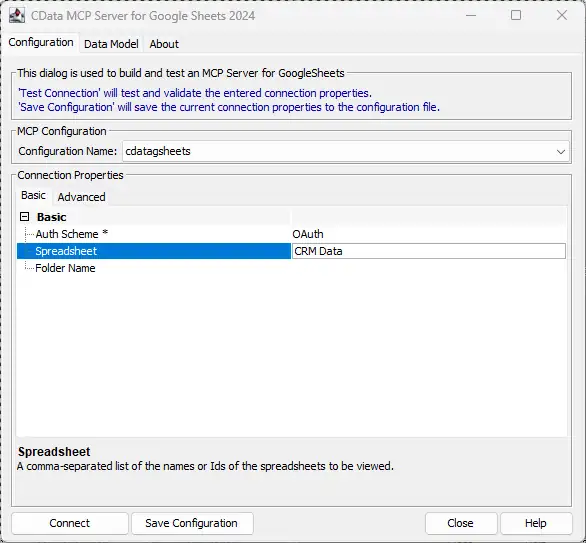
- Click "Connect" to authenticate with Oracle Eloqua Reporting.
- Finally, click "Save Configuration" to save the MCP server.
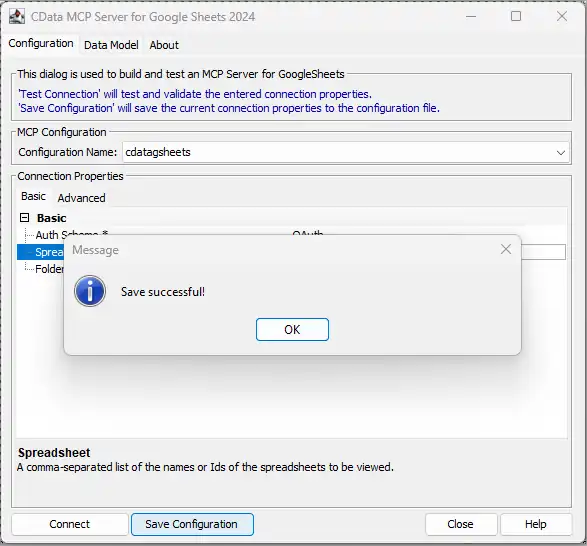
NOTE: This saves the configuration details to a separate file and updates the Claude Desktop configuration file (claude_desktop_config.json) to start the CData MCP Server when the Claude Desktop client starts.
With the CData MCP Server configured, you are ready to start asking questions of your live data from Claude.
Step 3: Ask AI for answers from live Oracle Eloqua Reporting data
Now that we have installed the CData MCP Server and configured a connection, we are ready to start with Oracle Eloqua Reporting data in Claude Desktop.
- Open Claude Desktop. It may take a moment for the MCP Servers to start, but you will see the list of servers and tools available in the Claude interface (look for the settings icon below the prompt bar).
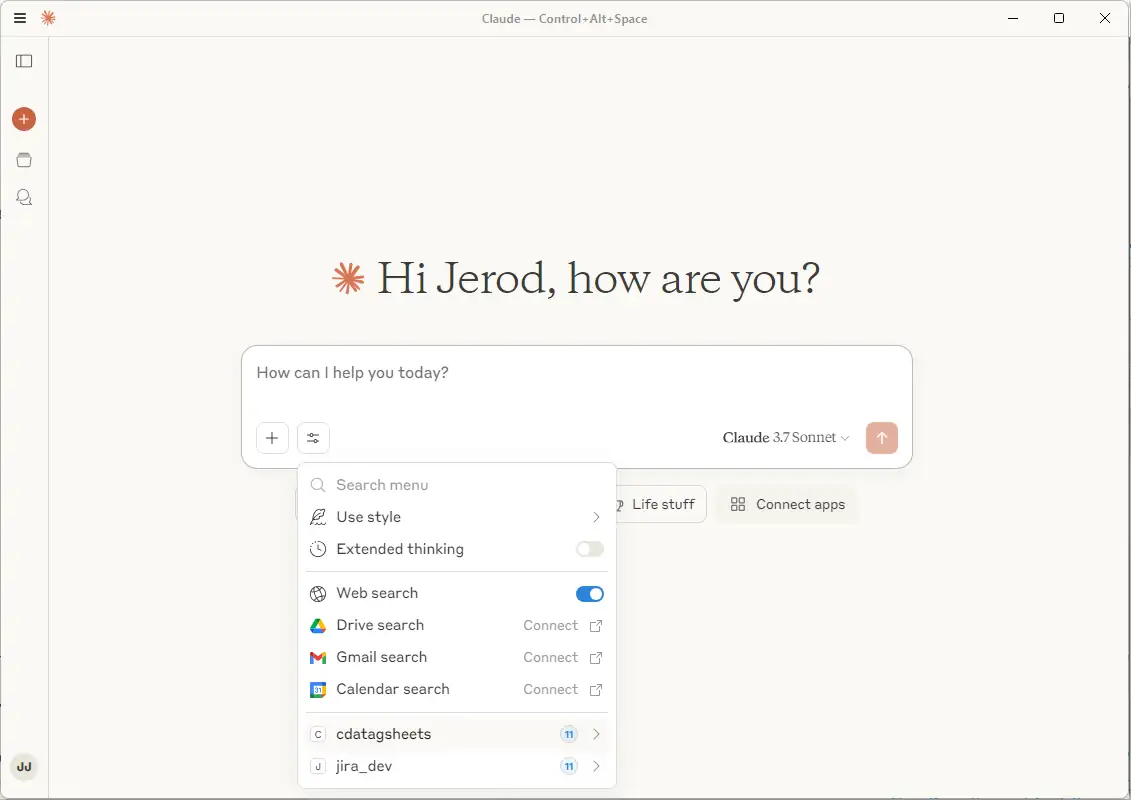
You can individually enable and disable specific tools by clicking on the server name.
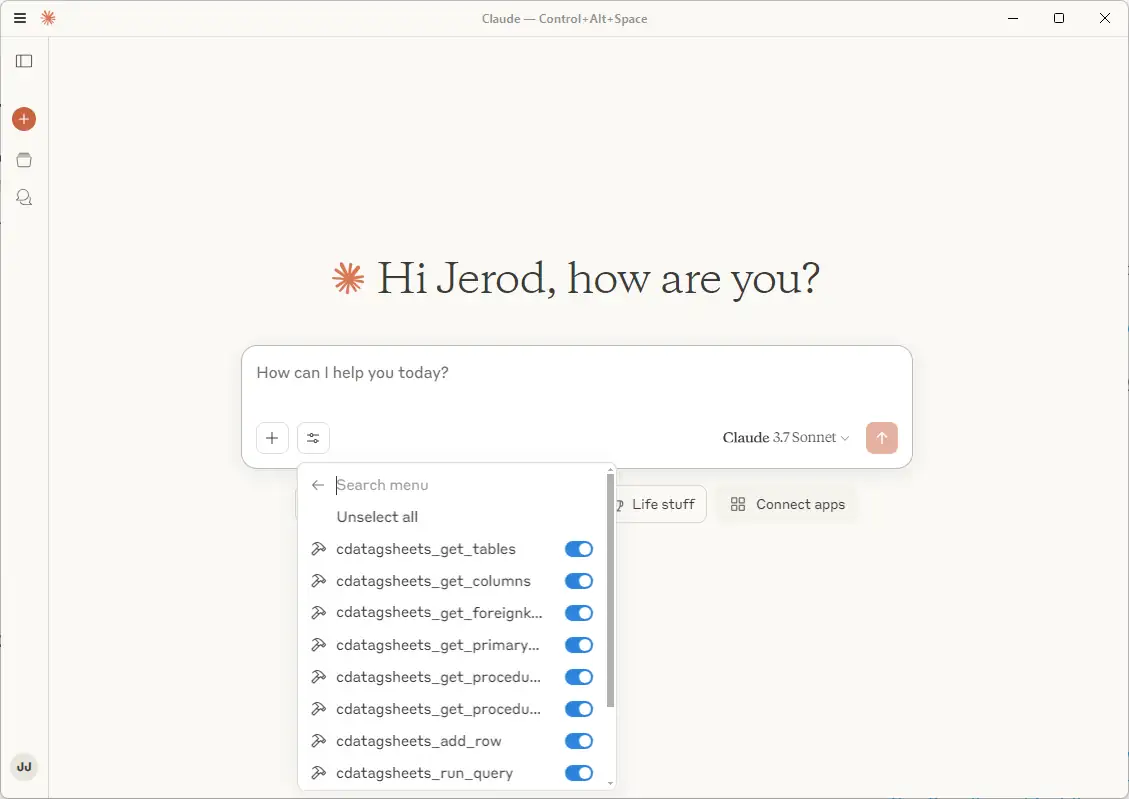
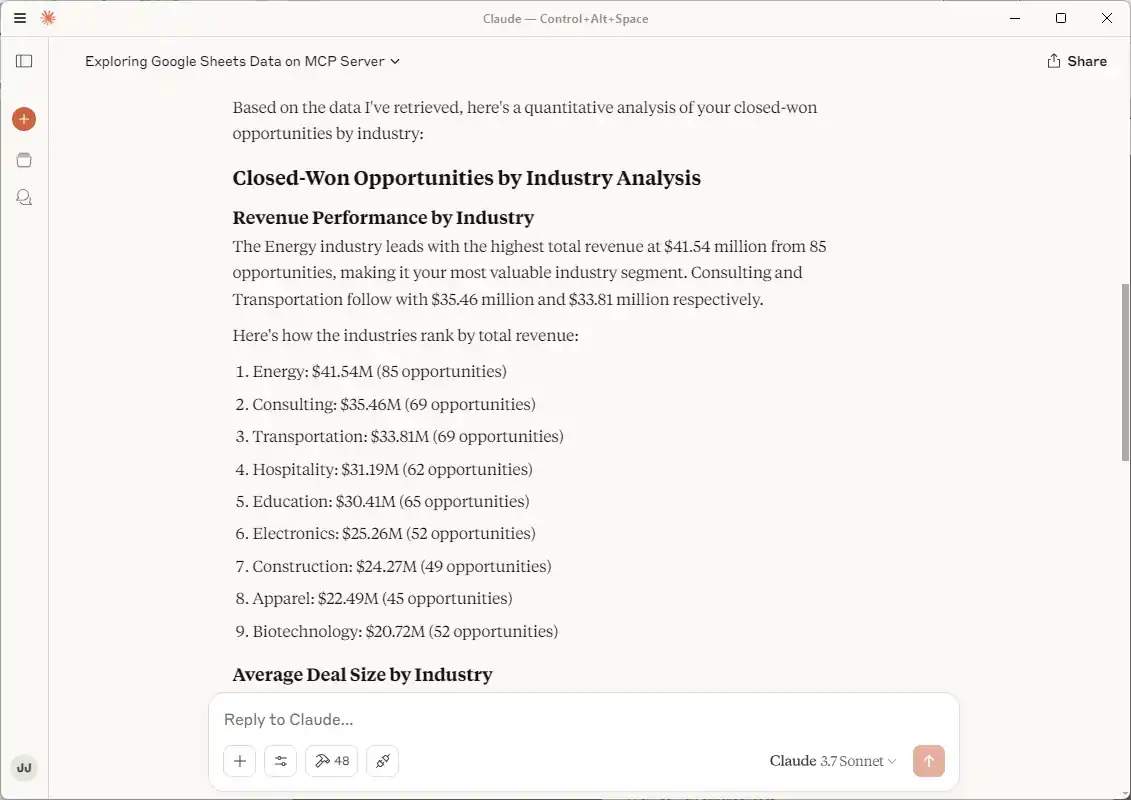
- Now that you have connected, you can ask Claude questions about the Oracle Eloqua Reporting data. For example: "Can you give me a quantitative analysis about my closed-won opportunities by industry?"
NOTE: Claude may need to explore the Oracle Eloqua Reporting data to make sense of it before it can begin answering questions of the data. The tabular model presented by CData alongside the database tools available simplify the data exploration and analysis for an LLM.
Connect your AI to your data today!
CData MCP Servers make it easier than ever for LLMs to work with live enterprise data. To explore the technology hands-on, download a free, 30-day trial or visit the CData Community to share insights, ask questions, and help shape the future of enterprise-ready AI.
Ready to get started?
Download a free Oracle Eloqua Reporting MCP Server to get started:
Download NowLearn more:
 Oracle Eloqua Reporting MCP Server
The CData MCP Server for Oracle Eloqua Reporting allows you to connect with live Oracle Eloqua Reporting account data, directly from LLMs that support MCP.
