




Create Informatica Mappings From/To an ODBC Data Source for Oracle Eloqua Reporting

Informatica provides a powerful, elegant means of transporting and transforming your data. By utilizing the CData ODBC Driver for Oracle Eloqua Reporting, you are gaining access to a driver based on industry-proven standards that integrates seamlessly with Informatica's powerful data transportation and manipulation features. This tutorial shows how to transfer and browse Oracle Eloqua Reporting data in Informatica PowerCenter.
Connect to Oracle Eloqua Reporting as an ODBC Data Source
Information for connecting to Oracle Eloqua Reporting follows, along with different instructions for configuring a DSN in Windows and Linux environments.
Oracle Eloqua Reporting supports the following authentication methods:
- Basic authentication (User and Password)
- OAuth 2.0 code grant flow
- OAuth 2.0 password grant flow
Basic Authentication (User and Password)
To perform authentication with a user and password, specify these properties:
- AuthScheme: Basic.
- Company: The company name associated with your Oracle Eloqua Reporting account.
- User: Your login account name.
- Password: Your login password.
OAuth Authentication (Code Grant Flow)
To authenticate with the OAuth code grant flow, you must set AuthScheme to OAuth and create a custom OAuth application. For information about how to create a custom OAuth application, see the Help documentation.
Then set the following properties:
- InitiateOAuth: GETANDREFRESH. Used to automatically get and refresh the OAuthAccessToken.
- OAuthClientId: The client Id assigned when you registered your application.
- OAuthClientSecret: The client secret that was assigned when you registered your application.
- CallbackURL: The redirect URI that was defined when you registered your application.
When you connect, the driver opens Oracle Eloqua Reporting's OAuth endpoint in your default browser. Log in and grant permissions to the application. When the access token expires, the driver refreshes it automatically.
OAuth Authentication (Password Grant Flow)
With the OAuth password grant flow, you can use your OAuth application's credentials alongside your user credentials to authenticate without the need to grant permission manually via a browser prompt. You must create an OAuth app (see the Help documentation) to use this authentication method.
Set the following properties:
- AuthScheme: OAuthPassword
- Company: The company's unique identifier.
- User: Your login account name.
- Password: Your login password.
- OAuthClientId: The client Id assigned when you registered your custom OAuth application.
- OAuthClientSecret: The client secret assigned when you registered your custom OAuth application.
Windows
If you have not already, first specify connection properties in an ODBC DSN (data source name). This is the last step of the driver installation. You can use the Microsoft ODBC Data Source Administrator to create and configure ODBC DSNs.
Linux
If you are installing the CData ODBC Driver for Oracle Eloqua Reporting in a Linux environment, the driver installation predefines a system DSN. You can modify the DSN by editing the system data sources file (/etc/odbc.ini) and defining the required connection properties.
/etc/odbc.ini
[CData OracleEloquaReporting Source]
Driver = CData ODBC Driver for Oracle Eloqua Reporting
Description = My Description
AuthScheme = Basic
User = user
Password = password
Company = MyCompany
For specific information on using these configuration files, please refer to the help documentation (installed and found online).
Create a Linked Table to Data
Follow the steps below to create a linked table, which enables you to access live data.
Create the ODBC Connection
Follow the steps below to connect to Oracle Eloqua Reporting in Informatica PowerCenter:
- In the Informatica Developer tool connect to your repository and create a project.
- In the Connection Explorer pane, right-click and click Create a Connection.
- In the New Database Connection wizard that is displayed, enter a name and Id for the connection and in the Type menu select ODBC.
- In the Connection String property, enter the DSN.
NOTE: If you are working in a Linux operating system, set the Driver Manager for Linux property to unixODBC 2.3.x.
Create the Oracle Eloqua Reporting Data Object
After you have created an ODBC connection to Oracle Eloqua Reporting, you can now access Oracle Eloqua Reporting entities in Informatica. Follow the steps below to add entities to your project.
- In the Object Explorer, right-click your project and then click New -> Data Object.
- In the wizard that is displayed, select the Relational Data Object option.
- Click the Browse button next to the Connection box and select the ODBC connection you created in the previous step.
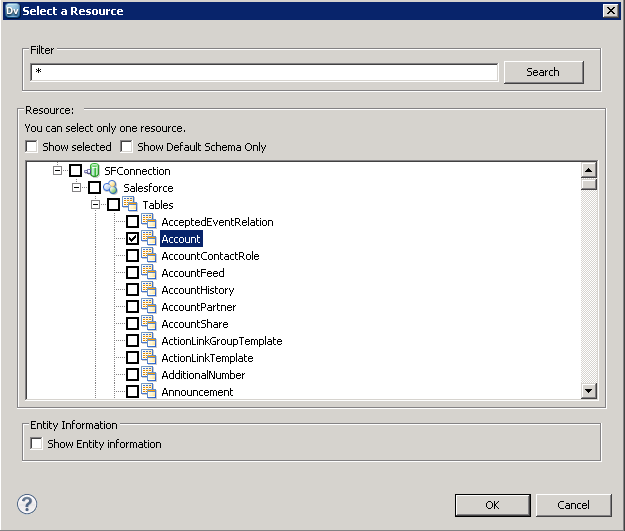
- Select the option to create a data object from an existing resource and click the Browse button next to the Resource box.
- In the dialog that is displayed, clear the Show Default Schema Only option and expand the node for the ODBC connection. Select the entity that you want.
You can now browse the table in the Data Viewer: Right-click the node for the table and then click Open. On the Data Viewer view, click Run.
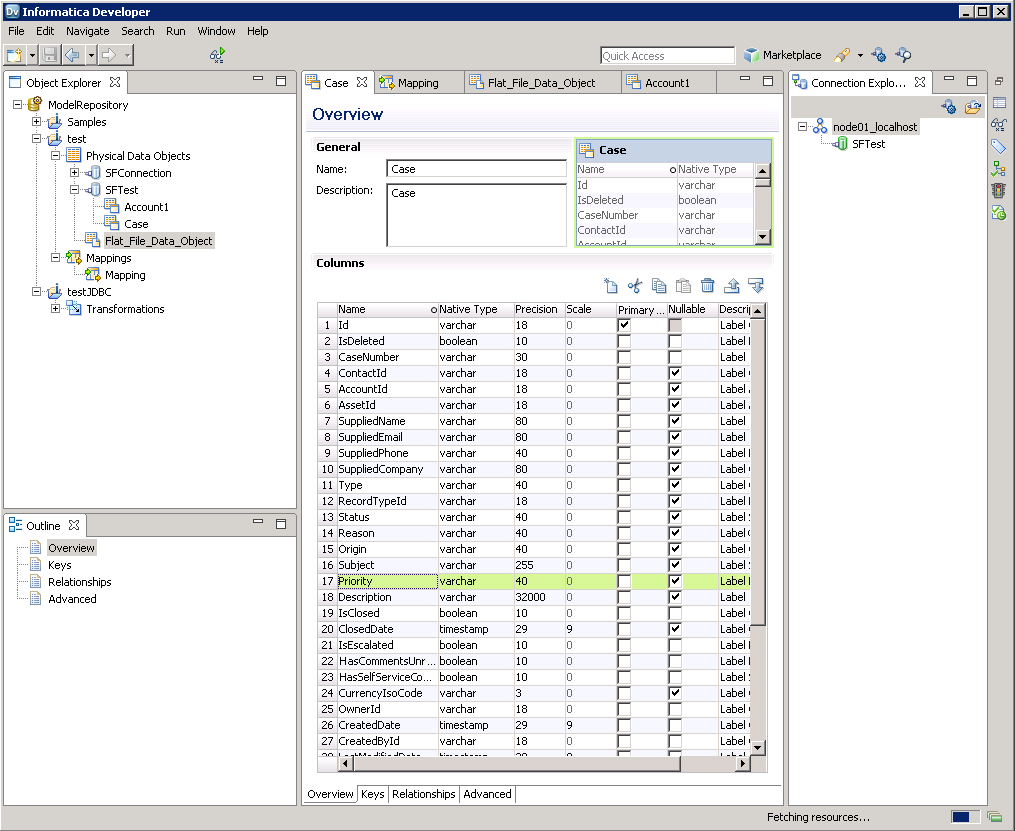
Create the Mapping
Follow the steps below to add the Oracle Eloqua Reporting source to a mapping:
- In the Object Explorer, right-click your project and then click New -> Mapping.
- Expand the node for the Oracle Eloqua Reporting connection and then drag the data object for the table onto the editor.
- In the dialog that appears, select the Read option.
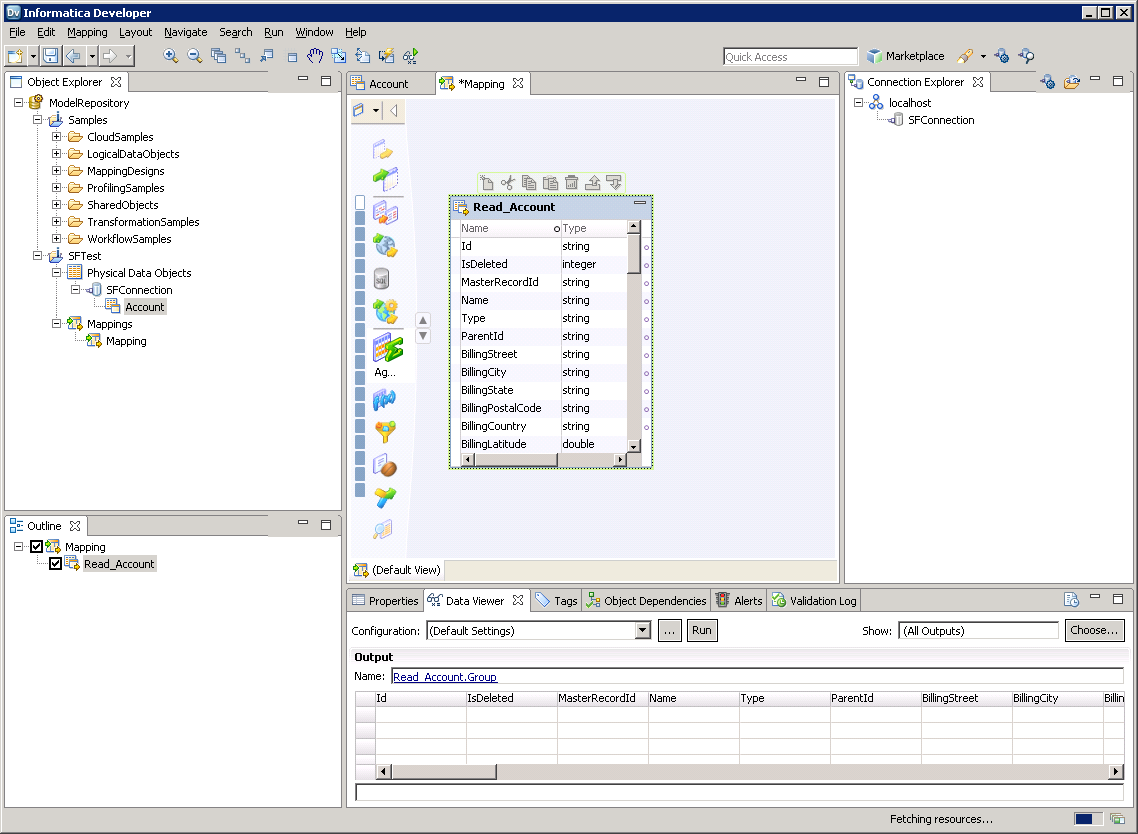
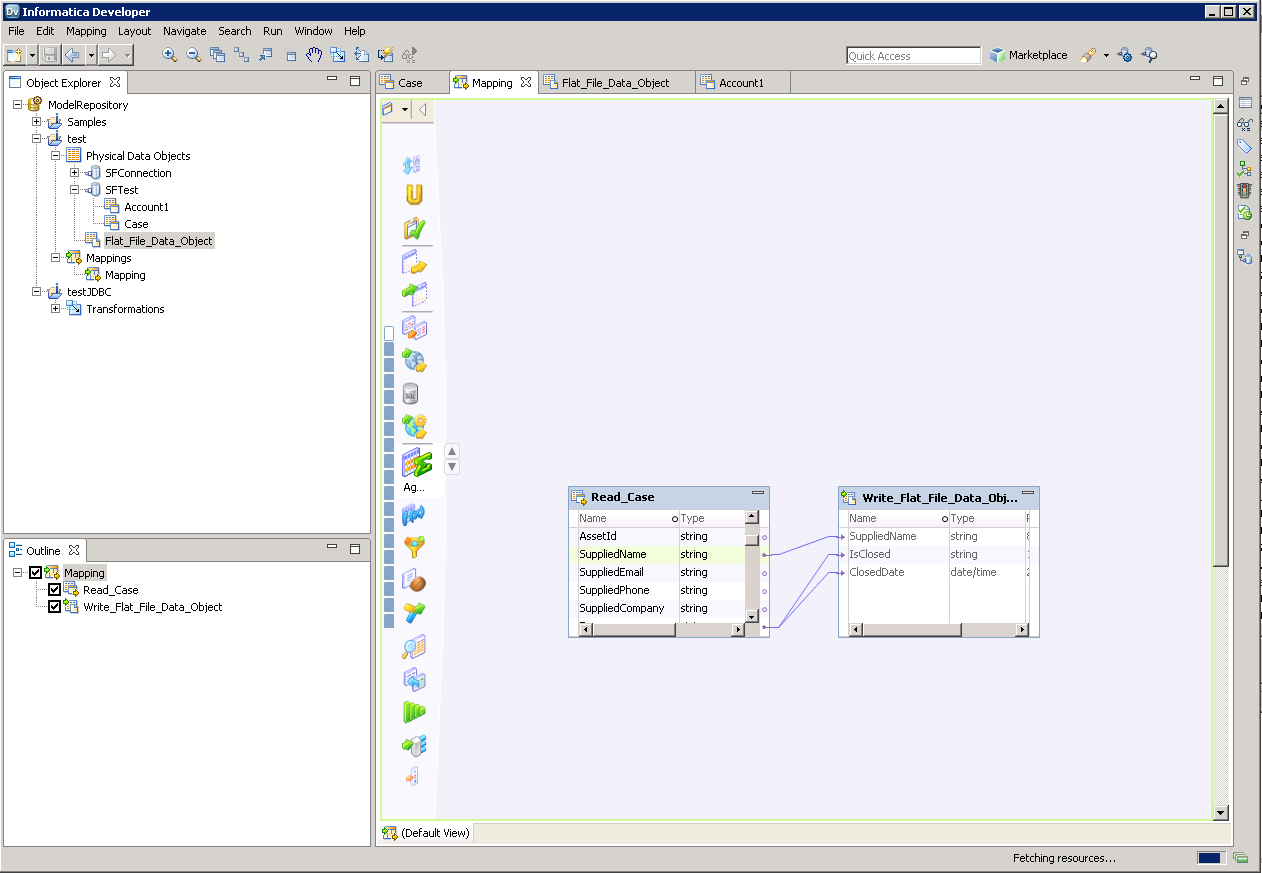
Follow the steps below to map Oracle Eloqua Reporting columns to a flat file:
- In the Object Explorer, right-click your project and then click New -> Data Object.
- Select Flat File Data Object -> Create as Empty -> Fixed Width.
- In the properties for the Oracle Eloqua Reporting object, select the rows you want, right-click, and then click copy. Paste the rows into the flat file properties.
- Drag the flat file data object onto the mapping. In the dialog that appears, select the Write option.
- Click and drag to connect columns.
To transfer Oracle Eloqua Reporting data, right-click in the workspace and then click Run Mapping.
Ready to get started?
Download a free trial of the Oracle Eloqua Reporting ODBC Driver to get started:
Download NowLearn more:
 Oracle Eloqua Reporting ODBC Driver
The Oracle Eloqua Reporting ODBC Driver is a powerful tool that allows you to connect with live data from Oracle Eloqua Reporting, directly from any applications that support ODBC connectivity.
Access Oracle Eloqua Reporting data like you would a database - read, write, and update Oracle Eloqua Reporting 0, etc. through a standard ODBC Driver interface.
