






Using the CData ODBC Driver for EmailOctopus in PyCharm

The CData ODBC Drivers can be used in any environment that supports loading an ODBC Driver. In this tutorial we will explore using the CData ODBC Driver for EmailOctopus from within PyCharm. Included are steps for adding the CData ODBC Driver as a data source, as well as basic PyCharm code to query the data source and display results.
To begin, this tutorial will assume that you have already installed the CData ODBC Driver for EmailOctopus as well as PyCharm.
Add Pyodbc to the Project
Follow the steps below to add the pyodbc module to your project.
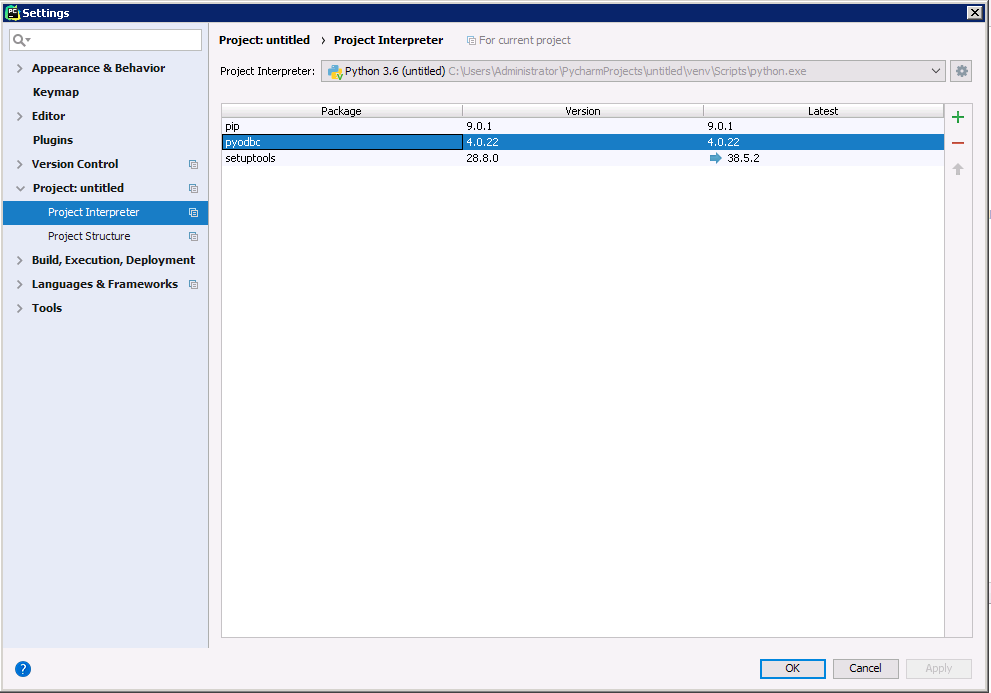
- Click File -> Settings to open the project settings window.
- Click Project Interpreter from the Project: YourProjectName menu.
- To add pyodbc, click the + button and enter pyodbc.
- Click Install Package to install pyodbc.
Connect to EmailOctopus
You can now connect with an ODBC connection string or a DSN. See the Getting Started section in the CData driver documentation for a guide to creating a DSN on your OS.
Start by setting the Profile connection property to the location of the EmailOctopus Profile on disk (e.g. C:\profiles\EmailOctopus.apip). Next, set the ProfileSettings connection property to the connection string for EmailOctopus (see below).
EmailOctopus API Profile Settings
Sign into your EmailOctopus account and navigate to Integrations & API > API > Your API Keys to generate or retrieve your API key.
Below is the syntax for a DSN:
[CData API Source]
Driver = CData ODBC Driver for EmailOctopus
Description = My Description
Profile = C:\profiles\EmailOctopus.apip
ProfileSettings = 'APIKey = your_api_key'
Execute SQL to EmailOctopus
Instantiate a Cursor and use the execute method of the Cursor class to execute any SQL statement.
import pyodbc

cnxn = pyodbc.connect('DRIVER={CData ODBC Driver for API};Profile = C:\profiles\EmailOctopus.apip;ProfileSettings = 'APIKey = your_api_key';')
cursor = cnxn.cursor()
cursor.execute("SELECT CampaignId, ContactId FROM CampaignReportBounced WHERE ContactStatus = 'bounced'")
rows = cursor.fetchall()
for row in rows:
  print(row.CampaignId, row.ContactId)
After connecting to EmailOctopus in PyCharm using the CData ODBC Driver, you will be able to build Python apps with access to EmailOctopus data as if it were a standard database. If you have any questions, comments, or feedback regarding this tutorial, please contact us at [email protected].