






Access Live Epicor Kinetic Data in Roo Code via CData Connect AI

Roo Code is an open-source AI coding agent that runs inside VS Code with real file system access, terminal control, and multi-step workflows. It works across entire project workspaces through specialized modes like Code, Architect, and Orchestrator. Available as a VS Code Extension for local development, or as Cloud Agents that integrate with Slack and GitHub. Roo Code natively supports MCP, connecting external tools and data sources via STDIO or Streamable HTTP.
By default, Roo Code has no access to live enterprise data. CData Connect AI bridges this gap by exposing 350+ data sources. Once connected, Roo can introspect live schemas, validate queries, and generate code directly inside VS Code, retrieved by real enterprise data.
Step 1: Configure Epicor Kinetic connectivity for Roo Code
Connectivity to Epicor Kinetic from Roo Code is made possible through CData Connect AI's Remote MCP Server. To interact with Epicor Kinetic data from Roo Code, start by creating and configuring a Epicor Kinetic connection in CData Connect AI.
- Log into Connect AI, click Sources, and then click Add Connection
- Select Epicor Kinetic from the Add Connection panel
-
Enter the necessary authentication properties to connect to Epicor Kinetic.
To successfully connect to your ERP instance, you must specify the following connection properties:
- Url:the URL of the server hosting your ERP instance. For example, https://myserver.EpicorSaaS.com
- ERPInstance: the name of your ERP instance.
- User: the username of your account.
- Password: the password of your account.
- Service: the service you want to retrieve data from. For example, BaqSvc.
In addition, you may also set the optional connection properties:
- ApiKey: An optional key that may be required for connection to some services depending on your account configuration.
- ApiVersion: Defaults to v1. May be set to v2 to use the newer Epicor API.
- Company: Required if you set the ApiVersion to v2.

- Click Save & Test
- Navigate to the Permissions tab and update user-based permissions



Add a Personal Access Token
A Personal Access Token (PAT) is used to authenticate the connection to Connect AI from Roo Code. It is best practice to create a separate PAT for each integration to maintain granular access control.
- Click the gear icon at the top right of the Connect AI app to open Settings
- On the Settings page, go to the Access Tokens section and click Create PAT
- Give the PAT a descriptive name and click Create
- Copy the token when displayed and store it securely. It will not be shown again

With the Epicor Kinetic connection configured and a PAT generated, Roo Code can now connect to Epicor Kinetic data through Connect AI.
Step 2: Configure Connect AI in Roo Code
CData Connect AI can be integrated with Roo Code by registering the MCP Server directly in the Roo Code MCP configuration panel. Once registered, Roo Code agents can call live Epicor Kinetic data through MCP tools without additional setup.
Method 1: Direct MCP configuration
Users can register the CData Connect AI MCP Server directly in the Roo Code MCP settings. Once registered, agents in any project can query live Epicor Kinetic data through MCP tools without additional setup.
- Open VS Code with the Roo Code extension installed
- Click the Roo Code icon in the Activity Bar
-
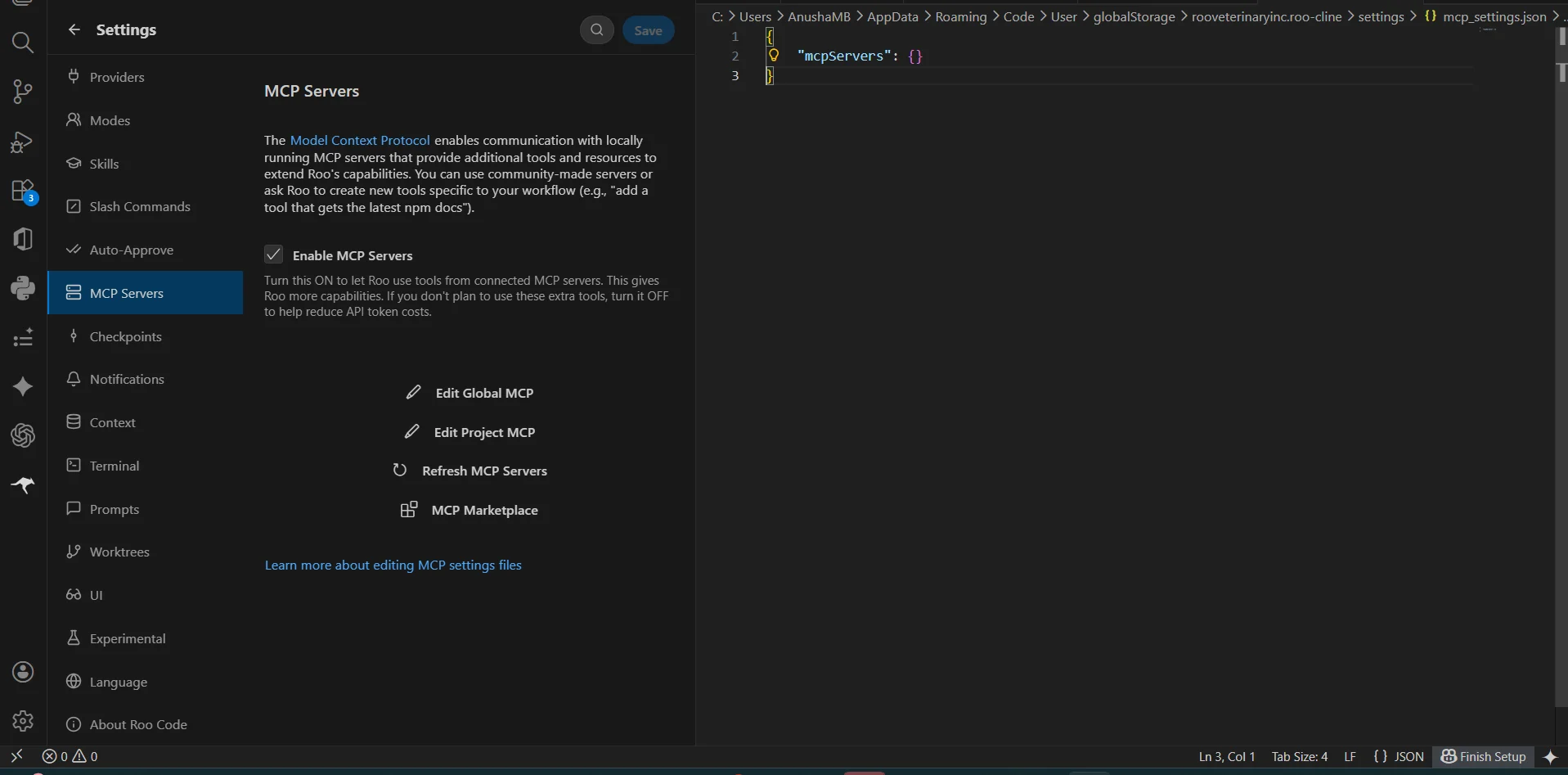
Navigate to Settings, then choose MCP Servers in the Roo Code pane and turn on Enable MCP Servers, now click Edit Global MCP to open the MCP configuration file
-
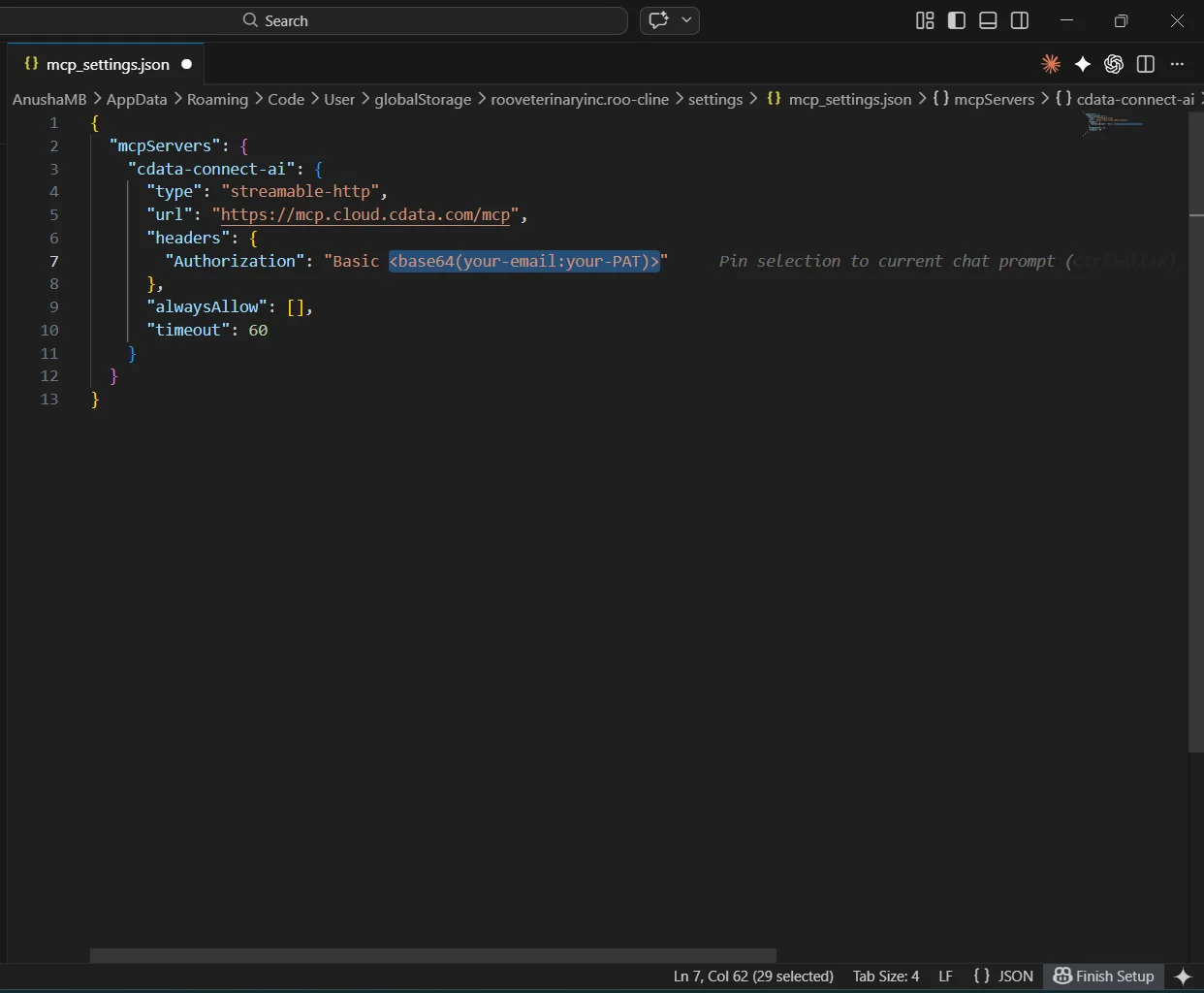
In the mcp_settings.json file, add the following inside the mcpServers object, replacing base64encode
{
    "mcpServers": {
        "cdata-mcp": {
            "type": "streamable-http",
            "url": "https://mcp.cloud.cdata.com/mcp",
            "headers": {
                "Authorization": "Basic base64encode(USERNAME:PAT)"
            }
        }
    }
}
- Save the file to register the MCP server
- Return to the MCP Servers panel and confirm that cdata-mcp is listed and its toggle is enabled. If it is not enabled, toggle it on
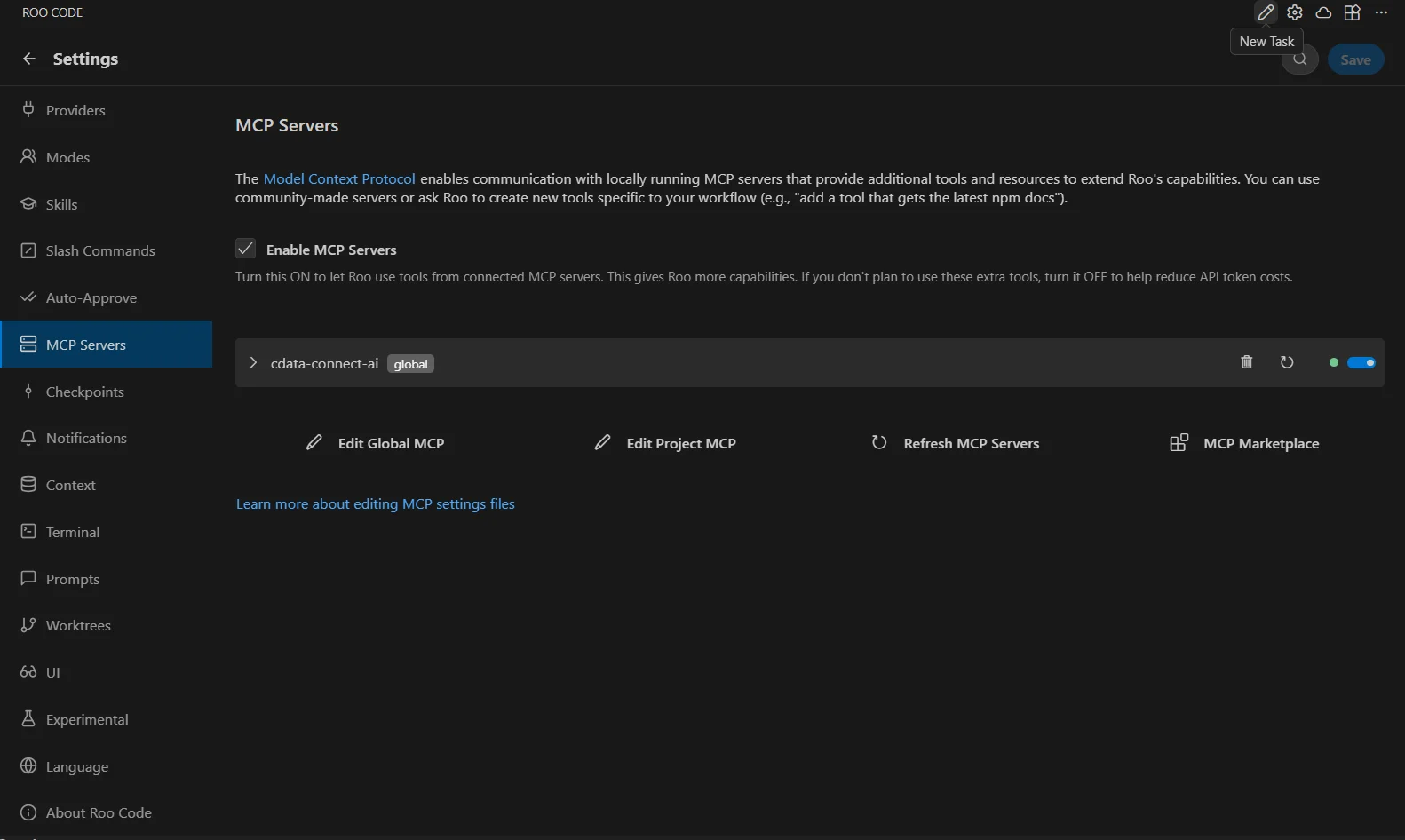
With the CData MCP Server registered and enabled, Roo Code agents can now query and act on live Epicor Kinetic data through Connect AI in any project.
Query live Epicor Kinetic data from Roo Code
With the MCP server configured, start a conversation in the Roo Code chat panel to interact with live Epicor Kinetic data.
-
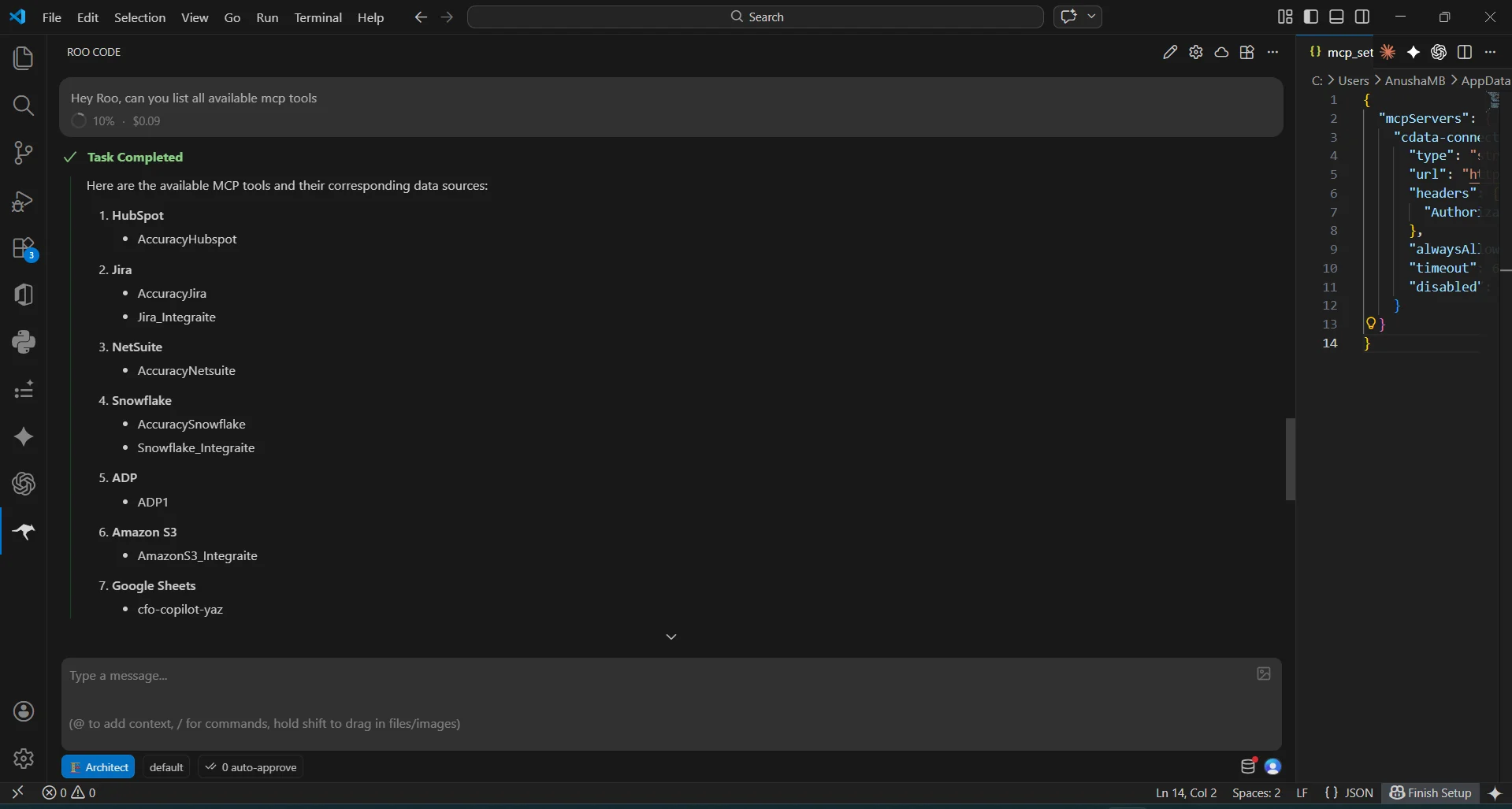
Open the Roo Code chat and enter a prompt to explore your data, for example:
- List all available catalogs in my cdata-mcp connection.
- Show the schemas and tables available for Epicor Kinetic.
- Query the top 5 records from Epicor Kinetic data.
- The agent calls the CData Connect AI MCP Server and returns live results from Epicor Kinetic data
Method 2: Build an application with natural language
Users can direct Roo Code to build a full application that connects to the CData Connect AI MCP Server through a natural language prompt. The agent gathers the required endpoint and credentials interactively, then generates a working application wired to live Epicor Kinetic data — all from the Roo Code chat panel inside VS Code.
- Open the Roo Code panel in VS Code and select your preferred model from the dropdown
-
Enter a prompt that describes the application you want to build.
For example:
I would like to build a small application that connects to a remote MCP HTTPS server. I already have the MCP endpoint URL and the required credentials. The application should: - Establish a connection to the remote MCP server - Authenticate using the provided credentials - Retrieve and list all available catalogs from the MCP Please make sure the credentials are stored securely in a .env file and not hardcoded in the application. -
Roo Code will prompt you to provide the MCP endpoint URL and
authentication credentials. Supply the following values:
- MCP Endpoint URL: https://mcp.cloud.cdata.com/mcp
- Authorization: Basic base64(email:PAT)
-
Roo Code creates the project directory, initializes a
Node.js project, installs the necessary packages, and stores
credentials securely in a .env file
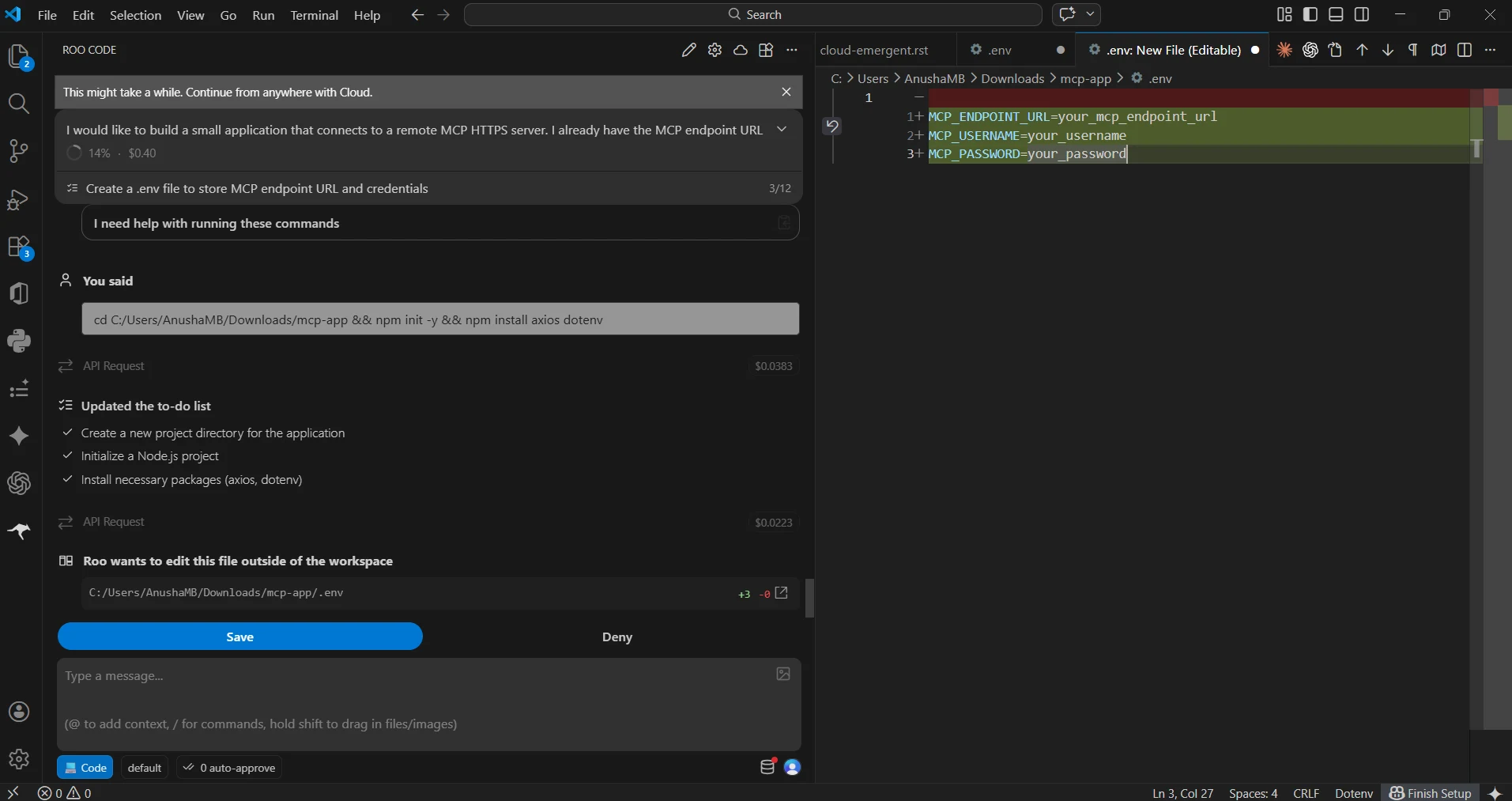
At this point, Roo Code has built an application that communicates with the CData Connect AI MCP Server and retrieves live Epicor Kinetic data, all from a single natural language prompt inside VS Code.
Get CData Connect AI
To access 350+ SaaS, Big Data, and NoSQL sources directly from Roo Code, try CData Connect AI today! Sign up for a free 14-day trial of CData Connect AI, and as always, our world-class Support Team is available to assist you with any questions you may have.