






Create SSAS Tabular Models from Factorial Data

SQL Server Analysis Services (SSAS) is an analytical data engine used in decision support and business analytics. It provides enterprise-grade semantic data models for business reports and client applications, such as Power BI, Excel, Reporting Services reports, and other data visualization tools. When paired with the CData API Driver for ODBC, you can create a tabular model from Factorial data for deeper and faster data analysis.
Create a Connection to Factorial Data
If you have not already, first specify connection properties in an ODBC DSN (data source name). This is the last step of the driver installation. You can use the Microsoft ODBC Data Source Administrator to create and configure ODBC DSNs.
Authentication
Factorial uses OAuth 2.0 for authentication to connect to your HR data or to allow other users to connect to their data.
Using OAuth Authentication
To connect using OAuth, follow these steps:
- Navigate to your Factorial admin panel and create a new OAuth application.
- Copy the Client ID and Client Secret from your application configuration.
- Configure the following connection properties:
After setting the following connection properties, you are ready to connect:
- AuthScheme: Set this to OAuth.
- OAuthClientId: Set this to your OAuth Client ID.
- OAuthClientSecret: Set this to your OAuth Client Secret.
- Scope: Set this to specify the data access permissions (default: "read write").
Creating a Data Source for Factorial
Start by creating a new Analysis Services Tabular Project in Visual Studio. Ensure that you select a Compatibility Level of 1400 or higher in the Tabular model designer dialog. Next create a Data Source for Factorial in the project.
- In the Tabular Model Explorer, right-click Data Sources and select "New Data Source"
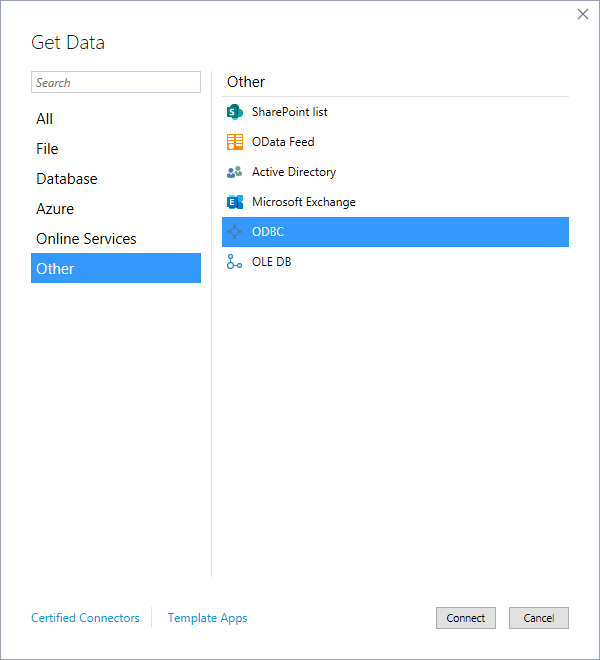
- Select "ODBC" from the Other tab and click "Connect"
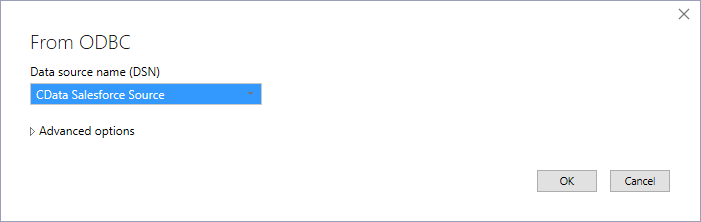
- Select the DSN you previously configured
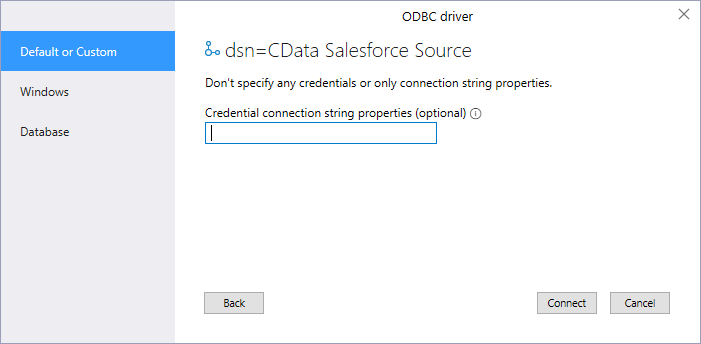
- Choose "Default or Custom" as the authentication option and click "Connect"
Add Tables & Relationships
After creating the data source you are ready to import tables and define the relationships between the tables.
- Right-click the new data source, click "Import New Tables" and select the tables to import
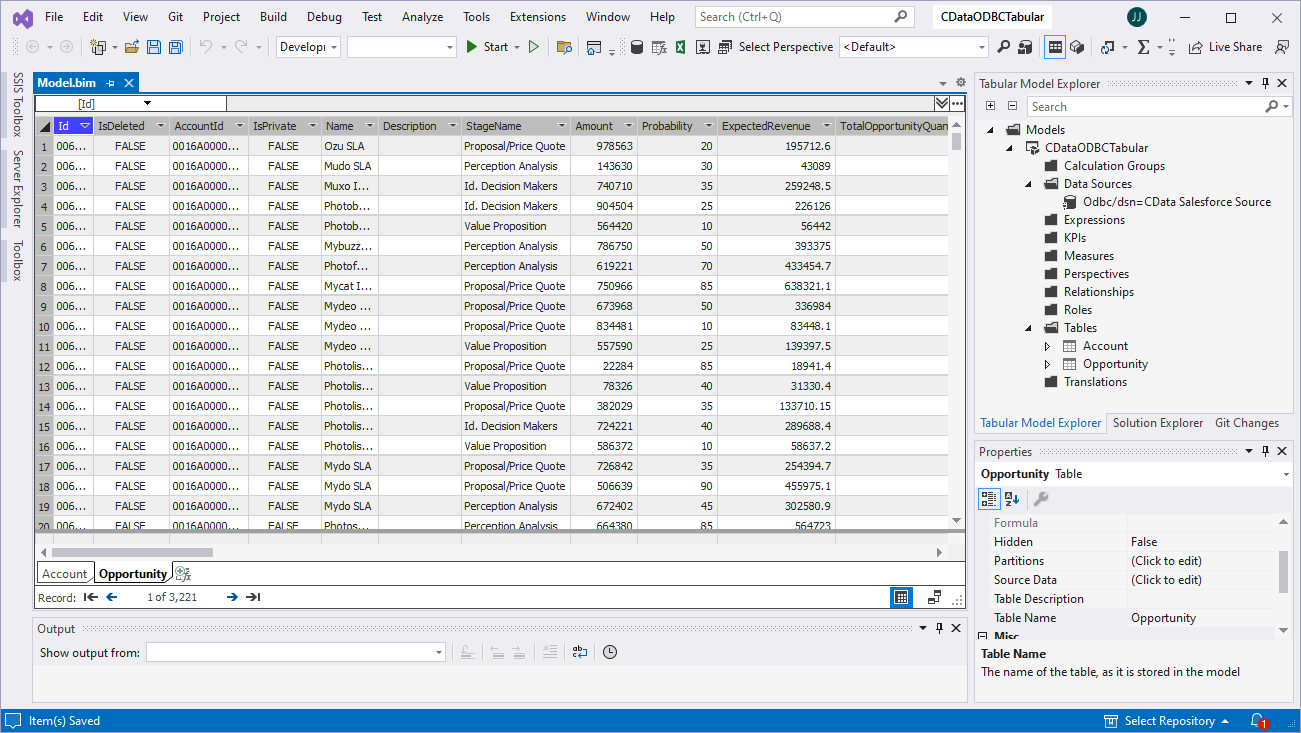
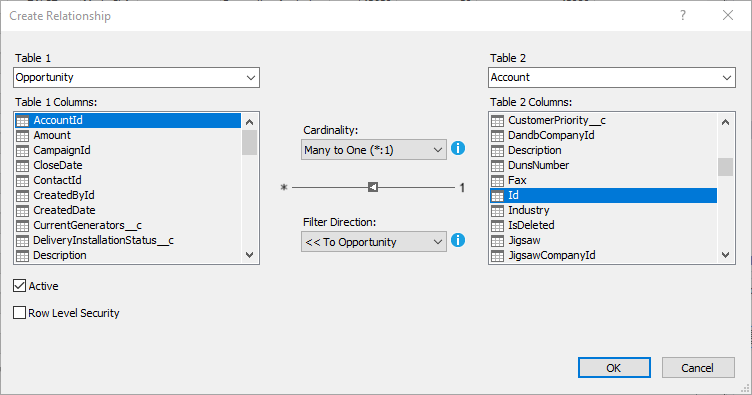
- After importing the tables, right-click "Relationships" and click "Create Relationships"
- Select table(s), and choose the foreign keys, cardinality, and filter direction
Create Measures
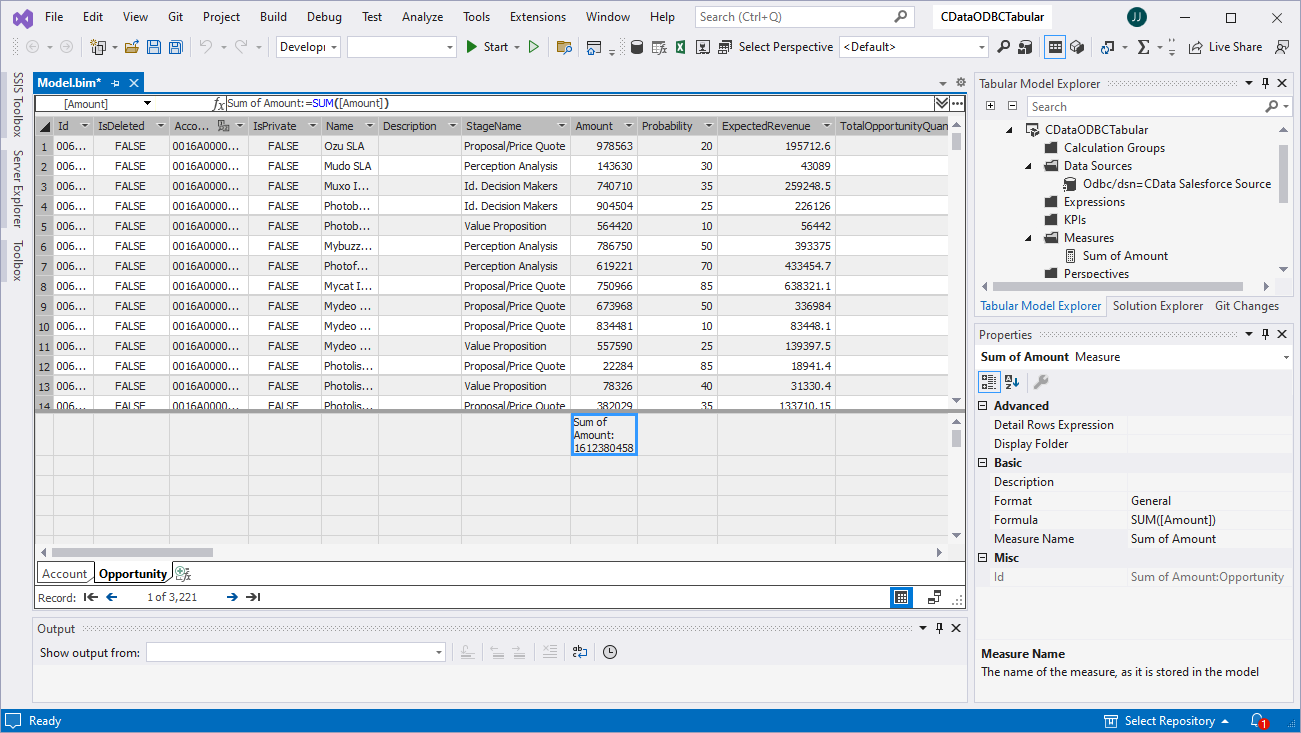
After importing the tables and defining the relationships, you are ready to create measures.
- Select the column in the table for which you wish to create a measure
- In the Extensions menu -> click "Columns" -> "AutoSum" and select your aggregation method
Deploy the Model
Once you create measures, you are ready to deploy the model. Configure the target server and database by right-clicking the project found in the Solution Explorer and selecting "Properties." Configure the "Deployment Server" properties and click "OK."
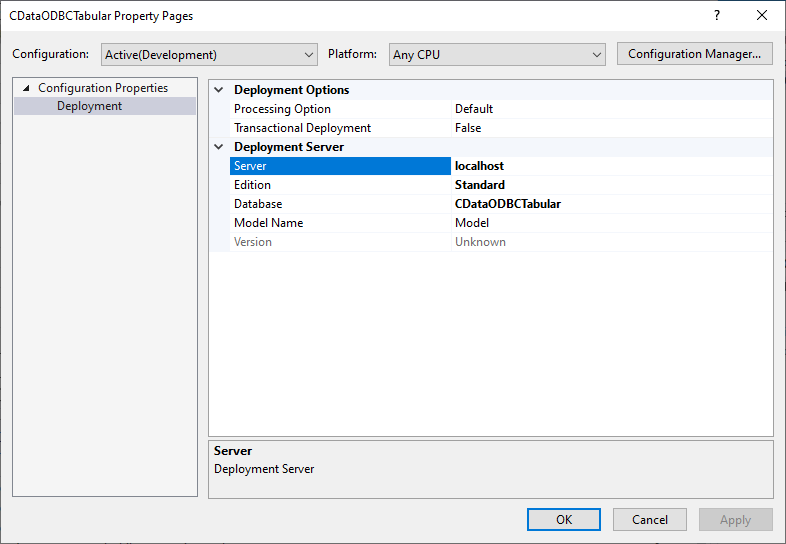
After configuring the deployment server, open the "Build" menu and click "Deploy Solution." You now have a tabular model for Factorial data in your SSAS instance, ready to be analyzed, reported, and viewed. Get started with a free, 30-day trial of the CData API Driver for ODBC.