





Create Reports from FTP Data in Looker Studio

Looker Studio, formerly known as Google Data Studio, empowers users to craft customized reports featuring data visualizations that can be shared with clients while reflecting your brand identity. When combined with CData Connect AI, you gain immediate cloud-to-cloud access to FTP data to create visualizations, dashboards, and more. This article provides step-by-step instructions on establishing a virtual database for FTP and generating reports from FTP data within Looker Studio.
CData Connect AI offers a seamless cloud-to-cloud interface tailored for FTP, making it straightforward to construct reports directly from live FTP data within Looker Studio without the need for data replication. As you create visualizations, Looker Studio generates queries to retrieve data. With its inherent optimized data processing capabilities, CData Connect AI efficiently channels all supported query operations, including filters, JOINs, and more, directly to FTP. This leverages server-side processing to swiftly provide the requested FTP data.
This article requires a CData Connect AI instance and the CData Connect AI Connector for Looker Studio. Get more information on the CData Connect AI and sign up for a free trial at https://www.cdata.com/cloud.
Configure FTP Connectivity for Looker Studio
Connectivity to FTP from Looker Studio is made possible through CData Connect AI. To work with FTP data from Looker Studio, we start by creating and configuring a FTP connection.
- Log into Connect AI, click Sources, and then click Add Connection
- Select "FTP" from the Add Connection panel
-
Enter the necessary authentication properties to connect to FTP.
To connect to FTP or SFTP servers, specify at least RemoteHost and FileProtocol. Specify the port with RemotePort.
Set User and Password to perform Basic authentication. Set SSHAuthMode to use SSH authentication. See the Getting Started section of the data provider help documentation for more information on authenticating via SSH.
Set SSLMode and SSLServerCert to secure connections with SSL.
The data provider lists the tables based on the available folders in your FTP server. Set the following connection properties to control the relational view of the file system:
- RemotePath: Set this to the current working directory.
- TableDepth: Set this to control the depth of folders to list as views.
- FileRetrievalDepth: Set this to retrieve and list files recursively from the root table.
Stored Procedures are available to download files, upload files, and send protocol commands. See the Data Model chapter of the FTP data provider documentation for more information.

- Click Save & Test
-
Navigate to the Permissions tab in the Add FTP Connection page and update the User-based permissions.



With the connection configured, you are ready to connect to FTP data from Looker Studio.
Visualize Live FTP Data from Looker Studio
The steps below outline connecting to CData Connect AI from Looker Studio to create a new FTP data source and build a simple visualization from the data.
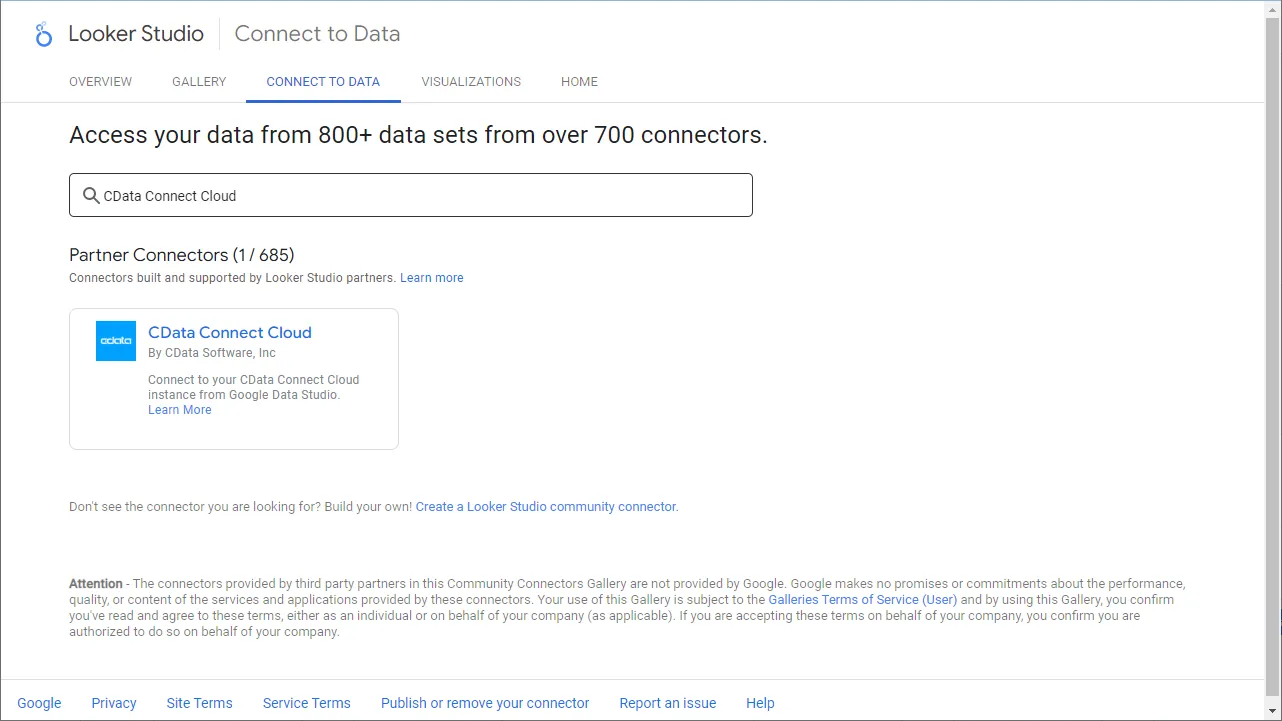
- Log into Looker Studio, click data sources, create a new data source, and choose CData Connect AI Connector.
- Click Authorize and allow access to your Google account.
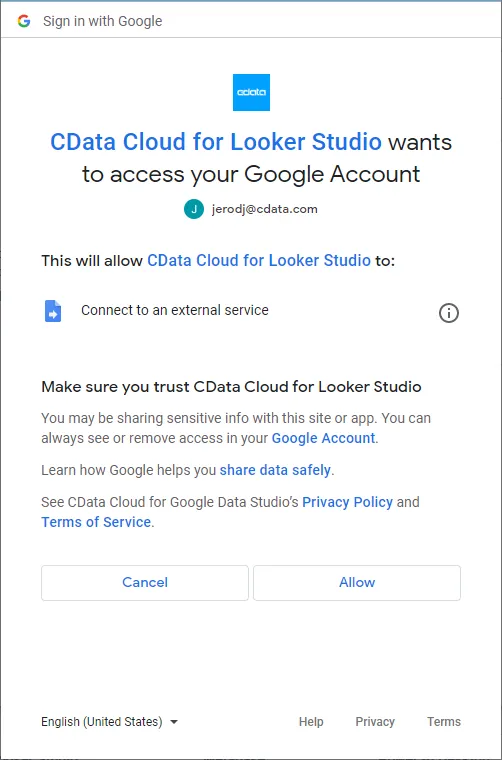
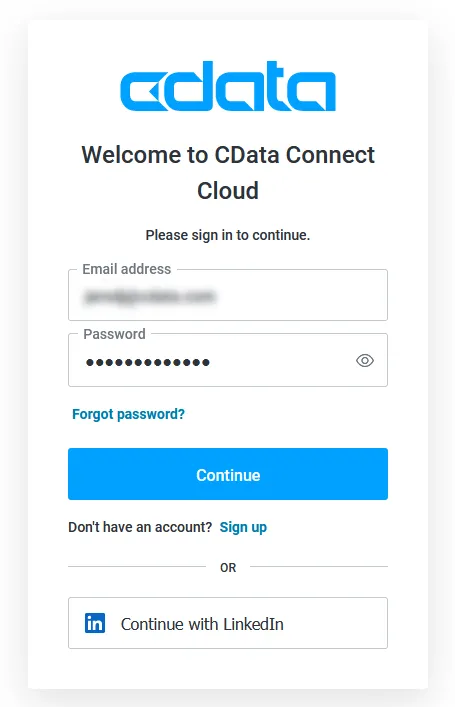
- Click Authorize to authenticate with your CData Connect AI instance
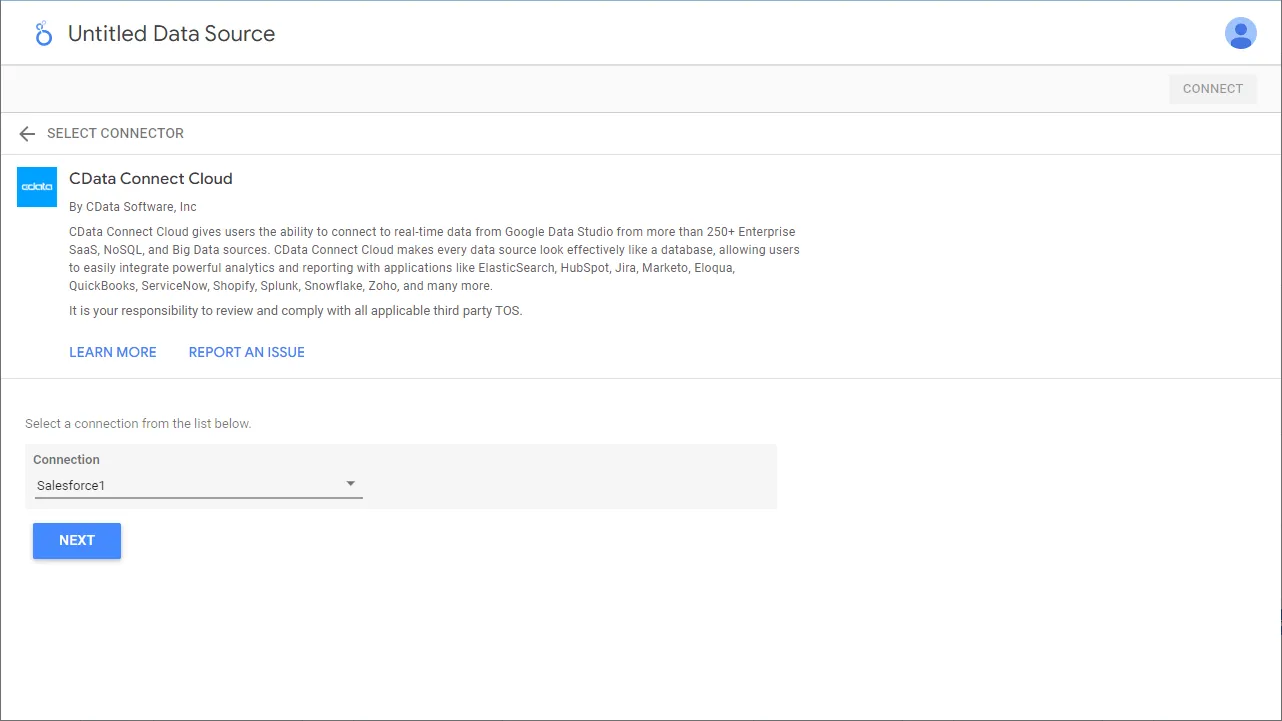
- In the CData Connect AI Connector in Looker Studio select a Connection (e.g. FTP1) and click Next
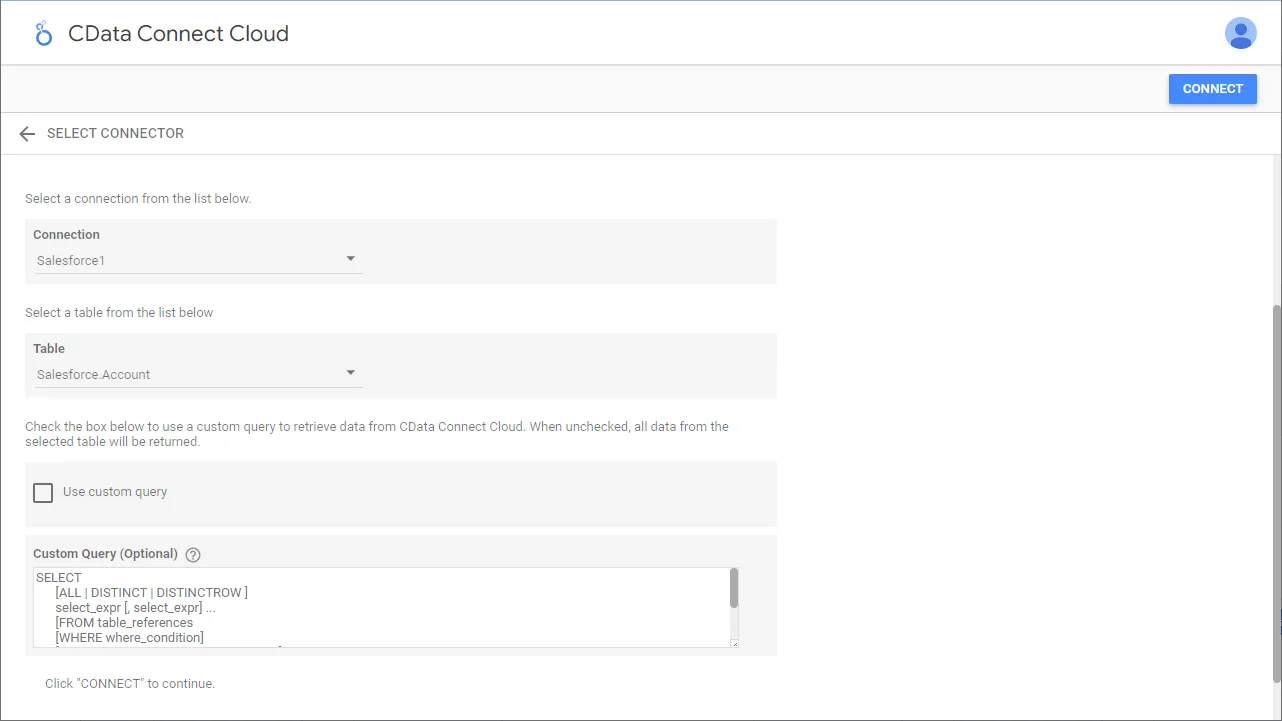
- Select a Table (e.g. MyDirectory) or use a Custom Query and click Connect to continue
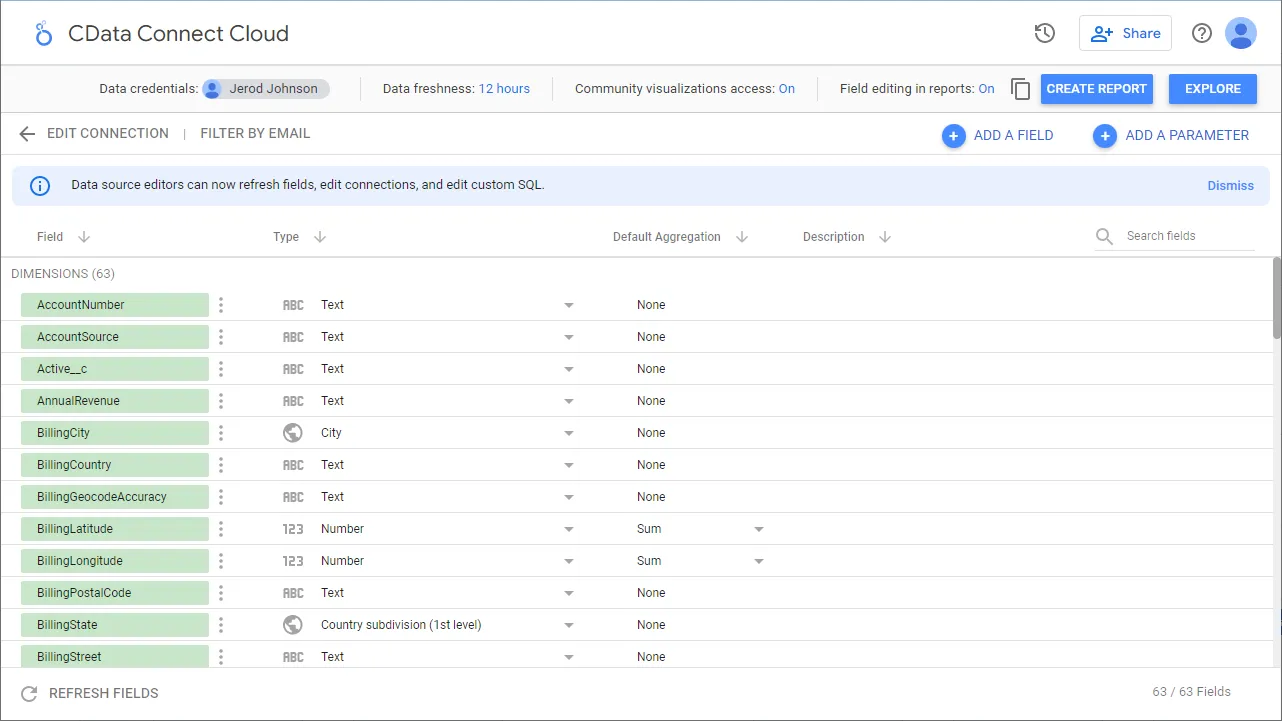
- If needed, modify columns, click Create Report, and add the data source to the report.
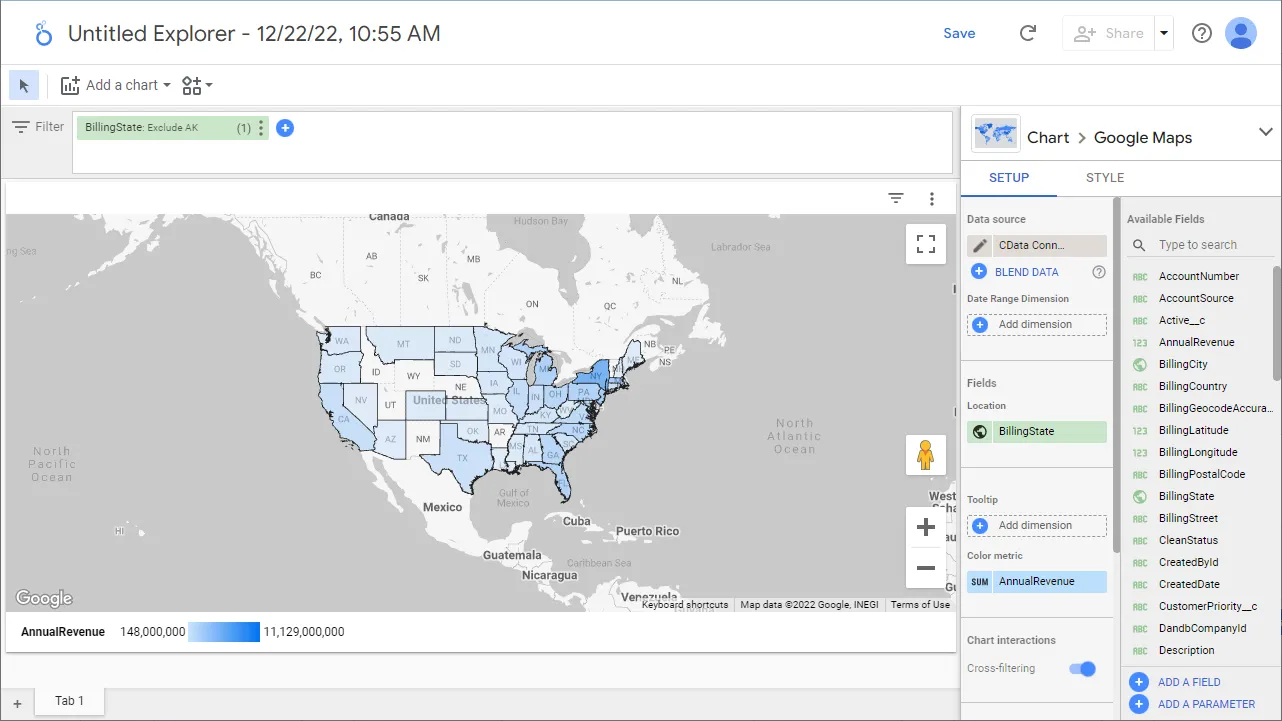
- Select a visualization style and add it to the report.
- Select Dimensions and Measures to customize your visualization.
Live Access to FTP Data from Cloud Applications
Now you have a direct, cloud-to-cloud connection to live FTP data from your Looker Studio workbook. You can create more data sources and new visualizations, build reports, and more — all without replicating FTP data.
Try CData Connect AI and get real-time data access to 300+ SaaS, Big Data, and NoSQL sources directly from your cloud applications.