






Feed Google Translate Data into FineReport

The CData JDBC Driver for Google Translate fully implements the JDBC standard and can provide Google Translate data connectivity to a wide variety of BI, reporting, and ETL tools and custom applications. In this article, we explain how to set Google Translate data as JDBC data source in FineReport and view Google Translate data as a table in the Report Designer.
Set Up a JDBC Data Source of Google Translate Data
Follow the instruction below to set Google Translate data as a FineReport database connection.
- Copy the cdata.jdbc.api.jar file from the lib folder in the CData JDBC Driver for Google Translate installation directory to the lib folder of the FineReport installation directory. You will need to copy the cdata.jdbc.api.lic file as well.
- From the Server tab, select Define Data Connection, click to add a new connection, and click JDBC.
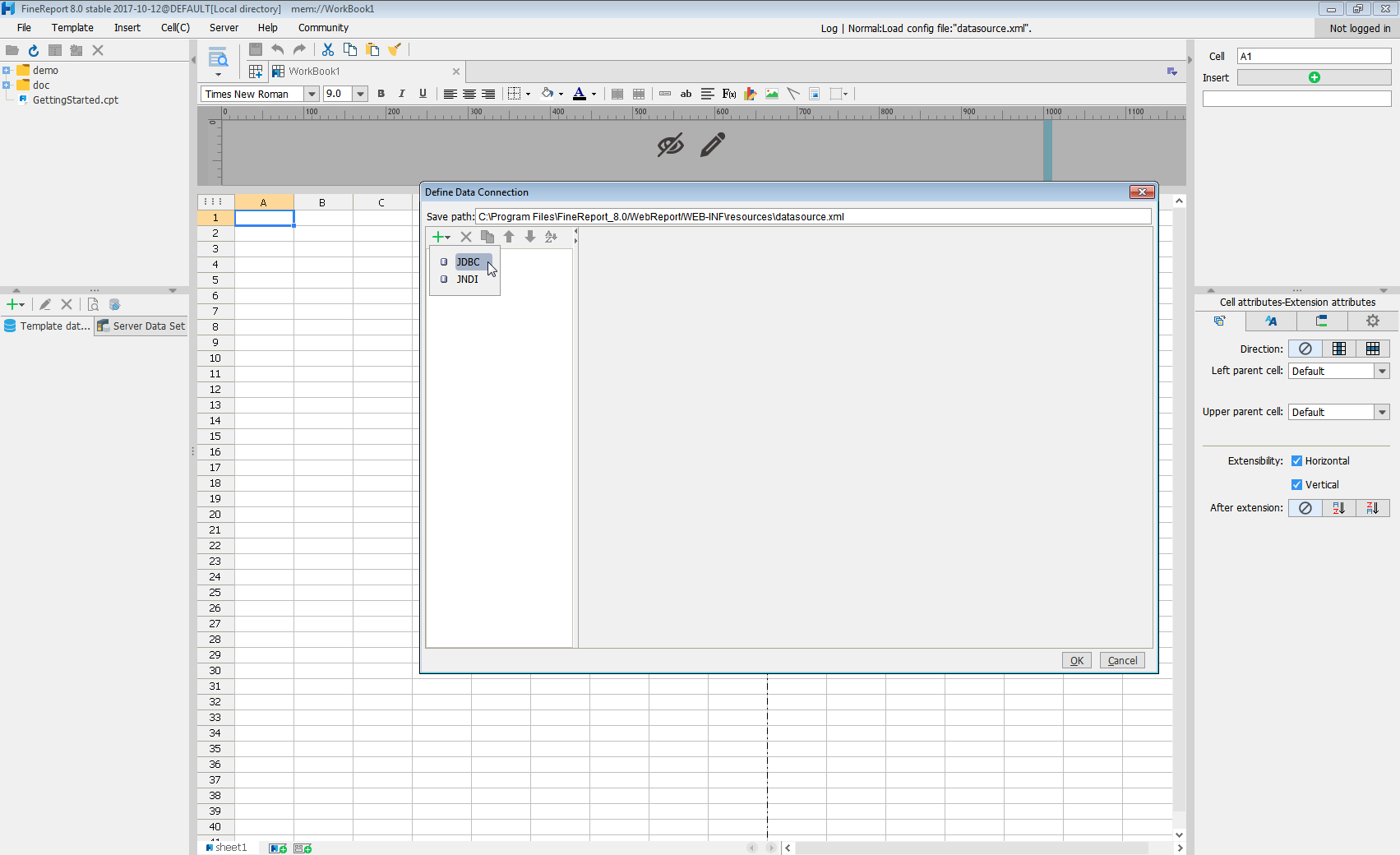
Next we will set up the data connection definition in the window.
- Database: Others
- JDBC Driver: cdata.jdbc.api.APIDriver
-
URL: A standard JDBC connection string using semicolon-separated connection properties.
Authentication
Google Cloud Translation API requires OAuth 2.0 authentication to ensure secure access to translation services, datasets, glossaries, and adaptive MT resources. This authentication method allows you to securely connect to your Google Cloud project and manage translation resources with proper authorization.
OAuth 2.0 Setup and Configuration
Step 1: Create Google Cloud Project and Enable API
To set up OAuth authentication:
- Visit the Google Cloud Console
- Create a new project or select an existing project
- Note down your Project ID (required for all API calls)
- Navigate to "APIs & Services" > "Library"
- Search for and enable the "Cloud Translation API"
- Go to "APIs & Services" > "Credentials"
- Click "Create Credentials" and select "OAuth Client ID"
- Configure the OAuth consent screen if prompted
- Select "Desktop application" or "Web application" as appropriate
- Set the authorized redirect URI (CallbackURL)
- Copy the Client ID and Client Secret for use in your connection
Required Connection Properties
- AuthScheme: Set this to OAuth (required)
- OAuthClientId: Client ID from Google Cloud Console (required)
- OAuthClientSecret: Client secret from Google Cloud Console (required)
- CallbackURL: Redirect URI specified in your OAuth application (required)
- InitiateOAuth: Set to GETANDREFRESH for automatic token management (recommended)
- ProjectId: Your Google Cloud project ID or project number (required for queries)
Required OAuth Scopes
The Google Cloud Translation API Profile requires the following OAuth scope:
- https://www.googleapis.com/auth/cloud-translation - Full access to Cloud Translation API resources including translation, datasets, glossaries, and adaptive MT
Built-in Connection String Designer
For assistance in constructing the JDBC URL, use the connection string designer built into the Google Translate JDBC Driver. Either double-click the JAR file or execute the jar file from the command-line.
java -jar cdata.jdbc.api.jar
Fill in the connection properties and copy the connection string to the clipboard.

When you configure the JDBC URL, you may also want to set the Max Rows connection property. This will limit the number of rows returned, which is especially helpful for improving performance when designing reports and visualizations.
A typical JDBC URL is below:
jdbc:api:Profile=C:\profiles\GoogleTranslate.apip;AuthScheme=OAuth;InitiateOAuth=GETANDREFRESH;OAuthClientId=your_client_id;OAuthClientSecret=your_client_secret;CallbackUrl=your_callback_url; - Click Connection pool attributes and set Test before getting connections to No.
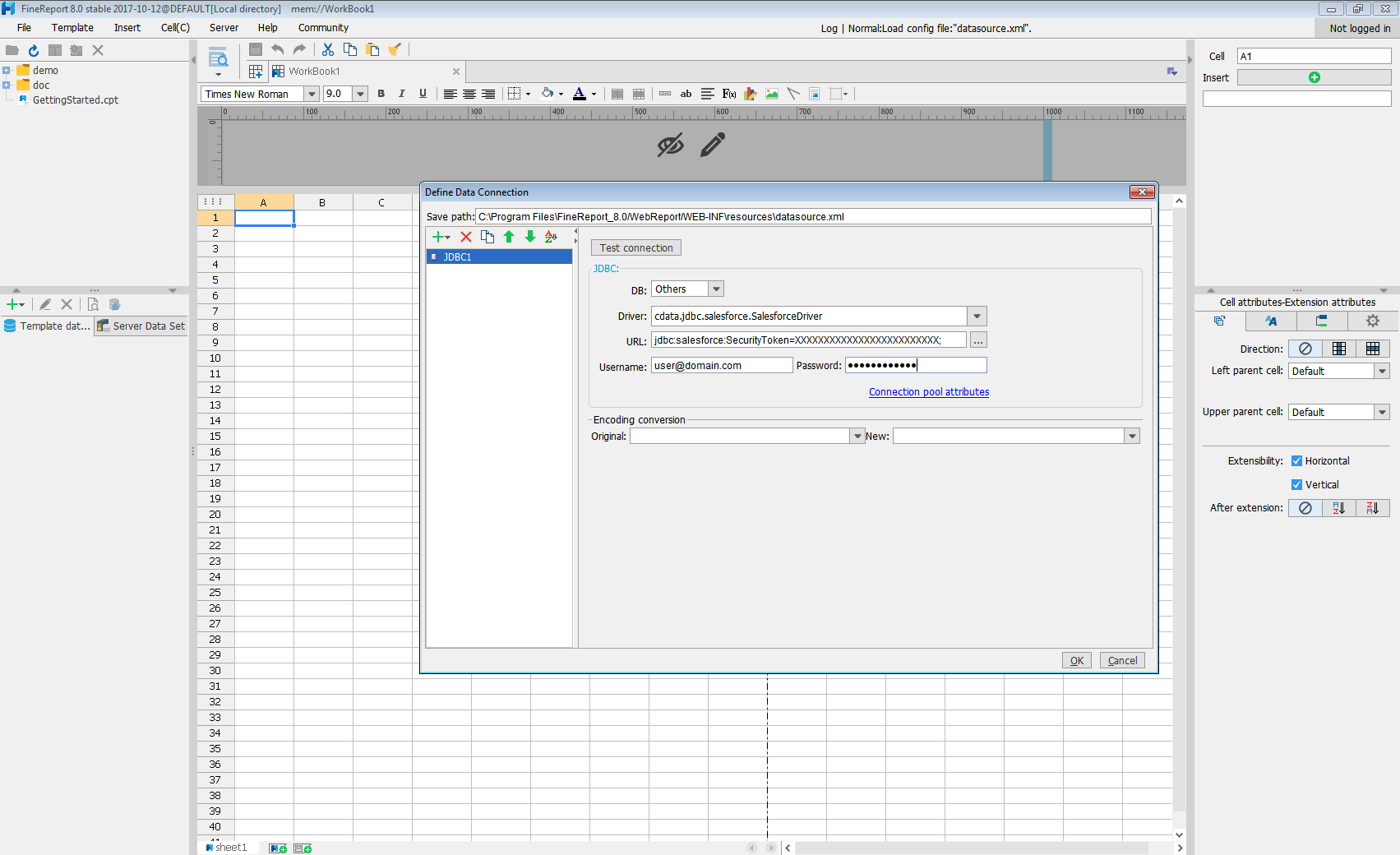
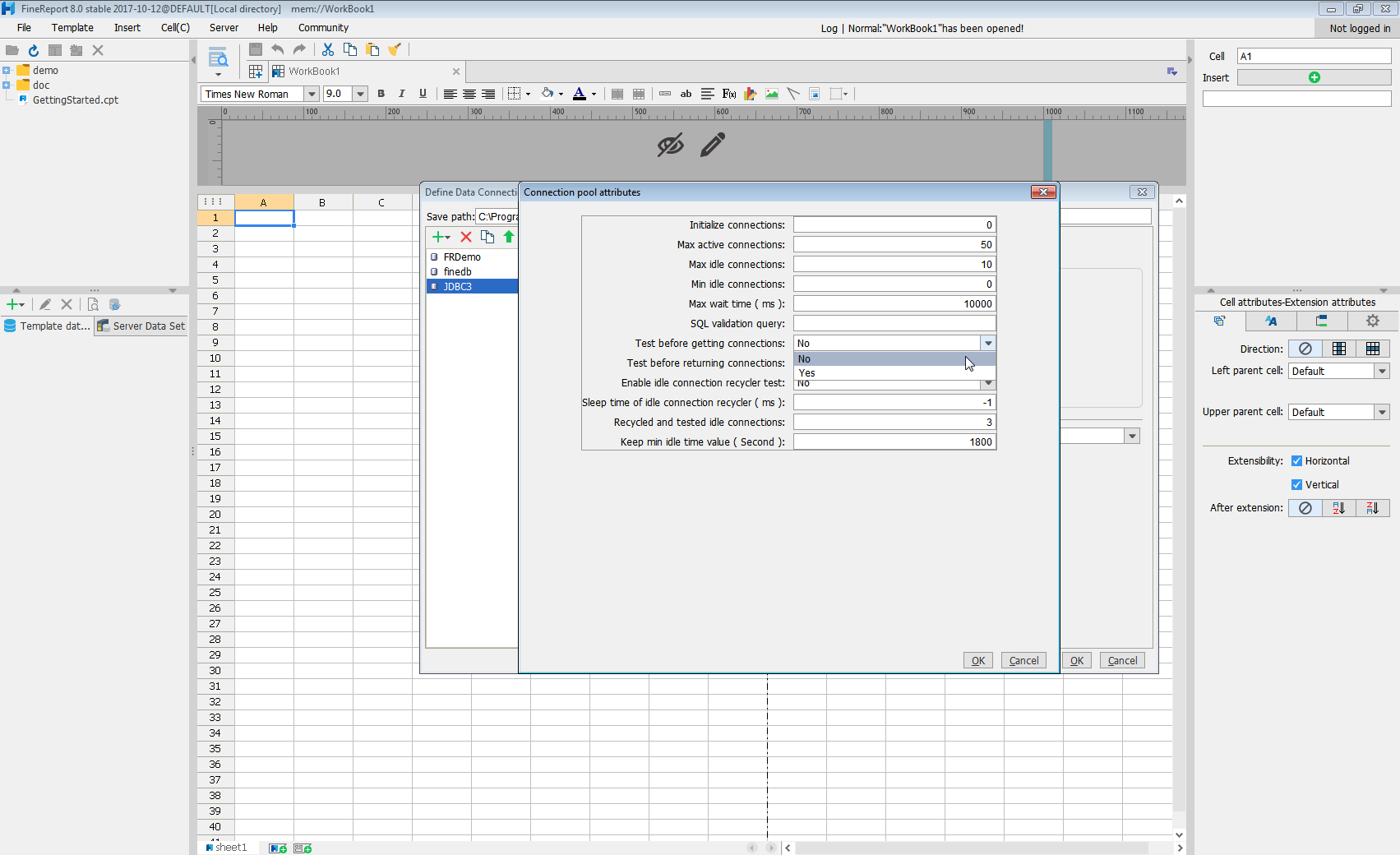
Click Test connection to ensure you have configured the connection properly. With the connection to Google Translate set up, you can use it as FineReport data source.
Select Google Translate Data in the Report Designer.
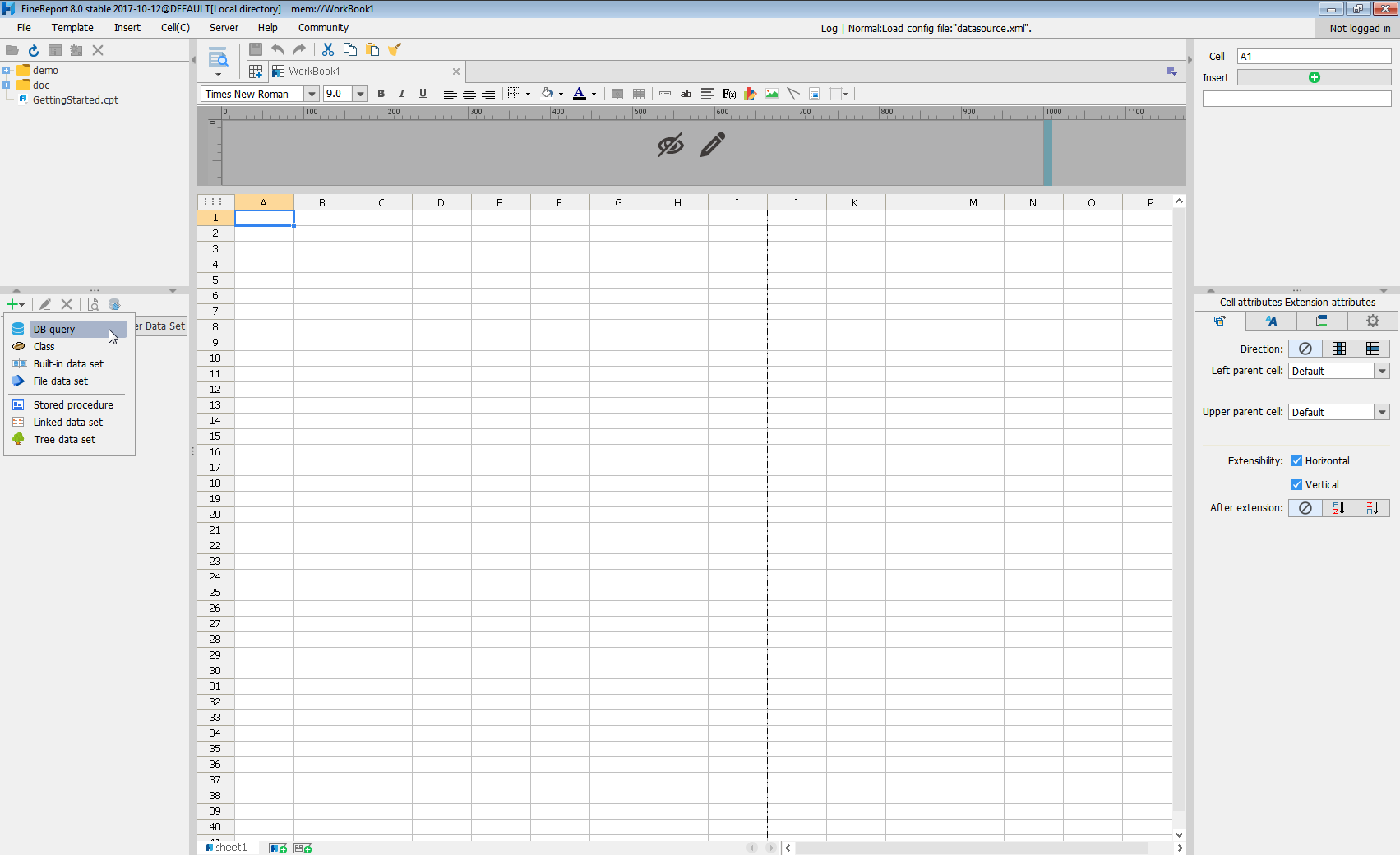
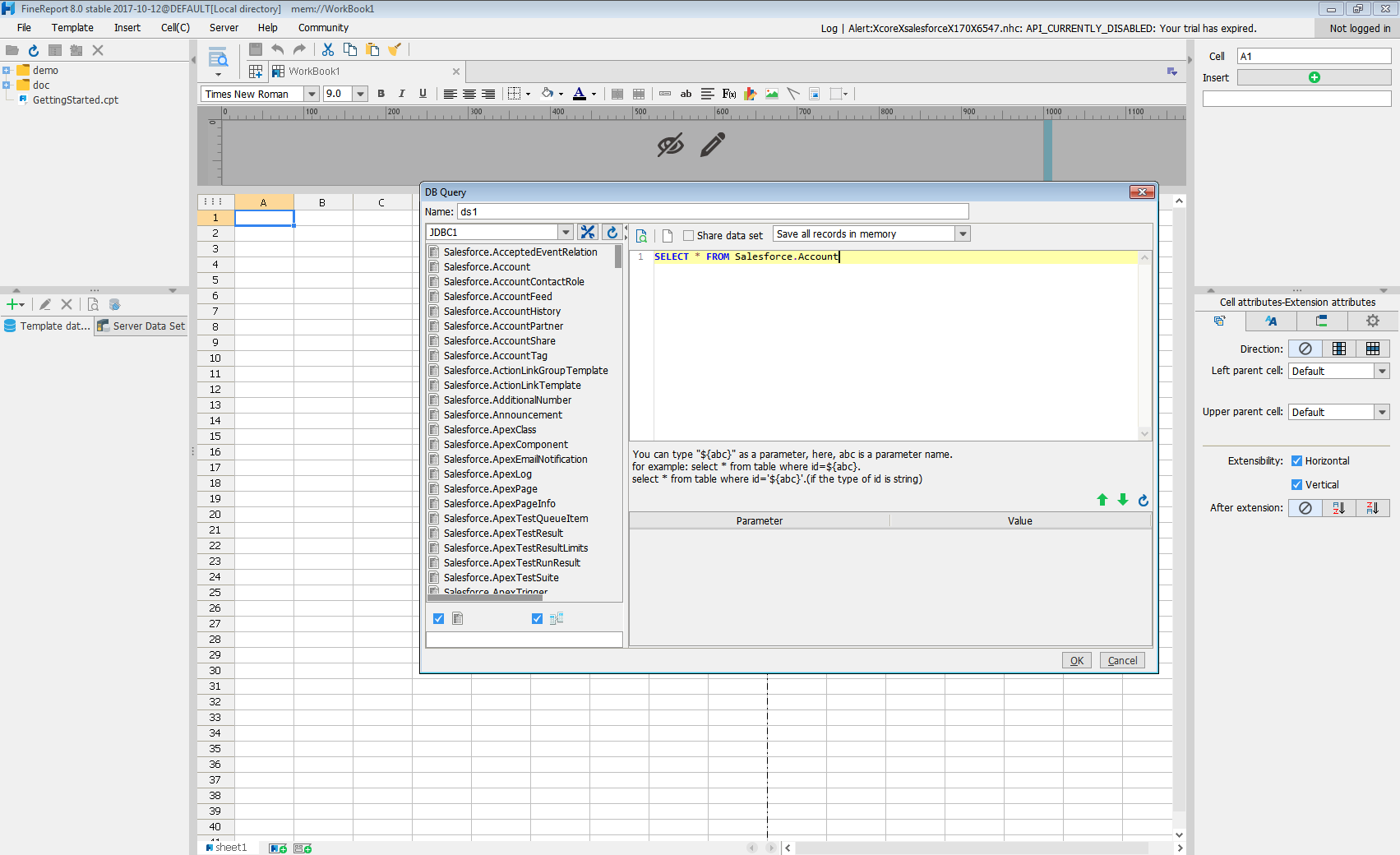
- Click to add a new template data set and select DB query to open the database query window.
- Choose the JDBC connection that you created from the dropdown list.
- The Google Translate entities will appear as tables on the left pane.
- Write a SELECT statement for the Google Translate data tables and columns that you want to load.
- Click preview and data is shown as table.
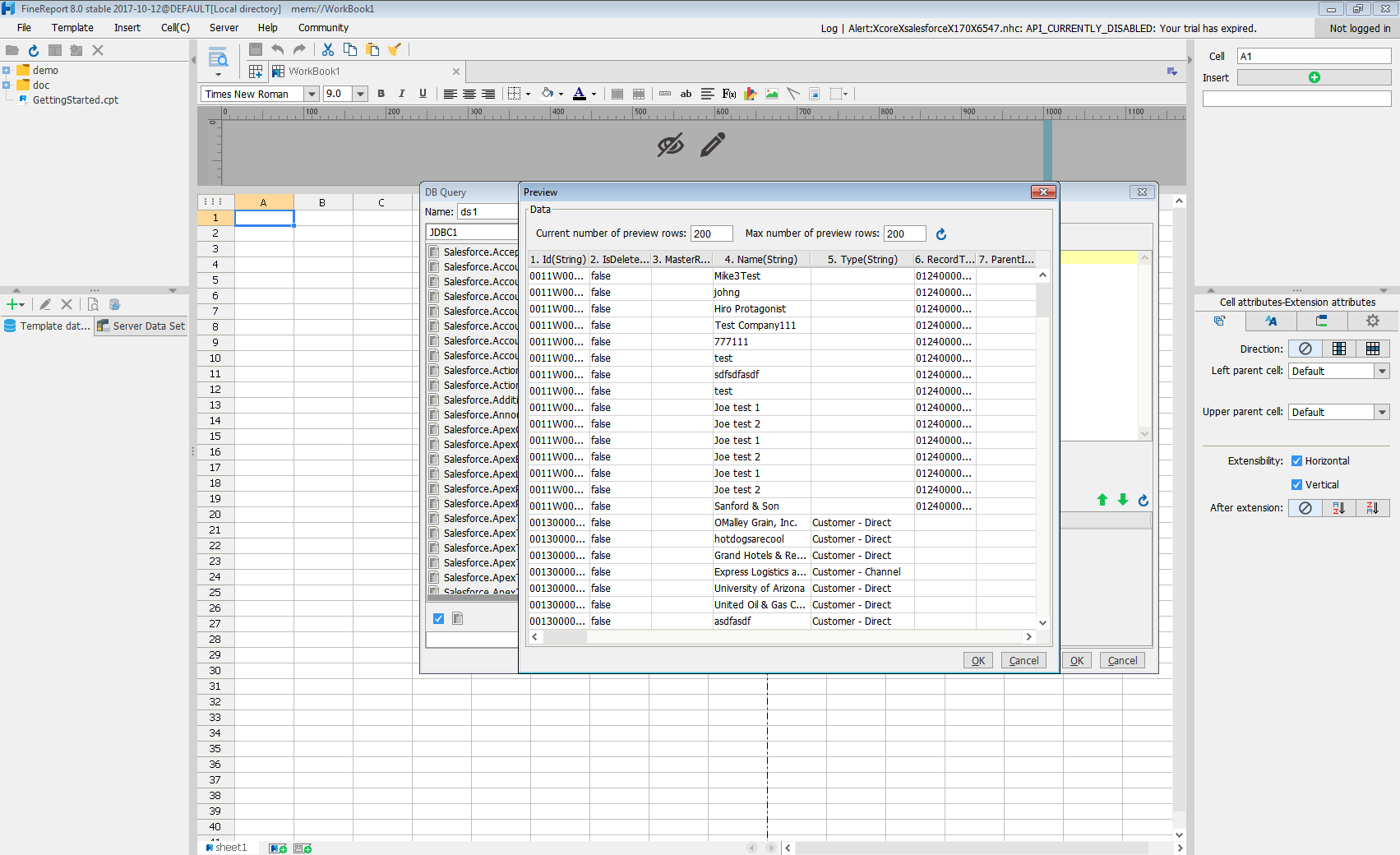
With these simple steps, Google Translate can be used as a JDBC data source in FineReport.