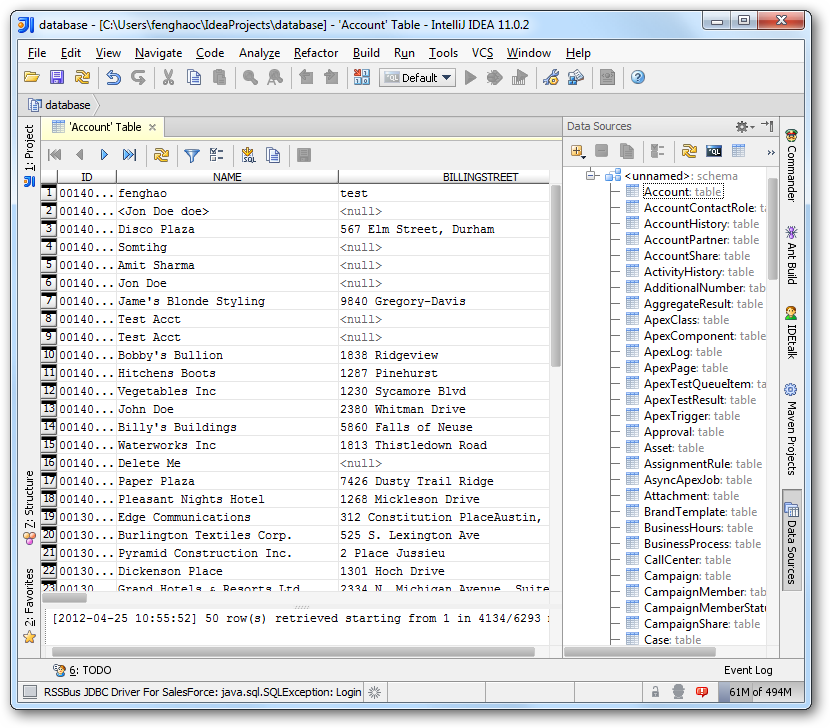
How to connect to Gorgias Data from IntelliJ

The CData JDBC Driver for Gorgias enables you to access Gorgias as a JDBC data source, providing integration with rapid development tools in IDEs. This article shows how to use the data source configuration wizard to connect to Gorgias data in IntelliJ.
Create a JBDC Data Source for Gorgias
Follow the steps below to add the driver JAR and define connection properties required to connect to Gorgias data.
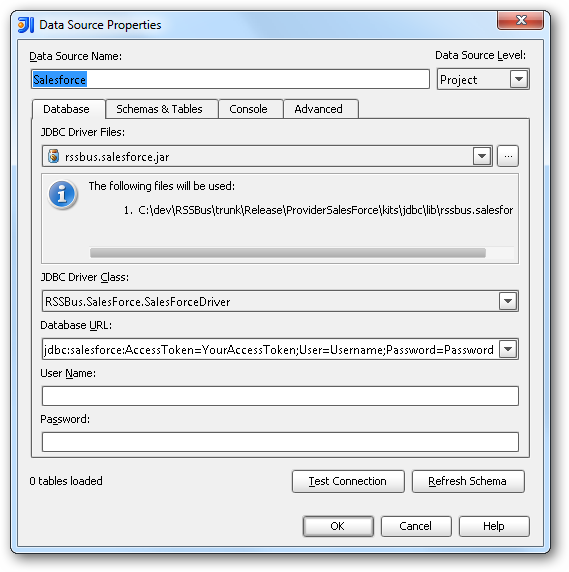
- In the Data Sources window, right-click and then click Add Data Source -> DB Data Source.
In the Data Source Properties dialog that appears, the following properties are required:
- JDBC Driver Files: Click the button next to this menu to add the JDBC Driver file cdata.jdbc.api.jar, located in the installation directory.
- JDBC Driver Class: In this menu, select cdata.jdbc.api.APIDriver from the list.
Database URL: Enter the connection URL in the JDBC URL property. The URL must start with jdbc:api: and includes connection properties separated with semicolons.
Start by setting the Profile connection property to the location of the Gorgias Profile on disk (e.g. C:\profiles\Gorgias.apip). Next, set the ProfileSettings connection property to the connection string for Gorgias (see below).
Gorgias API Profile Settings
Use your Gorgias login email as the User and your API key as the Password. Your Domain is the subdomain from your Gorgias portal URL.
Built-in Connection String Designer
For assistance in constructing the JDBC URL, use the connection string designer built into the Gorgias JDBC Driver. Either double-click the JAR file or execute the jar file from the command-line.
java -jar cdata.jdbc.api.jar
Fill in the connection properties and copy the connection string to the clipboard.

A typical JDBC URL is the following:
jdbc:api:Profile=C:\profiles\Gorgias.apip;ProfileSettings='User=your_email;Password=your_api_key;Domain=your_subdomain';
Edit and Save Gorgias Data
To discover schema information, right-click the data source you just created and click Refresh Tables. To query a table, right-click it and then click Open Tables Editor.