






Process & Analyze Gumroad Data in Databricks (AWS)

Databricks is a cloud-based service that provides data processing capabilities through Apache Spark. When paired with the CData JDBC Driver, customers can use Databricks to perform data engineering and data science on live Gumroad data. This article explains how to host the CData JDBC Driver in AWS, as well as connect to and process live Gumroad data in Databricks.
With built-in optimized data processing, the CData JDBC Driver offers unmatched performance for interacting with live Gumroad data. When you issue complex SQL queries to Gumroad, the driver pushes supported SQL operations, like filters and aggregations, directly to Gumroad and utilizes the embedded SQL engine to process unsupported operations client-side (often SQL functions and JOIN operations). Its built-in dynamic metadata querying allows you to work with and analyze Gumroad data using native data types.
Install the CData JDBC Driver in Databricks
To work with live Gumroad data in Databricks, install the driver on your Databricks cluster.
- Navigate to your Databricks administration screen and select the target cluster.
- On the Libraries tab, click "Install New."
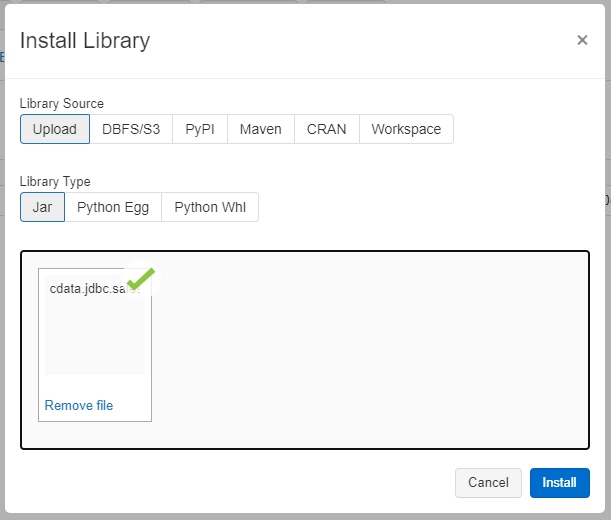
- Select "Upload" as the Library Source and "Jar" as the Library Type.
- Upload the JDBC JAR file (cdata.jdbc.api.jar) from the installation location (typically C:\Program Files\CData[product_name]\lib).
Access Gumroad Data in your Notebook: Python
With the JAR file installed, we are ready to work with live Gumroad data in Databricks. Start by creating a new notebook in your workspace. Name the notebook, select Python as the language (though Scala is available as well), and choose the cluster where you installed the JDBC driver. When the notebook launches, we can configure the connection, query Gumroad, and create a basic report.
Configure the Connection to Gumroad
Connect to Gumroad by referencing the JDBC Driver class and constructing a connection string to use in the JDBC URL. Additionally, you will need to set the RTK property in the JDBC URL (unless you are using a Beta driver). You can view the licensing file included in the installation for information on how to set this property.
Step 1: Connection Information
driver = "cdata.jdbc.api.APIDriver"
url = "jdbc:api:RTK=5246...;Profile=C:\profiles\Gumroad.apip;AuthScheme=OAuth;InitiateOAuth=GETANDREFRESH;OAuthClientId=your_client_id;OAuthClientSecret=your_client_secret;CallbackUrl=your_callback_url;"
Built-in Connection String Designer
For assistance in constructing the JDBC URL, use the connection string designer built into the Gumroad JDBC Driver. Either double-click the JAR file or execute the jar file from the command-line.
java -jar cdata.jdbc.api.jar
Fill in the connection properties and copy the connection string to the clipboard.
Using OAuth Authentication
To authenticate to Gumroad and connect to your own data or to allow other users to connect to their data, you can use the OAuth 2.0 standard. This is the recommended authentication method.
First you need to register an OAuth application with Gumroad. You can create an OAuth application by visiting your Gumroad account settings at https://app.gumroad.com/settings/advanced and navigating to the Applications section.
After setting the following connection properties, you are ready to connect:
- AuthScheme: Set this to OAuth.
- InitiateOAuth: Set this to GETANDREFRESH. The CData API Profile for Gumroad will automatically walk through the OAuth process in order to obtain the access token.
- OAuthClientID: Set this to the client_id that is specified in your app settings.
- OAuthClientSecret: Set this to the client_secret that is specified in your app settings.
- CallbackURL: Set this to the Redirect URI you specified in your app settings.
Example connection string
Profile=C:\profiles\Gumroad.apip;AuthScheme=OAuth;InitiateOAuth=GETANDREFRESH;OAuthClientId=your_client_id;OAuthClientSecret=your_client_secret;CallbackUrl=your_callback_url;

Load Gumroad Data
Once you configure the connection, you can load Gumroad data as a dataframe using the CData JDBC Driver and the connection information.
Step 2: Reading the data
remote_table = spark.read.format ( "jdbc" ) \
	.option ( "driver" , driver) \
	.option ( "url" , url) \
	.option ( "dbtable" , "CustomFields") \
	.load ()
Display Gumroad Data
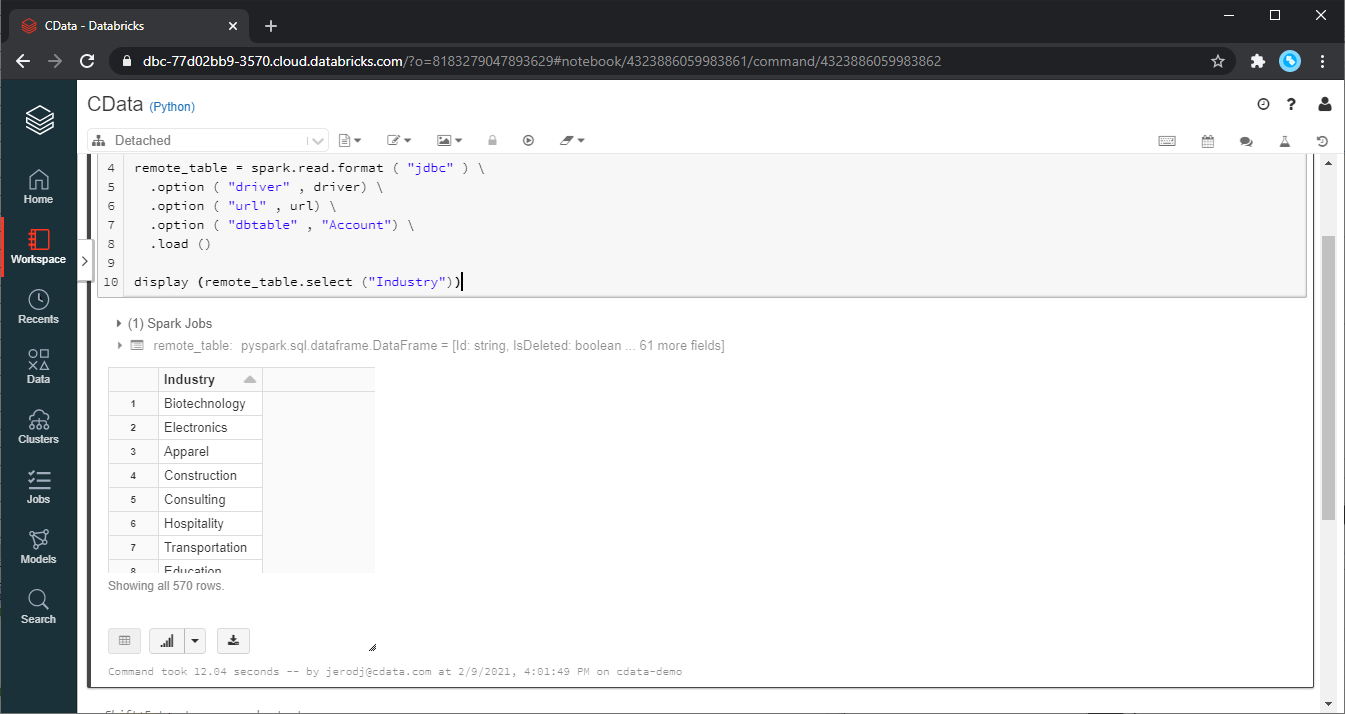
Check the loaded Gumroad data by calling the display function.
Step 3: Checking the result
display (remote_table.select (""))
Analyze Gumroad Data in Databricks
If you want to process data with Databricks SparkSQL, register the loaded data as a Temp View.
Step 4: Create a view or table
remote_table.createOrReplaceTempView ( "SAMPLE_VIEW" )
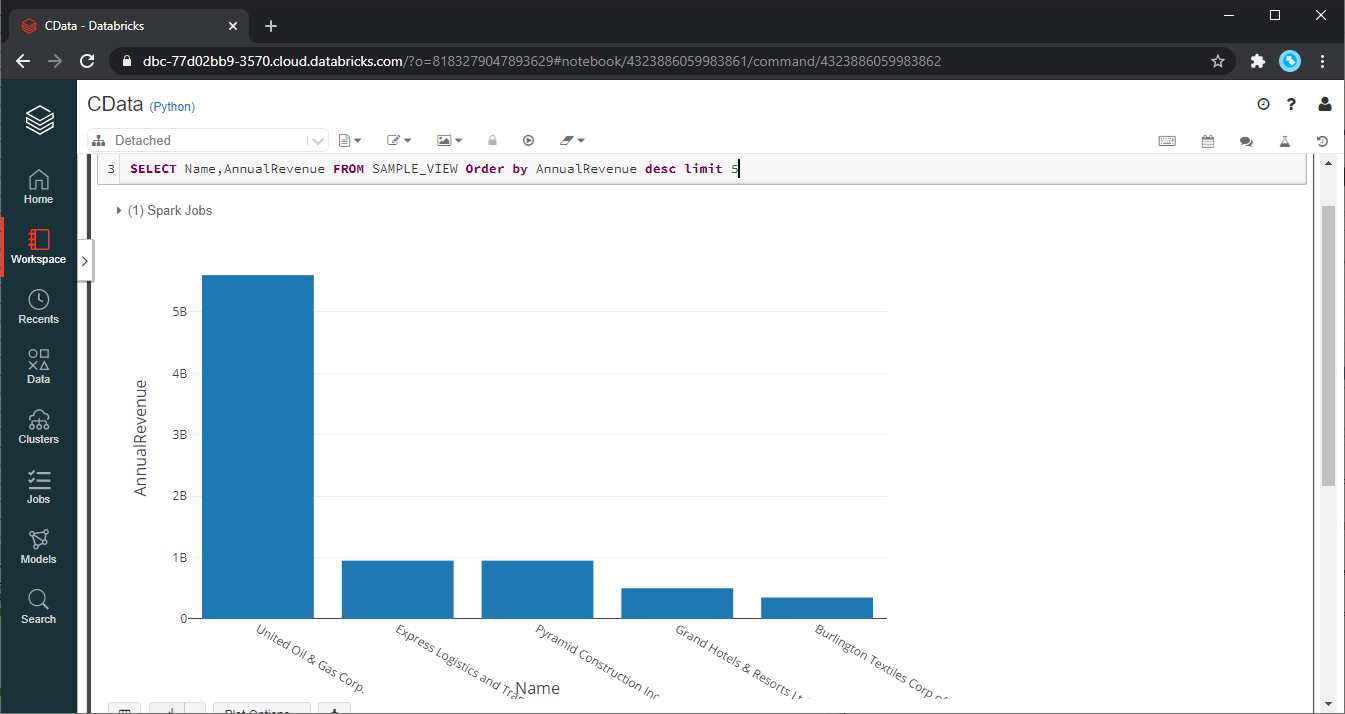
With the Temp View created, you can use SparkSQL to retrieve the Gumroad data for reporting, visualization, and analysis.
% sql

SELECT ,  FROM SAMPLE_VIEW ORDER BY  DESC LIMIT 5
The data from Gumroad is only available in the target notebook. If you want to use it with other users, save it as a table.
remote_table.write.format ( "parquet" ) .saveAsTable ( "SAMPLE_TABLE" )
Download a free, 30-day trial of the CData API Driver for JDBC and start working with your live Gumroad data in Databricks. Reach out to our Support Team if you have any questions.