






How to update Lakebase from Excel

The CData Excel Add-In for Lakebase enables you to edit and save Lakebase data directly from Excel. This article explains how to transfer data from Excel to Lakebase. This technique is useful if you want to work on Lakebase data in Excel and update changes, or if you have a whole spreadsheet you want to import into Lakebase. In this example, you will use the Orders table; however, the same process will work for any table that can be retrieved by the CData Excel Add-In.
Establish a Connection
If you have not already done so, create a new Lakebase connection by clicking From Lakebase on the ribbon.
To connect to Databricks Lakebase, start by setting the following properties:
- DatabricksInstance: The Databricks instance or server hostname, provided in the format instance-abcdef12-3456-7890-abcd-abcdef123456.database.cloud.databricks.com.
- Server: The host name or IP address of the server hosting the Lakebase database.
- Port (optional): The port of the server hosting the Lakebase database, set to 5432 by default.
- Database (optional): The database to connect to after authenticating to the Lakebase Server, set to the authenticating user's default database by default.
OAuth Client Authentication
To authenicate using OAuth client credentials, you need to configure an OAuth client in your service principal. In short, you need to do the following:
- Create and configure a new service principal
- Assign permissions to the service principal
- Create an OAuth secret for the service principal
For more information, refer to the Setting Up OAuthClient Authentication section in the Help documentation.
OAuth PKCE Authentication
To authenticate using the OAuth code type with PKCE (Proof Key for Code Exchange), set the following properties:
- AuthScheme: OAuthPKCE.
- User: The authenticating user's user ID.
For more information, refer to the Help documentation.
Retrieve Data from Lakebase
To insert data into Lakebase, you will first need to retrieve data from the Lakebase table you want to add to. This links the Excel spreadsheet to the Lakebase table selected: After you retrieve data, any changes you make to the data are highlighted in red.
- Click the From Lakebase button on the CData ribbon. The Data Selection wizard is displayed.
- In the Table or View menu, select the Orders table.
- In the Maximum Rows menu, select the number of rows you want to retrieve. If you want to insert rows, you need to retrieve only one row. The Query box will then display the SQL query that corresponds to your request.
- In the Sheet Name box, enter the name for the sheet that will be populated. By default the add-in will create a new sheet with the name of the table.
Insert Rows to Lakebase
After retrieving data, you can add data from an existing spreadsheet in Excel.
- In a cell after the last row, enter a formula referencing the corresponding cell from the other spreadsheet; for example, =MyOrdersSheetInExcel!A1.
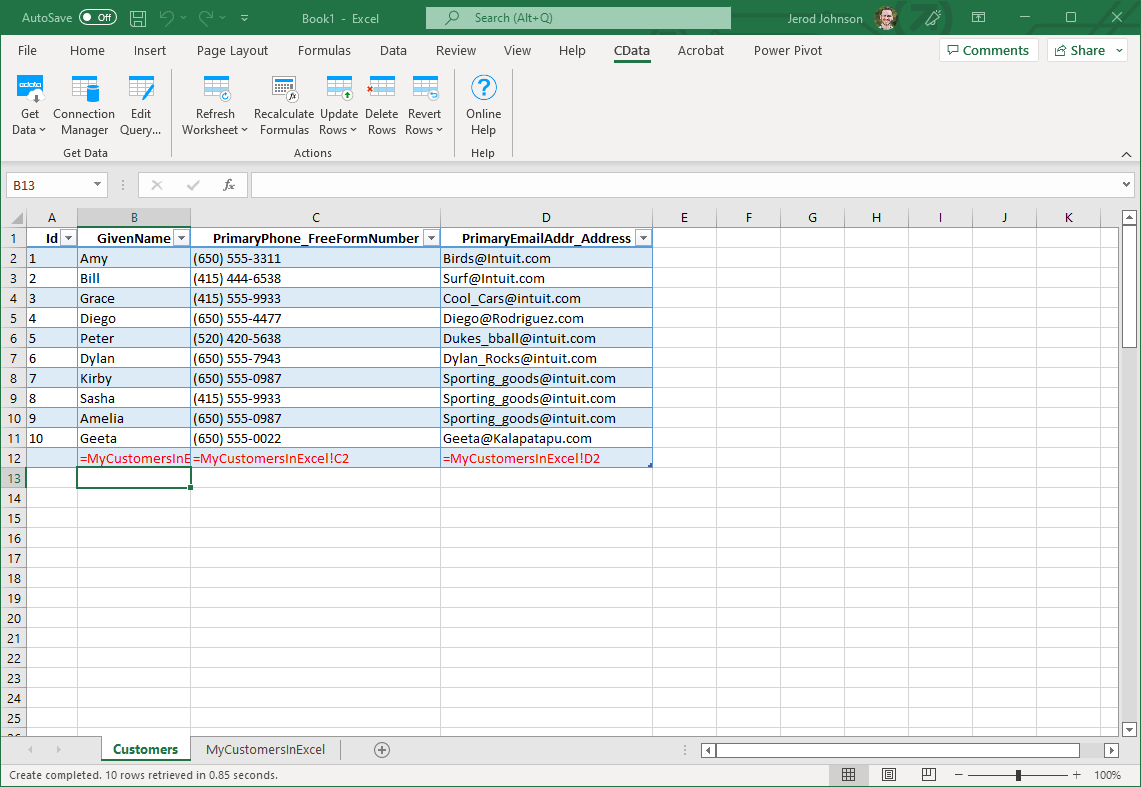
- After using a formula to reference the cells you want to add to Lakebase, select the cells that you are inserting data into and drag the formula down as far as needed. The referenced values you want to add will be displayed on
the Orders sheet.
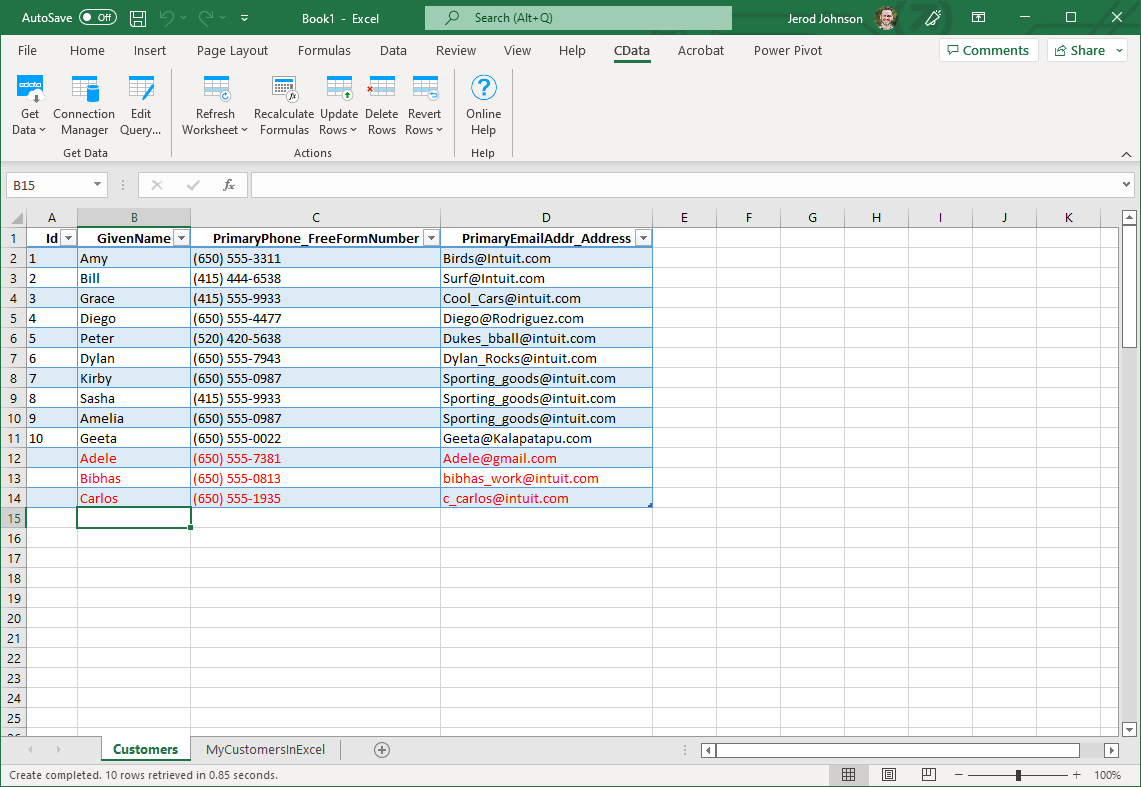
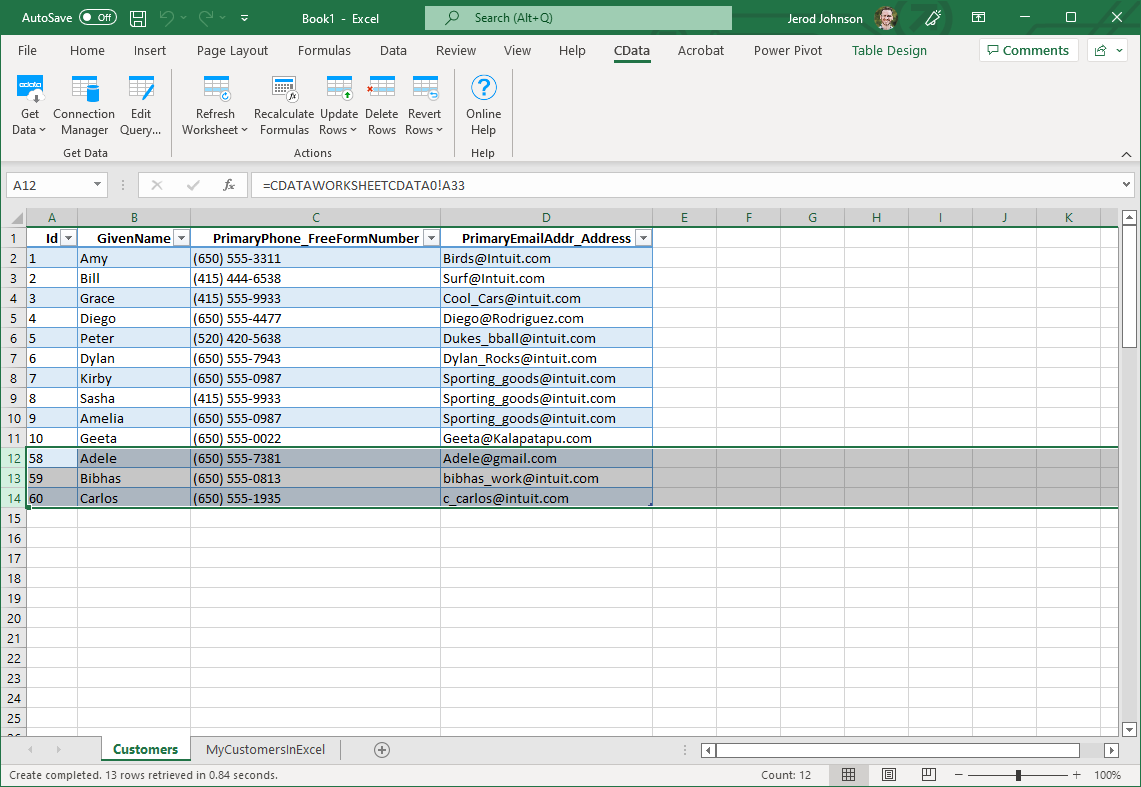
- Highlight the rows you want to insert and click the Update Rows button.
As each row is inserted, the Id value will appear in the Id column and the row's text will change to black, indicating that the record has been inserted.
Ready to get started?
Download a free trial of the Excel Add-In for Lakebase to get started:
Download NowLearn more:
 Excel Add-In for Lakebase
The Lakebase Excel Add-In is a powerful tool that allows you to connect with live Lakebase data, directly from Microsoft Excel.
Use Excel to read, write, and update Lakebase 0, etc. Perfect for mass imports / exports / updates, data cleansing & de-duplication, Excel based data analysis, and more!
