






Bind Live Lakebase Data in Wijmo FlexGrid with CData API Server

Wijmo FlexGrid is a lightweight, high-performance JavaScript datagrid for creating responsive, interactive data applications.
With the CData API Server and the Lakebase Connector (or any of the hundreds of available connectors), you can quickly create APIs that expose live data from multiple sources, using industry standards like OData and Swagger for seamless integration with client-side and server-side controls in Wijmo's FlexGrid.
In this article, we'll use the Wijmo FlexGrid JavaScript components to build a simple HTML page that lets you select tables and columns from Lakebase and display the data.
Let's get started!
Prerequisites
- CData API Server: Download a free trial here.
- Wijmo FlexGrid: No downloads are required for this example, but you can sign up for a free trial here.
- An active Lakebase account with access to your data.
Overview
Here's a quick overview of the steps we'll follow:
- Install the CData API Server, configure a connection to Lakebase, and expose OData endpoints.
- Bind Wijmo Grid to the live OData feed for real-time data access and interaction.
Step 1: Install the CData API Server and Add a Connection to Lakebase
1.1 Install the API Server
If you haven't already, download an installer for your machine from the CData API Server page. Follow the installation instructions to complete the setup.
Once installed, you can start the server in the following ways:
- Windows: CData API Server runs as a service by default. Make sure the service is running, then open http://hostname:port (e.g., http://localhost:8080/) in your browser to access the API Server admin console.
- Linux/Mac: You can run the server manually or as a service. To start it manually, navigate to the installation directory and run java -jar apiserver.jar.
- Alternatively, run service.sh with root privileges to set up API Server as a Linux system service.
1.2 Enable CORS
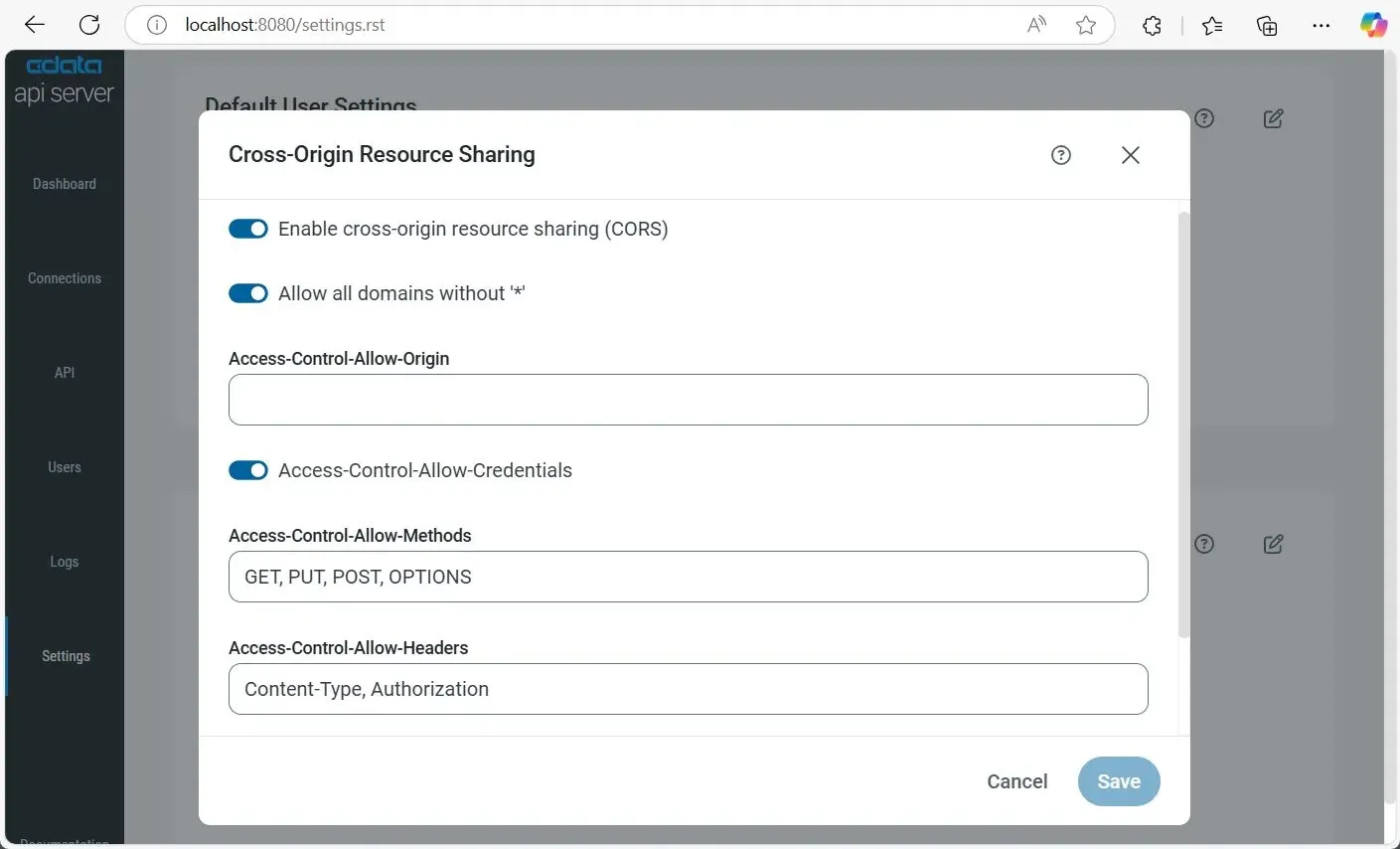
When your Wijmo Grid application and the CData API Server are hosted on different domains, CORS (Cross-Origin Resource Sharing) must be enabled. To enable CORS in the API Server:
- Go to Settings and click the icon to edit CORS settings.
- Enable Cross-Origin Resource Sharing (CORS).
- Enable Allow all domains without '*' to accept any origin.
- In Access-Control-Allow-Origin, enter your Lakebase origin domain, or use * to allow all domains (suitable for public APIs).
- Enable Access-Control-Allow-Credentials to allow cookies and auth headers.
- In Access-Control-Allow-Methods, enter GET, PUT, POST, OPTIONS.
- In Access-Control-Allow-Headers, enter Authorization, Content-Type.
- Set Access-Control-Max-Age (default: 3600 seconds).
- Click Save.
1.3 Add a Lakebase Connection in the API Server
- Go to Settings and click Add Connection in the top-right.
- Select Lakebase. If it's not visible, toggle off Only Installed to view all connectors.
- Click Install Connector to auto-install. For a manual setup, choose Manual Install and upload the obtained ZIP file.
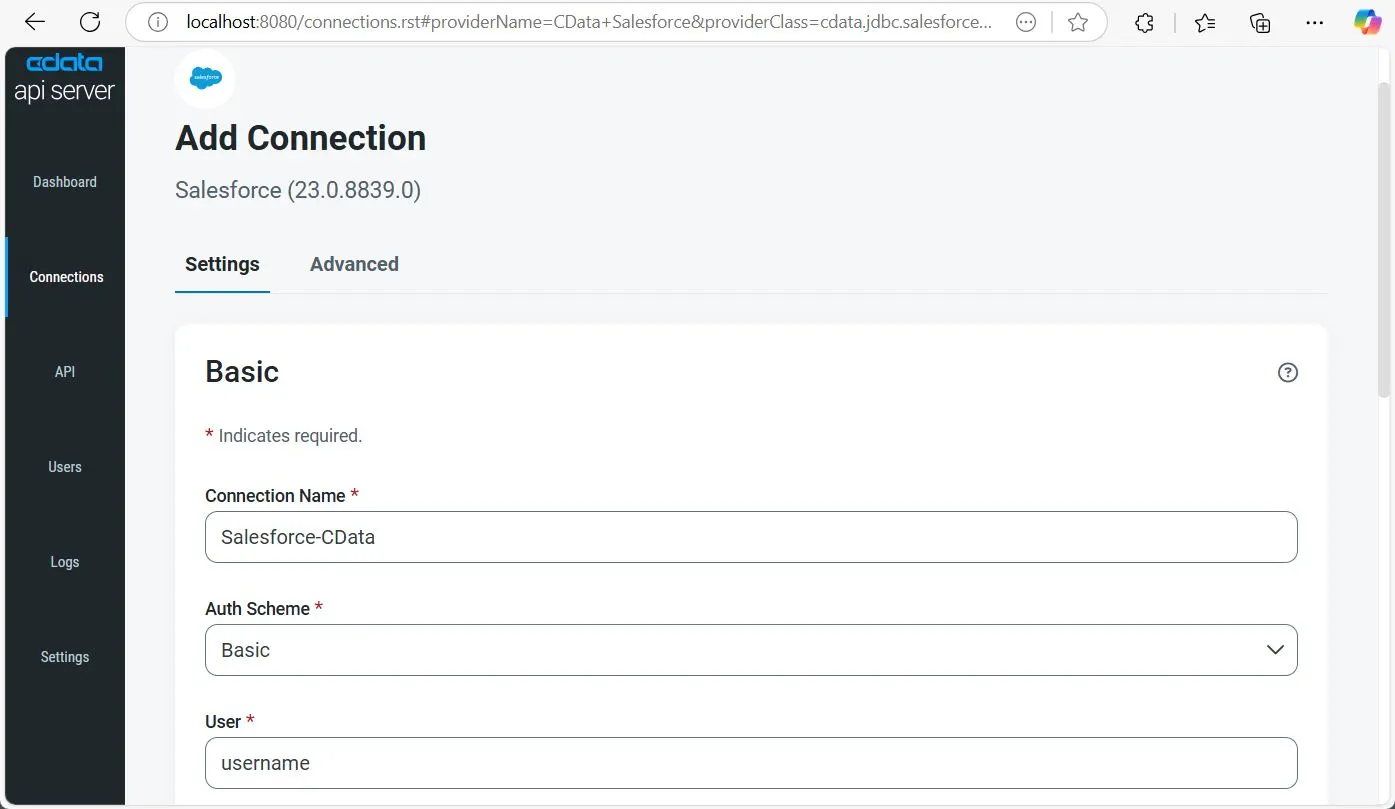
- Once installed, click Lakebase to configure connection settings. To connect to Databricks Lakebase, start by setting the following properties:
- DatabricksInstance: The Databricks instance or server hostname, provided in the format instance-abcdef12-3456-7890-abcd-abcdef123456.database.cloud.databricks.com.
- Server: The host name or IP address of the server hosting the Lakebase database.
- Port (optional): The port of the server hosting the Lakebase database, set to 5432 by default.
- Database (optional): The database to connect to after authenticating to the Lakebase Server, set to the authenticating user's default database by default.
- Create and configure a new service principal
- Assign permissions to the service principal
- Create an OAuth secret for the service principal
- AuthScheme: OAuthPKCE.
- User: The authenticating user's user ID.
- Click Save & Test to validate and complete the connection setup.
OAuth Client Authentication
To authenicate using OAuth client credentials, you need to configure an OAuth client in your service principal. In short, you need to do the following:
For more information, refer to the Setting Up OAuthClient Authentication section in the Help documentation.
OAuth PKCE Authentication
To authenticate using the OAuth code type with PKCE (Proof Key for Code Exchange), set the following properties:
For more information, refer to the Help documentation.
1.4 Add and Configure Users
To allow secure access to the created OData endpoints, create and configure Users in the API Server.
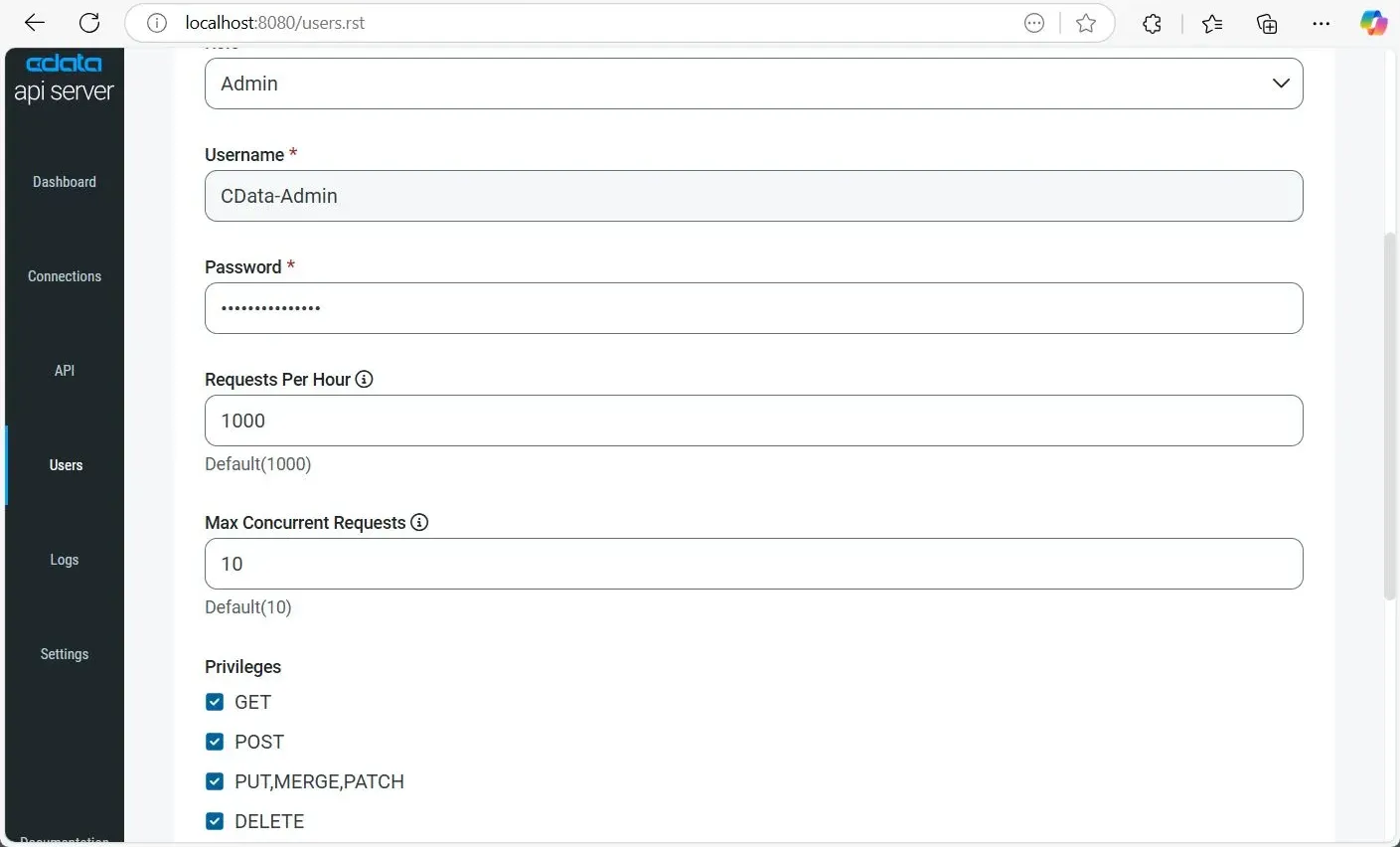
- Go to Users from the navigation pane, then click Add User.
- Set a Username and Password.
- Select a Role: Select Admin for full access and Query for limited access.
- Define user Privileges (GET, POST, PUT, DELETE, etc.).
- Click Add User to save.
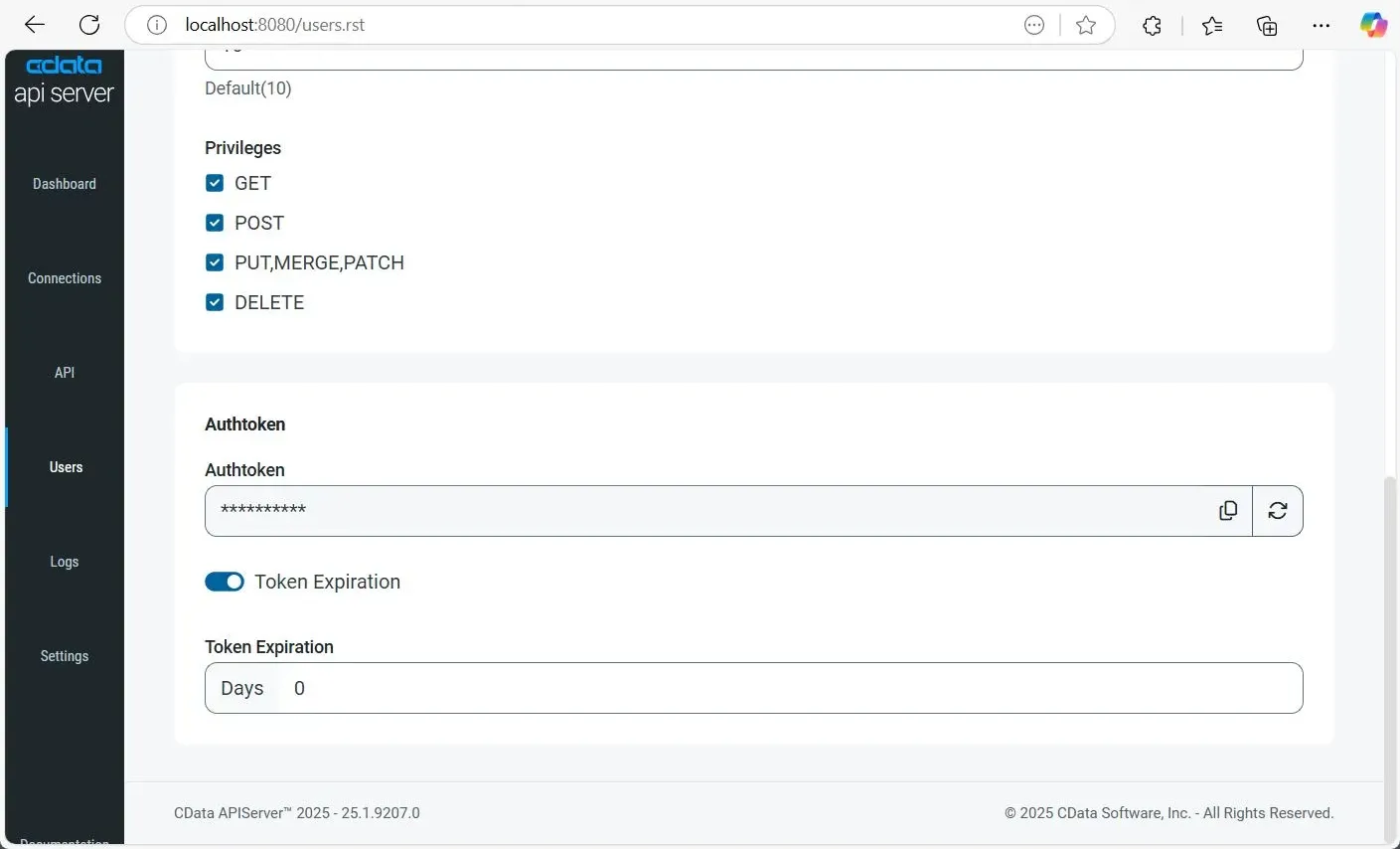
Once a user is added, an Authtoken is automatically generated. This token can be used in API requests as a secure authentication method instead of a password.
You can also refresh the Authtoken, disable it, or set expiration rules (e.g., number of days until expiry) by enabling the Token Expiration option in the user settings.
1.5 Add Tables for the Endpoint
To make data from Lakebase accessible in Wijmo Grid via OData, you need to expose your desired tables through the API Server. Here's how:
- In the API Server, go to API and click Add Table.
- Select the Lakebase connection and click Next.
- Choose the tables you want to expose and click Confirm.
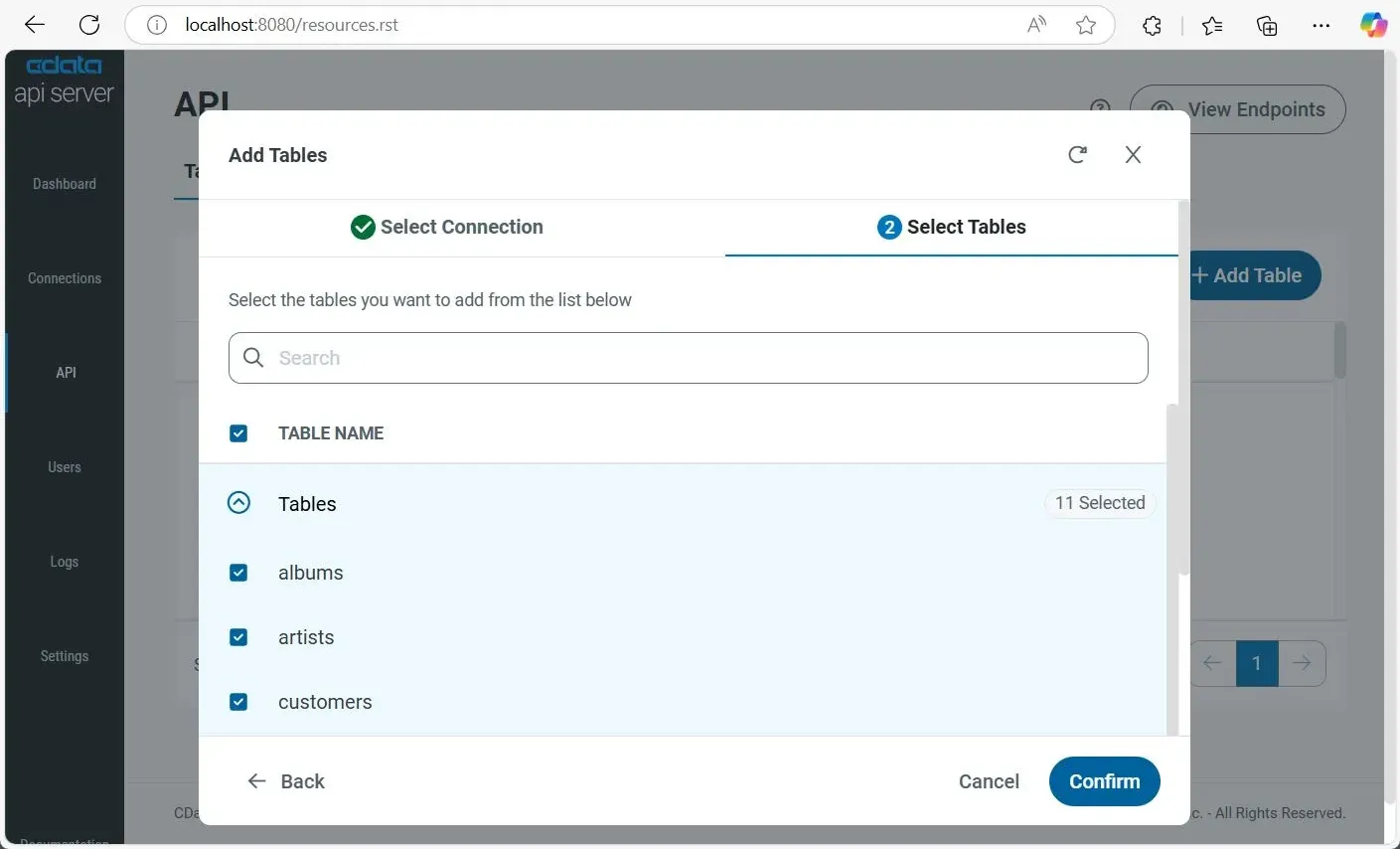
1.6 Access the Endpoints in Wijmo FlexGrid
Now that your API is configured, Wijmo FlexGrid can connect to the OData endpoints to display live data. Below are the URL formats for OData endpoints that you can use:
| Endpoint | URL | |
|---|---|---|
| Entity List | http://address:port/api.rsc/ | |
| Table Metadata (e.g., albums) | http://address:port/api.rsc/albums/$metadata?@json | |
| Table Data (e.g., albums) | http://address:port/api.rsc/albums |
These OData endpoints are now ready to be directly consumed in Wijmo FlexGrid using the URL. Since Wijmo FlexGrid supports OData, you can easily bind live data from Lakebase and create dynamic, interactive grids.
The CData API Server supports full OData filtering capabilities. For custom queries and filtered visualizations, you can append standard OData query parameters like $select, $filter, $orderby, $top, and $skip to your requests.
Step 2: Build the Simple Wijmo Grid
You've got the CData API Server up and running now with consumable OData endpoints from your Lakebase data. Now let's build a simple Wijmo FlexGrid that lets you select tables and columns and view your data.
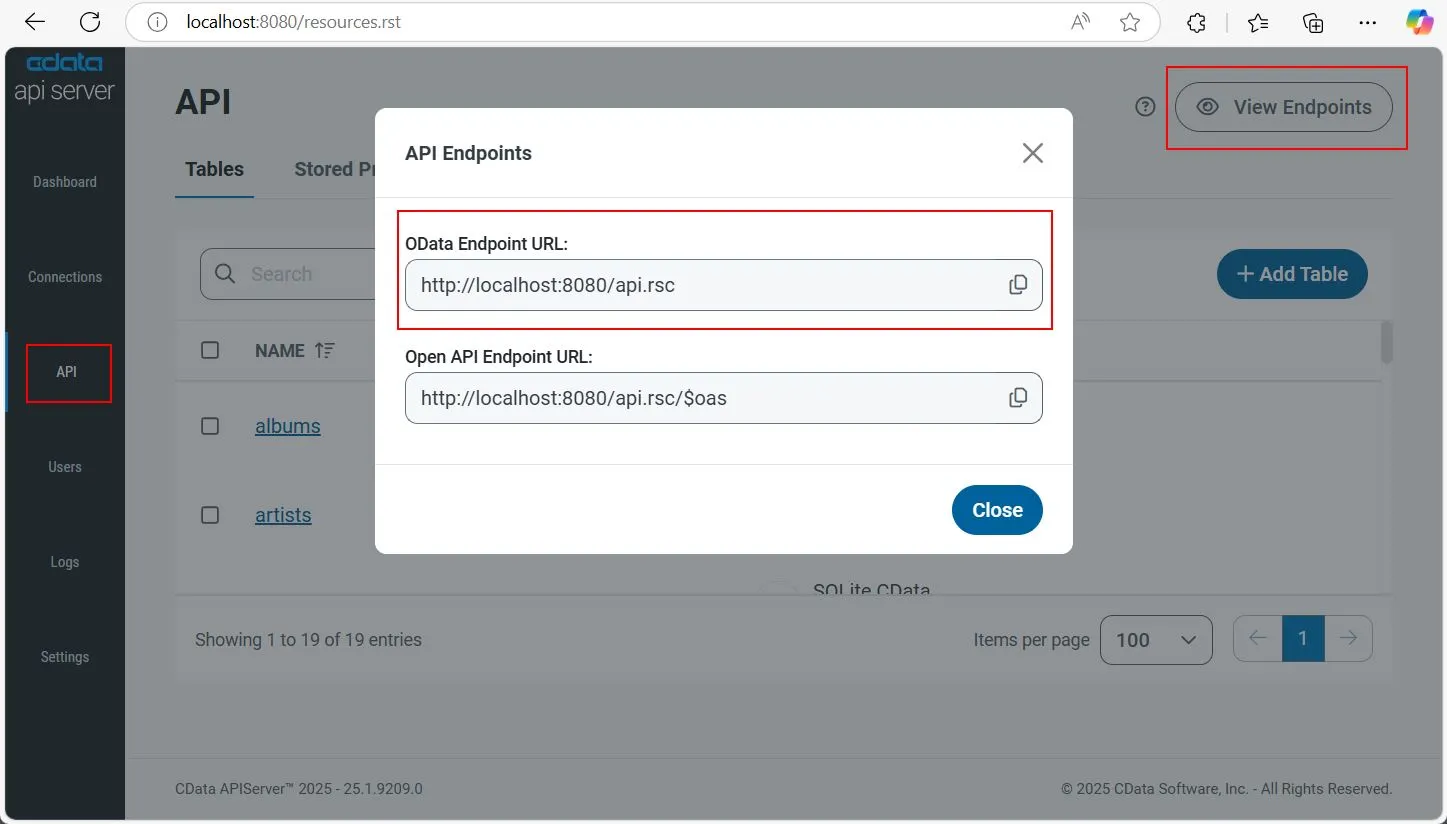
- Get the CData API Endpoint URL by logging into your CData API Server. Go to API from the left navigation, then click View Endpoints at the top-right.
- Copy the URL (e.g., http://localhost:8080/api.rsc).
- Create a new HTML file and give it a name (e.g., Wijmo-Grid.html).
- Paste the following code into your HTML file.
- Update the following placeholder values at the start of the script section:
- yourUsername: Replace with your CData API Server username.
- yourPassword: Replace with your CData API Server password.
- Your_CData_API_Server_URL: Replace with the full API endpoint URL you copied earlier.
- Open the HTML file in your browser.
- Your browser should display the Wijmo FlexGrid. You can select a table and columns to display your data.
<!DOCTYPE html>
<html lang="en">
<head>

  <meta charset="UTF-8">
  <title>Wijmo Grid with CData API Server</title>

  <!-- Wijmo styles -->
  <link href="https://cdn.mescius.com/wijmo/5.latest/styles/wijmo.min.css" rel="stylesheet" />

  <!-- Wijmo core and controls -->
  <script src="https://cdn.mescius.com/wijmo/5.latest/controls/wijmo.min.js"></script>
  <script src="https://cdn.mescius.com/wijmo/5.latest/controls/wijmo.grid.min.js"></script>
  <script src="https://cdn.mescius.com/wijmo/5.latest/controls/wijmo.input.min.js"></script>
  <script src="https://cdn.mescius.com/wijmo/5.latest/controls/wijmo.odata.min.js"></script>

<style>
    body {
      font-family: Arial, sans-serif;
      margin: 20px;
    }
    h1 {
      color: #00A0FF;
      text-align: center;
    }
    #selectors {
      display: flex;
      flex-wrap: wrap;
      gap: 15px;
      justify-content: center;
      align-items: flex-start;
      margin-bottom: 20px;
    }
    .select-group {
      display: flex;
      flex-direction: column;
      min-width: 200px;
    }
    label {
      font-weight: bold;
      margin-bottom: 5px;
      color: #00A0FF;
    }
    select, button {
      padding: 6px;
      font-size: 14px;
      border: 1px solid #00A0FF;
      border-radius: 4px;
    }
    button {
      background: #00A0FF;
      color: white;
      cursor: pointer;
      height: 40px;
      margin-top: 24px;
    }
    #columnsContainer {
      display: flex;
      flex-direction: column;
      gap: 5px;
      max-height: 150px;
      overflow-y: auto;
      border: 1px solid #00A0FF;
      padding: 8px;
      border-radius: 4px;
    }
    #theGrid {
      margin-top: 20px;
      border: 2px solid #00A0FF;
      height: 500px;
    }
    .wj-header {
      background: #00A0FF !important;
      color: white !important;
      font-weight: bold;
    }
  </style>

</head>
<body>

<h1>Simple Wijmo Grid with CData API Server</h1>

  <div id="selectors">
    <div class="select-group">
      <label for="tableSelect">Select Table</label>
      <select id="tableSelect"></select>
    </div>

    <div class="select-group">
      <label>Select Columns</label>
      <div id="columnsContainer"></div>
    </div>

    <div>
      <button onclick="loadGrid()">Load Grid</button>
    </div>
  </div>

  <div id="theGrid"></div>

<script>
    const username = 'yourUsername';
    const password = 'yourPassword';
    const authHeader = 'Basic ' + btoa(username + ':' + password);
    const serviceUrl = 'Your_CData_API_Server_URL';

    fetch(serviceUrl + '/$metadata', { headers: { Authorization: authHeader } })
      .then(res => res.text())
      .then(text => {
        const parser = new DOMParser();
        const xml = parser.parseFromString(text, 'application/xml');
        const tables = [...xml.getElementsByTagName('EntityType')];
        const select = document.getElementById('tableSelect');
        tables.forEach(t => {
          const name = t.getAttribute('Name');
          const option = document.createElement('option');
          option.value = name;
          option.textContent = name;
          select.appendChild(option);
        });
        loadColumns(); // load columns for the first table
      });

    document.getElementById('tableSelect').addEventListener('change', loadColumns);

    function loadColumns() {
      const table = document.getElementById('tableSelect').value;
      fetch(serviceUrl + '/$metadata', { headers: { Authorization: authHeader } })
        .then(res => res.text())
        .then(text => {
          const parser = new DOMParser();
          const xml = parser.parseFromString(text, 'application/xml');
          const entity = [...xml.getElementsByTagName('EntityType')].find(t => t.getAttribute('Name') === table);
          const columns = [...entity.getElementsByTagName('Property')];
          const container = document.getElementById('columnsContainer');
          container.innerHTML = '';
          columns.forEach(col => {
            const name = col.getAttribute('Name');
            const div = document.createElement('div');
            div.innerHTML = `<label><input type="checkbox" value="${name}" checked> ${name}</label>`;
            container.appendChild(div);
          });
        });
    }

    function loadGrid() {
      const table = document.getElementById('tableSelect').value;
      const selectedCols = [...document.querySelectorAll('#columnsContainer input:checked')].map(i => i.value);

      const odata = new wijmo.odata.ODataCollectionView(serviceUrl, table, {
        requestHeaders: { Authorization: authHeader }
      });

      const grid = new wijmo.grid.FlexGrid('#theGrid', {
        itemsSource: odata,
        autoGenerateColumns: false,
        columns: selectedCols.map(col => ({ binding: col, header: col })),
        selectionMode: 'CellRange',
        allowSorting: true
      });
    }
</script>

</body>
</html>
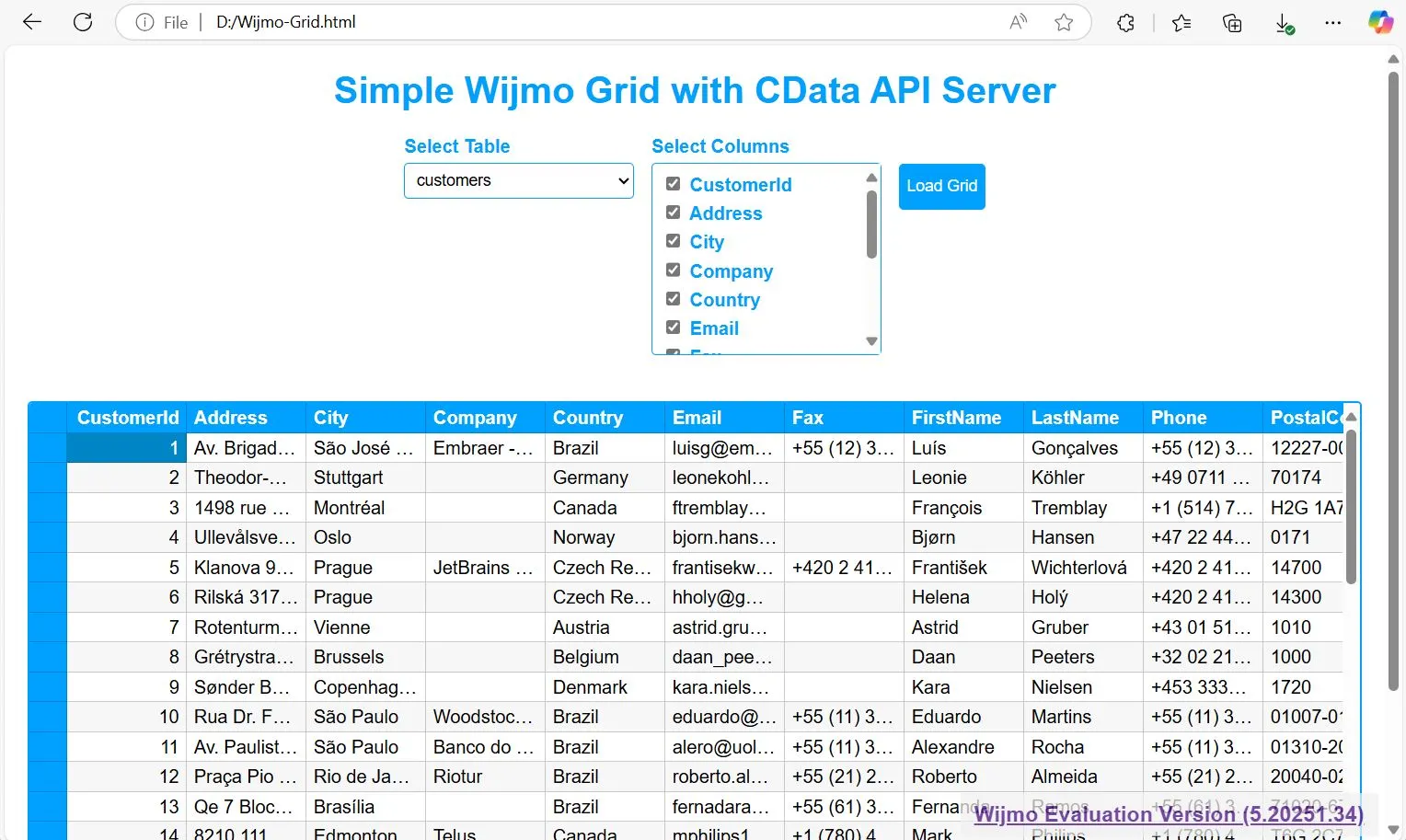
It's that simple. You can build even more complex applications and grids with Wijmo FlexGrid and the CData API Server by connecting to live data from Lakebase.
Check out the various frameworks supported by Wijmo at https://developer.mescius.com/wijmo.
Start Your Free 30-Day Trial of CData API Server
Experience how easy it is to create live, flexible OData APIs for your Wijmo FlexGrid applications with a free 30-day trial of the CData API Server. Quickly connect to live data from Lakebase and hundreds of other sources, enabling dynamic, real-time grids without manual data movement.