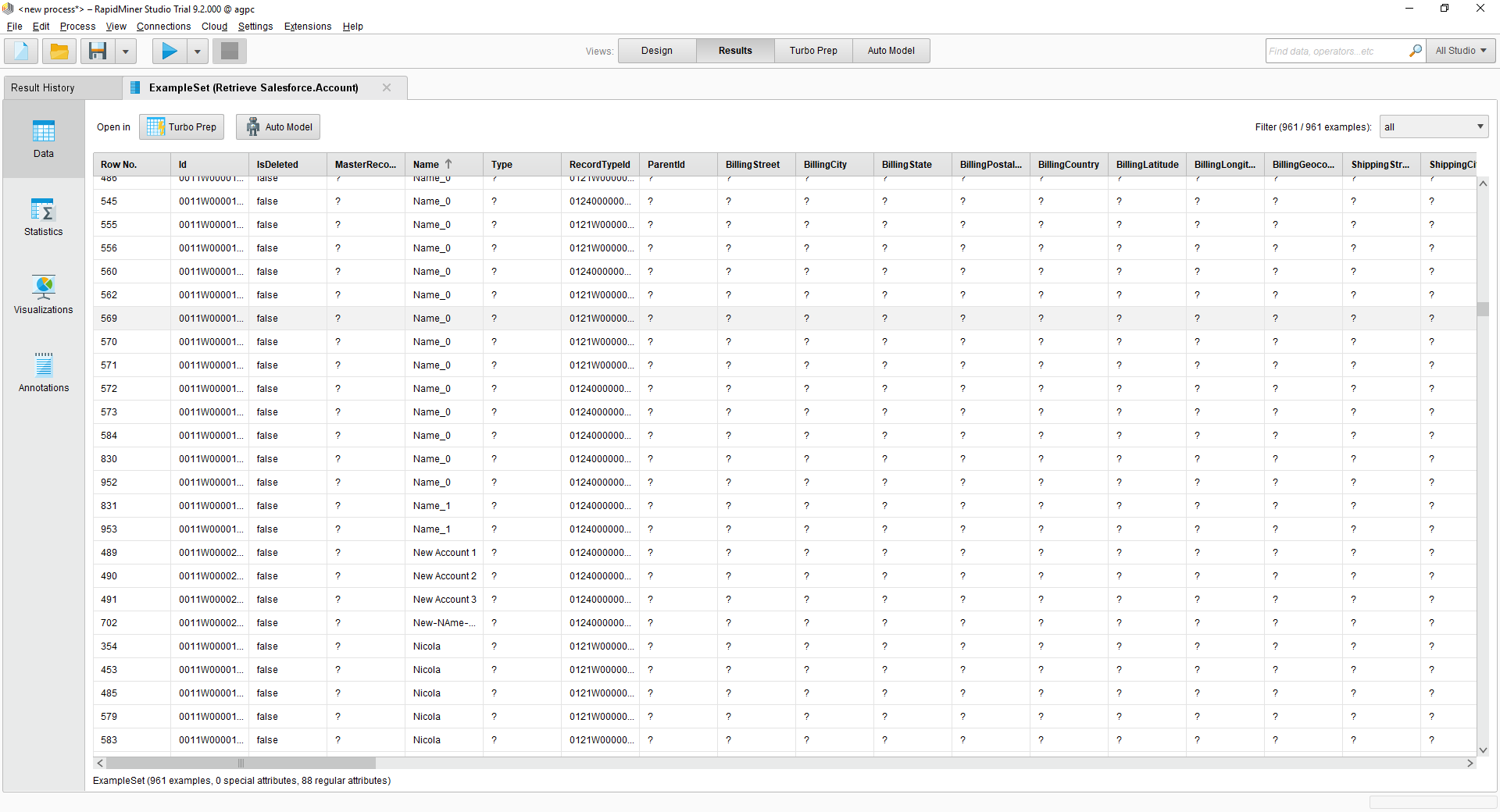
Connect to Missive Data in RapidMiner

This article shows how you can easily integrate the CData JDBC driver for Missive into your processes in RapidMiner. This article uses the CData JDBC Driver for Missive to transfer Missive data to a process in RapidMiner.
Connect to Missive in RapidMiner as a JDBC Data Source
You can follow the procedure below to establish a JDBC connection to Missive:
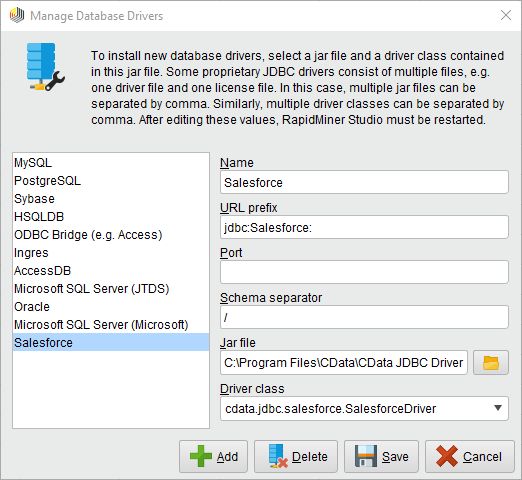
- Add a new database driver for Missive: Click Connections -> Manage Database Drivers.
- In the resulting wizard, click the Add button and enter a name for the connection.
- Enter the prefix for the JDBC URL:
jdbc:api:
- Enter the path to the cdata.jdbc.api.jar file, located in the lib subfolder of the installation directory.
- Enter the driver class:
cdata.jdbc.api.APIDriver
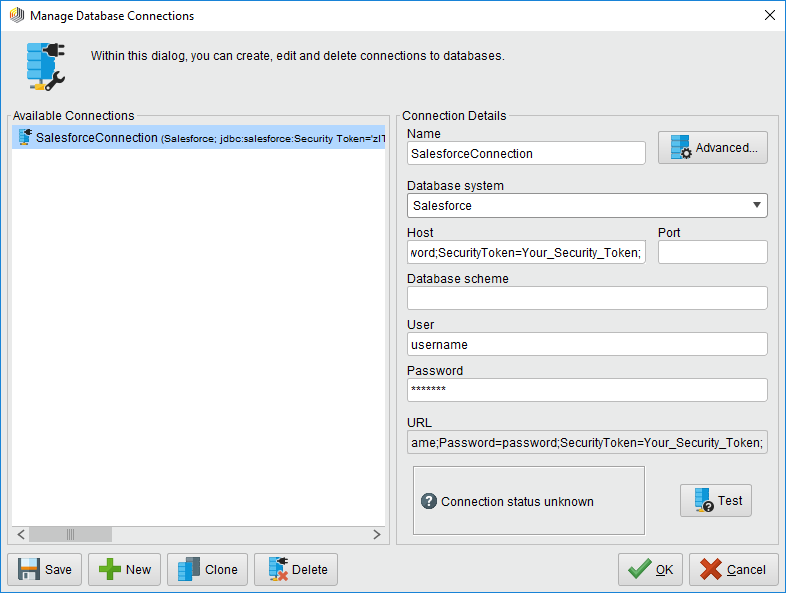
- Create a new Missive connection: Click Connections -> Manage Database Connections.
- Enter a name for your connection.
- For Database System, select the Missive driver you configured previously.
- Enter your connection string in the Host box.
Start by setting the Profile connection property to the location of the Missive Profile on disk (e.g. C:\profiles\Missive.apip). Next, set the ProfileSettings connection property to the connection string for Missive (see below).
Missive API Profile Settings
Generate an API token in your Missive account under Settings > API Tokens.
Built-in Connection String Designer
For assistance in constructing the JDBC URL, use the connection string designer built into the Missive JDBC Driver. Either double-click the JAR file or execute the jar file from the command-line.
java -jar cdata.jdbc.api.jar
Fill in the connection properties and copy the connection string to the clipboard.

A typical connection string is below:
Profile=C:\profiles\Missive.apip;ProfileSettings='Token=your_bearer_token';
- Enter your username and password if necessary.
You can now use your Missive connection with the various RapidMiner operators in your process. To retrieve Missive data, drag the Retrieve operator from the Operators view.
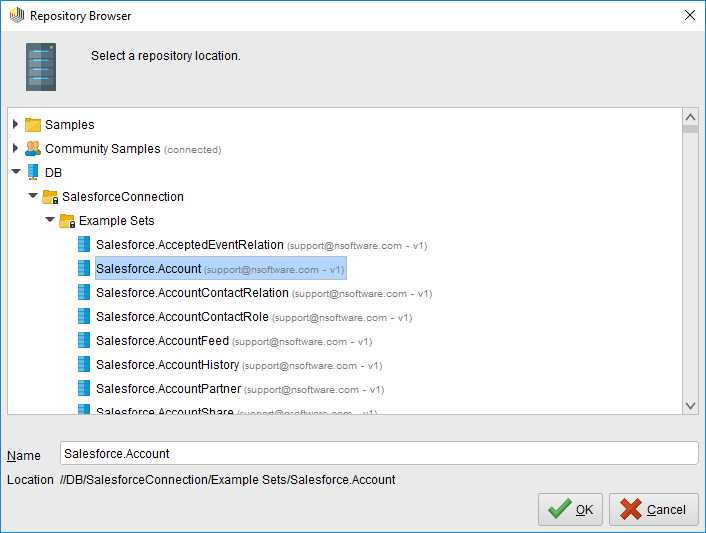 With the Retrieve operator selected, you can then define which table to retrieve in the Parameters view by clicking the folder icon next to the "repository entry." In the resulting Repository Browser, you can expand your connection node to select the desired example set.
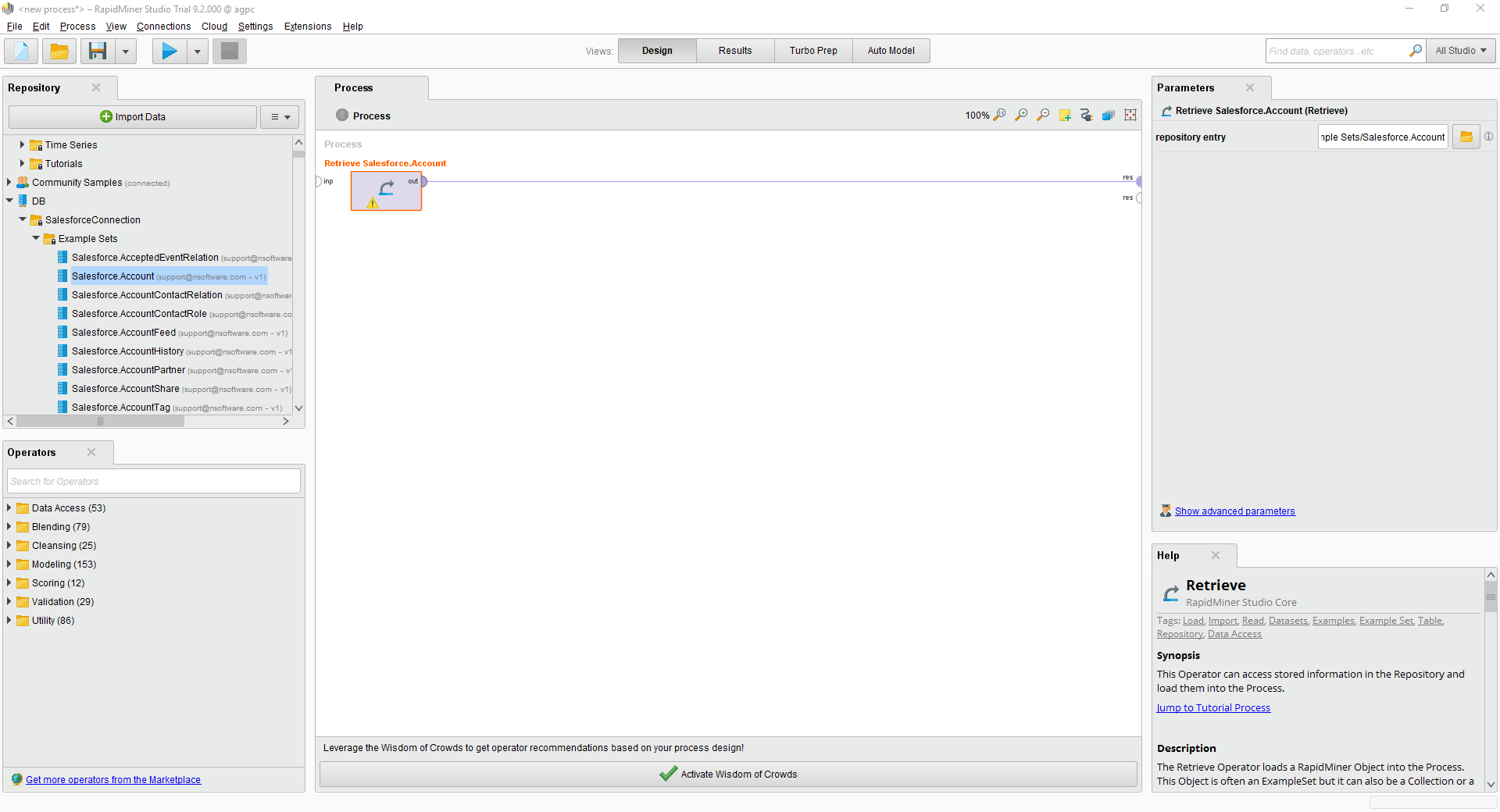
Finally, wire the output to the Retrieve process to a result, and run the process to see the Missive data.