Connect to Mistral AI Data in RazorSQL

The CData JDBC Driver for Mistral AI enables standards-based access from third-party tools, from wizards in IDEs to data management and analysis tools. This article shows how to connect to Mistral AI using wizards in RazorSQL.
Create a JDBC Data Source for Mistral AI Data
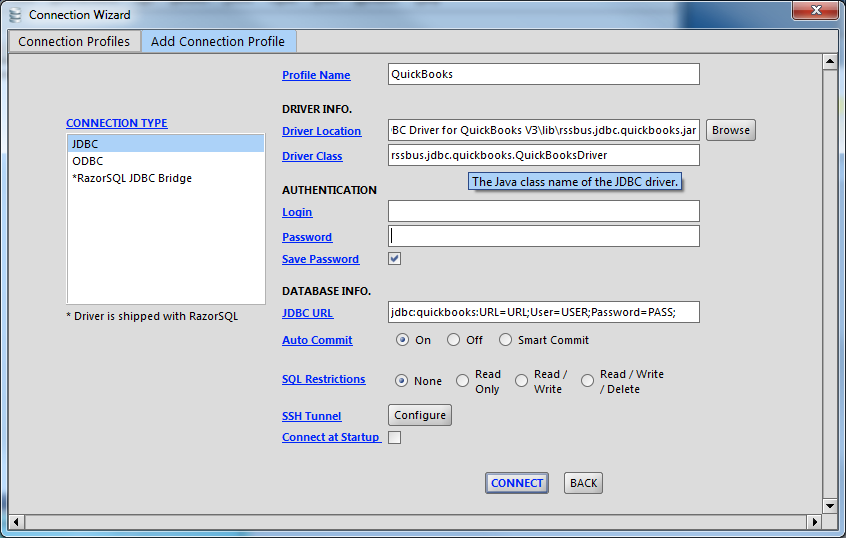
- Open the RazorSQL application and, in the Connections menu, select Add Connection Profile -> Other -> JDBC.
- In the Connection Wizard that appears, set the following properties:
- Driver Location: Set this property to the path to the lib subfolder in the installation directory.
- Driver Class: Set the driver class to cdata.jdbc.api.APIDriver.
- Username: Enter the username. (This property can also be set in the JDBC URL.)
- Password: Enter the password. (This property can also be set in the JDBC URL.)
JDBC URL: Enter connection parameters. The JDBC URL begins with jdbc:api: and is followed by a semicolon-separated list of connection properties.
The MistralAI API uses API key authentication.
Using API Key Authentication
Your MistralAI API Key is required to create a connection to MistralAI. API Keys can be obtained from your MistralAI account at console.mistral.ai by navigating to the API Keys section. Once you have obtained the API key, set it in the ProfileSettings connection property.
Example Connection string
Profile=C:\profiles\MistralAI.apip;ProfileSettings='APIKey=my_api_key;';AuthScheme=APIKey;
Built-in Connection String Designer
For assistance in constructing the JDBC URL, use the connection string designer built into the Mistral AI JDBC Driver. Either double-click the JAR file or execute the jar file from the command-line.
java -jar cdata.jdbc.api.jar
Fill in the connection properties and copy the connection string to the clipboard.

A typical JDBC URL is the following:
jdbc:api:Profile=C:\profiles\MistralAI.apip;ProfileSettings='APIKey=my_api_key;';AuthScheme=APIKey;
Query Mistral AI Data and Select Tables
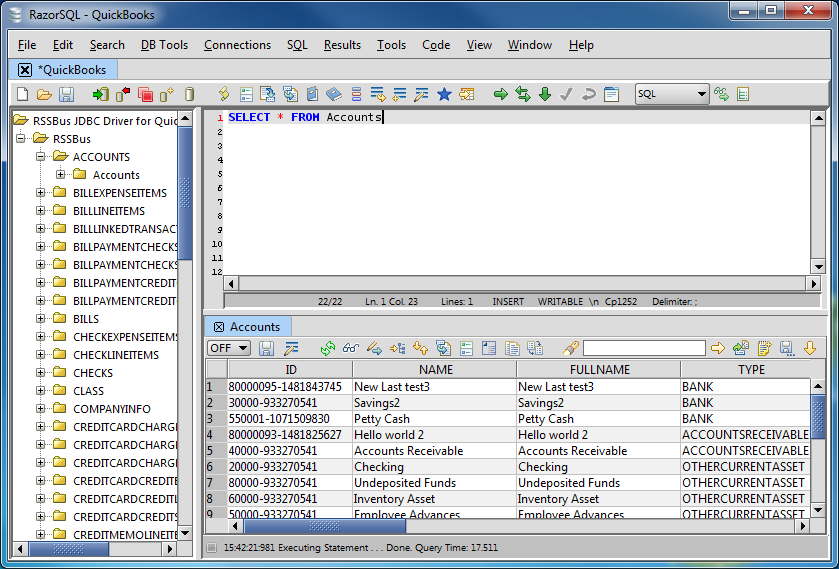
After establishing a connection, the wizard will close and the connection will be available in the connections panel. You can then query the tables.