Rapidly Develop Mouseflow-Driven Apps with Active Query Builder

Write standard .NET to expose Mouseflow data through an SQL interface: Active Query Builder helps developers write SQL interfaces; the CData ODBC Driver for Mouseflow enables standards-based access to Mouseflow. This integration uses the Microsoft ADO.NET Provider for ODBC as a bridge between the ODBC Driver and the Active Query Builder objects to build a visual SQL composer.
Connect to Mouseflow as an ODBC Data Source
If you have not already, first specify connection properties in an ODBC DSN (data source name). This is the last step of the driver installation. You can use the Microsoft ODBC Data Source Administrator to create and configure ODBC DSNs.
Start by setting the Profile connection property to the location of the Mouseflow Profile on disk (e.g. C:\profiles\Mouseflow.apip). Next, set the ProfileSettings connection property to the connection string for Mouseflow (see below).
Mouseflow API Profile Settings
Retrieve your API key from API > API Key within your Mouseflow account settings. Your region (us or eu) can be determined from your account URL.
Use SQL to Interact with Mouseflow
Follow the steps below to create a WinForms visual query builder.
- Open Active Query Builder for .NET WinForms.

- In the new Windows Forms project go to the "File" menu and click "Connect..."
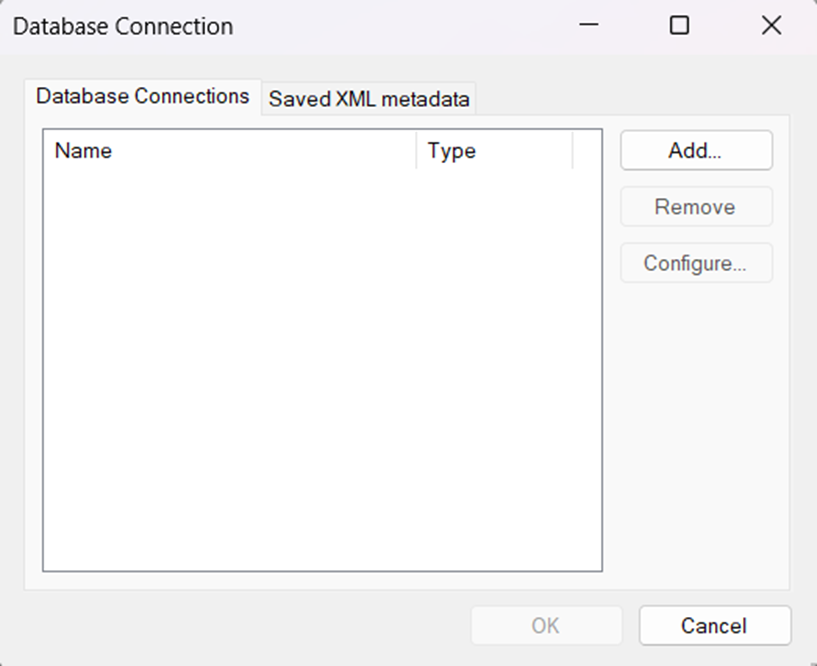
- Under Database Connections, click "Add..."
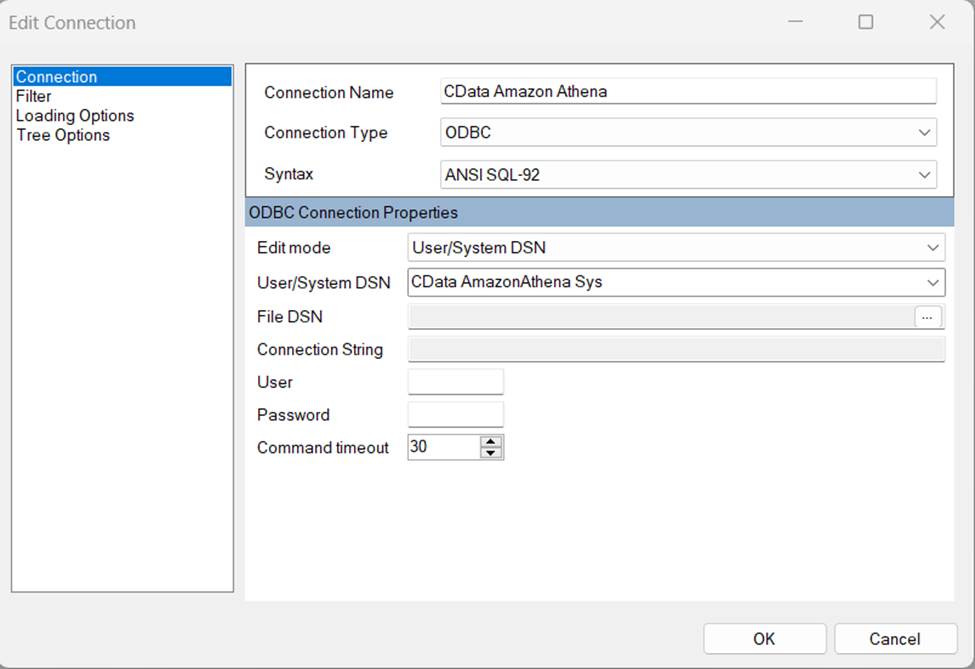
- Set your desired Connection Name (e.g. CData Mouseflow), set Connection Type to "ODBC" and locate your previously configured DSN in the "User/System" DSN dropdown.
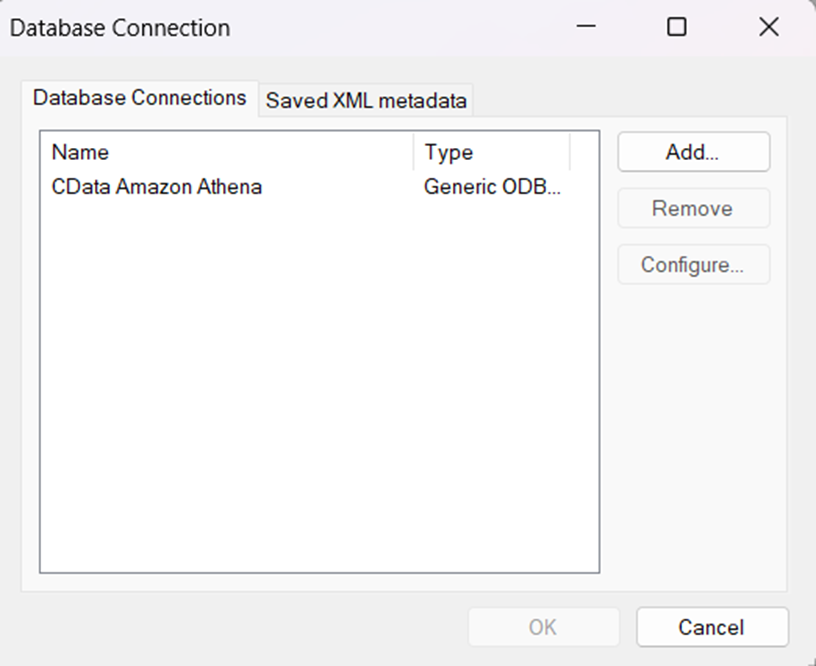
- Click "OK" to save the new connection.
- Back in the Database Connection wizard, select the newly created connection and click "OK."
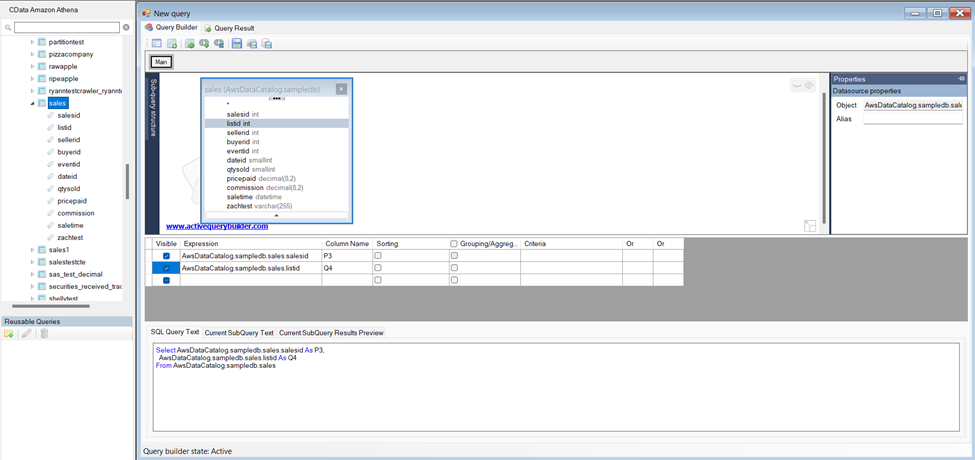
- Click "File" > "New Query" to create a QueryBuilder
You can now build queries visually: Double-click a table in the Columns Pane Area and an entity/relationship diagram is displayed in the Query Building Area. Columns that you select in the diagram are added to the query.