






Create Datasets from NASA in Domo Workbench and Build Visualizations of NASA Data in Domo

Domo helps you manage, analyze, and share data across your entire organization, enabling decision makers to identify and act on strategic opportunities. Domo Workbench provides a secure, client-side solution for uploading your on-premise data to Domo. The CData ODBC Driver for NASA links Domo Workbench to operational NASA data. You can build datasets from NASA data using standard SQL queries in Workbench and then create real-time visualizations of NASA data in the Domo service.
The CData ODBC Drivers offer unmatched performance for interacting with live NASA data in Domo due to optimized data processing built into the driver. When you issue complex SQL queries from Domo to NASA, the driver pushes supported SQL operations, like filters and aggregations, directly to NASA and utilizes the embedded SQL Engine to process unsupported operations (often SQL functions and JOIN operations) client-side. With built-in dynamic metadata querying, you can visualize and analyze NASA data using native Domo data types.
Connect to NASA as an ODBC Data Source
If you have not already, first specify connection properties in an ODBC DSN (data source name). This is the last step of the driver installation. You can use the Microsoft ODBC Data Source Administrator to create and configure ODBC DSNs.
Using API Key Authentication
Most NASA API endpoints (APOD, NeoWS, DONKI, TechTransfer) require a NASA API key. Register for a free key at https://api.nasa.gov. The default DEMO_KEY provides limited access (30 requests/hour, 50 requests/day); a registered key allows 1,000 requests/hour.
The following endpoints do not require an API key and work without authentication: EONET (Earth Observatory Natural Event Tracker), EPIC (Earth Polychromatic Imaging Camera), NASA Image and Video Library, and TechPort.
After obtaining your API key, set the following connection properties:
- AuthScheme: Set this to APIKey.
- APIKey: Set this to your NASA API key. Use DEMO_KEY for limited testing.
Example Connection String
Profile=C:\profiles\NASA.apip;AuthScheme=APIKey;APIKey=YOUR_NASA_API_KEY
Connecting to NASA
Once the authentication is configured, you can connect to NASA and query data from any of the available tables such as AstronomyPictureOfDay, NearEarthObjectFeed, EonetEvents, and NasaImageLibrary.
When you configure the DSN, you may also want to set the Max Rows connection property. This will limit the number of rows returned, which is especially helpful for improving performance when designing reports and visualizations.
After creating a DSN, you will need to create a dataset for NASA in Domo Workbench using the NASA DSN and build a visualization in the Domo service based on the dataset.
Build a Dataset for NASA Data
You can follow the steps below to build a dataset based on a table in NASA in Domo Workbench using the CData ODBC Driver for NASA.
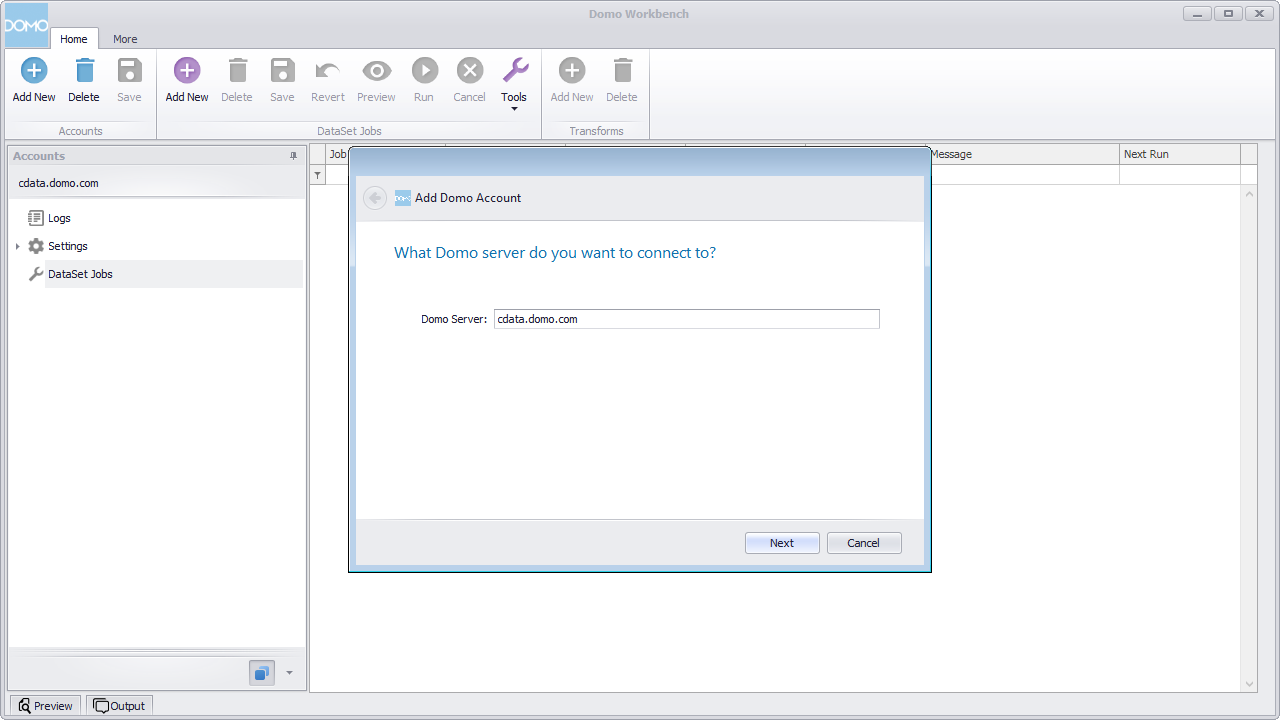
- Open Domo Workbench and, if you have not already, add your Domo service server to Workbench. In the Accounts submenu, click Add New, type in the server address (i.e., domain.domo.com) and click through the wizard to authenticate.
- In the DataSet Jobs submenu, click Add New.
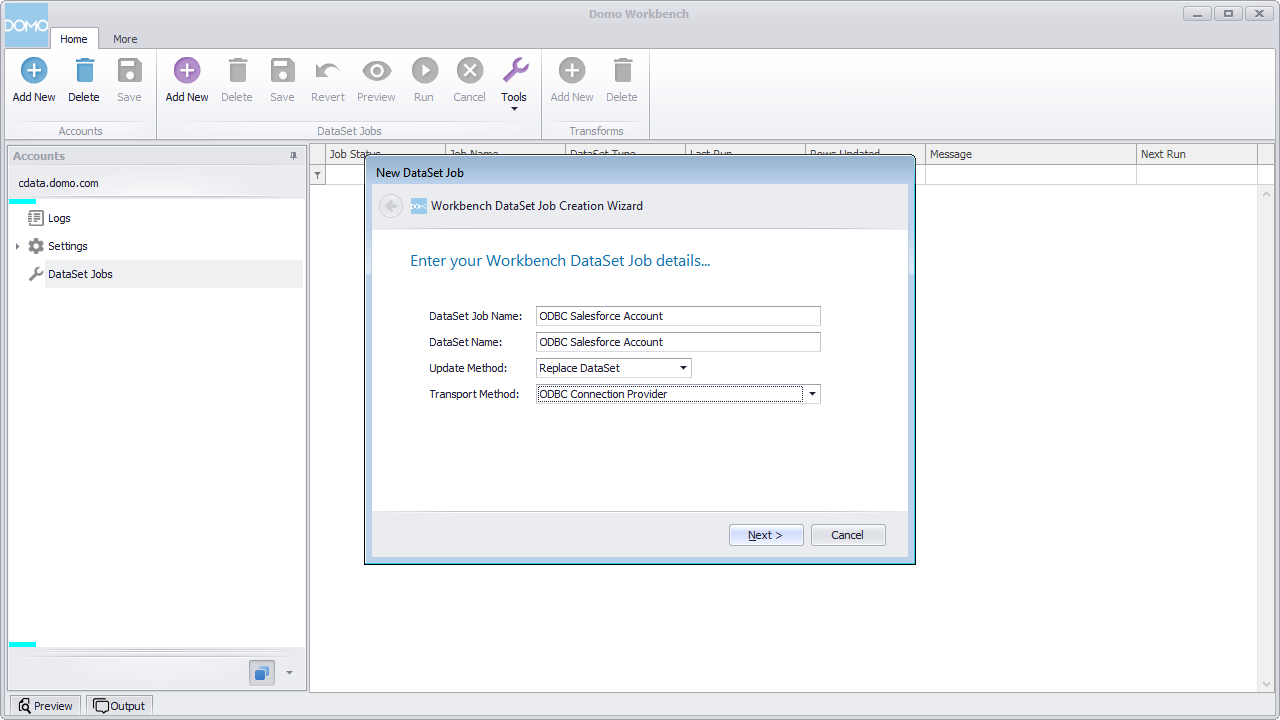
- Name the dataset job (i.e., ODBC NASA AstronomyPictureOfDay), select ODBC Connection Provider as the transport method, and click through the wizard.
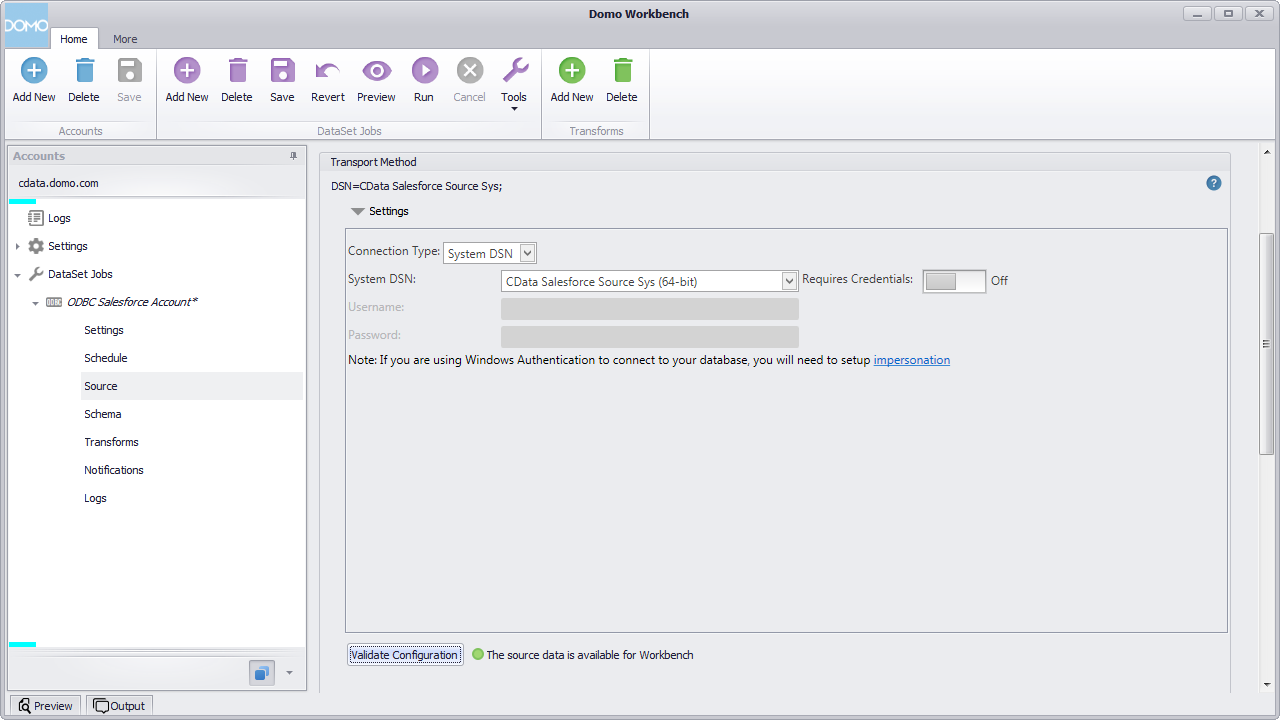
- In the newly created DataSet Job, navigate to Source and click to configure the settings.
- Select System DSN for the Connection Type.
- Select the previously configured DSN (CData API Sys) for the System DSN.
- Click to validate the configuration.
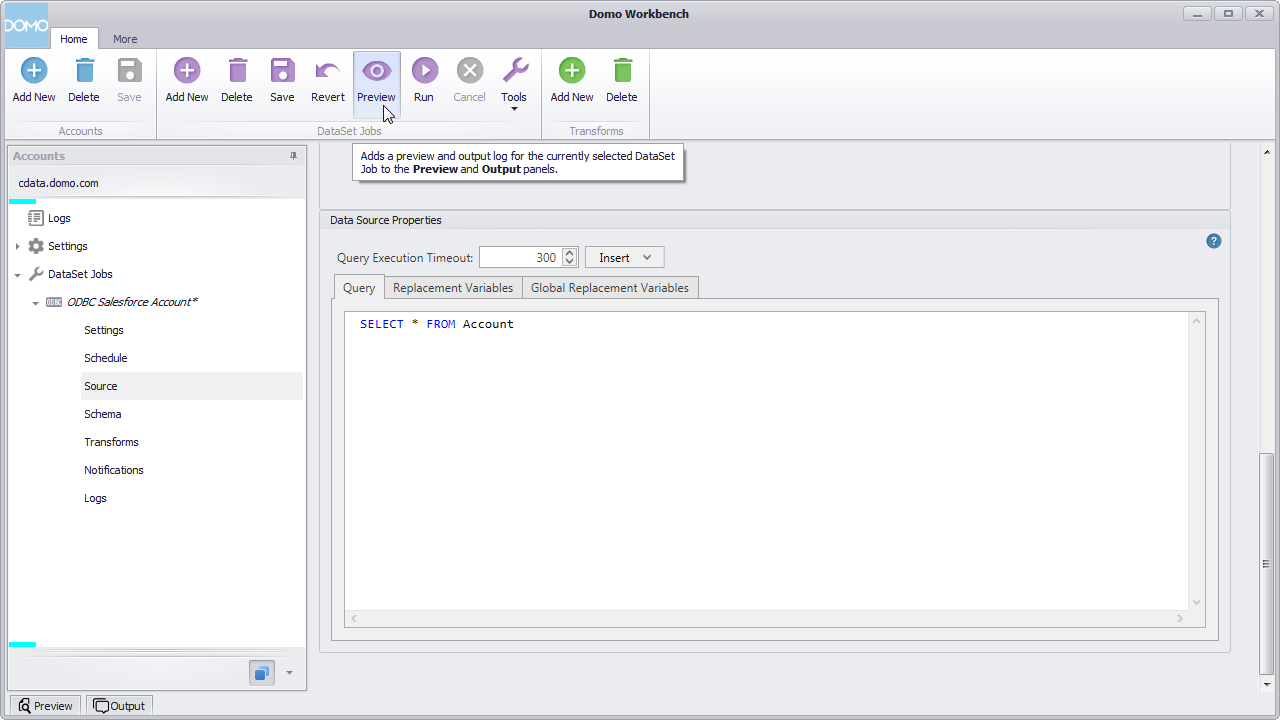
- Below the settings, set the Query to a SQL query:
SELECT * FROM AstronomyPictureOfDay
NOTE: By connecting to NASA data using an ODBC driver, you simply need to know SQL in order to get your data, circumventing the need to know NASA-specific APIs or protocols. - Click preview.
- Check over the generated schema, add any transformations, then save and run the dataset job.
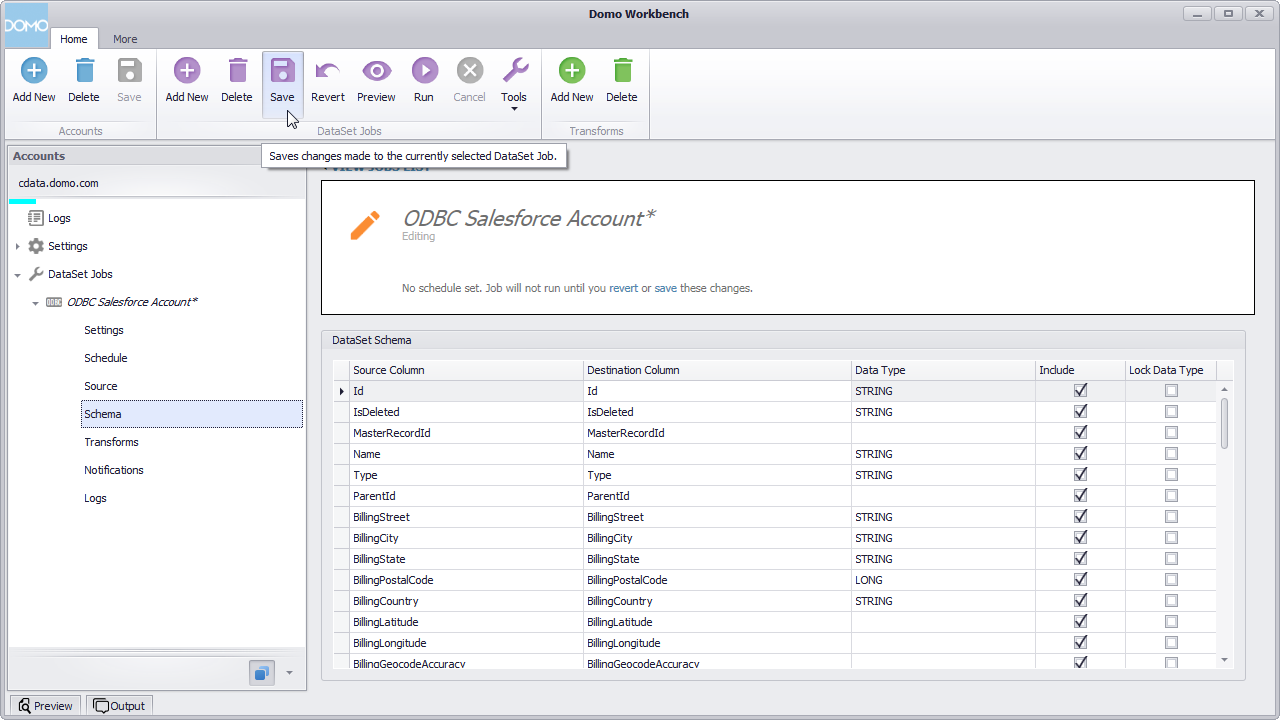
With the dataset job run, the dataset will be accessible from the Domo service, allowing you to build visualizations, reports, and more based on NASA data.
Create Data Visualizations
With the DataSet Job saved and run in Domo Workbench, we are ready to build visualizations of the NASA data in the Domo service.
- Navigate to the Data Center.
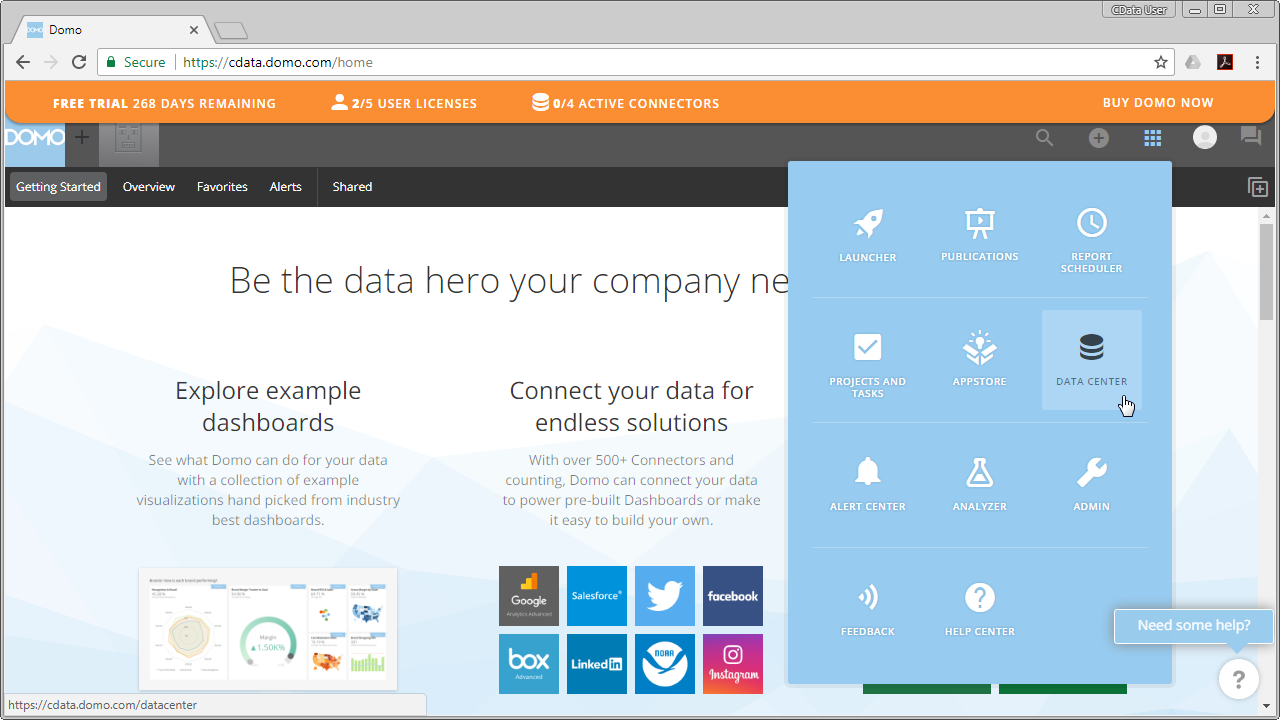
- In the data warehouse, select the ODBC data source and drill down to our new dataset.
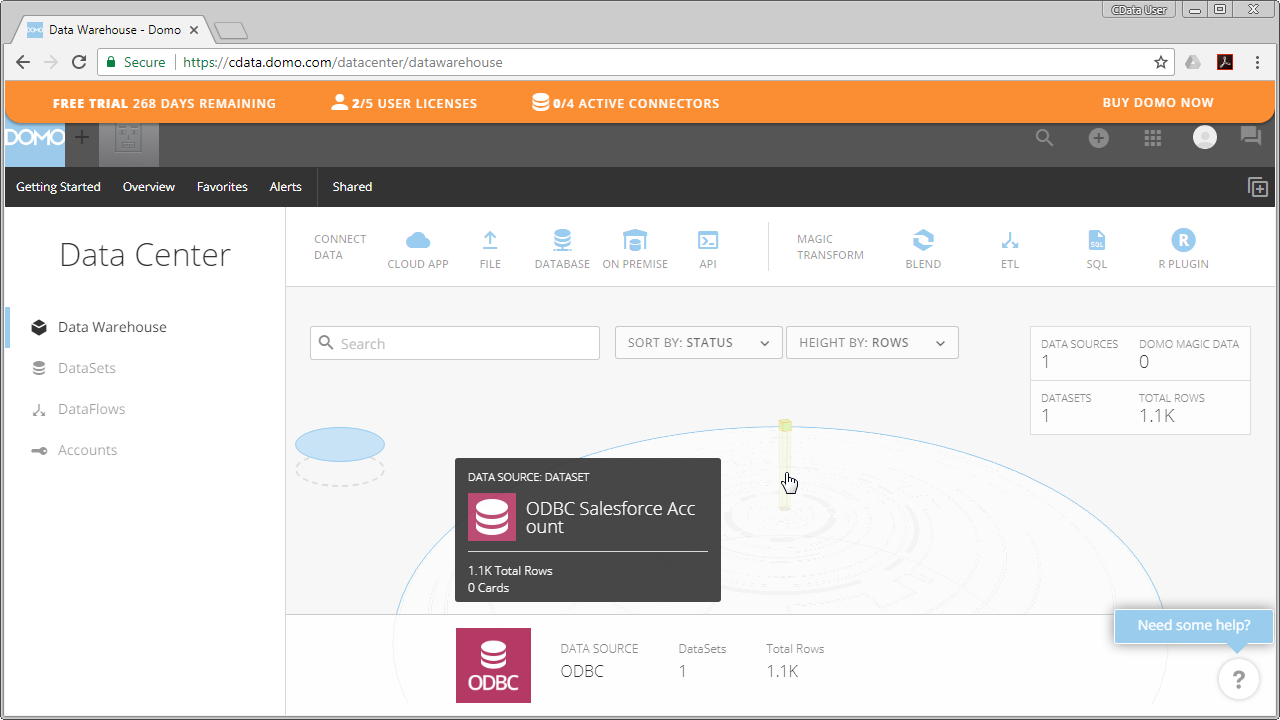
- With the dataset selected, choose to create a visualization.
- In the new card:
- Drag a Dimension to the X Value.
- Drag a Measure to the Y Value.
- Choose a Visualization.
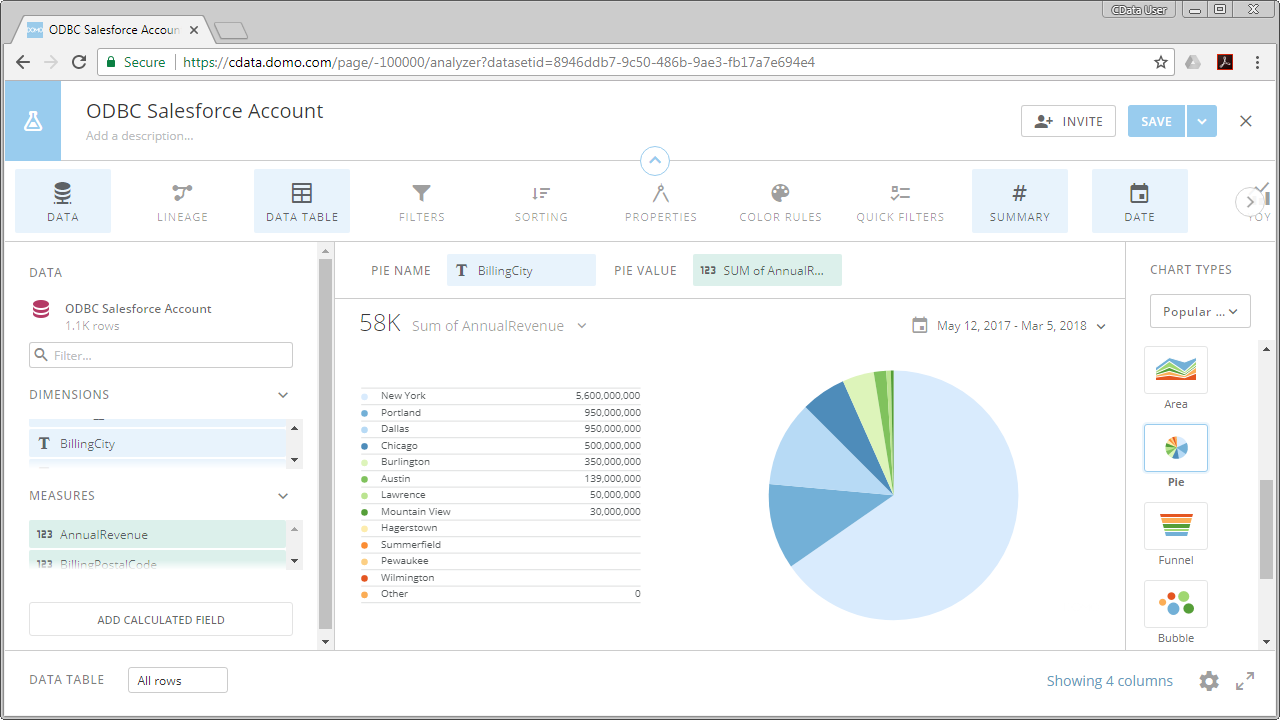
With the CData ODBC Driver for NASA, you can build custom datasets based on NASA data using only SQL in Domo Workbench and then build and share visualizations and reports through the Domo service.