Create Informatica Mappings From/To a JDBC Data Source for OnePageCrm

Informatica provides a powerful, elegant means of transporting and transforming your data. By utilizing the CData JDBC Driver for OnePageCrm, you are gaining access to a driver based on industry-proven standards that integrates seamlessly with Informatica's powerful data transportation and manipulation features. This tutorial shows how to transfer and browse OnePageCrm data in Informatica PowerCenter.
Deploy the Driver
To deploy the driver to the Informatica PowerCenter server, copy the CData JAR and .lic file, located in the lib subfolder in the installation directory, to the following folder: Informatica-installation-directory\services\shared\jars\thirdparty.
To work with OnePageCrm data in the Developer tool, you will need to copy the CData JAR and .lic file, located in the lib subfolder in the installation directory, into the following folders:
- Informatica-installation-directory\client\externaljdbcjars
- Informatica-installation-directory\externaljdbcjars
Create the JDBC Connection
Follow the steps below to connect from Informatica Developer:
- In the Connection Explorer pane, right-click your domain and click Create a Connection.
- In the New Database Connection wizard that is displayed, enter a name and Id for the connection and in the Type menu select JDBC.
- In the JDBC Driver Class Name property, enter:
cdata.jdbc.api.APIDriver
- In the Connection String property, enter the JDBC URL, using the connection properties for OnePageCrm.
Start by setting the Profile connection property to the location of the OnePageCrm Profile on disk (e.g. C:\profiles\OnePageCrm.apip). Next, set the ProfileSettings connection property to the connection string for OnePageCrm (see below).
OnePageCrm API Profile Settings
In your OnePageCRM account, go to Apps and Integrations > API (Developer Access) > Configuration to find your User ID and API Key.
Built-in Connection String Designer
For assistance in constructing the JDBC URL, use the connection string designer built into the OnePageCrm JDBC Driver. Either double-click the JAR file or execute the jar file from the command-line.
java -jar cdata.jdbc.api.jar
Fill in the connection properties and copy the connection string to the clipboard.

A typical connection string is below:
jdbc:api:Profile=C:\profiles\OnePageCrm.apip;ProfileSettings='User=your_user_id;Password=your_api_key';
Browse OnePageCrm Tables
After you have added the driver JAR to the classpath and created a JDBC connection, you can now access OnePageCrm entities in Informatica. Follow the steps below to connect to OnePageCrm and browse OnePageCrm tables:
- Connect to your repository.
- In the Connection Explorer, right-click the connection and click Connect.
- Clear the Show Default Schema Only option.
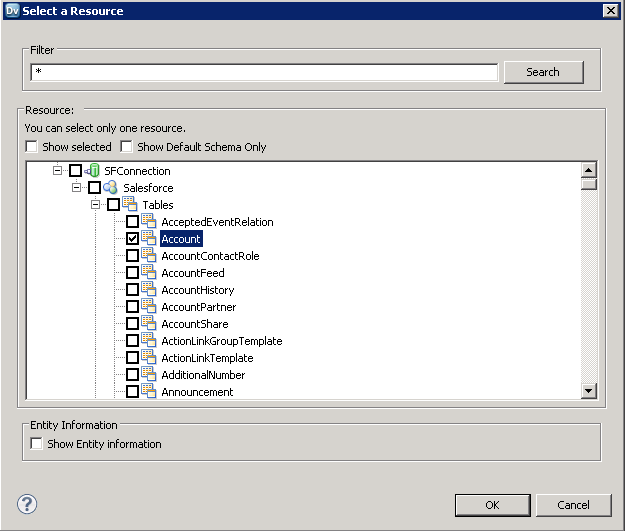
You can now browse OnePageCrm tables in the Data Viewer: Right-click the node for the table and then click Open. On the Data Viewer view, click Run.
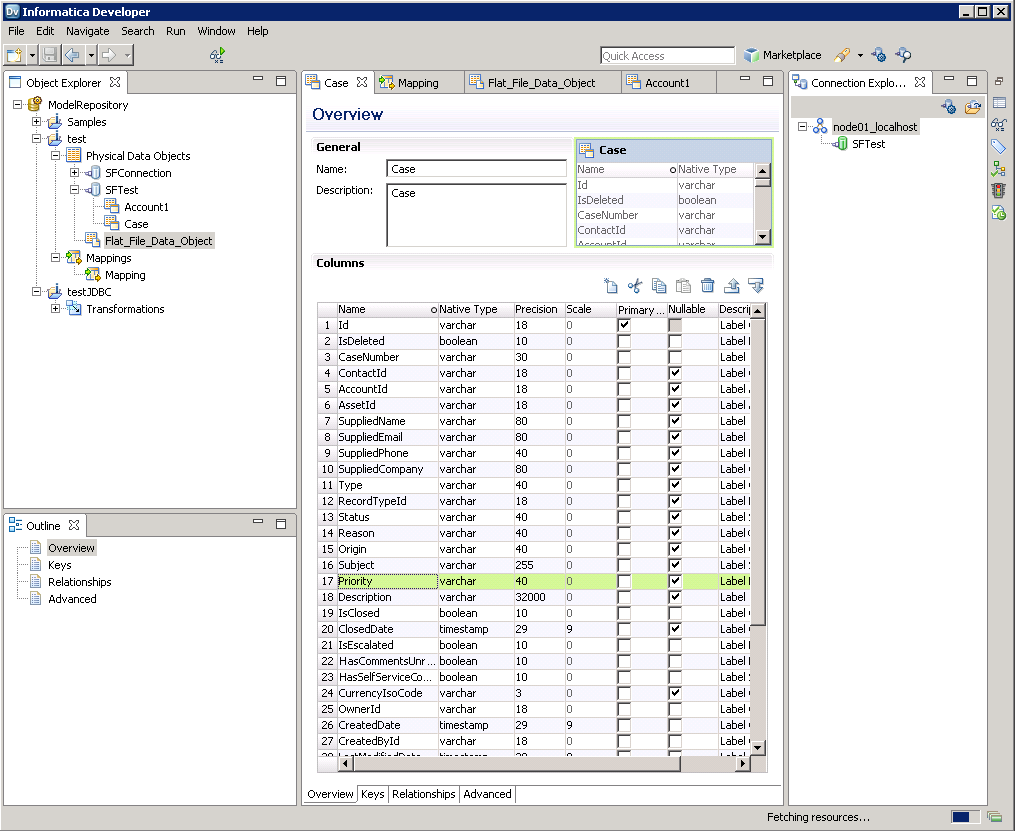
Create OnePageCrm Data Objects
Follow the steps below to add OnePageCrm tables to your project:
- Select tables in OnePageCrm, then right-click a table in OnePageCrm, and click Add to Project.
- In the resulting dialog, select the option to create a data object for each resource.
- In the Select Location dialog, select your project.
Create a Mapping
Follow the steps below to add the OnePageCrm source to a mapping:
- In the Object Explorer, right-click your project and then click New -> Mapping.
- Expand the node for the OnePageCrm connection and then drag the data object for the table onto the editor.
- In the dialog that appears, select the Read option.
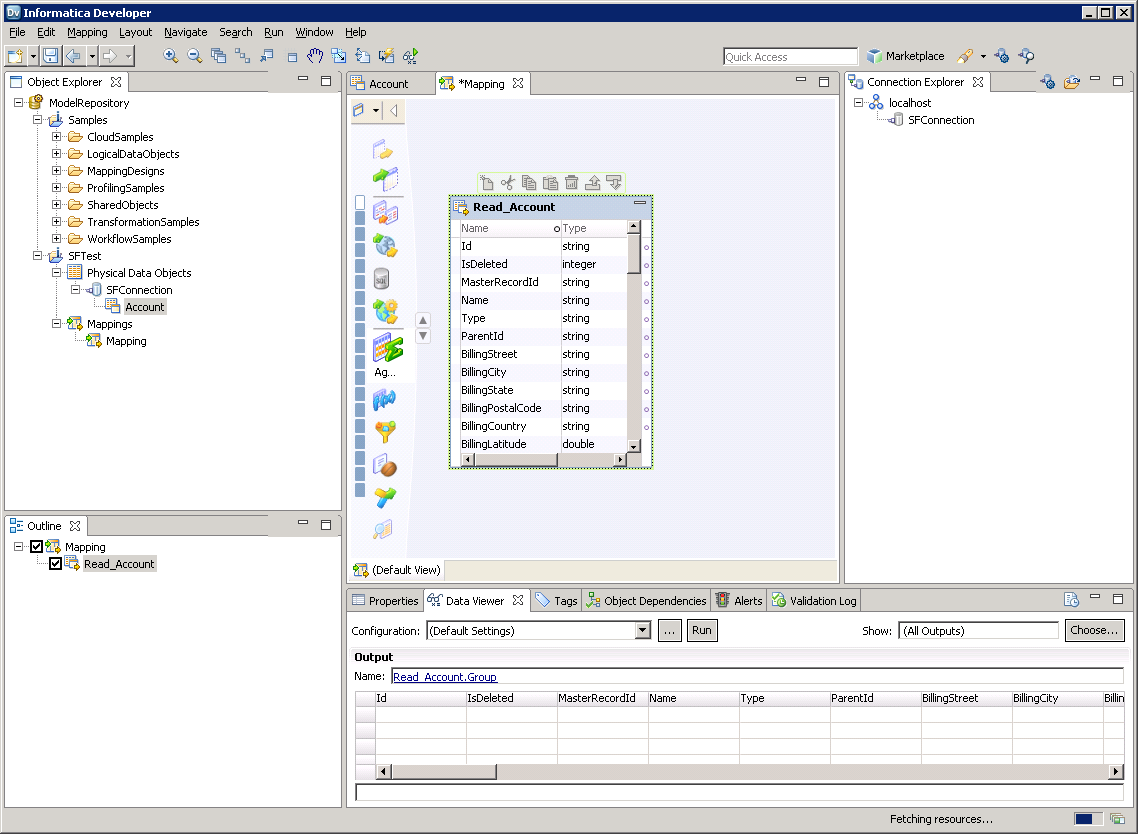
Follow the steps below to map OnePageCrm columns to a flat file:
- In the Object Explorer, right-click your project and then click New -> Data Object.
- Select Flat File Data Object -> Create as Empty -> Fixed Width.
- In the properties for the OnePageCrm object, select the rows you want, right-click, and then click copy. Paste the rows into the flat file properties.
- Drag the flat file data object onto the mapping. In the dialog that appears, select the Write option.
- Click and drag to connect columns.
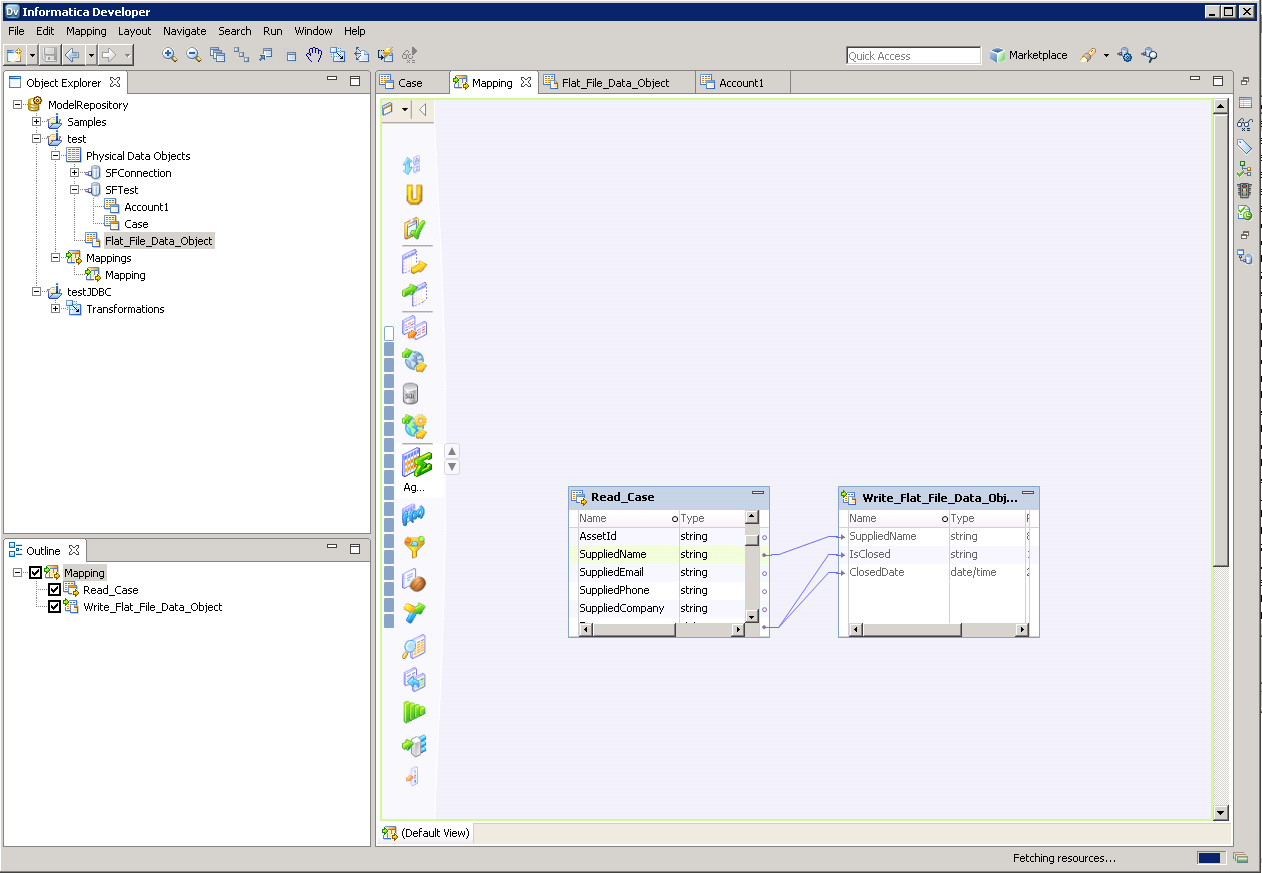
To transfer OnePageCrm data, right-click in the workspace and then click Run Mapping.