






Integrate Outlook Data in Your Informatica Cloud Instance

Informatica Cloud allows you to perform extract, transform, and load (ETL) tasks in the cloud. With the Cloud Secure Agent and the CData API Driver for JDBC, you get live access to Outlook data, directly within Informatica Cloud. In this article, we will walk through downloading and registering the Cloud Secure Agent, connecting to Outlook through the JDBC Driver and generating a mapping that can be used in any Informatica Cloud process.
Informatica Cloud Secure Agent
To work with the Outlook data through the JDBC Driver, install the Cloud Secure Agent.
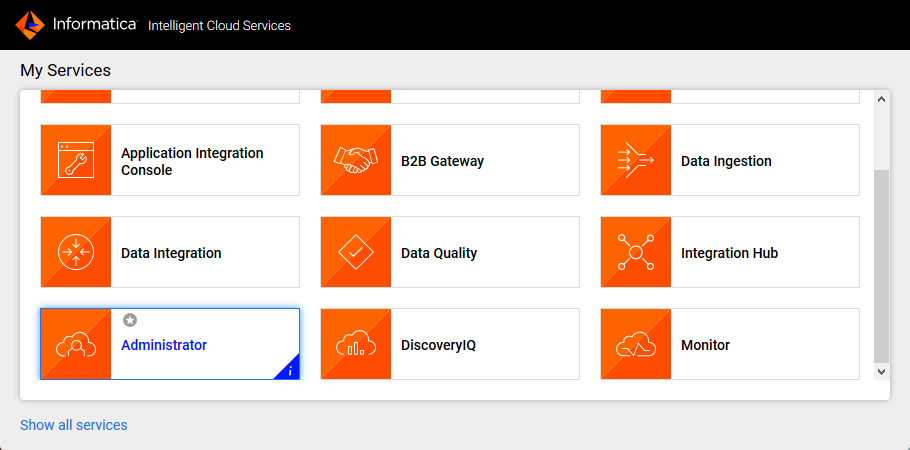
- Navigate to the Administrator page in Informatica Cloud
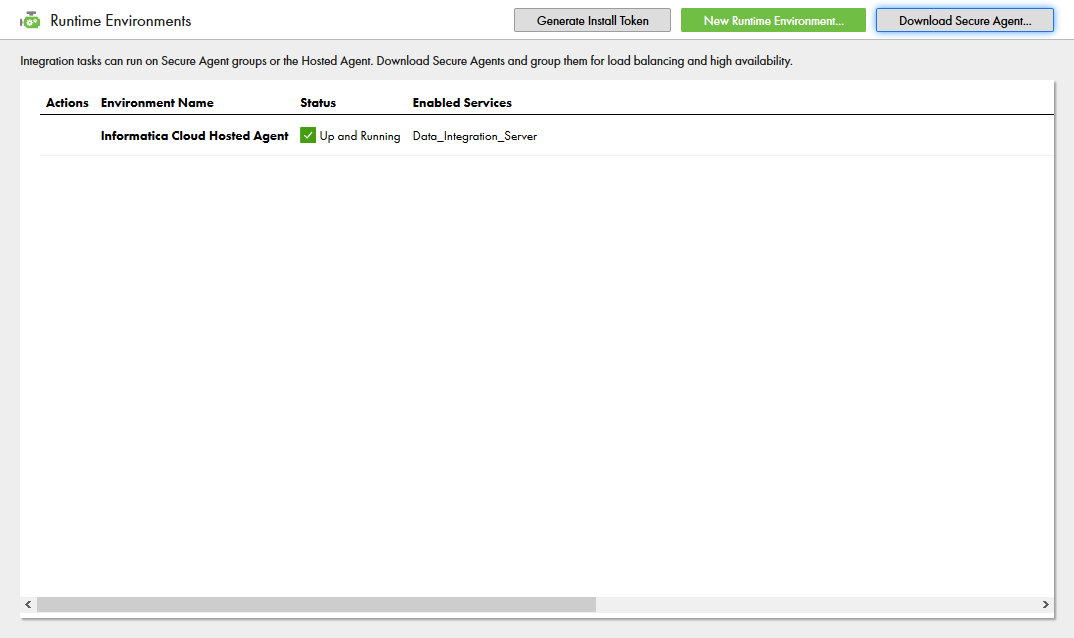
- Select the Runtime Environments tab
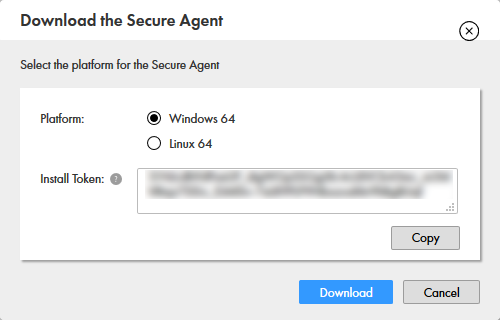
- Click "Download Secure Agent"
- Make note of the Install Token
- Run the installer on the client machine and register the Cloud Secure Agent with your username and install token
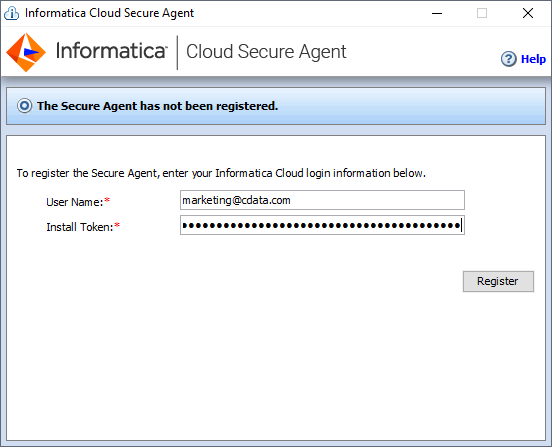
NOTE: It may take some time for all of the Cloud Secure Agent services to get up and running.
Connecting to the Outlook JDBC Driver
With the Cloud Secure Agent installed and running, you are ready to connect to Outlook through the JDBC Driver.
Adding the JDBC Driver to the Secure Agent Machine
- Navigate to the following directory on the Secure Agent machine:
%Secure Agent installation directory%/ext/connectors/thirdparty/
- Create a folder and add the driver JAR file (cdata.jdbc.api.jar) based on the type of mapping that you want to configure.
For mappings, create the following folder and add the driver JAR file:
informatica.jdbc_v2/common
For mappings in advanced mode, also create the following folder and add the driver JAR file:
informatica.jdbc_v2/spark
- Restart the Secure Agent.
Connecting to Outlook in Informatica Cloud
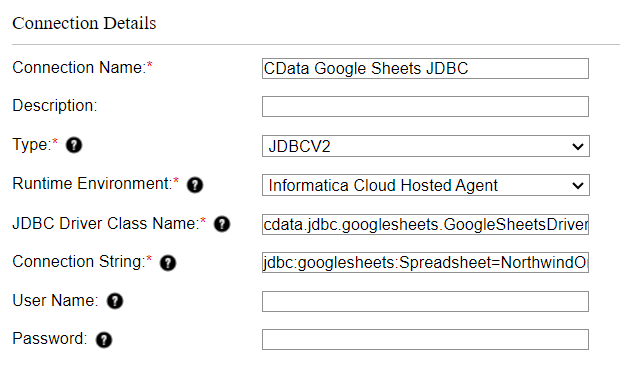
After installing the driver JAR file, you are ready to configure your connection to Outlook in Informatica Cloud. Start by clicking the Connections tab and clicking New Connection. Fill in the following properties for the connection:- Connection Name: Name your connection (i.e.: CData Outlook Connection)
- Type: Select "JDBC_V2"
- Runtime Environment: Select the runtime environment where you installed the Secure Agent
- JDBC Driver Class Name: The name of the JDBC driver class: cdata.jdbc.api.APIDriver
- JDBC Connection URL: Set this to the JDBC URL for Outlook. Your URL will look similar to the following:
jdbc:api:Profile=C:\profiles\Outlook.apip;AuthScheme=OAuth;InitiateOAuth=GETANDREFRESH;OAuthClientId=your_client_id;OAuthClientSecret=your_client_secret;TenantId=your_tenant_id;CallbackUrl=http://localhost:33333;
Using OAuth Authentication
Microsoft Graph API uses OAuth 2.0 for authentication. You must register an application in the Microsoft Azure Portal to obtain OAuth credentials (Client ID and Client Secret).
Obtaining OAuth Credentials
- Log in to the Azure Portal.
- Navigate to Azure Active Directory > App registrations.
- Click New registration to create a new application.
- Enter an application name and select the appropriate account types.
- Set the Redirect URI to your application's callback URL (e.g., http://localhost:33333 for desktop apps).
- Click Register to create the application.
- On the application overview page, copy the Application (client) ID - this is your OAuthClientId.
- Navigate to Certificates & secrets and create a new client secret.
- Copy the client secret value - this is your OAuthClientSecret.
- Navigate to API permissions and add the required Microsoft Graph API permissions:
- Mail.Read - For accessing email messages
- Contacts.Read - For accessing contacts
- Calendars.Read - For accessing calendar events
- Tasks.Read - For accessing To Do tasks
- offline_access - For obtaining refresh tokens
- Click Grant admin consent to grant these permissions.
Connecting with OAuth
After setting the following connection properties, you are ready to connect:
- AuthScheme: Set this to OAuth.
- InitiateOAuth: Set this to GETANDREFRESH. The CData API Profile for Outlook will automatically walk through the OAuth process in order to obtain the access token.
- OAuthClientId: Set this to the Application (client) ID from Azure Portal.
- OAuthClientSecret: Set this to the client secret value from Azure Portal.
- TenantId: Set this to your Azure AD tenant identifier (GUID or domain name like 'contoso.onmicrosoft.com').
- CallbackURL: Set this to the Redirect URI you specified in your app registration (e.g., http://localhost:33333 for desktop apps).
Example connection string
Profile=C:\profiles\Outlook.apip;AuthScheme=OAuth;InitiateOAuth=GETANDREFRESH;OAuthClientId=your_client_id;OAuthClientSecret=your_client_secret;TenantId=your_tenant_id;CallbackUrl=http://localhost:33333;
Built-In Connection String Designer
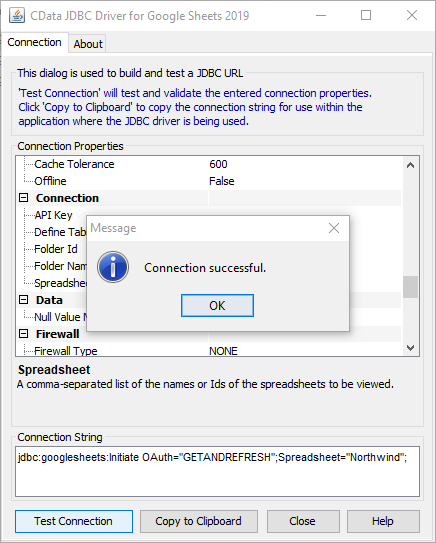
For assistance in constructing the JDBC URL, use the connection string designer built into the Outlook JDBC Driver. Either double-click the .jar file or execute the .jar file from the command-line.
java -jar cdata.jdbc.api.jarFill in the connection properties and copy the connection string to the clipboard.
- Username: Set this to a placeholder value (since Outlook does not require a username)
- Password: Set this to a placeholder value (since Outlook does not require a password)
Create a Mapping for Outlook Data
With the connection to Outlook configured, we can now access Outlook data in any Informatica process. The steps below walk through creating a mapping for Outlook to another data target.
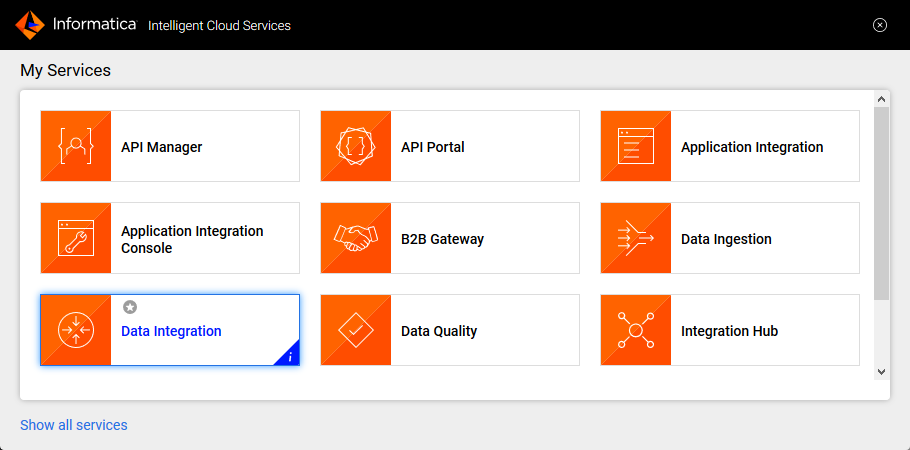
- Navigate to the Data Integration page
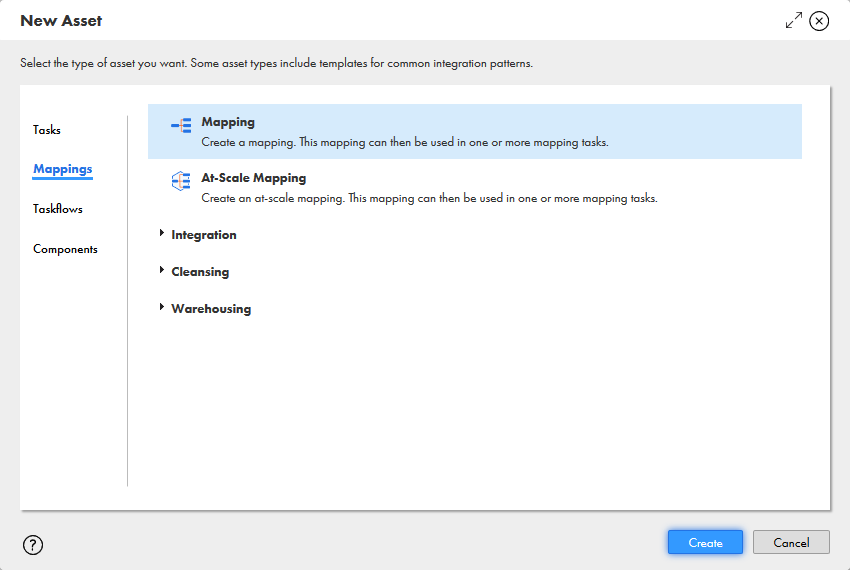
- Click New.. and select Mapping from the Mappings tab
- Click the Source Object and in the Source tab, select the Connection and set the Source Type
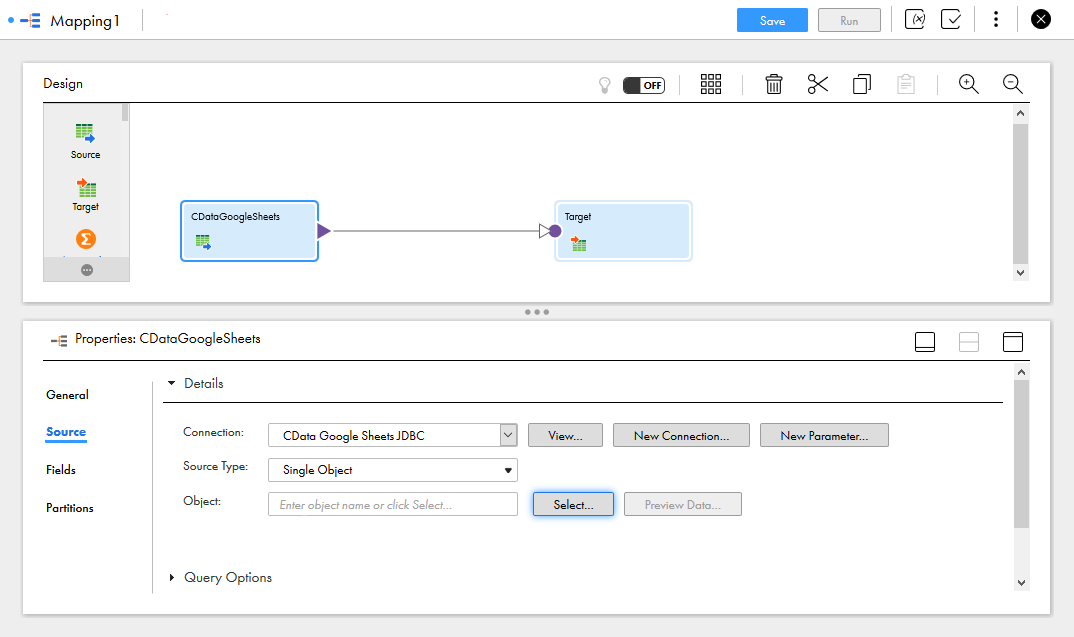
- Click "Select" to choose the table to map
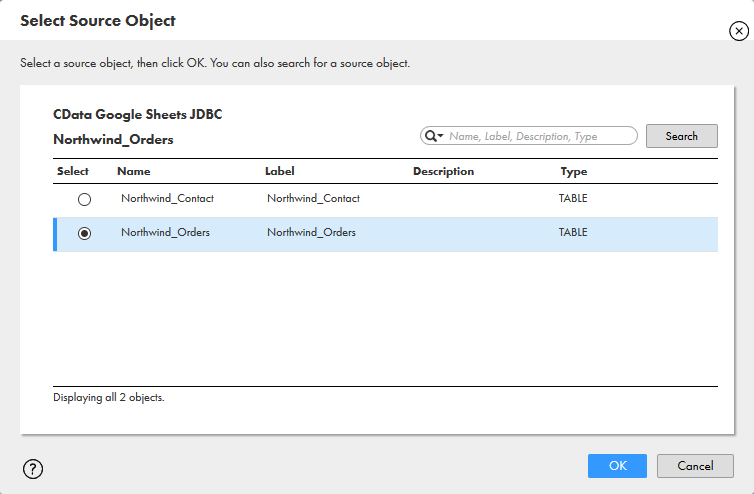
- In the Fields tab, select the fields from the Outlook table to map
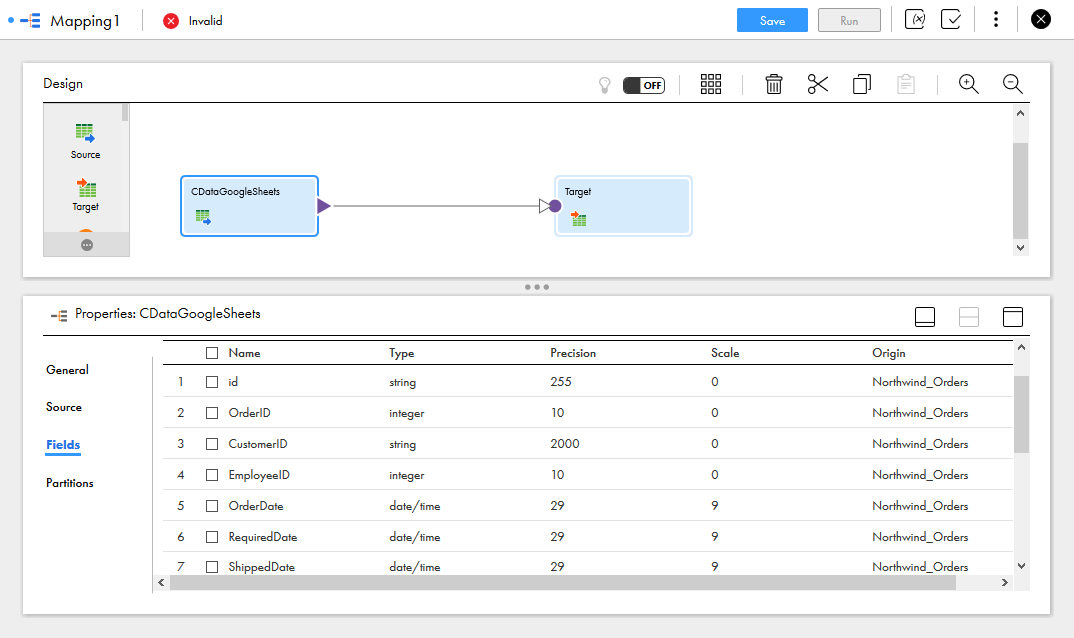
- Click the Target object and configure the Target source, table and fields. In the Field Mapping tab, map the source fields to the target fields.
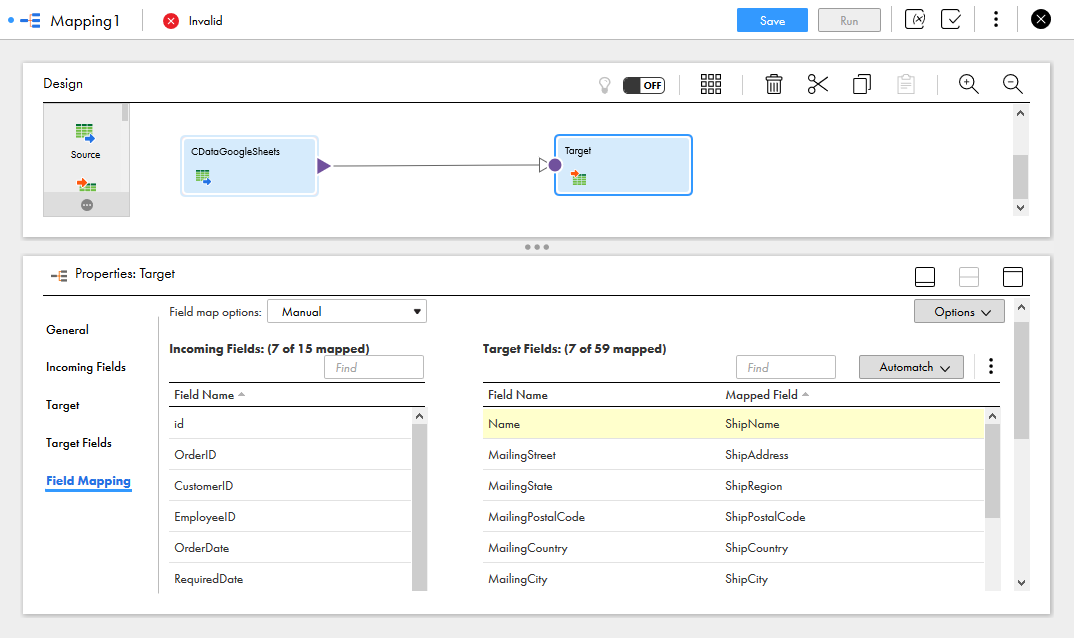
With the mapping configured, you are ready to start integrating live Outlook data with any of the supported connections in Informatica Cloud. Download a free, 30-day trial of the CData API Driver for JDBC and start working with your live Outlook data in Informatica Cloud today.