






Stream Outlook Data into Apache Kafka Topics

Apache Kafka is an open-source stream processing platform that is primarily used for building real-time data pipelines and event-driven applications. When paired with the CData API Driver for JDBC, Kafka can work with live Outlook data. This article describes how to connect, access and stream Outlook data into Apache Kafka Topics and to start Confluent Control Center to help users secure, manage, and monitor the Outlook data received using Kafka infrastructure in the Confluent Platform.
With built-in optimized data processing, the CData JDBC Driver offers unmatched performance for interacting with live Outlook data. When you issue complex SQL queries to Outlook, the driver pushes supported SQL operations, like filters and aggregations, directly to Outlook and utilizes the embedded SQL engine to process unsupported operations client-side (often SQL functions and JOIN operations). Its built-in dynamic metadata querying allows you to work with and analyze Outlook data using native data types.
Prerequisites
Before connecting the CData JDBC Driver for streaming Outlook data in Apache Kafka Topics, install and configure the following in the client Linux-based system.
- Confluent Platform for Apache Kafka
- Confluent Hub CLI Installation
- Self-Managed Kafka JDBC Source Connector for Confluent Platform
Define a New JDBC Connection to Outlook data
- Download CData API Driver for JDBC on a Linux-based system
- Follow the given instructions to create a new directory extract all the driver contents into it:
- Create a new directory named Outlook
mkdir API
- Move the downloaded driver file (.zip) into this new directory
mv APIJDBCDriver.zip API/
- Unzip the CData APIJDBCDriver contents into this new directory
unzip APIJDBCDriver.zip
- Create a new directory named Outlook
- Open the Outlook directory and navigate to the lib folder
ls
cd lib/
- Copy the contents of the lib folder of the CData API Driver for JDBC into the lib folder of Kafka Connect JDBC. Check the Kafka Connect JDBC folder contents to confirm that the cdata.jdbc.api.jar file is successfully copied into the lib folder
cp -r /path/to/CData API Driver for JDBC/lib/* /usr/share/confluent-hub-components/confluentinc-kafka-connect-jdbc/lib/
cd /usr/share/confluent-hub-components/confluentinc-kafka-connect-jdbc/lib/
- Install the CData Outlook JDBC driver license using the given command, followed by your Name and Email ID
java -jar cdata.jdbc.api.jar -l
- Enter the product key or "TRIAL" (In the scenarios of license expiry, please contact our CData Support team)
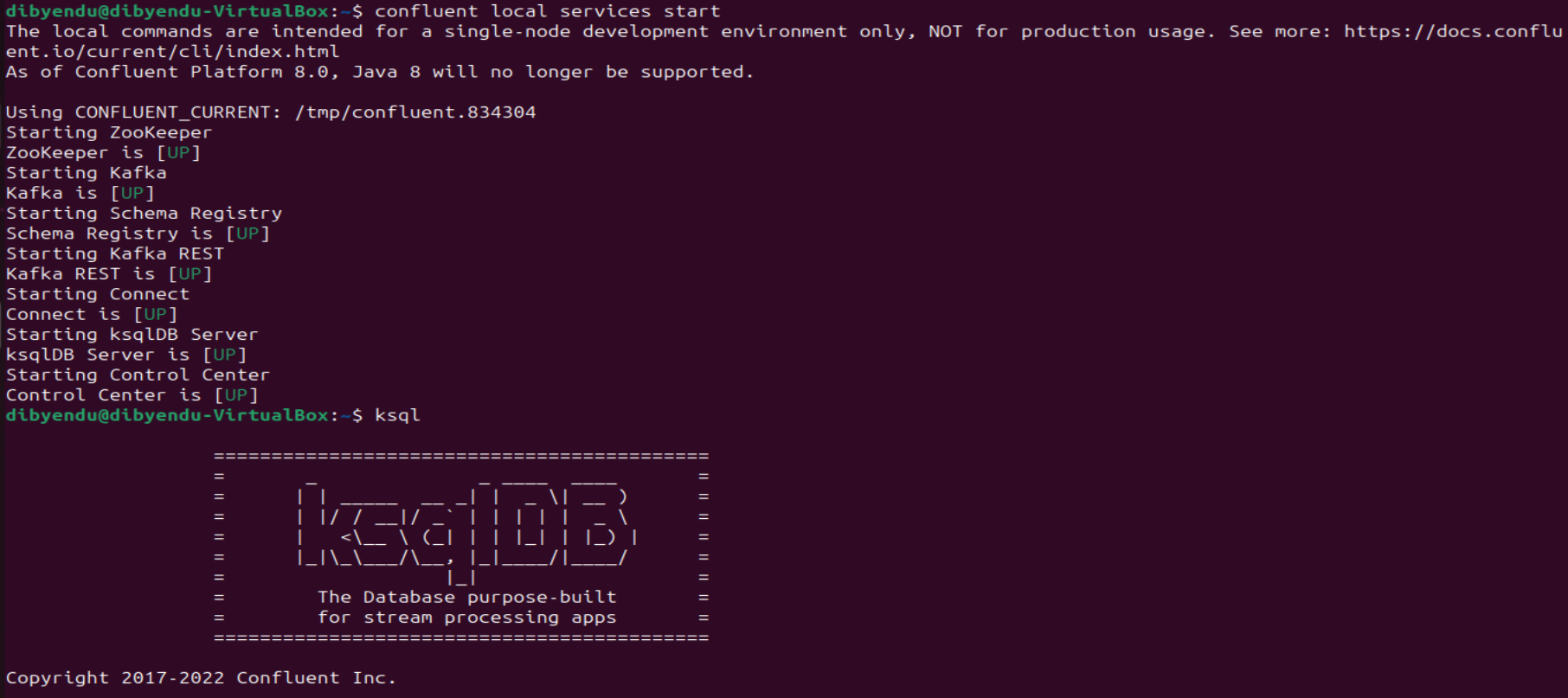
- Start the Confluent local services using the command:
confluent local services start
This starts all the Confluent Services like Zookeeper, Kafka, Schema Registry, Kafka REST, Kafka CONNECT, ksqlDB and Control Center. You are now ready to use the CData JDBC driver for Outlook to stream messages using Kafka Connect Driver into Kafka Topics on ksqlDB.
- Create the Kafka topics manually using a POST HTTP API Request:
 curl --location 'server_address:8083/connectors'
	--header 'Content-Type: application/json'
	--data '{
		"name": "jdbc_source_cdata_api_01",
		"config": {
			"connector.class": "io.confluent.connect.jdbc.JdbcSourceConnector",
			"connection.url": "jdbc:api:Profile=C:\profiles\Outlook.apip;AuthScheme=OAuth;InitiateOAuth=GETANDREFRESH;OAuthClientId=your_client_id;OAuthClientSecret=your_client_secret;TenantId=your_tenant_id;CallbackUrl=http://localhost:33333;",
		"topic.prefix": "api-01-",
		"mode": "bulk"
		}
	}'
Let us understand the fields used in the HTTP POST body (shown above):
- connector.class: Specifies the Java class of the Kafka Connect connector to be used.
- connection.url: The JDBC connection URL to connect with Outlook data.
Built-in Connection String Designer
For assistance in constructing the JDBC URL, use the connection string designer built into the CData API Driver for JDBC. Either double-click the JAR file or execute the jar file from the command-line.
java -jar cdata.jdbc.api.jar
Fill in the connection properties and copy the connection string to the clipboard.
Using OAuth Authentication
Microsoft Graph API uses OAuth 2.0 for authentication. You must register an application in the Microsoft Azure Portal to obtain OAuth credentials (Client ID and Client Secret).
Obtaining OAuth Credentials
- Log in to the Azure Portal.
- Navigate to Azure Active Directory > App registrations.
- Click New registration to create a new application.
- Enter an application name and select the appropriate account types.
- Set the Redirect URI to your application's callback URL (e.g., http://localhost:33333 for desktop apps).
- Click Register to create the application.
- On the application overview page, copy the Application (client) ID - this is your OAuthClientId.
- Navigate to Certificates & secrets and create a new client secret.
- Copy the client secret value - this is your OAuthClientSecret.
- Navigate to API permissions and add the required Microsoft Graph API permissions:
- Mail.Read - For accessing email messages
- Contacts.Read - For accessing contacts
- Calendars.Read - For accessing calendar events
- Tasks.Read - For accessing To Do tasks
- offline_access - For obtaining refresh tokens
- Click Grant admin consent to grant these permissions.
Connecting with OAuth
After setting the following connection properties, you are ready to connect:
- AuthScheme: Set this to OAuth.
- InitiateOAuth: Set this to GETANDREFRESH. The CData API Profile for Outlook will automatically walk through the OAuth process in order to obtain the access token.
- OAuthClientId: Set this to the Application (client) ID from Azure Portal.
- OAuthClientSecret: Set this to the client secret value from Azure Portal.
- TenantId: Set this to your Azure AD tenant identifier (GUID or domain name like 'contoso.onmicrosoft.com').
- CallbackURL: Set this to the Redirect URI you specified in your app registration (e.g., http://localhost:33333 for desktop apps).
Example connection string
Profile=C:\profiles\Outlook.apip;AuthScheme=OAuth;InitiateOAuth=GETANDREFRESH;OAuthClientId=your_client_id;OAuthClientSecret=your_client_secret;TenantId=your_tenant_id;CallbackUrl=http://localhost:33333;

- topic.prefix: A prefix that will be added to the Kafka topics created by the connector. It's set to "api-01-".
- mode: Specifies the mode in which the connector operates. In this case, it's set to "bulk", which suggests that the connector is configured to perform bulk data transfer.
This request adds all the tables/contents from Outlook as Kafka Topics.
Note: The IP Address (server) to POST the request (shown above) is the Linux Network IP Address.
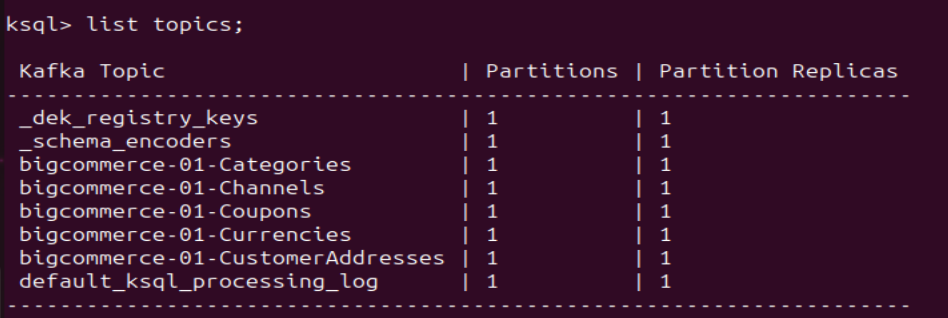
- Run ksqlDB and list the topics. Use the commands:
ksql
list topics;
- To view the data inside the topics, type the SQL Statement:
PRINT topic FROM BEGINNING;
Connecting with the Confluent Control Center
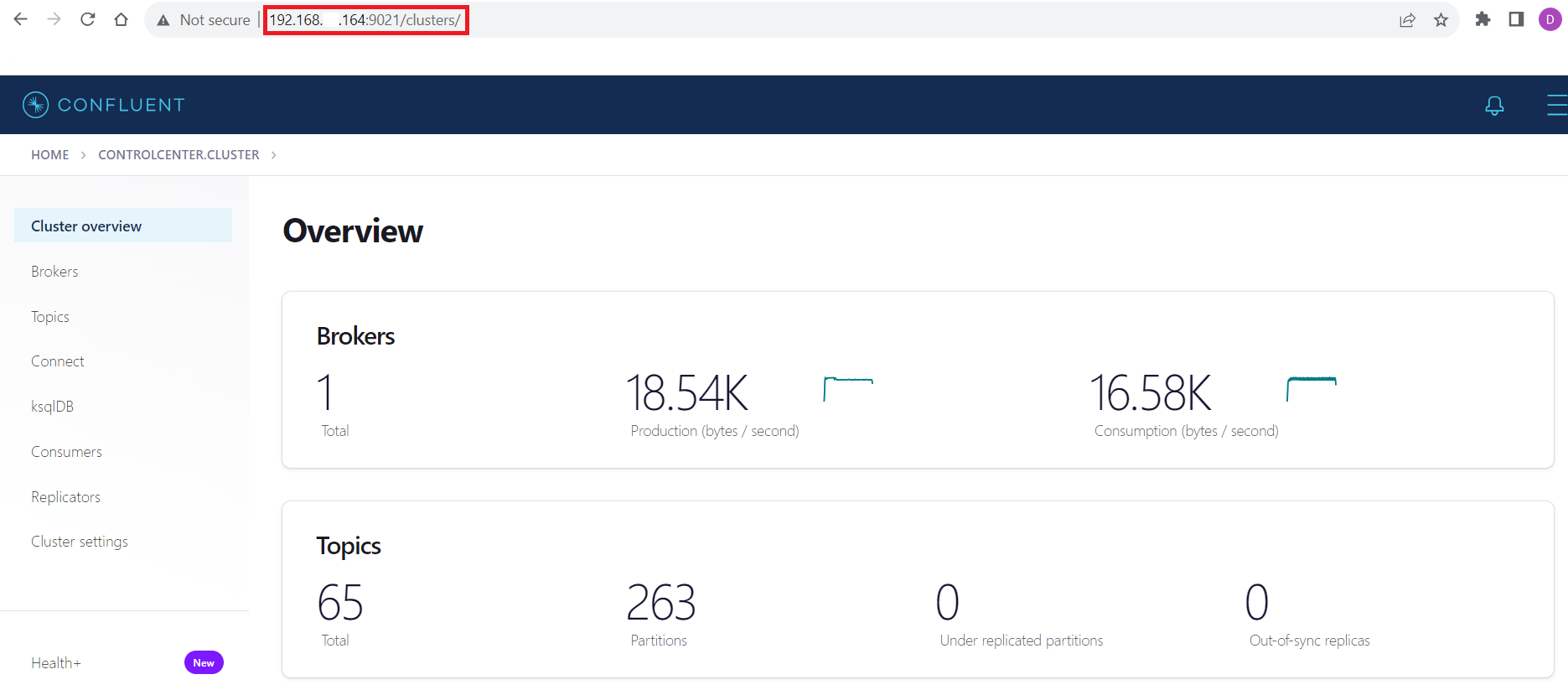
To access the Confluent Control Center user interface, ensure to run the "confluent local services" as described in the above section and type http://<server address>:9021/clusters/ on your local browser.
Get Started Today
Download a free, 30-day trial of the CData API Driver for JDBC and start streaming Outlook data into Apache Kafka. Reach out to our Support Team if you have any questions.