






Build Apps with Live Outlook Data Using the Low-Code Development Platform of Mendix

Mendix, developed by Siemens, is a low-code platform used to rapidly develop, test, and deploy web and mobile applications, facilitating digital transformation and enhancing business agility. When paired with the CData API Driver for JDBC, you can use your Outlook data to create various applications using Mendix Studio Pro.
With built-in optimized data processing, the CData JDBC driver offers unmatched performance for interacting with live Outlook data. When you issue complex SQL queries to Outlook, the driver pushes supported SQL operations, like filters and aggregations, directly to Outlook and utilizes the embedded SQL engine to process unsupported operations client-side (often SQL functions and JOIN operations). Its built-in dynamic metadata querying allows you to work with and analyze Outlook data using native data types.
This article shows how you can easily create an application that utilizes Outlook data in Mendix by combining the JDBC interface provided by Mendix with the CData JDBC Driver for Outlook.
Preparing the Mendix environment
In this section, we will explore how to develop an app using Mendix Studio Pro, as previously introduced, with Outlook data. Be sure to install Mendix Studio Pro beforehand.
Install the CData API Driver for JDBC
First, install the CData API Driver for JDBC on the same machine as Mendix. The JDBC Driver will be installed in the following path:
C:\Program Files\CData\CData JDBC Driver for Outlook 20xx\lib\cdata.jdbc.api.jar
Create an application
Now let's start creating the app. First, let's make an app that has the Database Connector available.
- Launch Mendix Studio Pro and click 'Create New App.'
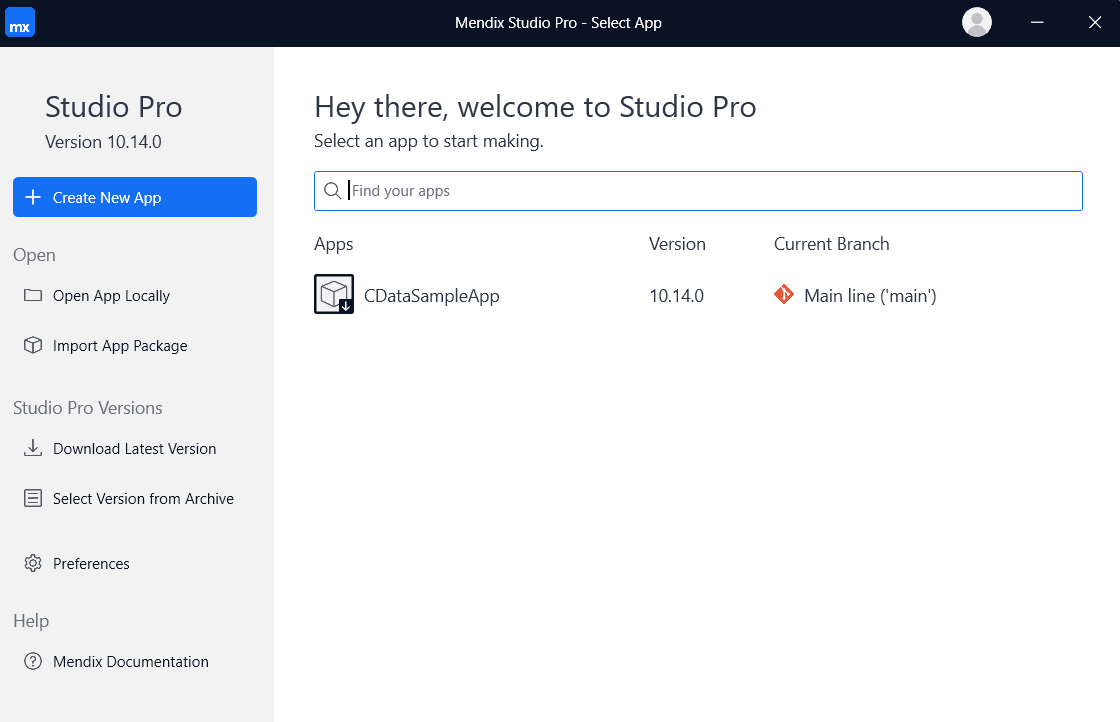
- Select the 'Blank Web App' option.
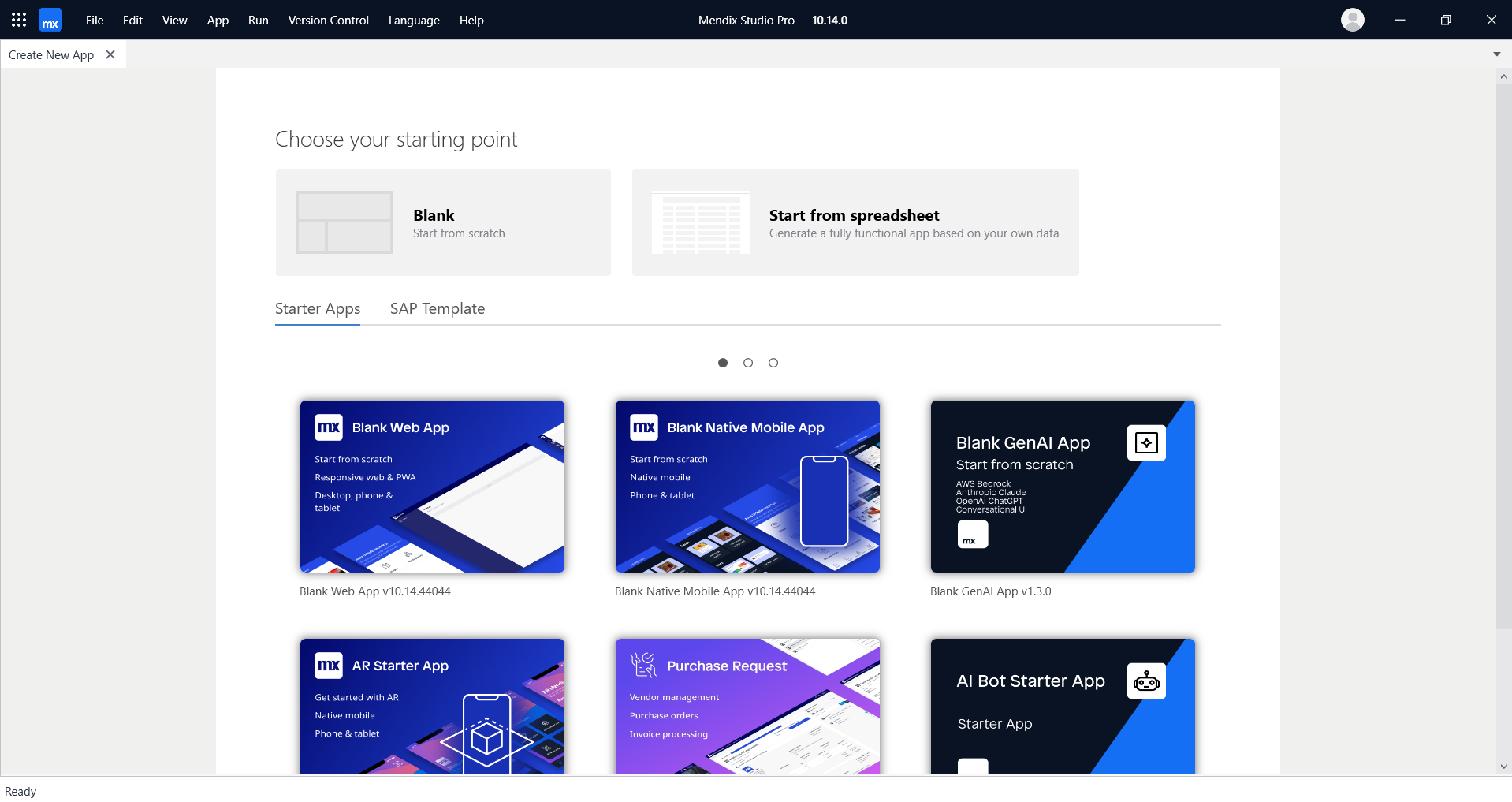
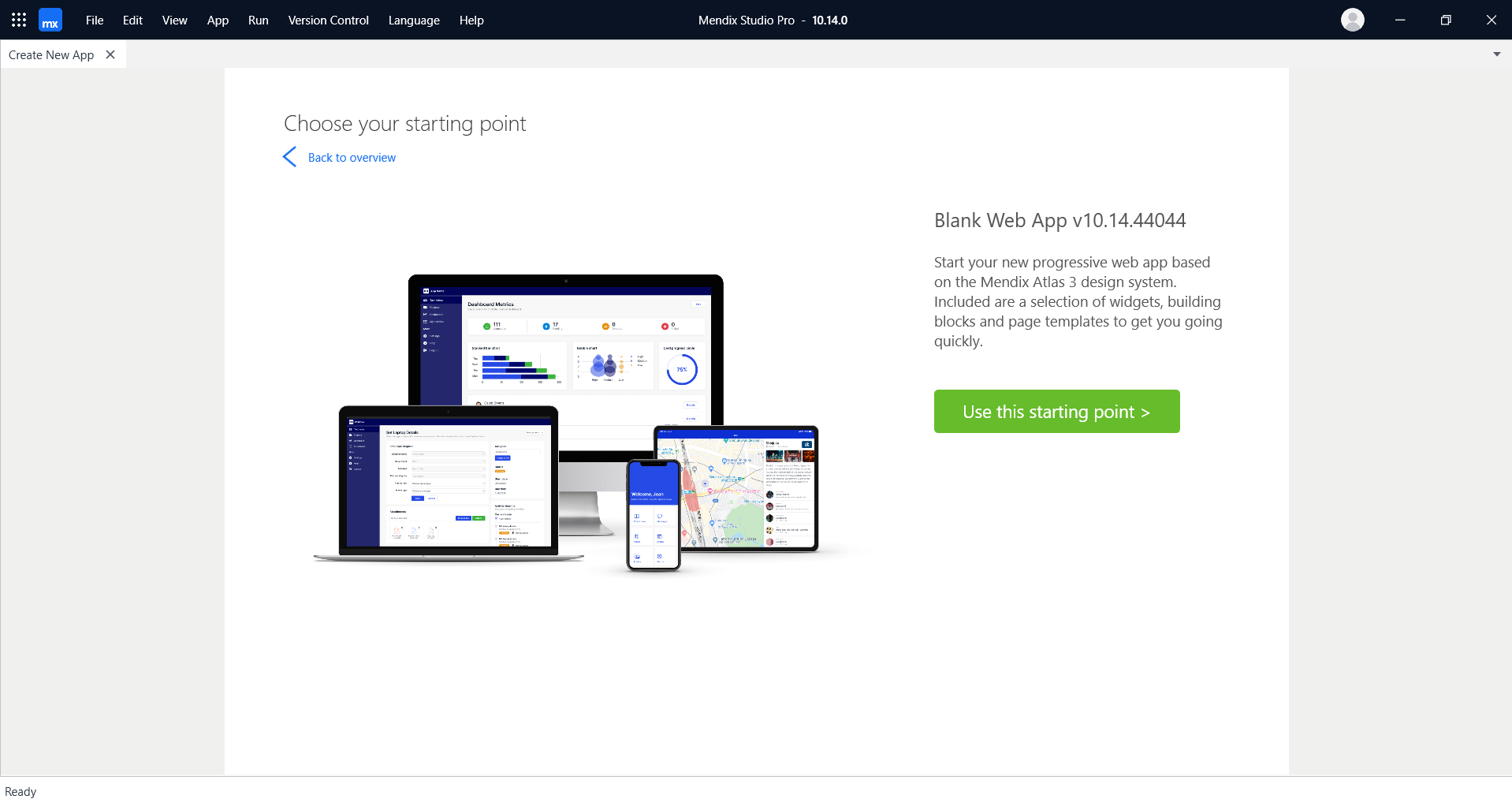
- Click 'Use this starting point' to proceed.
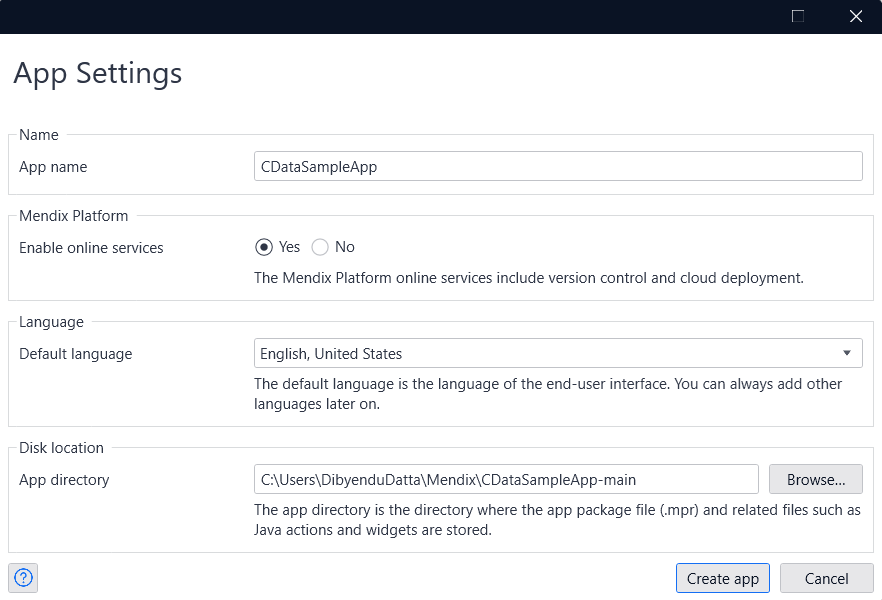
- Create an app with a name of your choice. Also, note down the "Disk location" information, for future reference.
- You have now created a brand-new app.
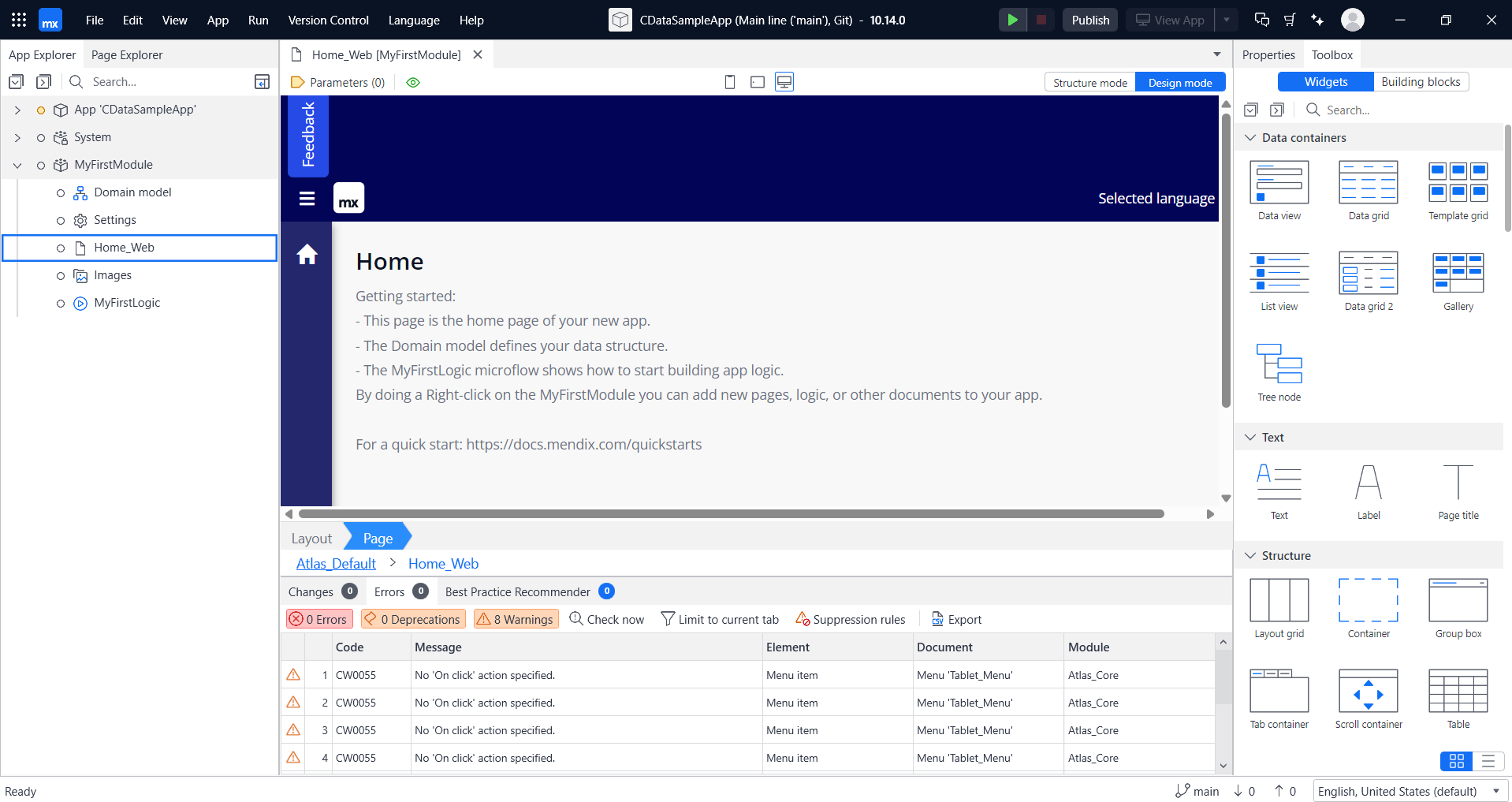
Add the Database Connector to your application
Next, add the Database Connector module to the app you just created.
- On the top right, click on the Marketplace button.
- Search for Database Connector in the Marketplace search section and select it.
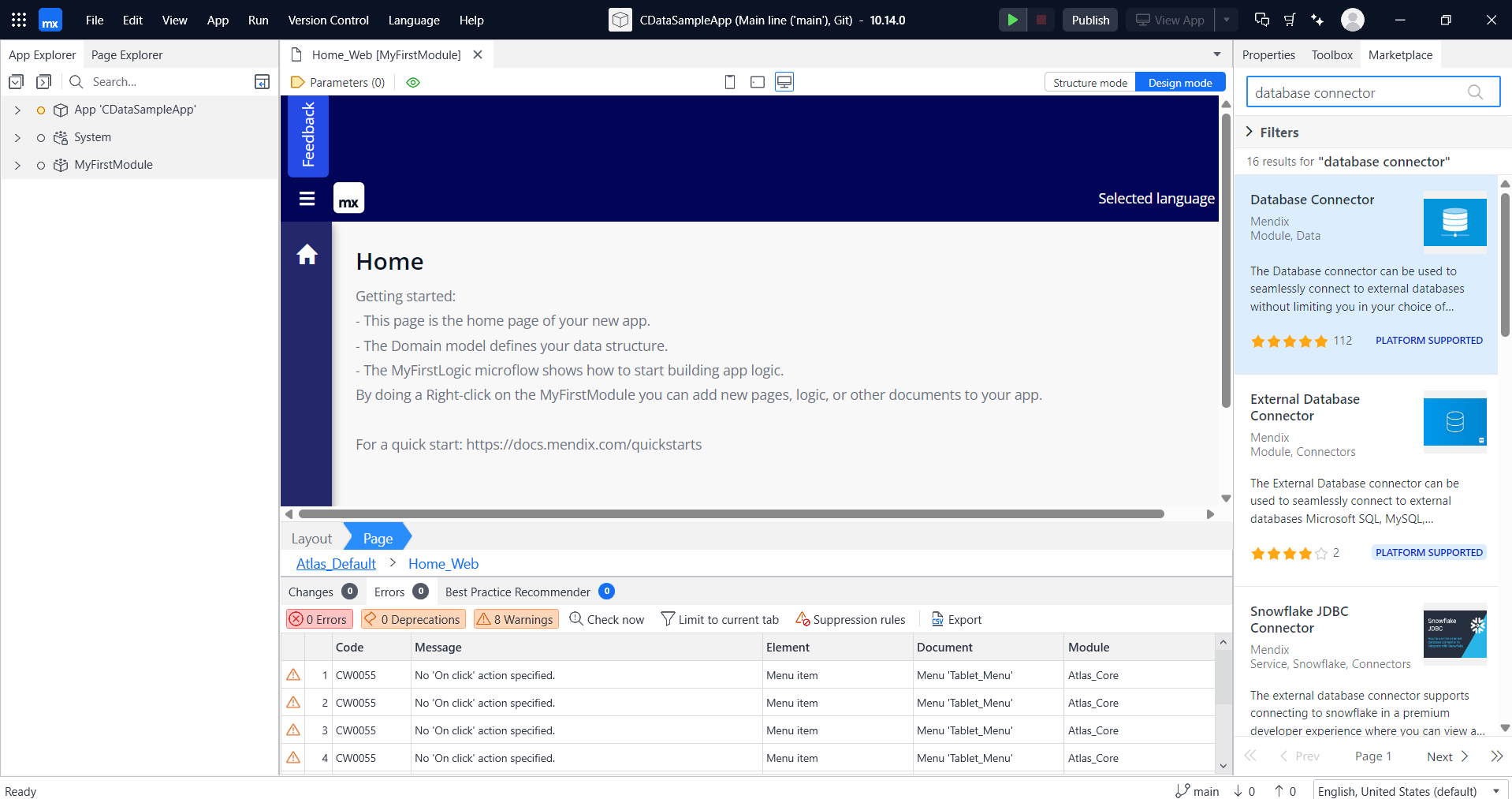
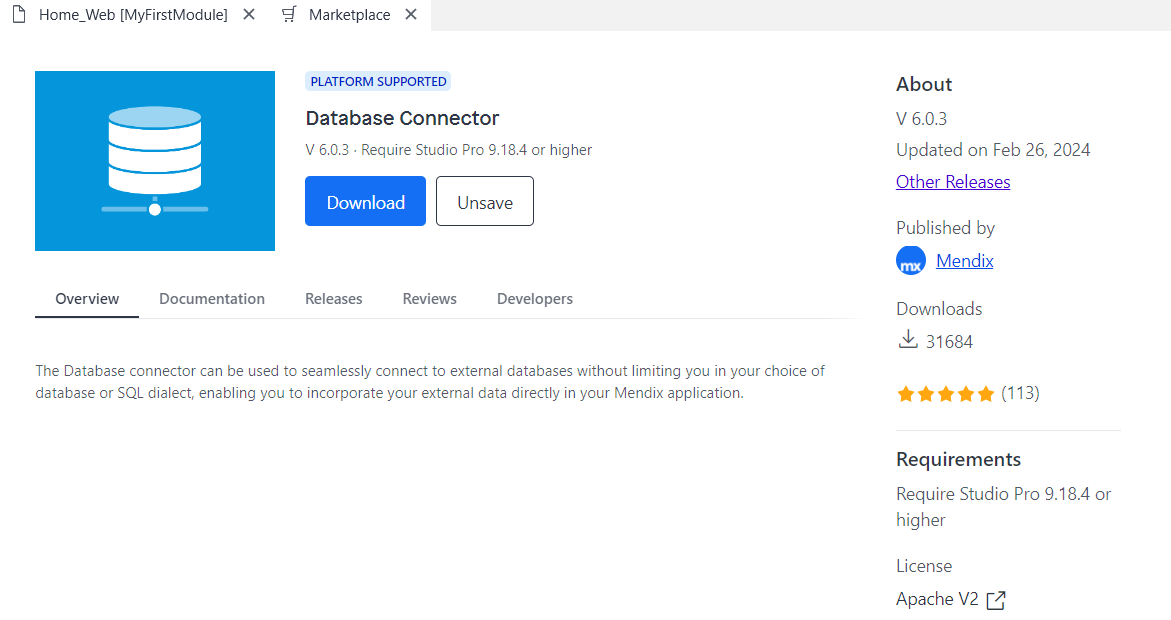
- Click on Download to download the latest Database Connector.
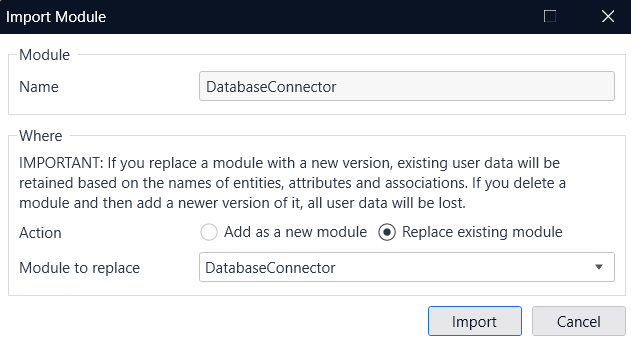
- In the Import Module window, select the Action as Add as a new module.
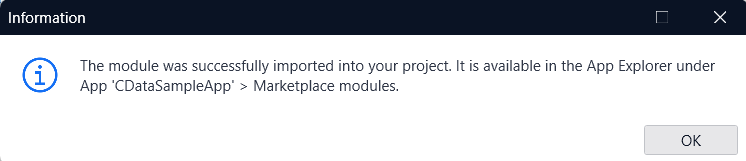
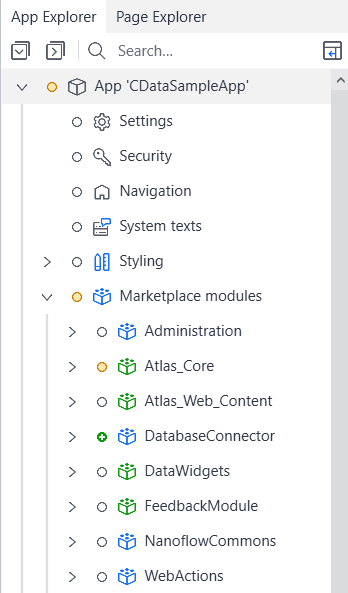
- If the Database Connector appears on the app screen, you are good to move on to the next steps.
Adding the JDBC Driver to Mendix Studio Pro
To use the CData JDBC driver with this Database Connector, you must add the JDBC Driver JAR file to your project.
- In the Mendix project folder you noted earlier, there is a folder named 'userlib.' Place the two files, 'cdata.jdbc.api.jar' and 'cdata.jdbc.api.lic,' into that folder.
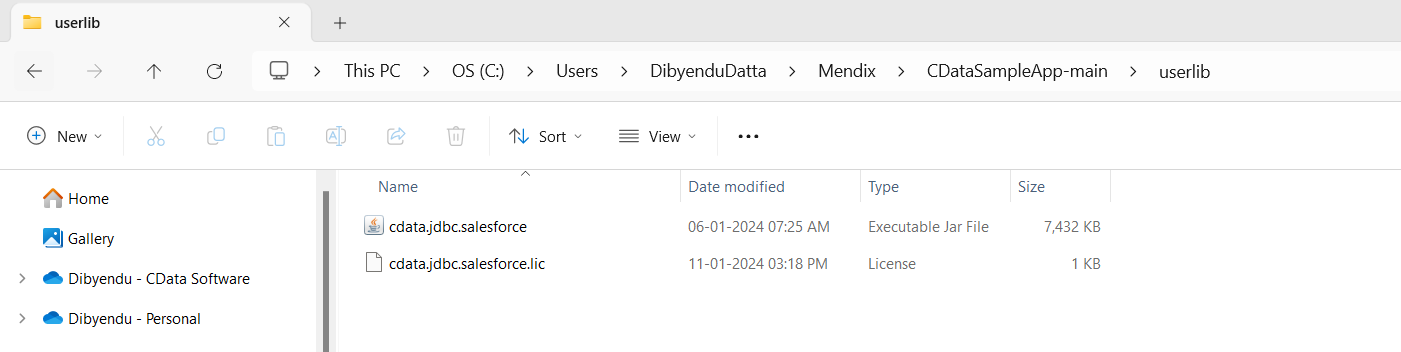
- You can now use the CData JDBC Driver with the Database Connector.
Create a Data Model
Now, let's create an app. We first need to define a data model to load data from the Database Connector and display it on the list screen. Let's create the data model before loading the data.
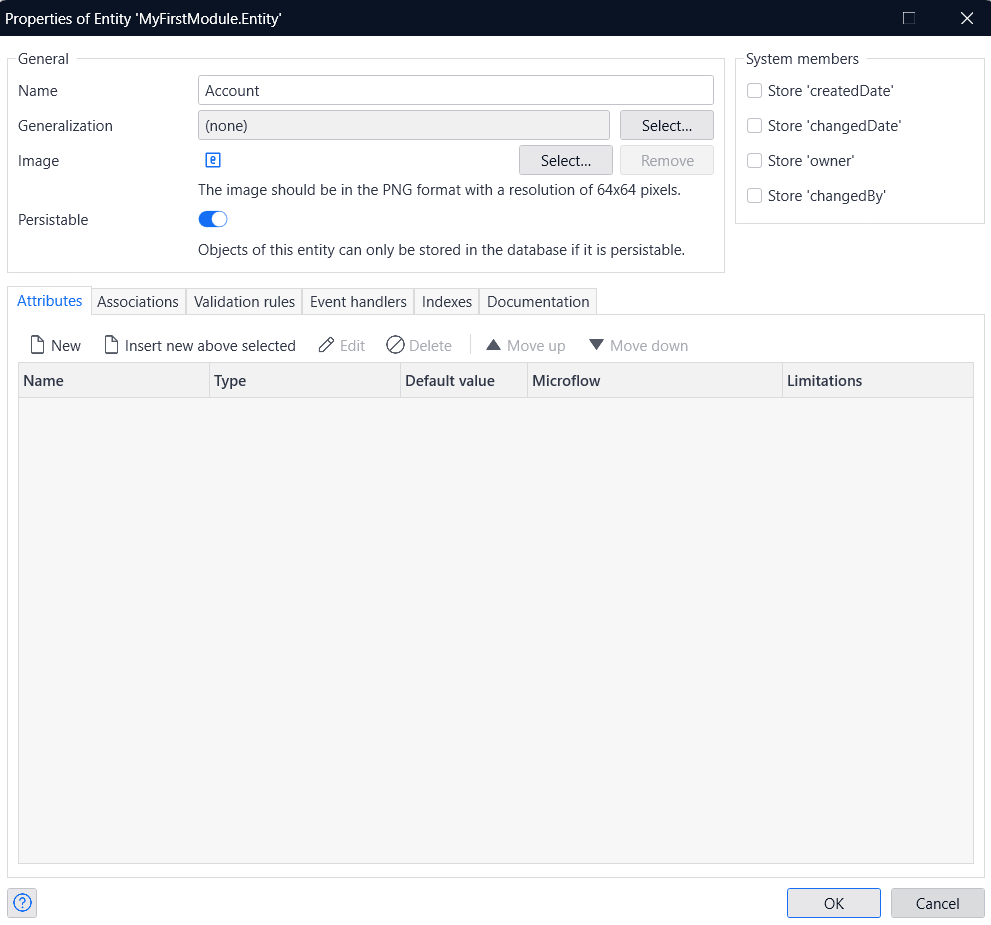
- Add an Entity to the 'Domain model' of MyFirstModule.
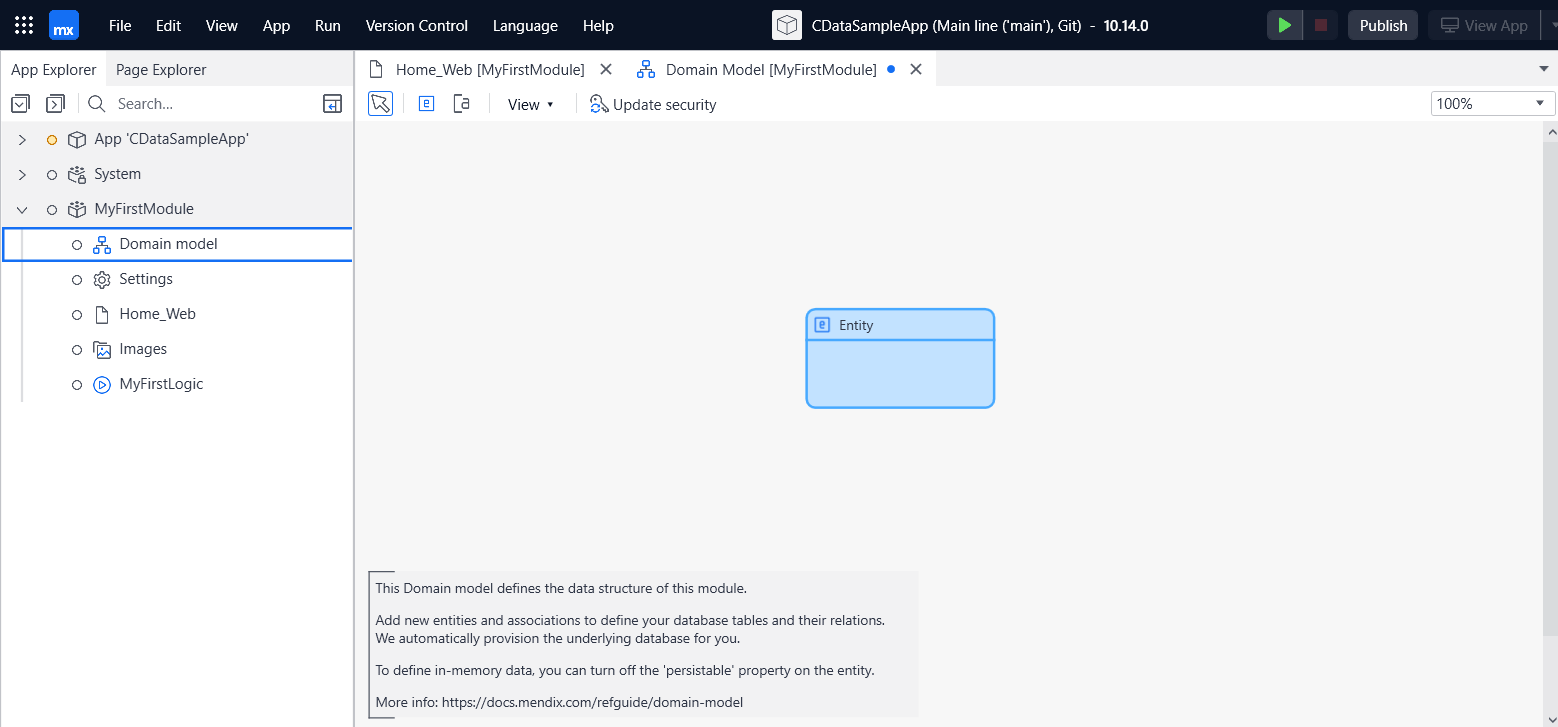
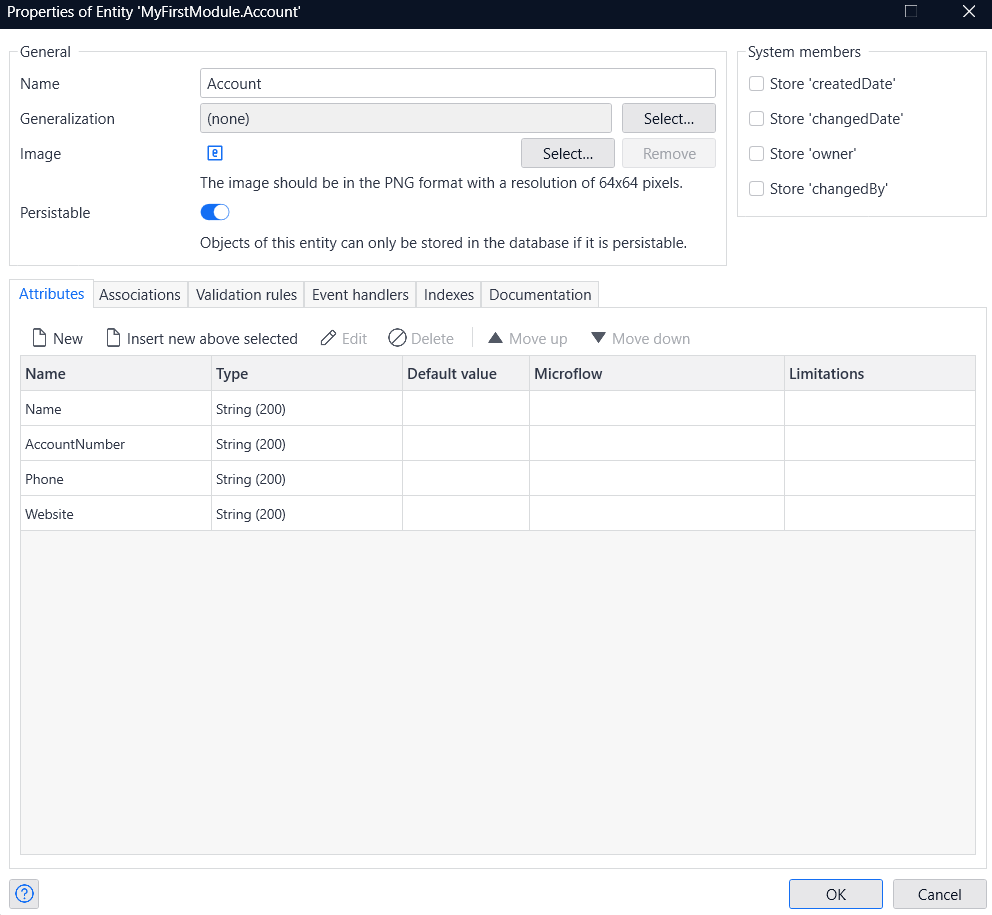
- Enter the entity name and field definitions.
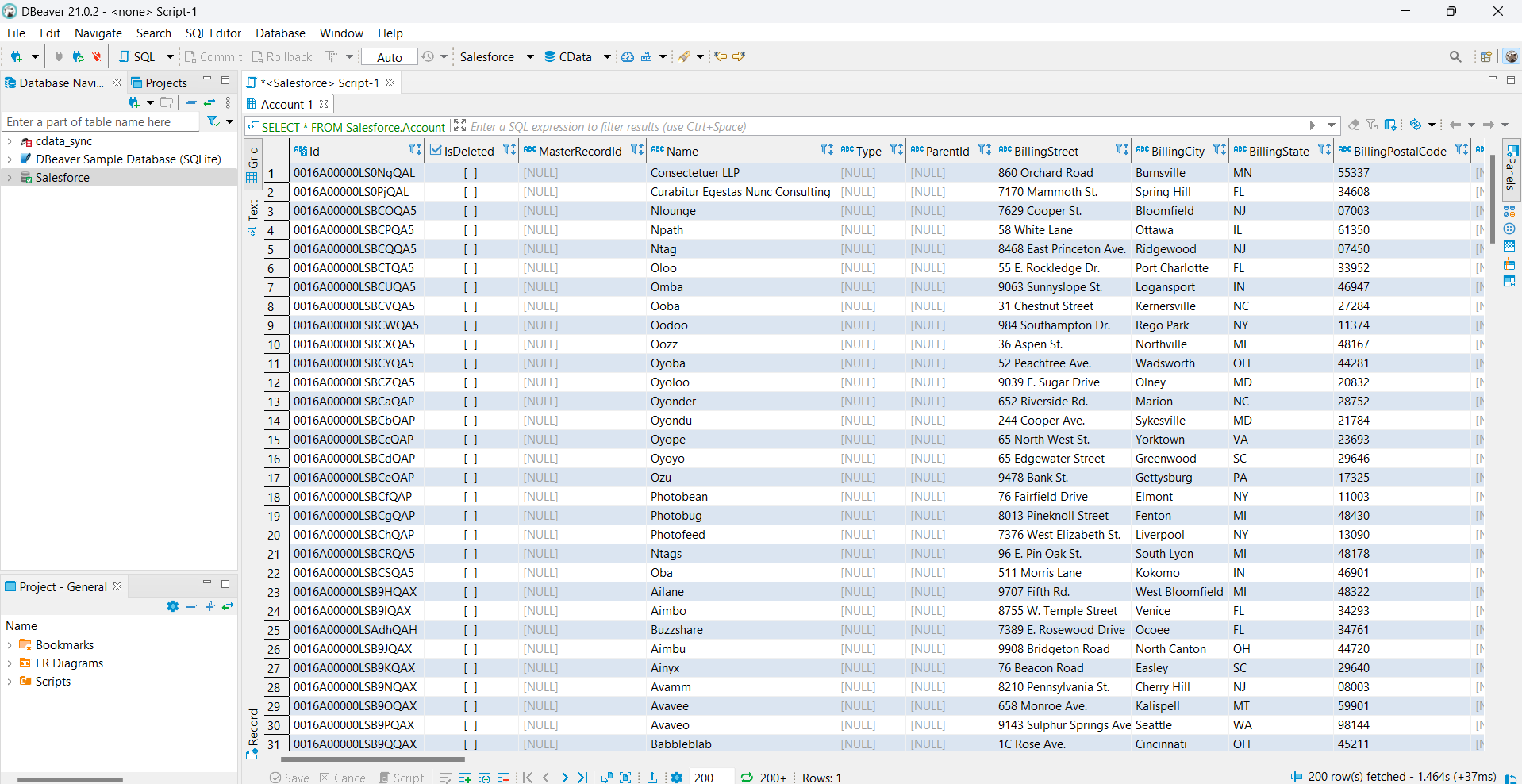
- You can easily configure the data by checking the table definition information through the CData JDBC driver using a tool such as DBeaver.
- Define the entities.
Create a constant for the JDBC URL
Next, create a JDBC URL constant to use with the Database Connector.
- Add 'Constant' to MyFirstModule.
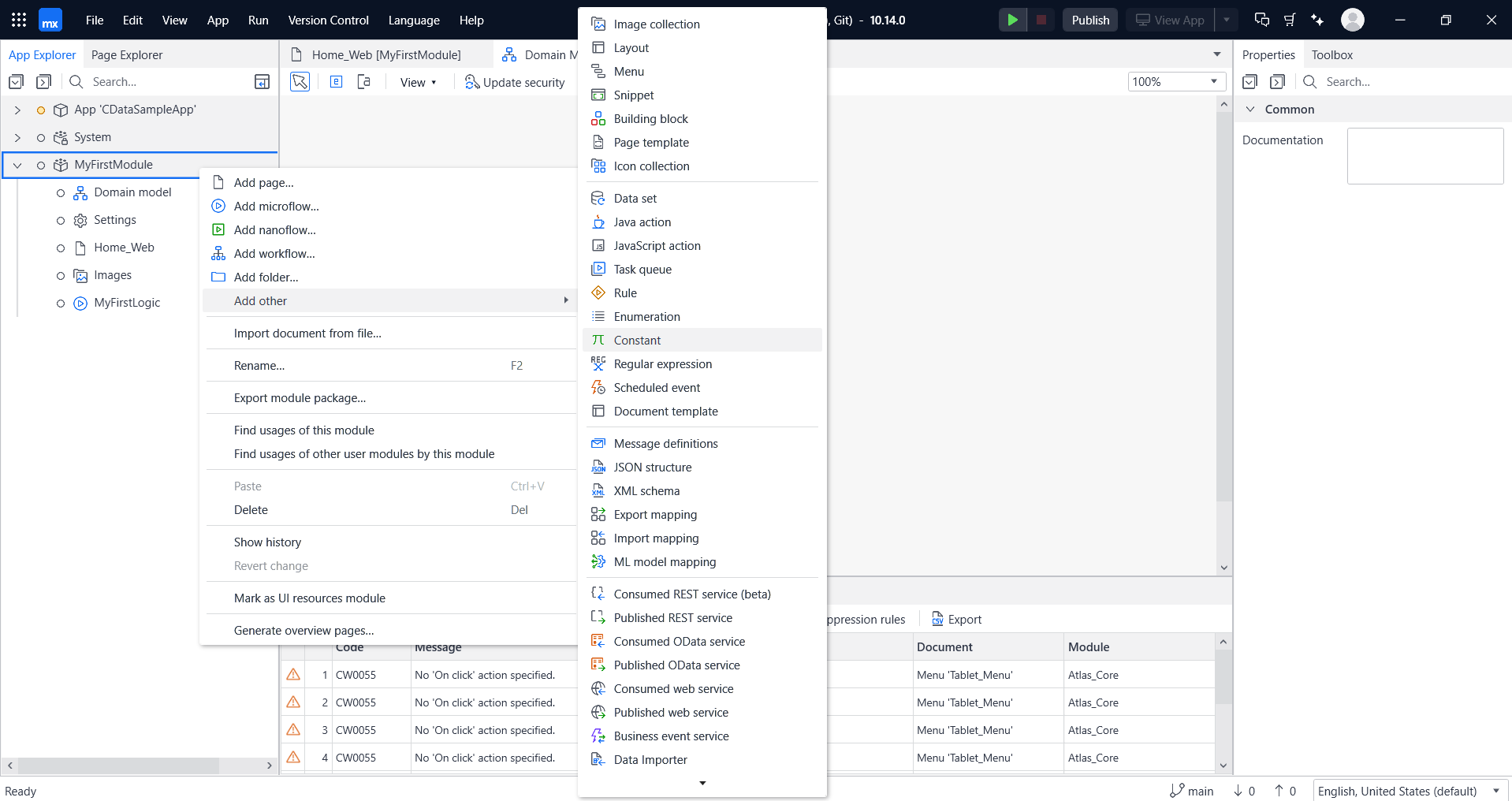
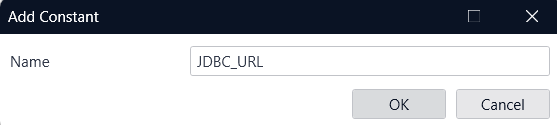
- Add a name to the Constant in the Add Constant window.
Generate a JDBC URL for connecting to Outlook, beginning with jdbc:api: followed by a series of semicolon-separated connection string properties.
Using OAuth Authentication
Microsoft Graph API uses OAuth 2.0 for authentication. You must register an application in the Microsoft Azure Portal to obtain OAuth credentials (Client ID and Client Secret).
Obtaining OAuth Credentials
- Log in to the Azure Portal.
- Navigate to Azure Active Directory > App registrations.
- Click New registration to create a new application.
- Enter an application name and select the appropriate account types.
- Set the Redirect URI to your application's callback URL (e.g., http://localhost:33333 for desktop apps).
- Click Register to create the application.
- On the application overview page, copy the Application (client) ID - this is your OAuthClientId.
- Navigate to Certificates & secrets and create a new client secret.
- Copy the client secret value - this is your OAuthClientSecret.
- Navigate to API permissions and add the required Microsoft Graph API permissions:
- Mail.Read - For accessing email messages
- Contacts.Read - For accessing contacts
- Calendars.Read - For accessing calendar events
- Tasks.Read - For accessing To Do tasks
- offline_access - For obtaining refresh tokens
- Click Grant admin consent to grant these permissions.
Connecting with OAuth
After setting the following connection properties, you are ready to connect:
- AuthScheme: Set this to OAuth.
- InitiateOAuth: Set this to GETANDREFRESH. The CData API Profile for Outlook will automatically walk through the OAuth process in order to obtain the access token.
- OAuthClientId: Set this to the Application (client) ID from Azure Portal.
- OAuthClientSecret: Set this to the client secret value from Azure Portal.
- TenantId: Set this to your Azure AD tenant identifier (GUID or domain name like 'contoso.onmicrosoft.com').
- CallbackURL: Set this to the Redirect URI you specified in your app registration (e.g., http://localhost:33333 for desktop apps).
Example connection string
Profile=C:\profiles\Outlook.apip;AuthScheme=OAuth;InitiateOAuth=GETANDREFRESH;OAuthClientId=your_client_id;OAuthClientSecret=your_client_secret;TenantId=your_tenant_id;CallbackUrl=http://localhost:33333;
Built-in Connection String Designer
For assistance in constructing the JDBC URL, use the connection string designer built into the Outlook JDBC Driver. Either double-click the JAR file or execute the jar file from the command-line.
java -jar cdata.jdbc.api.jar
Fill in the connection properties and copy the connection string to the clipboard.

A typical JDBC URL is below:
jdbc:api:Profile=C:\profiles\Outlook.apip;AuthScheme=OAuth;InitiateOAuth=GETANDREFRESH;OAuthClientId=your_client_id;OAuthClientSecret=your_client_secret;TenantId=your_tenant_id;CallbackUrl=http://localhost:33333;
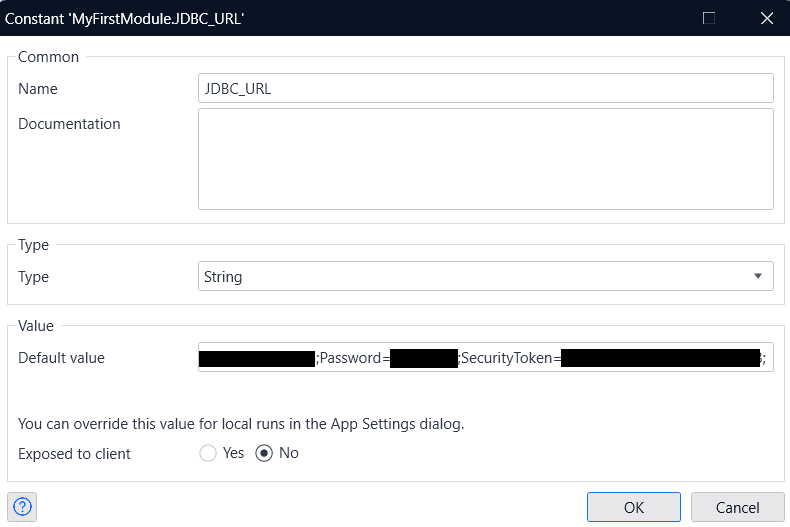
- Specify the connection string copied from the previous step in the Default value section and click on OK.
Create a microflow to retrieve Outlook data
Let's create a microflow that retrieves data from the Database Connector based on the entity we created.
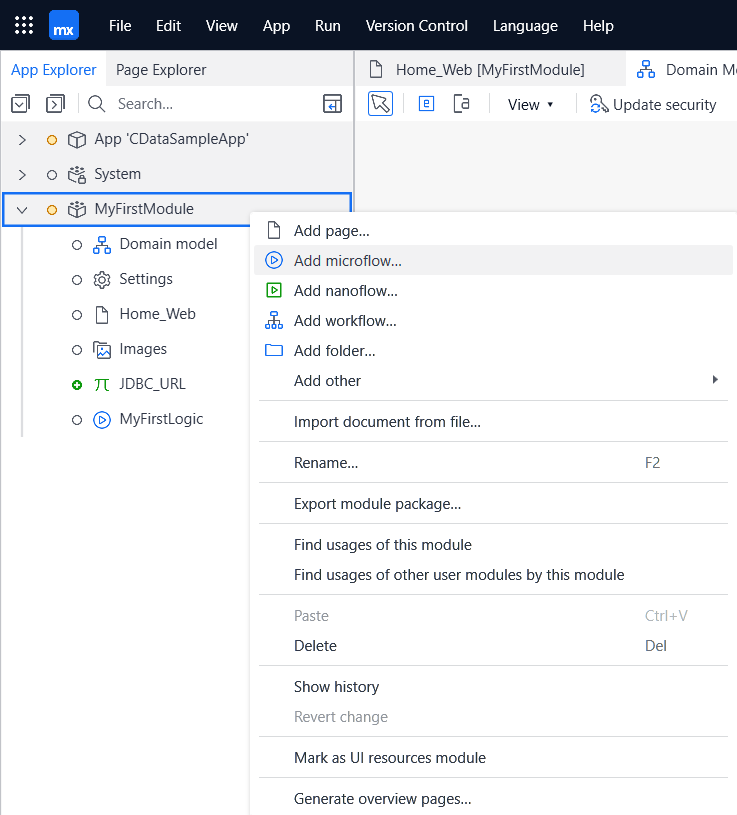
- Click 'Add microflow' from MyFirstModule.
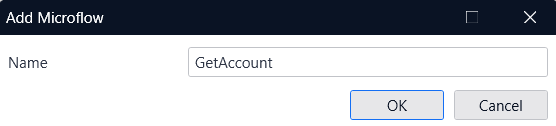
- Create a microflow with any name.
- First, create an object for the entity you defined earlier. Then, add the 'Create Object' action to the microflow.
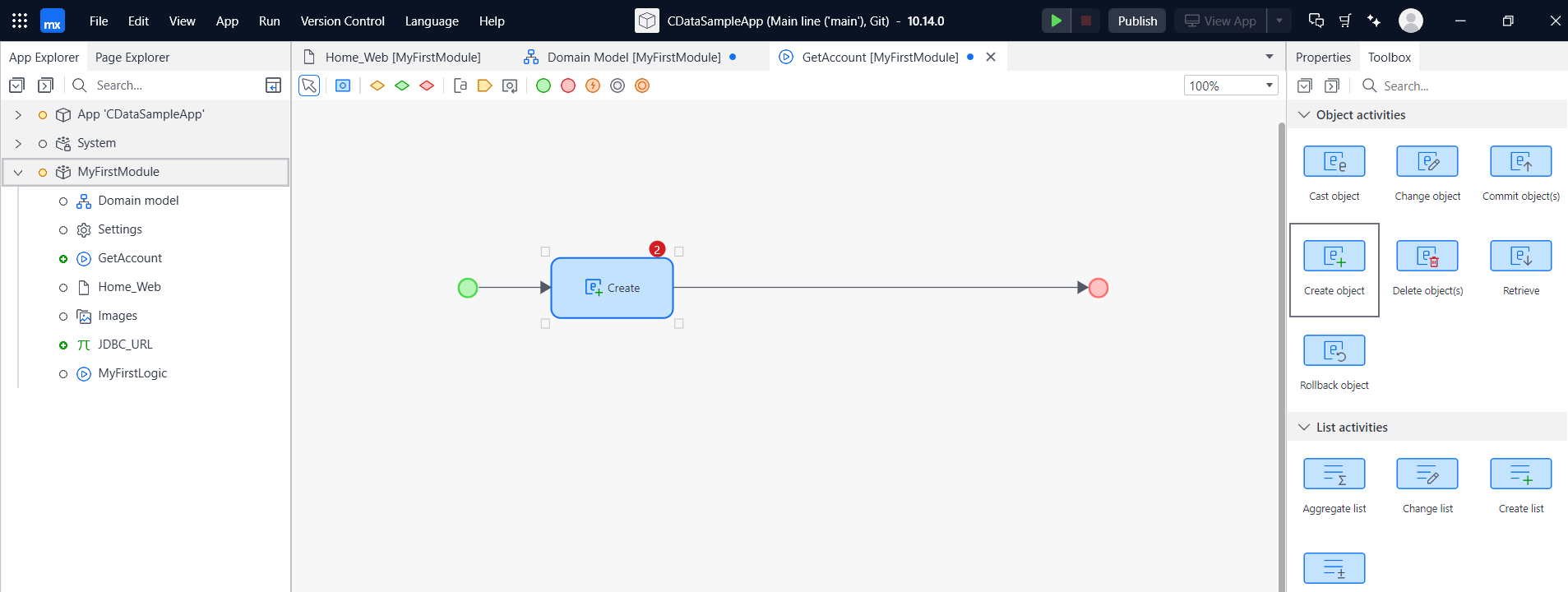
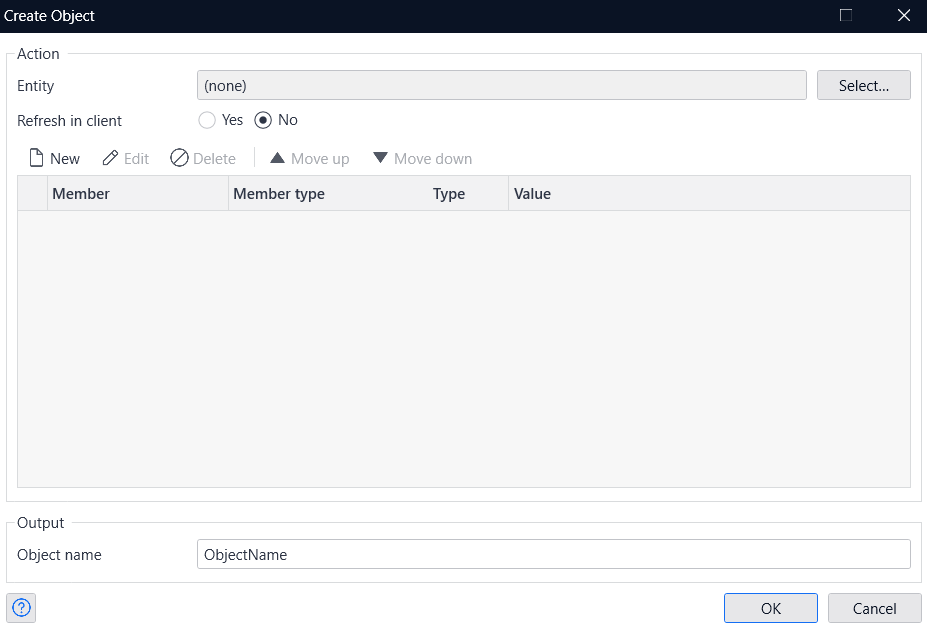
- Click on the 'Select' button for Entity in the Create Object window.
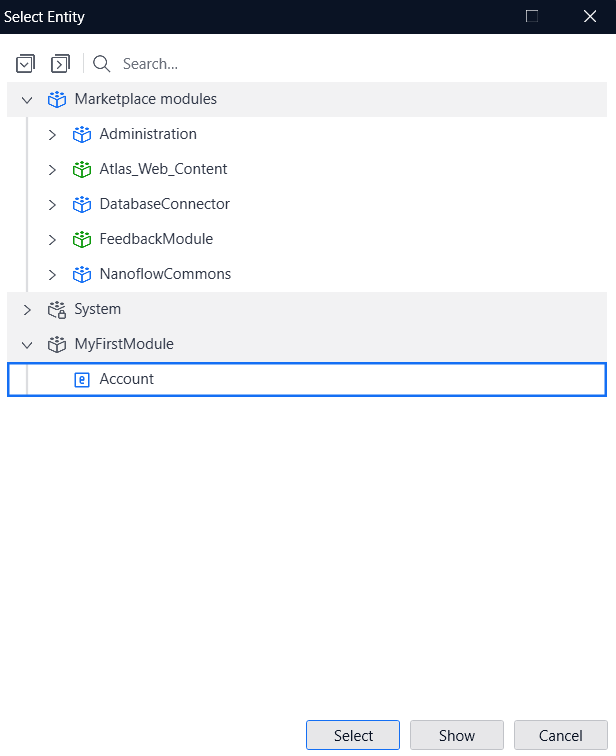
- Select a previously defined Entity.
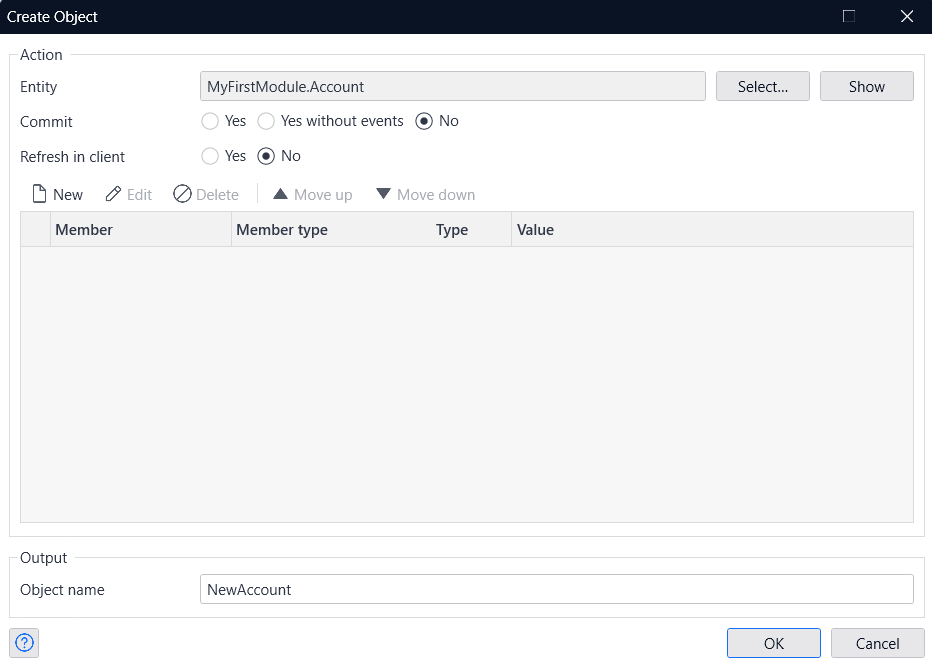
- Enter an arbitrary Object name and click OK.
- Next, add an Execute Query action to the microflow to retrieve data from the Database Connector.
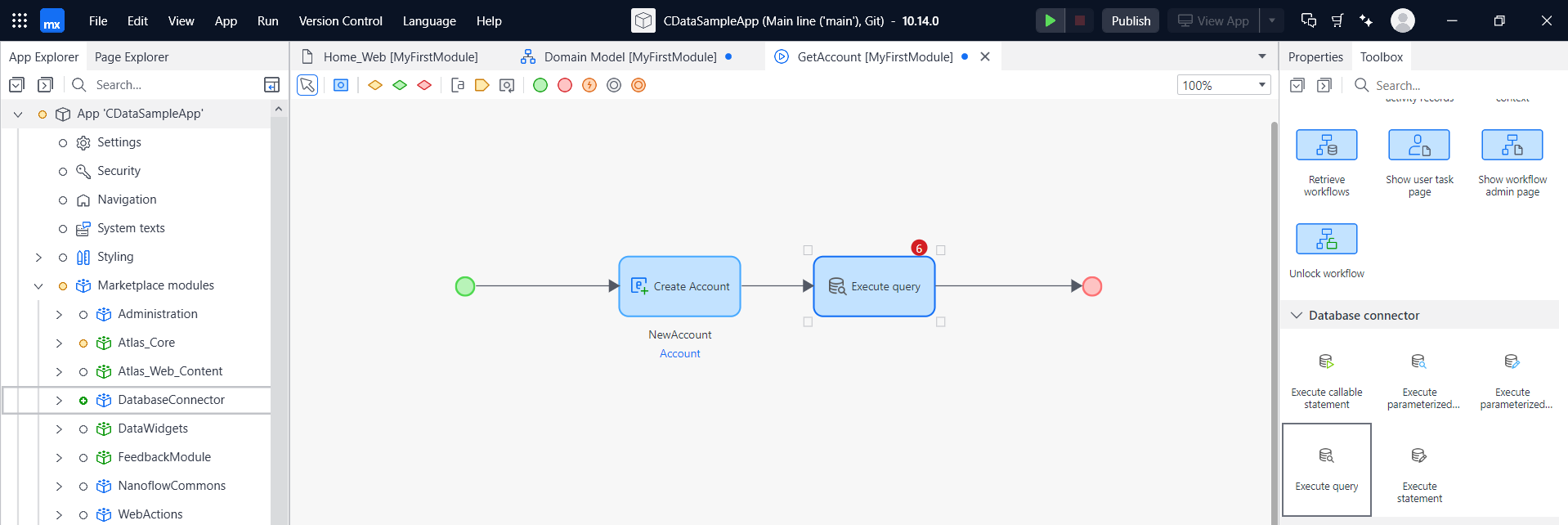
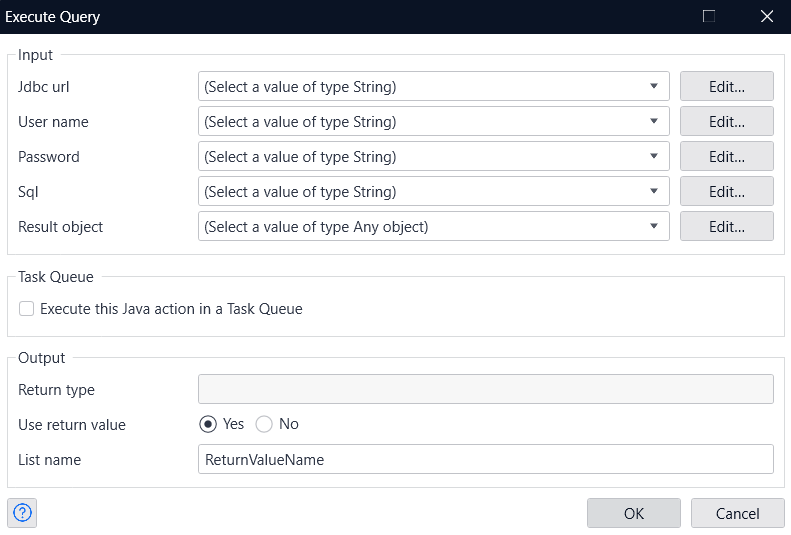
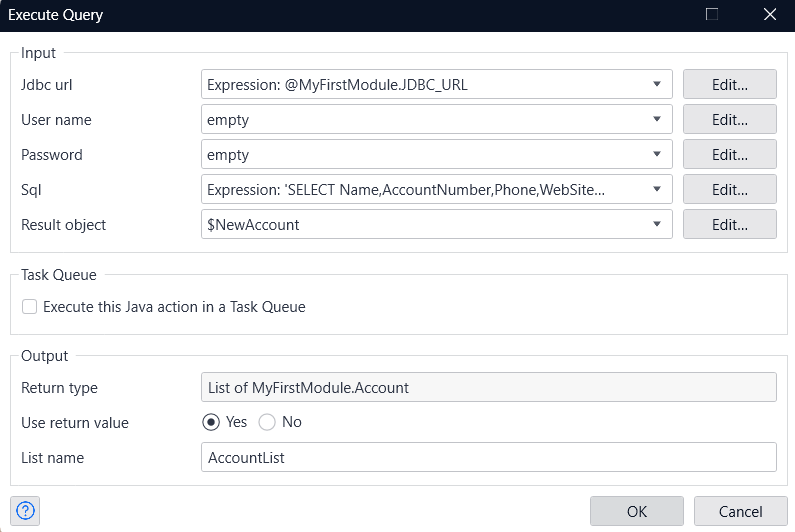
- Define each input in the Execute Query window.
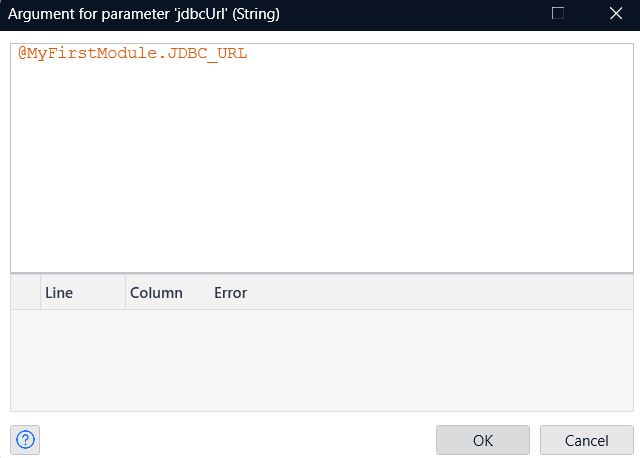
- In "jdbc url", specify the constant you defined beforehand.
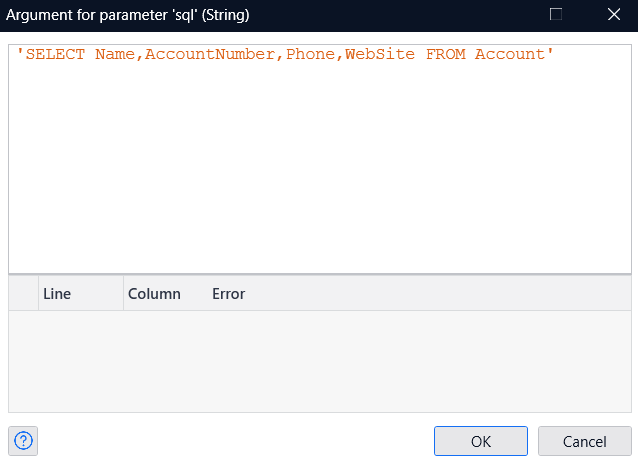
- In SQL, write a query to retrieve data from Outlook.
- You don't need a Username or Password this time, so set them to 'empty' and assign the object created in the previous flow as the Result object. Then, simply specify any name you prefer for the List in the List Name section.
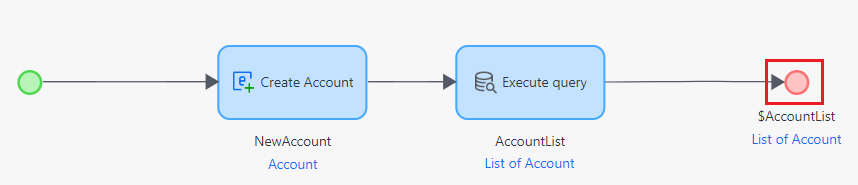
- Finally, define the output of the microflow.
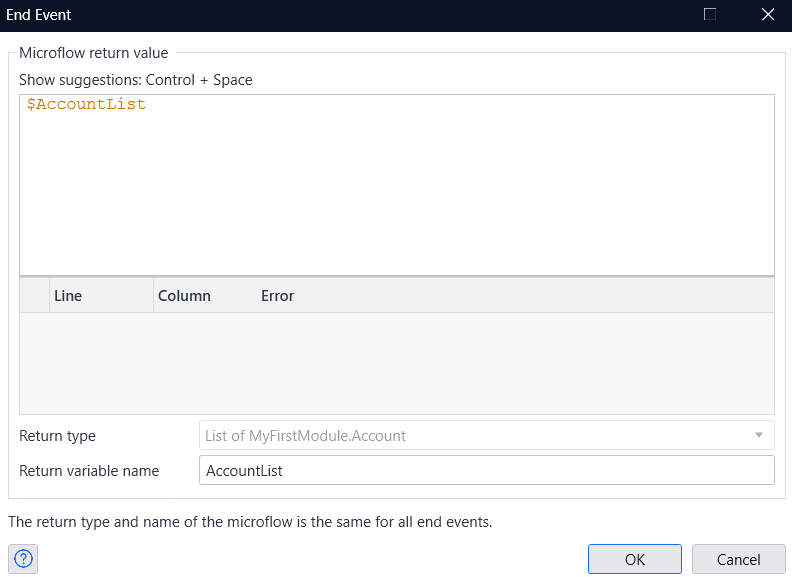
- Double-click the End Event to open it, select 'List' from the Type dropdown, and link it to the Entity you defined earlier. Then, set the output result of Execute Query as the Return value.
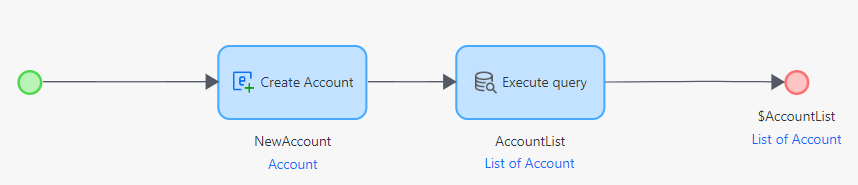
- This completes the microflow that retrieves data from Outlook.
Create a list screen and link it to a microflow
Finally, let's create a screen that displays the results obtained from the microflow.
- Double-click 'Home_web' inside the Toolbox menu to open it.

- Drag and drop a Data grid template from the Data containers section into the list screen.
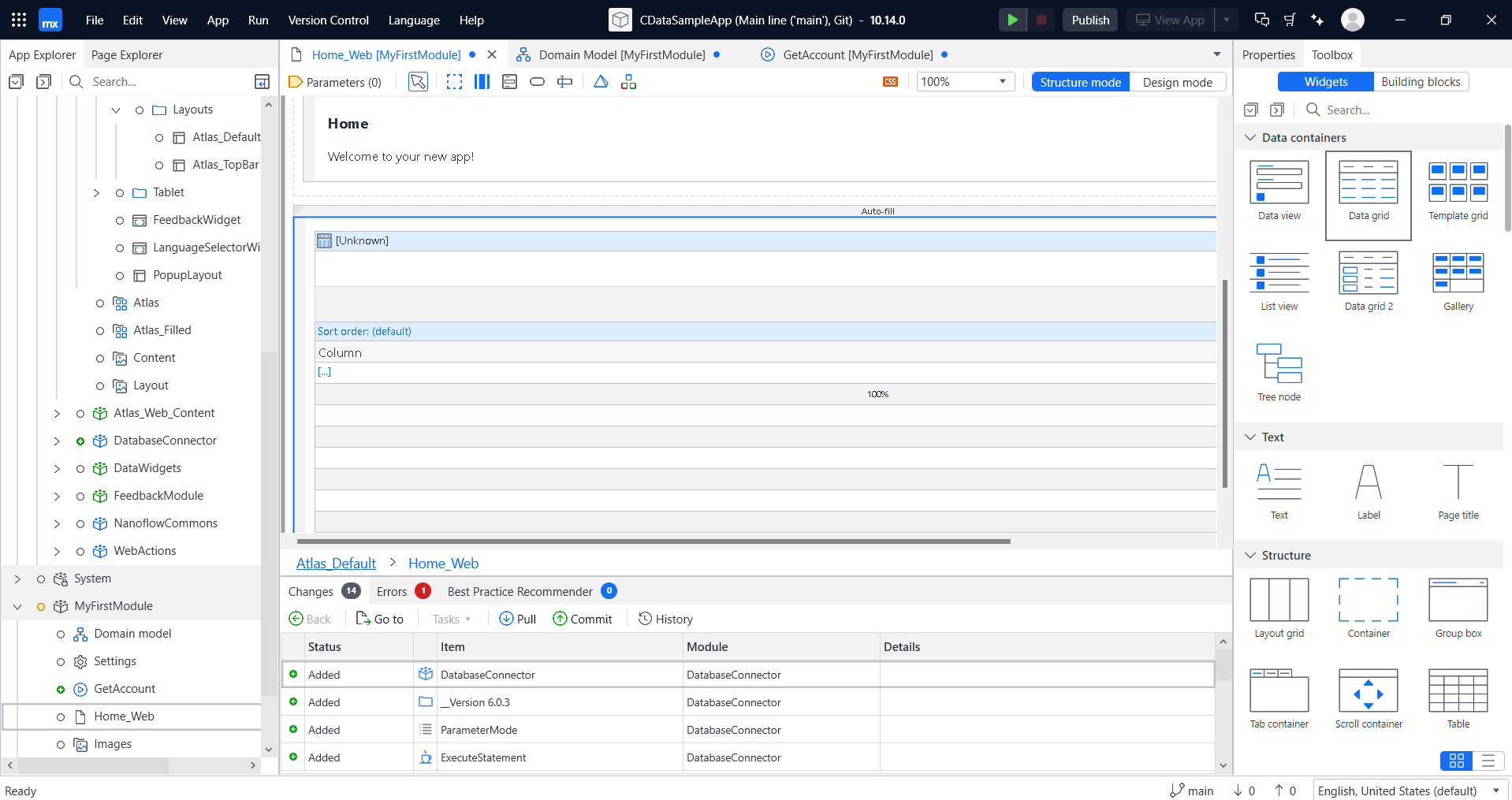
- Once you have placed the Data grid, double-click on it to display the Edit Data Grid settings screen.
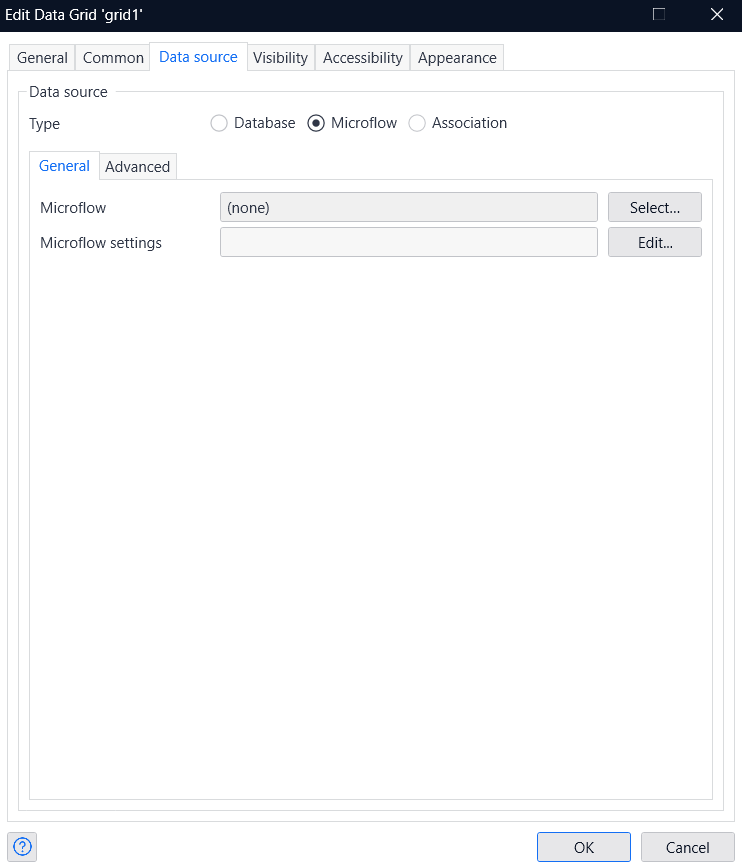
- Navigate to the Data source tab and link the data source type with the Microflow.
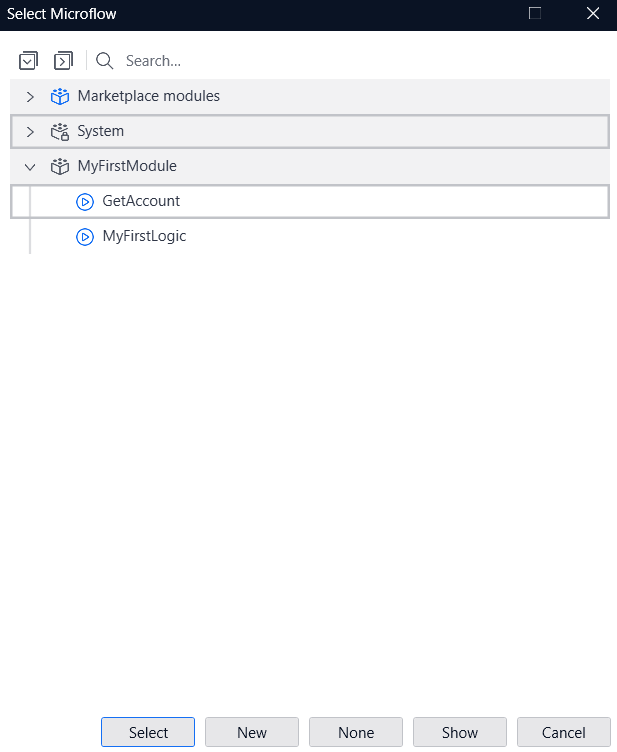
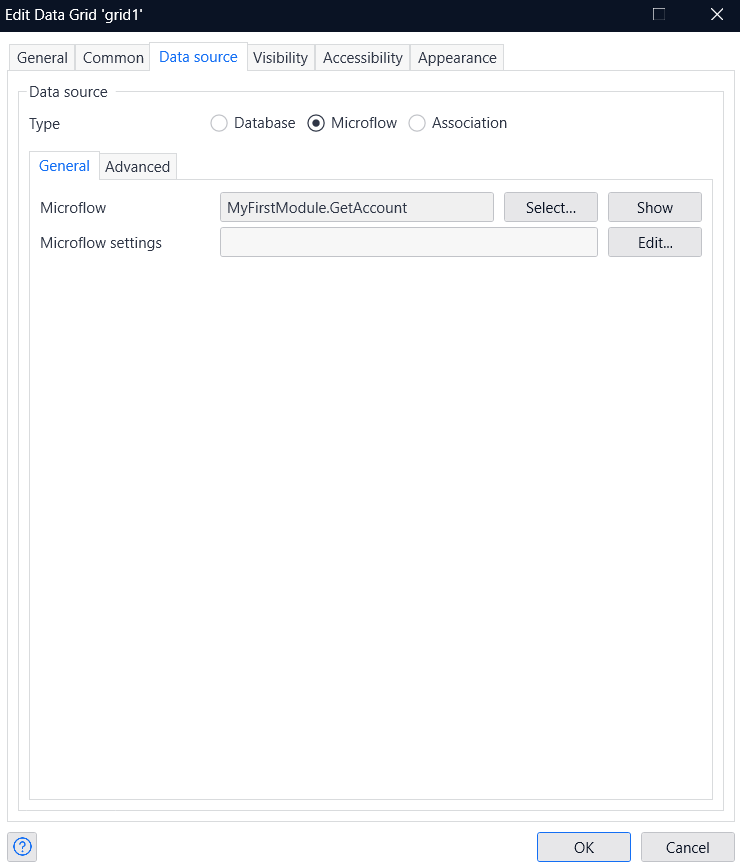
- Select the microflow you just created.
- Now click OK.
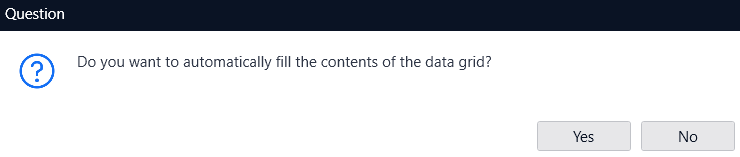
- When you click OK, you'll be prompted to auto-detect columns. Simply click 'Yes' to proceed.
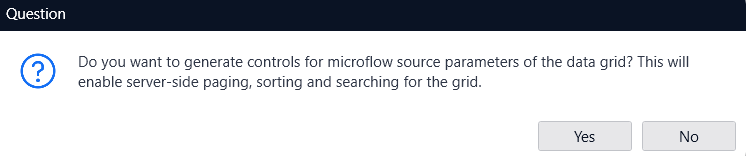
- Next, you'll be prompted to generate controllers for various Data grids. Since we won't be configuring the logic for each one this time, click 'No.'
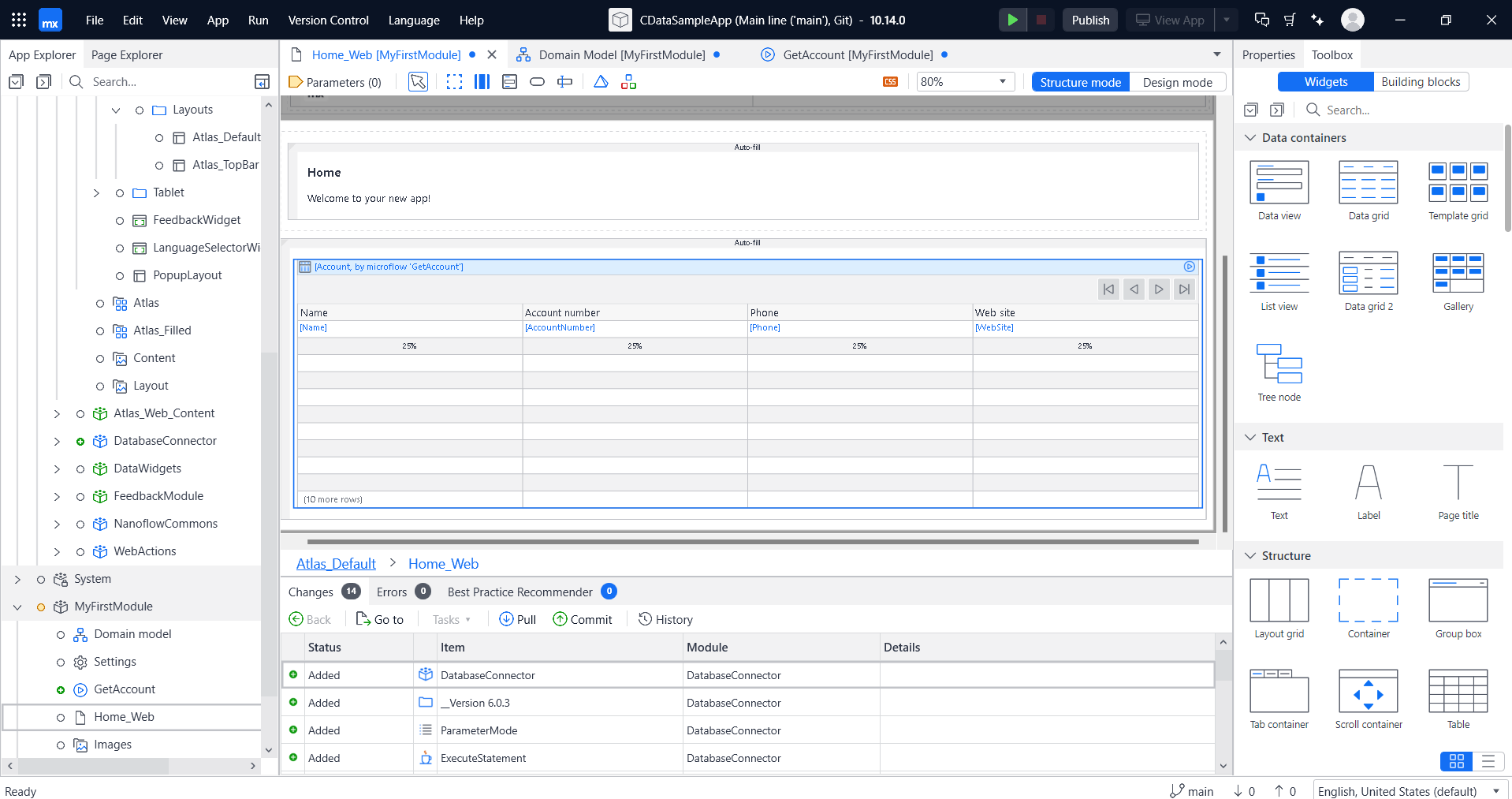
- This will create a simple data grid screen as shown below.
Try it out
Now let's check if it works properly.
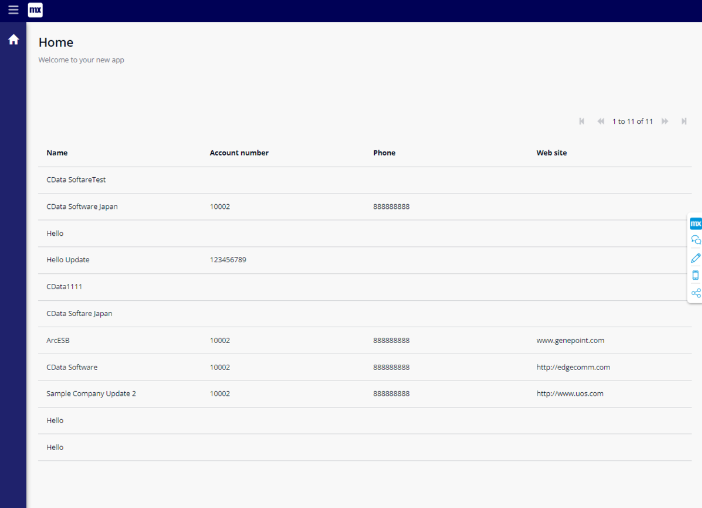
- Click the 'Publish' button to prepare the app you created. Once that's done, click 'View App' to open the app.

- If you see a list of Outlook data like the one below, you're all set! You've successfully created a Outlook-linked app with low code, without needing to worry about Outlook's API.
Get Started Today
Download a free 30-day trial of the CData API Driver for JDBC with Mendix, and effortlessly create an app that connects to Outlook data.
Reach out to our Support Team if you have any questions.