






How to Create Power BI Visual Reports with Real-Time Outlook Data

CData Power BI Connectors provide self-service integration with Microsoft Power BI. The CData API Driver for Power BI links your Power BI reports to real-time Outlook data. You can monitor Outlook data through dashboards and ensure that your analysis reflects Outlook data in real time by scheduling refreshes or refreshing on demand. This article details how to use the Power BI Connector to create real-time visualizations of Outlook data in Microsoft Power BI Desktop.
If you are interested in publishing reports on Outlook data to PowerBI.com, refer to our other Knowledge Base article.
Collaborative Query Processing
The CData Power BI Connectors offer unmatched performance for interacting with live Outlook data in Power BI due to optimized data processing built into the connector. When you issue complex SQL queries from Power BI to Outlook, the connector pushes supported SQL operations, like filters and aggregations, directly to Outlook and utilizes the embedded SQL Engine to process unsupported operations (often SQL functions and JOIN operations) client-side. With built-in dynamic metadata querying, you can visualize and analyze Outlook data using native Power BI data types.
Connect to Outlook as a Power BI Data Source
Installing the Power BI Connector creates a DSN (data source name) called CData Power BI Outlook. This the name of the DSN that Power BI uses to request a connection to the data source. Configure the DSN by filling in the required connection properties.
You can use the Microsoft ODBC Data Source Administrator to create and configure the DSN: From the Start menu, enter "ODBC Data Sources" and select the CData PowerBI REST DSN. Ensure that you run the version of the ODBC Administrator that corresponds to the bitness of your Power BI Desktop installation (32-bit or 64-bit). You can also use run the ConfigureODBC.exe tool located in the installation folder for the connector.
Using OAuth Authentication
Microsoft Graph API uses OAuth 2.0 for authentication. You must register an application in the Microsoft Azure Portal to obtain OAuth credentials (Client ID and Client Secret).
Obtaining OAuth Credentials
- Log in to the Azure Portal.
- Navigate to Azure Active Directory > App registrations.
- Click New registration to create a new application.
- Enter an application name and select the appropriate account types.
- Set the Redirect URI to your application's callback URL (e.g., http://localhost:33333 for desktop apps).
- Click Register to create the application.
- On the application overview page, copy the Application (client) ID - this is your OAuthClientId.
- Navigate to Certificates & secrets and create a new client secret.
- Copy the client secret value - this is your OAuthClientSecret.
- Navigate to API permissions and add the required Microsoft Graph API permissions:
- Mail.Read - For accessing email messages
- Contacts.Read - For accessing contacts
- Calendars.Read - For accessing calendar events
- Tasks.Read - For accessing To Do tasks
- offline_access - For obtaining refresh tokens
- Click Grant admin consent to grant these permissions.
Connecting with OAuth
After setting the following connection properties, you are ready to connect:
- AuthScheme: Set this to OAuth.
- InitiateOAuth: Set this to GETANDREFRESH. The CData API Profile for Outlook will automatically walk through the OAuth process in order to obtain the access token.
- OAuthClientId: Set this to the Application (client) ID from Azure Portal.
- OAuthClientSecret: Set this to the client secret value from Azure Portal.
- TenantId: Set this to your Azure AD tenant identifier (GUID or domain name like 'contoso.onmicrosoft.com').
- CallbackURL: Set this to the Redirect URI you specified in your app registration (e.g., http://localhost:33333 for desktop apps).
Example connection string
Profile=C:\profiles\Outlook.apip;AuthScheme=OAuth;InitiateOAuth=GETANDREFRESH;OAuthClientId=your_client_id;OAuthClientSecret=your_client_secret;TenantId=your_tenant_id;CallbackUrl=http://localhost:33333;
How to Query Outlook Tables
Follow the steps below to build a query to pull Outlook data into the report:
- Open Power BI Desktop and click Get Data -> Other -> CData API.
- Select CData PowerBI Outlook in the Data Source Name menu and select a data connectivity mode:
Select Import if you want to import a copy of the data into your project. You can refresh this data on demand.
Select DirectQuery if you want to work with the remote data. - Select tables in the Navigator dialog.
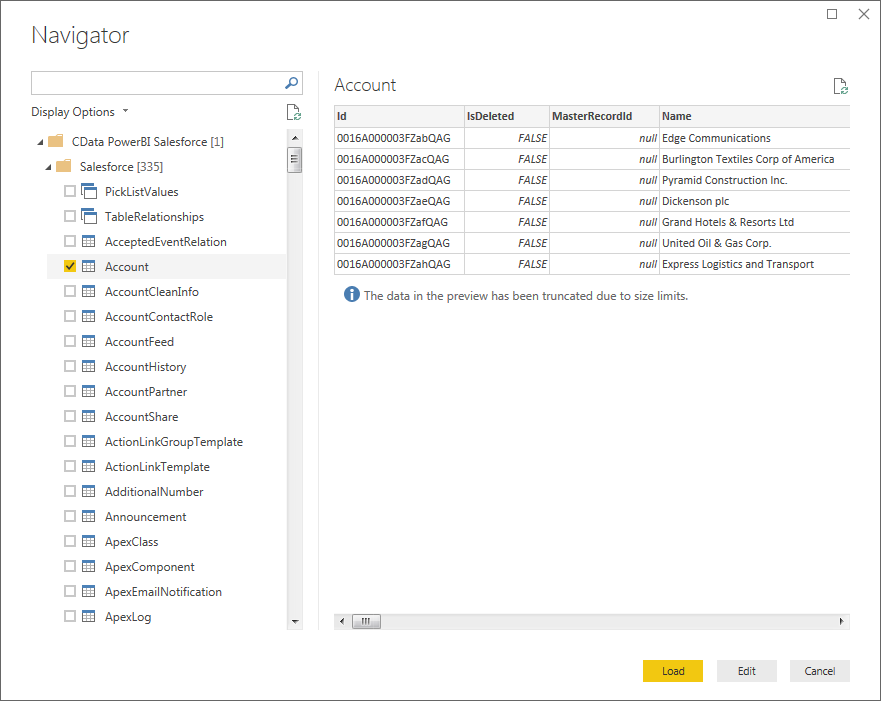
In the Query Editor, you can customize your dataset by filtering, sorting, and summarizing Outlook columns. Click Edit to open the query editor. Right-click a row to filter the rows. Right-click a column header to perform actions like the following:
- Change column data types
- Remove a column
- Group by columns
Power BI detects each column's data type from the Outlook metadata retrieved by the connector.
Power BI records your modifications to the query in the Applied Steps section, adjusting the underlying data retrieval query that is executed to the remote Outlook data. When you click Close and Apply, Power BI executes the data retrieval query.
Otherwise, click Load to pull the data into Power BI.
How to Create Data Visualizations in Power BI
After pulling the data into Power BI, you can create data visualizations in the Report view by dragging fields from the Fields pane onto the canvas. Follow the steps below to create a pie chart:
- Select the pie chart icon in the Visualizations pane.
- Select a dimension in the Fields pane: for example, .
- Select a measure in the Fields pane: for example, .
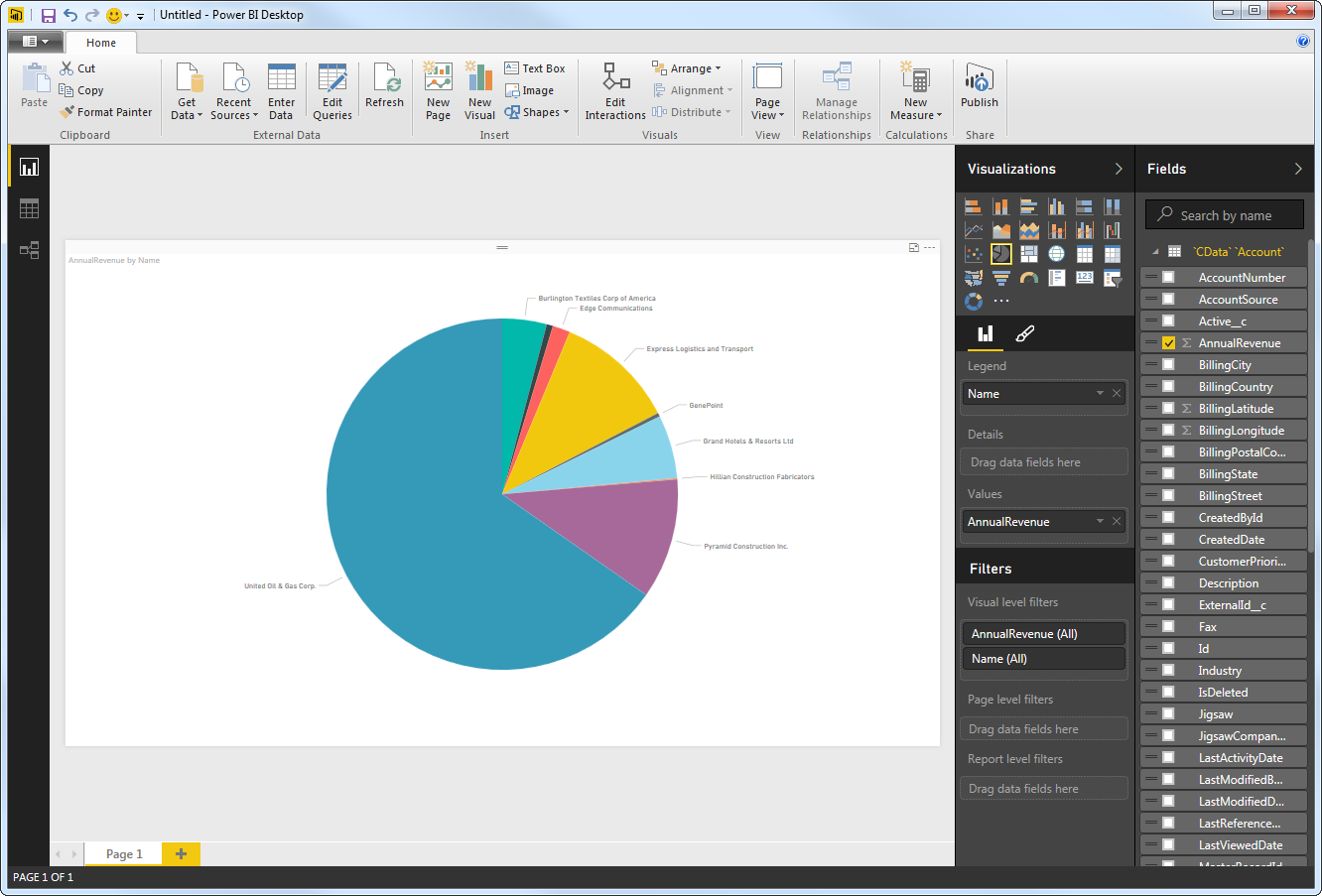
You can change sort options by clicking the ellipsis (...) button for the chart. Options to select the sort column and change the sort order are displayed.
You can use both highlighting and filtering to focus on data. Filtering removes unfocused data from visualizations; highlighting dims unfocused data. You can highlight fields by clicking them:
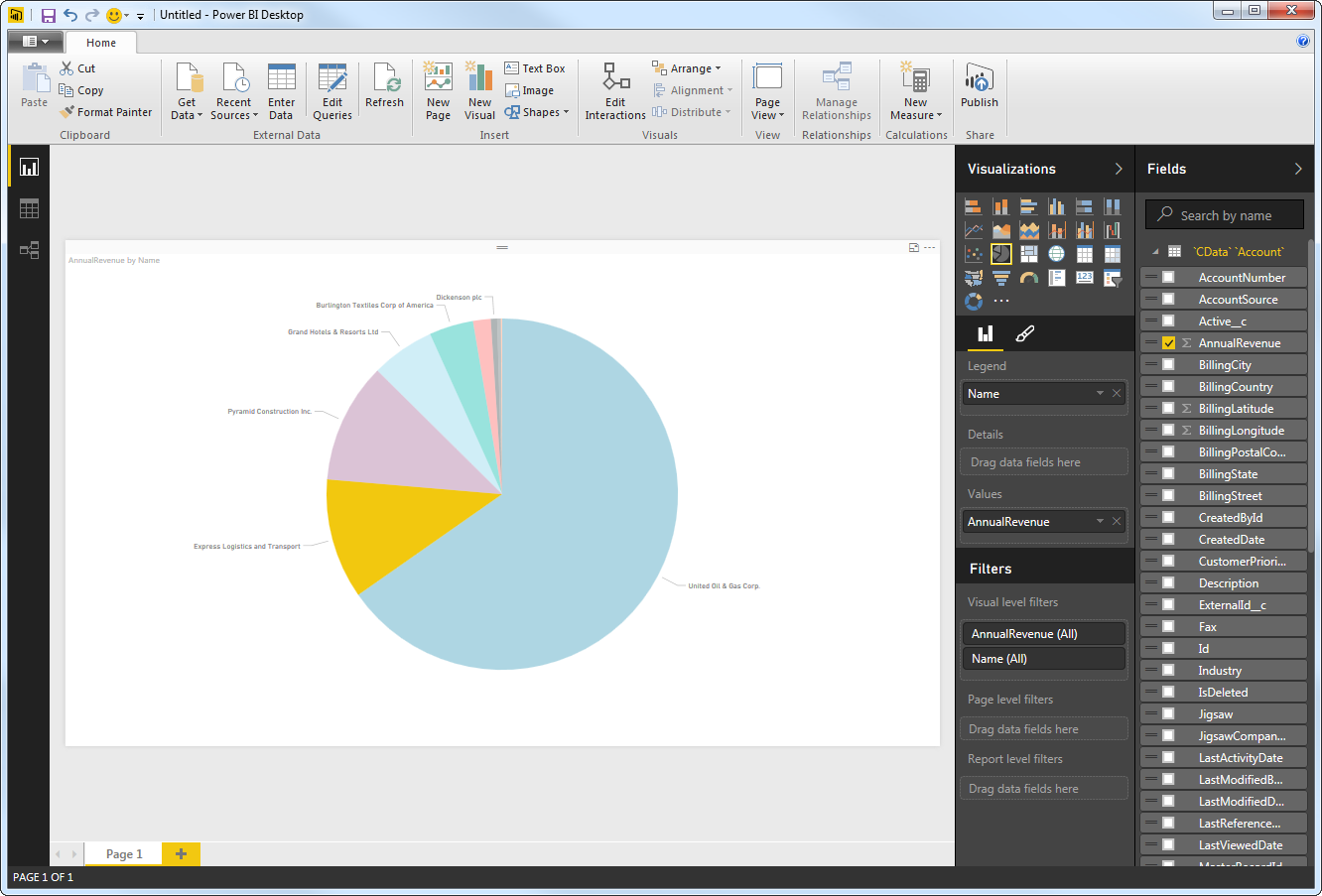
You can apply filters at the page level, at the report level, or to a single visualization by dragging fields onto the Filters pane. To filter on the field's value, select one of the values that are displayed in the Filters pane.
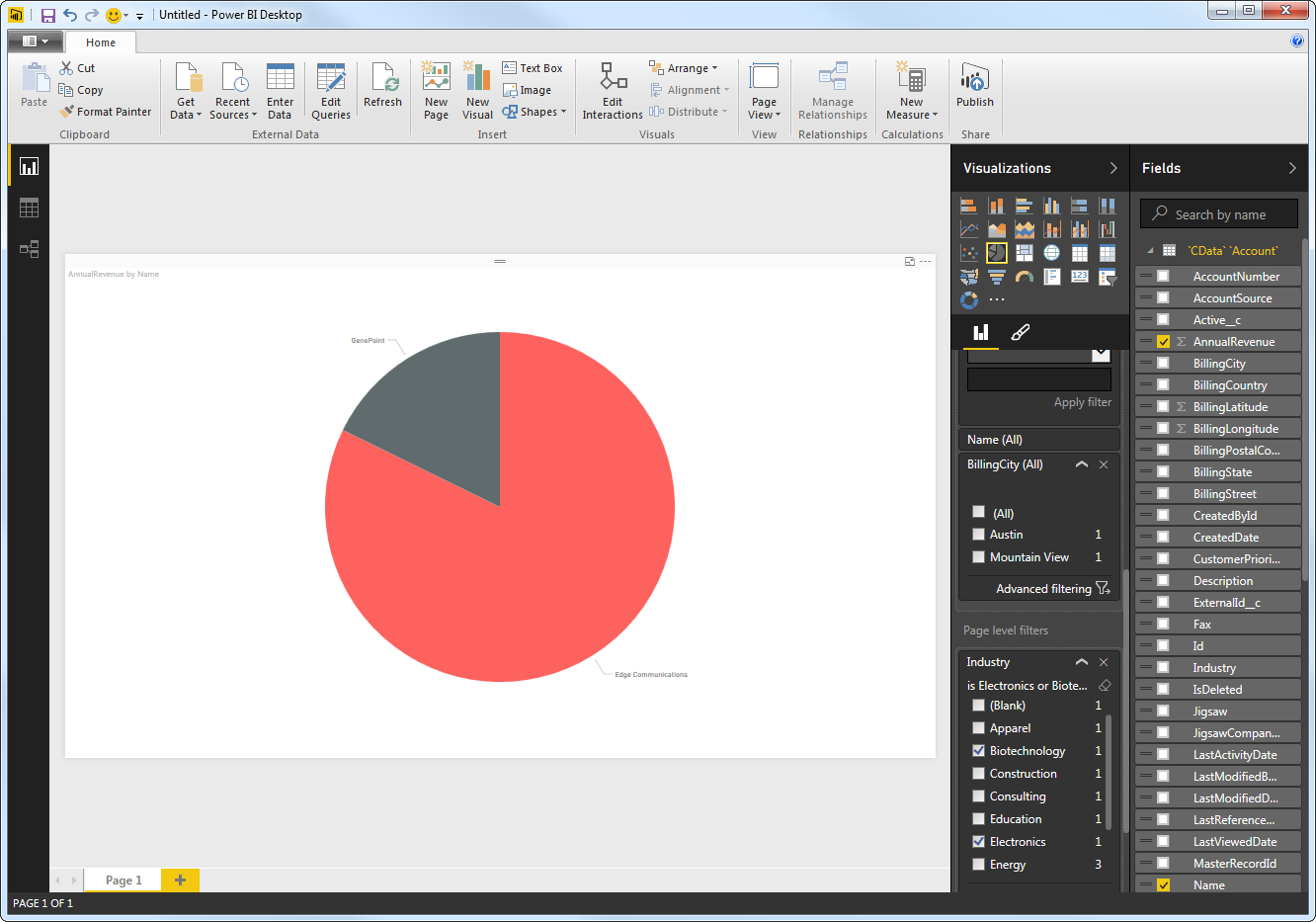
Click Refresh to synchronize your report with any changes to the data.
At this point, you will have a Power BI report built on top of live Outlook data. Learn more about the CData Power BI Connectors for Outlook and download a free trial from the CData API Driver for Power BI page. Let our Support Team know if you have any questions.