






Integrate LibreChat with Live Paylocity Data via CData Connect AI

LibreChat is an open-source, self-hosted AI chat platform that brings together multiple LLM providers, agents, and assistants behind a single interface. It also supports the Model Context Protocol (MCP), so you can connect external tools and data sources directly to the chat and pull in live data from the systems you already work with.
By integrating LibreChat with CData Connect AI through the built-in MCP Server, LibreChat gains governed, real-time access to live Paylocity data. This enables you to list catalogs, explore schemas, and query records from Paylocity data using natural language prompts, with all data access running securely against authorized sources.
This article explains how to configure Paylocity connectivity in Connect AI, generate the required personal access token, install LibreChat, register the Connect AI MCP Server, configure an LLM provider, and verify the integration by querying live Paylocity data from the LibreChat interface.
Step 1: Configure Paylocity connectivity for LibreChat
Connectivity to Paylocity from LibreChat is made possible through Connect AI's Remote MCP Server. To interact with Paylocity data from LibreChat, start by creating and configuring a Paylocity connection in Connect AI.
- Log into Connect AI, click Sources, and then click Add Connection
- Select Paylocity from the Add Connection panel
-
Enter the necessary authentication properties to connect to Paylocity.
Set the following to establish a connection to Paylocity:
- RSAPublicKey: Set this to the RSA Key associated with your Paylocity, if the RSA Encryption is enabled in the Paylocity account.
This property is required for executing Insert and Update statements, and it is not required if the feature is disabled.
- UseSandbox: Set to true if you are using sandbox account.
- CustomFieldsCategory: Set this to the Customfields category. This is required when IncludeCustomFields is set to true. The default value for this property is PayrollAndHR.
- Key: The AES symmetric key(base 64 encoded) encrypted with the Paylocity Public Key. It is the key used to encrypt the content.
Paylocity will decrypt the AES key using RSA decryption.
It is an optional property if the IV value not provided, The driver will generate a key internally. - IV: The AES IV (base 64 encoded) used when encrypting the content. It is an optional property if the Key value not provided, The driver will generate an IV internally.
Connect Using OAuth Authentication
You must use OAuth to authenticate with Paylocity. OAuth requires the authenticating user to interact with Paylocity using the browser. For more information, refer to the OAuth section in the Help documentation.
The Pay Entry API
The Pay Entry API is completely separate from the rest of the Paylocity API. It uses a separate Client ID and Secret, and must be explicitly requested from Paylocity for access to be granted for an account. The Pay Entry API allows you to automatically submit payroll information for individual employees, and little else. Due to the extremely limited nature of what is offered by the Pay Entry API, we have elected not to give it a separate schema, but it may be enabled via the UsePayEntryAPI connection property.
Please be aware that when setting UsePayEntryAPI to true, you may only use the CreatePayEntryImportBatch & MergePayEntryImportBatchgtable stored procedures, the InputTimeEntry table, and the OAuth stored procedures. Attempts to use other features of the product will result in an error. You must also store your OAuthAccessToken separately, which often means setting a different OAuthSettingsLocation when using this connection property.

- RSAPublicKey: Set this to the RSA Key associated with your Paylocity, if the RSA Encryption is enabled in the Paylocity account.
- Click Save & Test
- Navigate to the Permissions tab and update user-based permissions



Add a Personal Access Token
A Personal Access Token (PAT) is used to authenticate the connection to Connect AI from LibreChat. It is best practice to create a separate PAT for each integration to maintain granular access control.
- Click the gear icon () at the top right of the Connect AI app to open Settings
- On the Settings page, go to the Access Tokens section and click Create PAT
- Give the PAT a descriptive name and click Create
- Copy the token when displayed and store it securely. It will not be shown again

With the Paylocity connection configured and a PAT generated, LibreChat can now connect to Paylocity data through Connect AI.
Step 2: Install LibreChat and configure Connect AI MCP
Next, install LibreChat locally and configure the Connect AI Remote MCP Server so that the chat interface can discover and call live data tools through Connect AI.
- Install LibreChat by following the official installation guide. If you are using the npm setup, make sure MongoDB and MeiliSearch are installed and running locally
-
Once the installation is complete, start LibreChat and open http://localhost:3080/ in your browser to access the chat interface
-
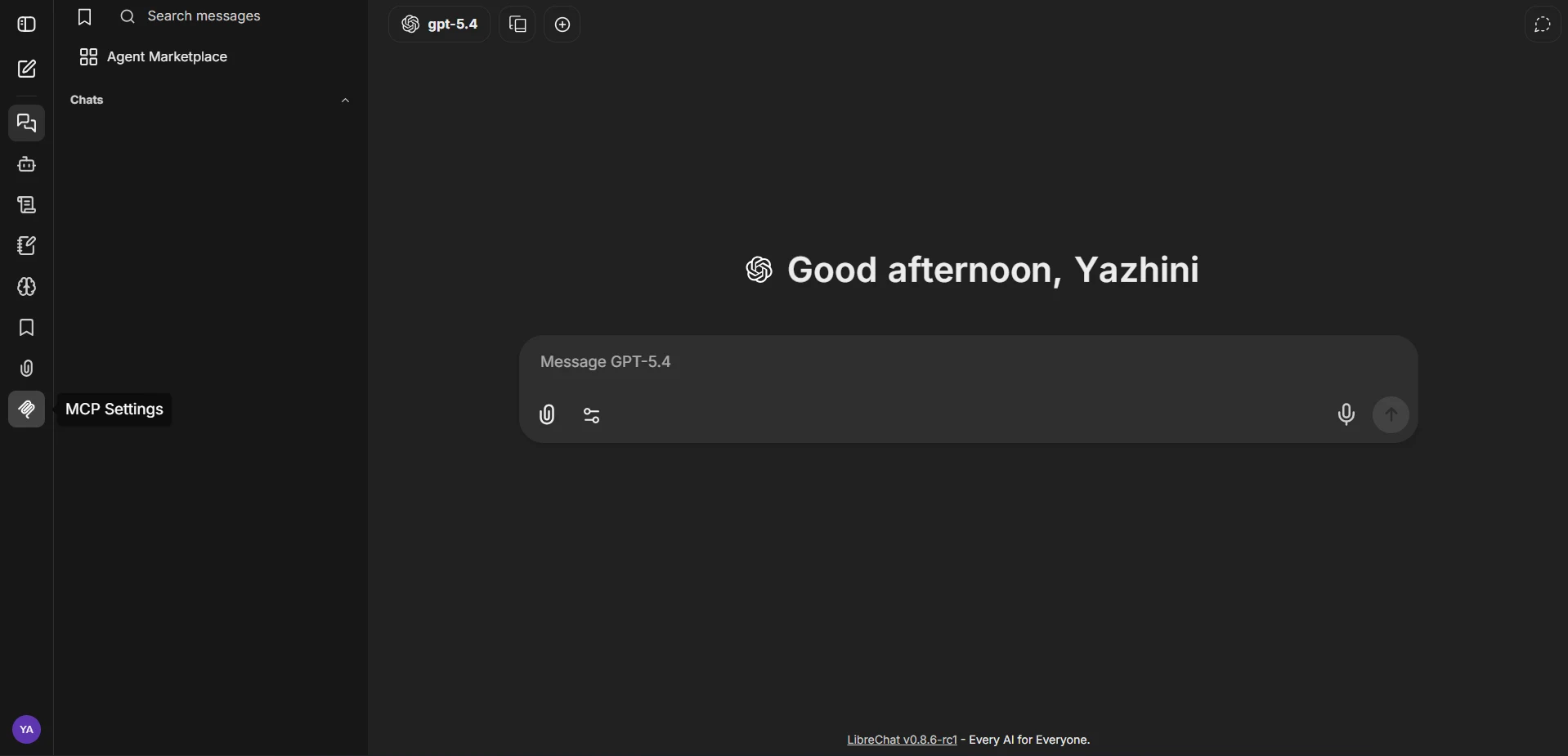
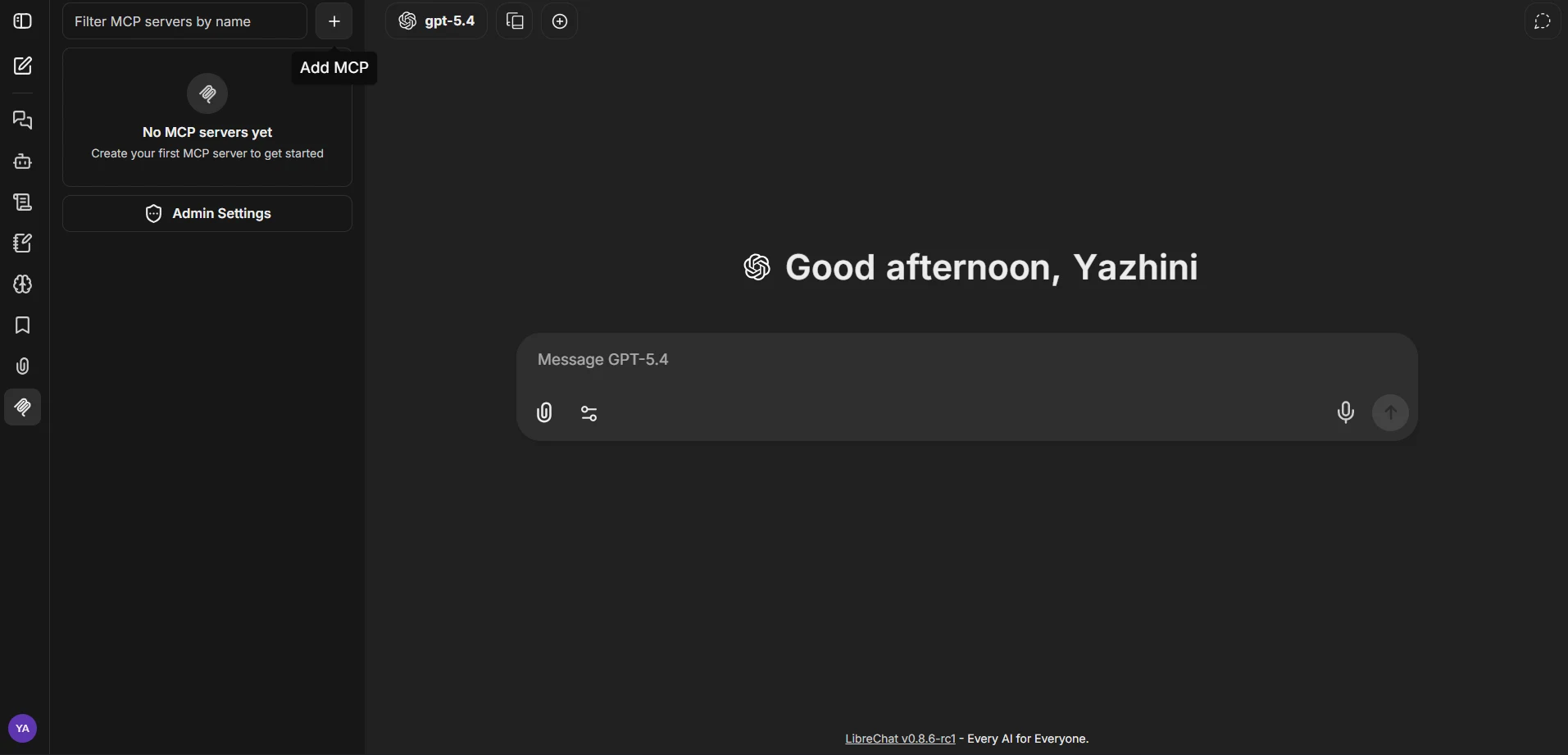
In the left navigation bar, click the MCP Settings icon, then click Add MCP
-
In the Add MCP panel, configure the server with the following values:
- Name: CData MCP, or any name of your choice
- Description: Optional description for the server
- MCP Server URL: https://mcp.cloud.cdata.com/mcp
- Transport: Streamable HTTPS
- Authentication: API Key
- Header Format: Basic
- API Key: base64-encoded value of email:PAT
Note: LibreChat will use Basic authentication with Connect AI. Combine your Connect AI user email and the PAT you created earlier in the format email:PAT, then base64 encode the combined string and paste it in the API Key field. For example, [email protected]:ABC123...XYZ789 base64-encoded becomes something like: dXNlckBkb21haW4uY29tOkFCQzEyMy4uLlhZWjc4OQ==
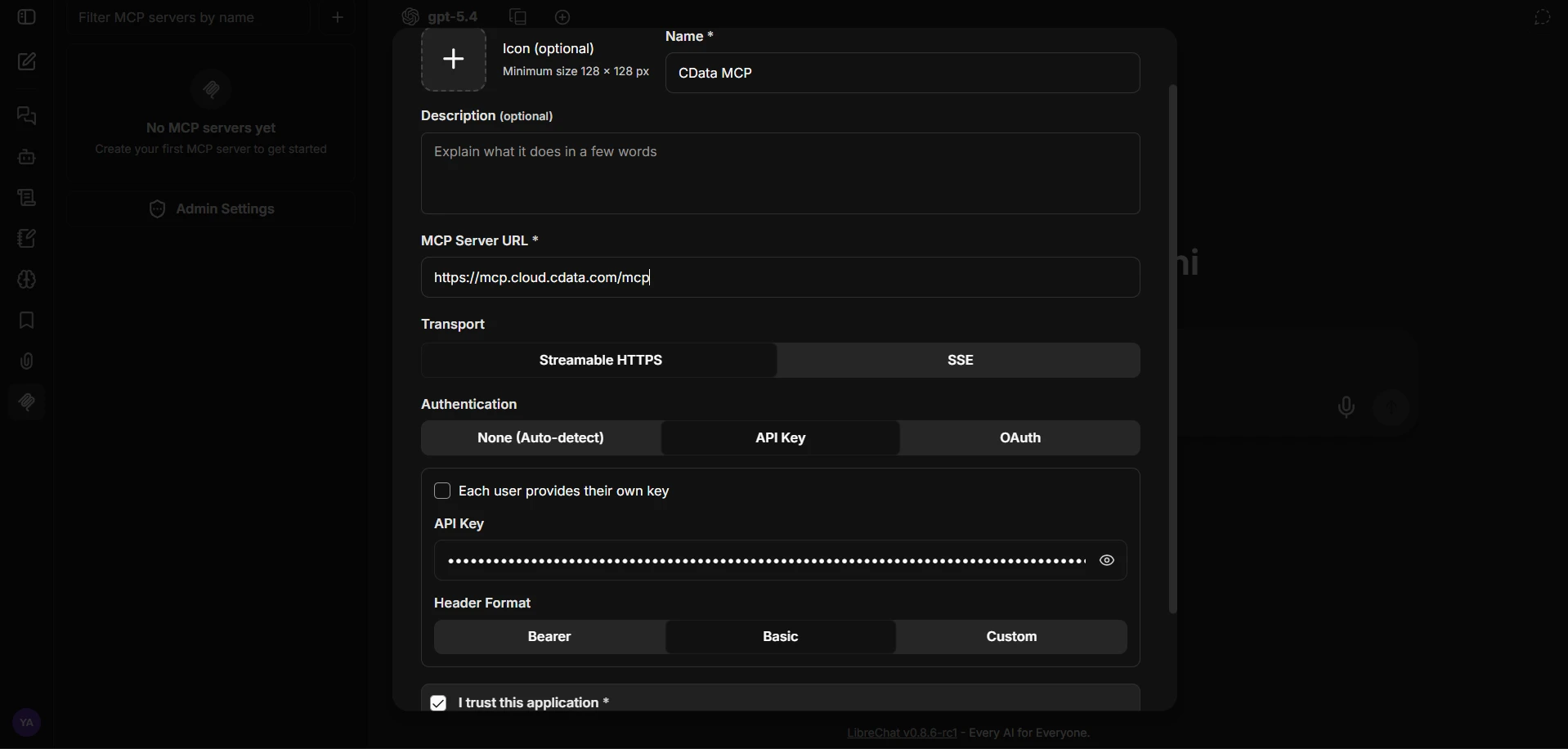
- Check I trust this application and click Add to save the server
-
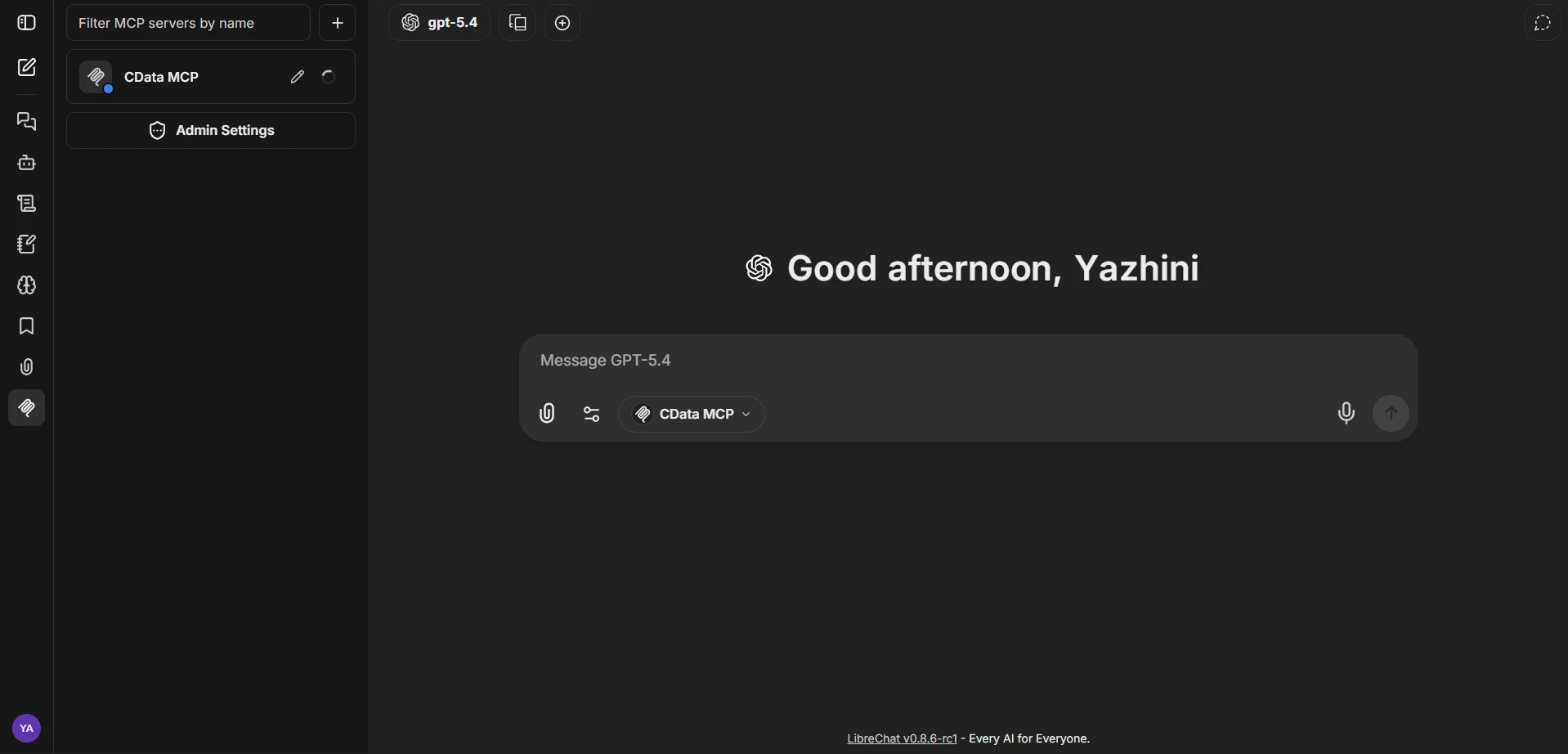
The CData MCP server now appears in the left navigation bar. Click the connect icon next to it to establish the connection to Connect AI
Enable the MCP server and configure an LLM provider
LibreChat requires at least one LLM provider to power the chat. Enable the MCP server in the chat input and add an API key for your preferred provider so the model can interpret prompts and call MCP tools through Connect AI.
-
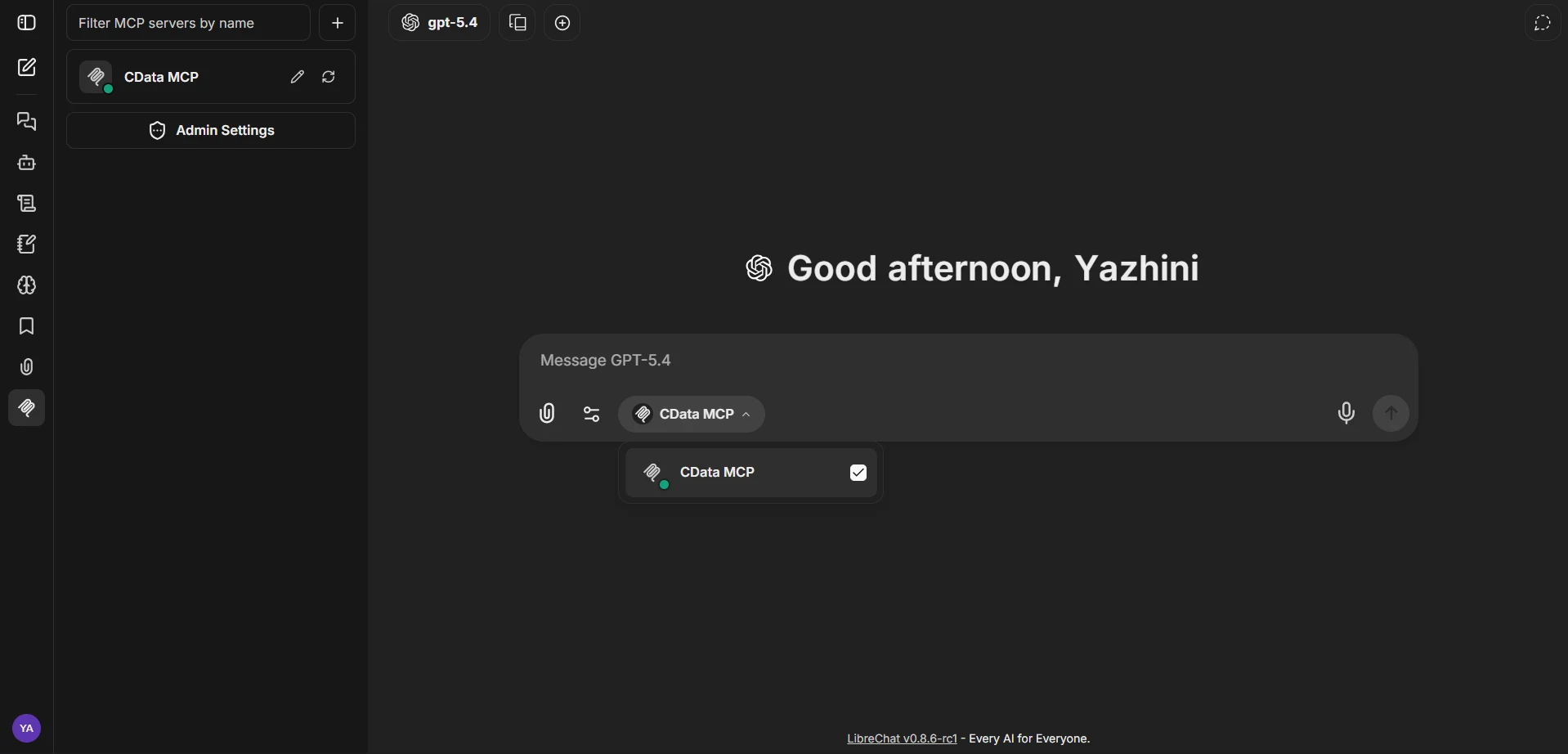
In the chat interface, click the MCP selector at the bottom of the input box and confirm that CData MCP is checked so the tools are exposed to the chat
-
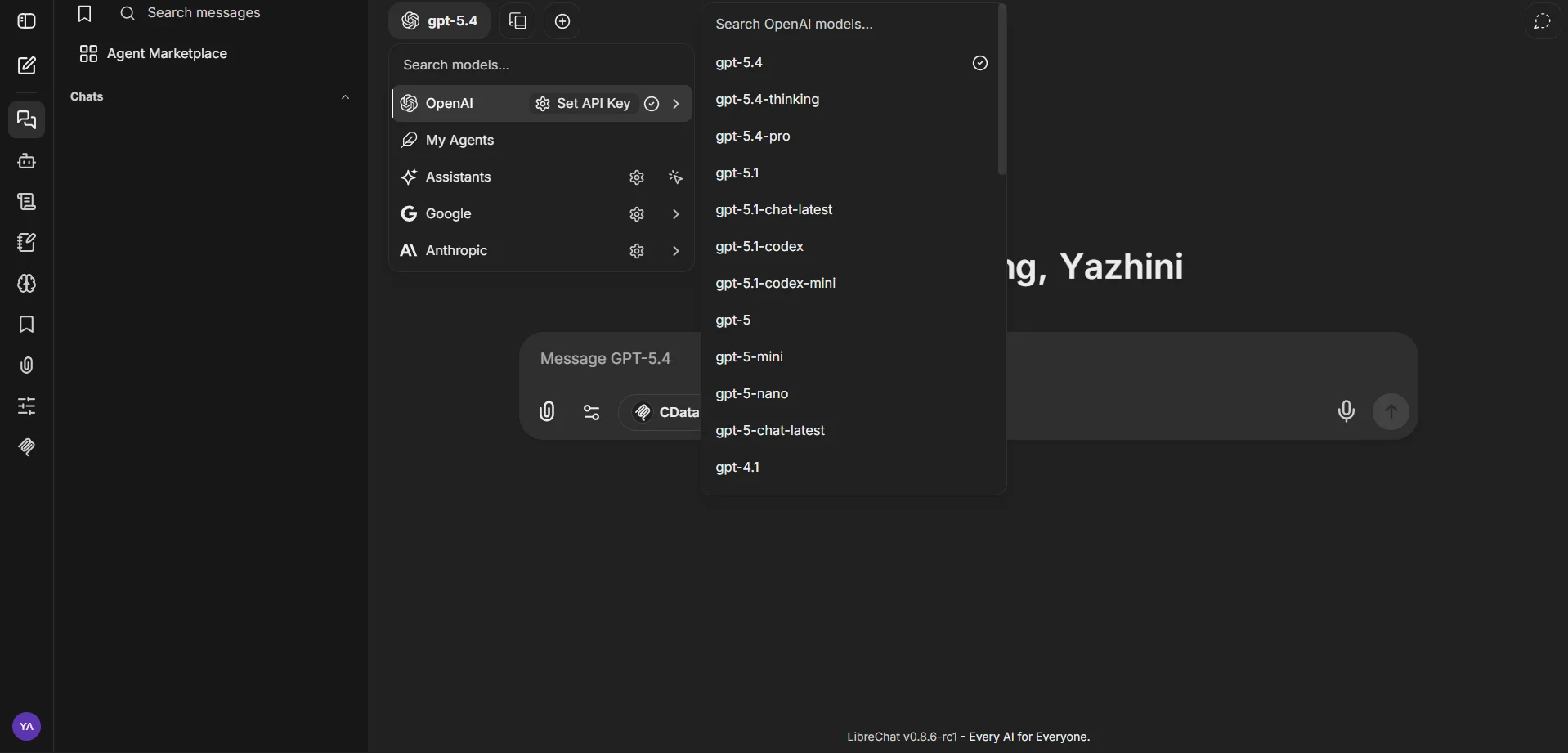
At the top of the chat, click the model selector and choose your preferred LLM provider (e.g., OpenAI, Anthropic, Google) and model
-
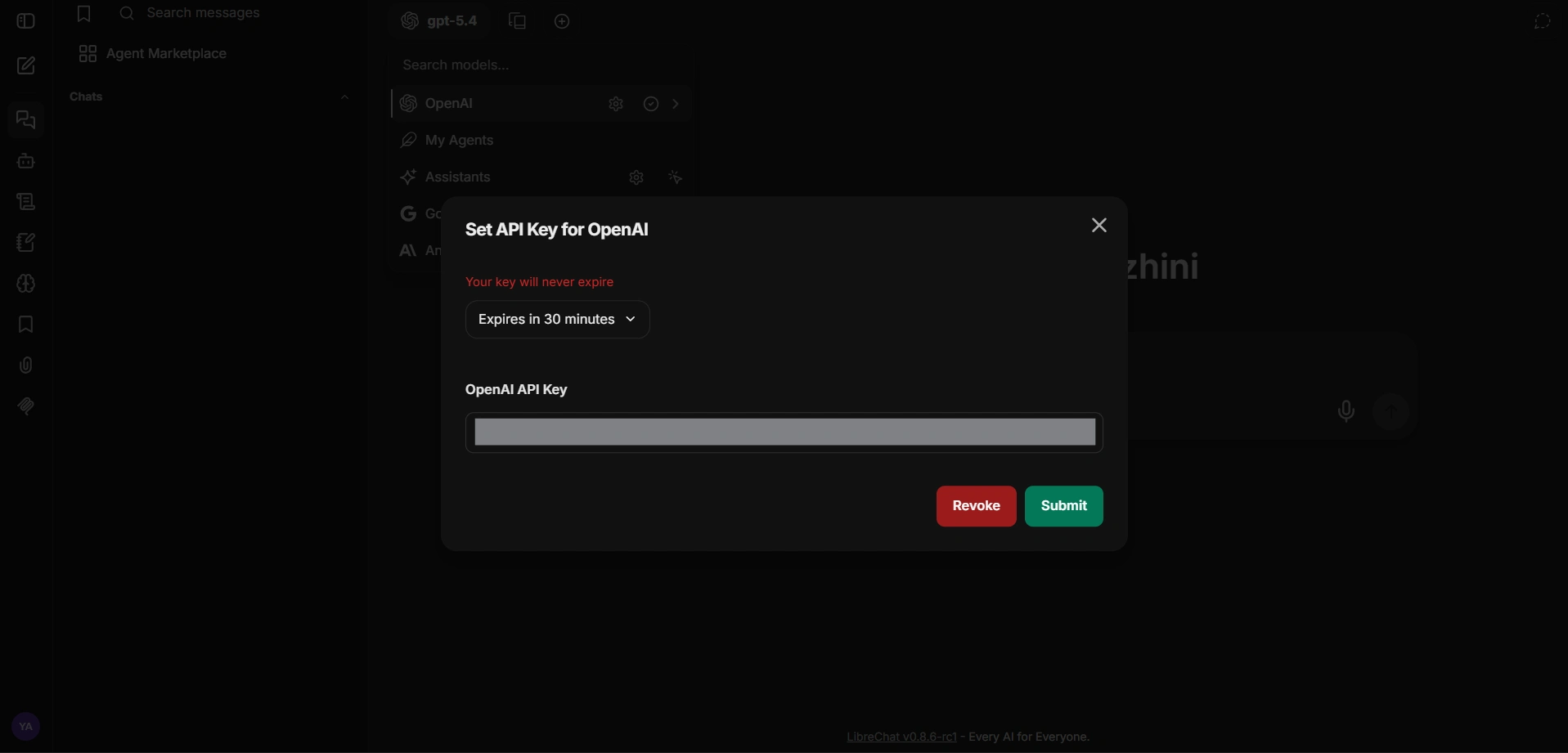
Click Set API Key next to the chosen provider, paste your provider API key, and click Submit
With the MCP server and an LLM provider configured, LibreChat is ready to query live Paylocity data through Connect AI.
Step 3: Query live Paylocity data from LibreChat
With the integration complete, use the LibreChat chat input to interact with live Paylocity data through natural language prompts handled by the configured LLM.
-
With the CData MCP server enabled and a model selected, type a prompt in the chat input, for example:
- List all catalogs in my cdata mcp
- Show the available schemas and tables for Paylocity
- Query the top 5 records from a table in Paylocity data
-
LibreChat calls the Connect AI MCP Server and returns live results from Paylocity data
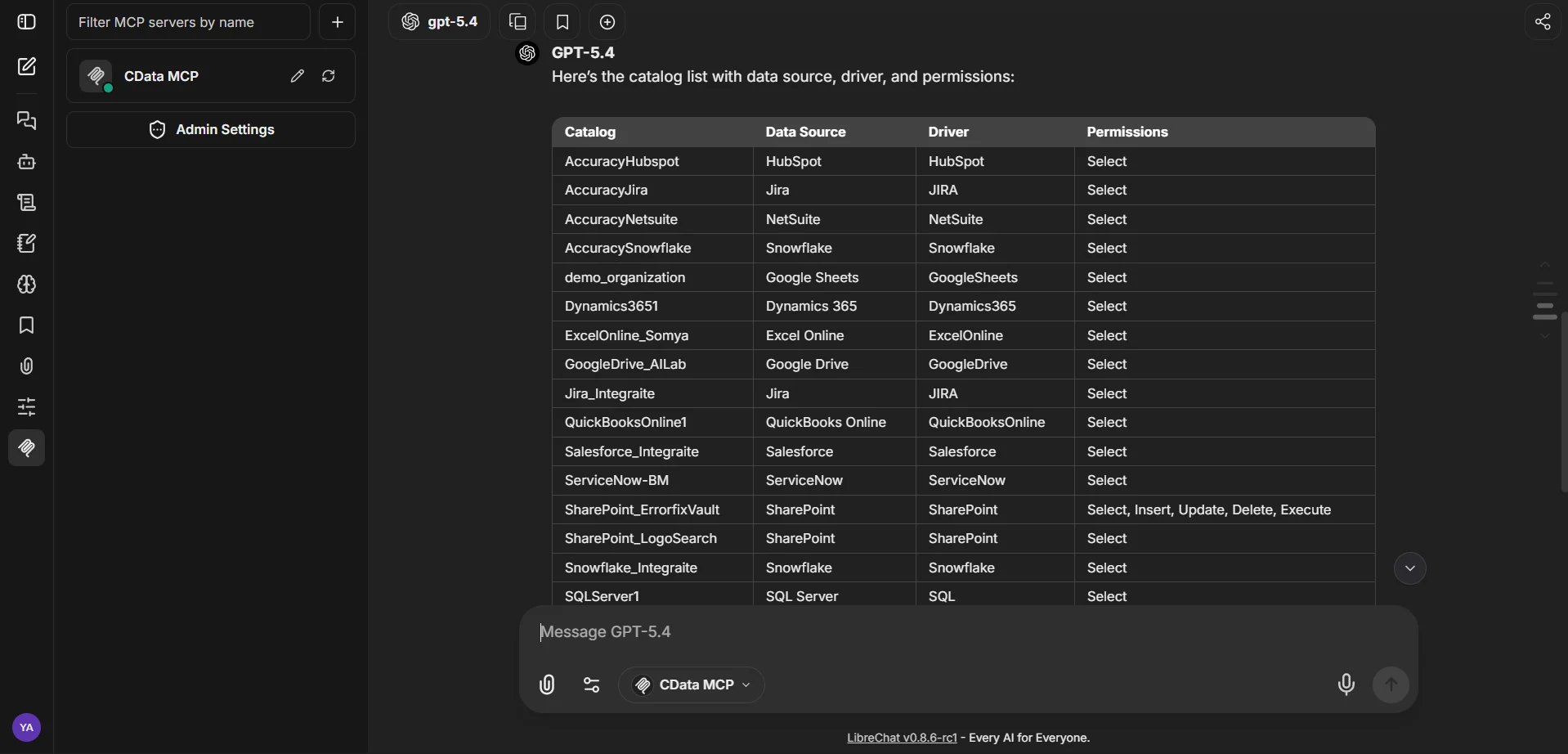
At this point, your LibreChat instance communicates with the Connect AI MCP Server and retrieves live Paylocity data through remote MCP tools directly from the chat interface.
Get CData Connect AI
To access hundreds of SaaS, Big Data, and NoSQL sources directly from your cloud applications, try CData Connect AI today! Download a free 14-day trial, and as always, our world-class Support Team is available to assist you with any questions you may have.