






Connect to PDFMonkey Data from Blazor Apps

Blazor is a framework for developing modern, client-side web UIs using .NET technology. Instead of coding in JavaScript, developers can use the familiar C# language and .NET libraries to build app UIs.
The CData API Driver for ADO.NET can be used with standard ADO.NET interfaces, such as LINQ and Entity Framework, to interact with live PDFMonkey data. Since Blazor supports .NET Core, developers can use CData ADO.NET Providers in Blazor apps. In this article, we will guide you to build a simple Blazor app that talks to PDFMonkey using standard SQL queries.
Install the CData API Driver for ADO.NET
CData ADO.NET Providers allow users to access PDFMonkey just like they would access SQL Server, using simple SQL queries.
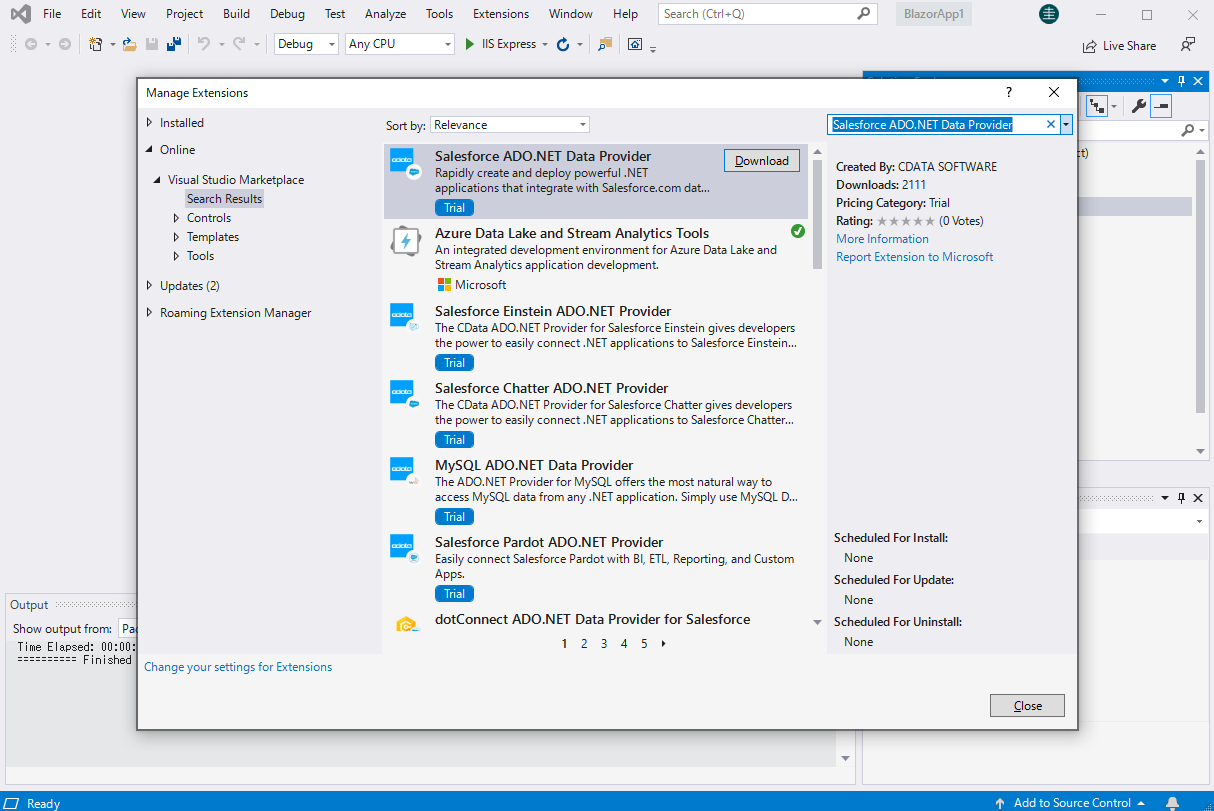
Install the PDFMonkey ADO.NET Data Provider from the CData website or from NuGet. Search NuGet for "PDFMonkey ADO.NET Data Provider."
Create a PDFMonkey-Connected Blazor App
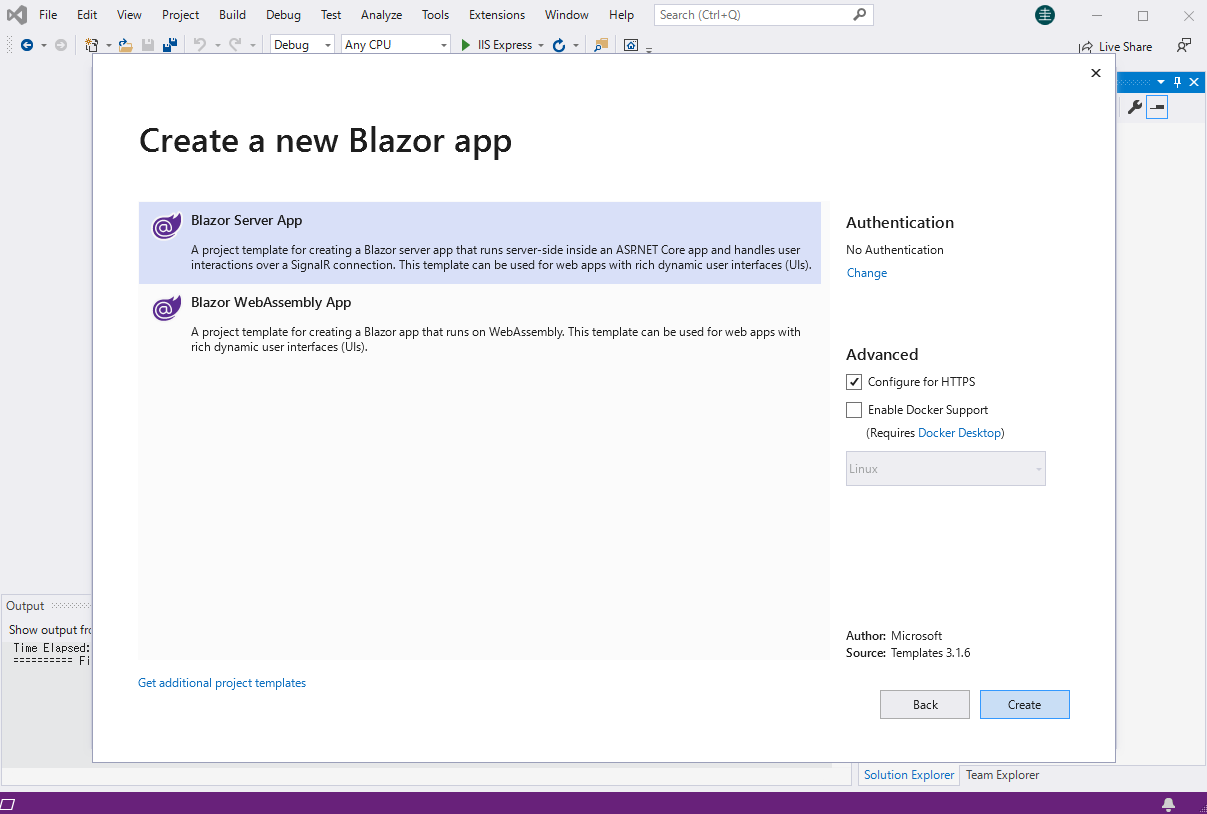
Start by creating a Blazor project that references the CData API Driver for ADO.NET
- Create a Blazor project on Visual Studio.
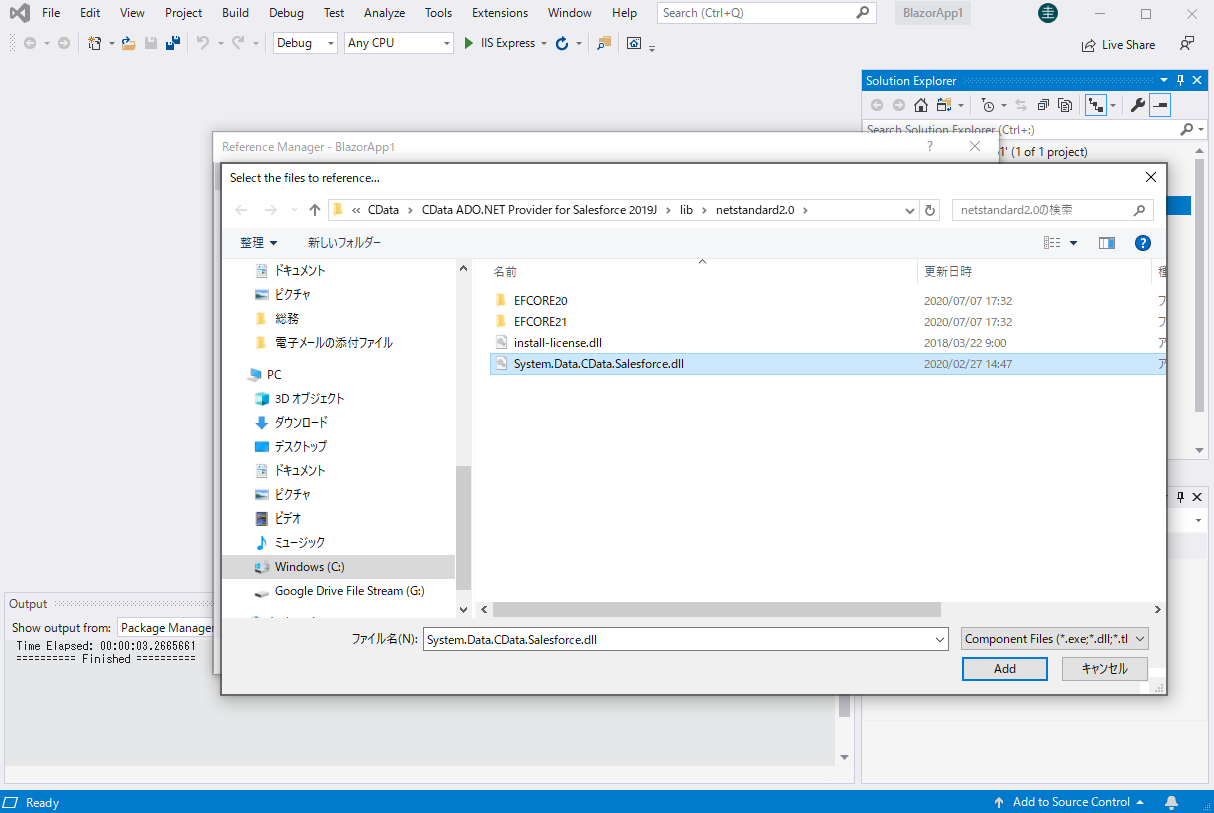
- From the Solution Explorer, right click Dependencies, then click Add Project Reference.
- In the Reference Manager, click the Browse button, and choose the .dll file of the installed ADO.NET Provider (e.g. System.Data.CData.API.dll, typically located at C:\Program Files\CData\CData API Driver for ADO.NET\lib etstandard2.0).
SELECT PDFMonkey Data from the Blazor App
- Open the Index.razor file from the Project page.
- In a APIConnection object, set the connection string:
Using API Key Authentication
PdfMonkey uses API key authentication. To obtain an API key:
- Log in to your PdfMonkey account at https://app.pdfmonkey.io
- Navigate to your account settings
- Open the API Key page
- Copy your API key
After obtaining your API key, set the following connection properties:
- AuthScheme: Set this to APIKey.
- APIKey: Set this to your PdfMonkey API key.
Example Connection String
Profile=C:\profiles\PdfMonkey.apip;AuthScheme=APIKey;ProfileSettings="APIKey=your_api_key"
Connecting to PdfMonkey
Once the authentication is configured, you can connect to PdfMonkey and query data from any of the available tables such as CurrentUser, DocumentCards, Documents, DocumentTemplateCards, and DocumentTemplates.
For example: Profile=C:\profiles\PdfMonkey.apip;AuthScheme=APIKey;ProfileSettings="APIKey=your_api_key"
- The code below creates a simple Blazor app for displaying PDFMonkey data, using standard SQL to query PDFMonkey just like SQL Server.
@page "/" @using System.Data; @using System.Data.CData.API; <h1>Hello, world!</h1> Welcome to your Data app. <div class="row"> <div class="col-12"> @using (APIConnection connection = new APIConnection( "Profile=C:\profiles\PdfMonkey.apip;AuthScheme=APIKey;ProfileSettings="APIKey=your_api_key"")) { var sql = "SELECT , FROM CurrentUser WHERE = ''"; var results = new DataTable(); APIDataAdapter dataAdapter = new APIDataAdapter(sql, connection); dataAdapter.Fill(results); <table class="table table-bordered"> <thead class="thead-light"> <tr> @foreach (DataColumn item in results.Rows[0].Table.Columns) { <th scope="col">@item.ColumnName</th> } </tr> </thead> <tbody> @foreach (DataRow row in results.Rows) { <tr> @foreach (var column in row.ItemArray) { <td>@column.ToString()</td> } </tr> } </tbody> </table> } </div> </div> - Rebuild and run the project. The ADO.NET Provider renders PDFMonkey data as an HTML table in the Blazor app.
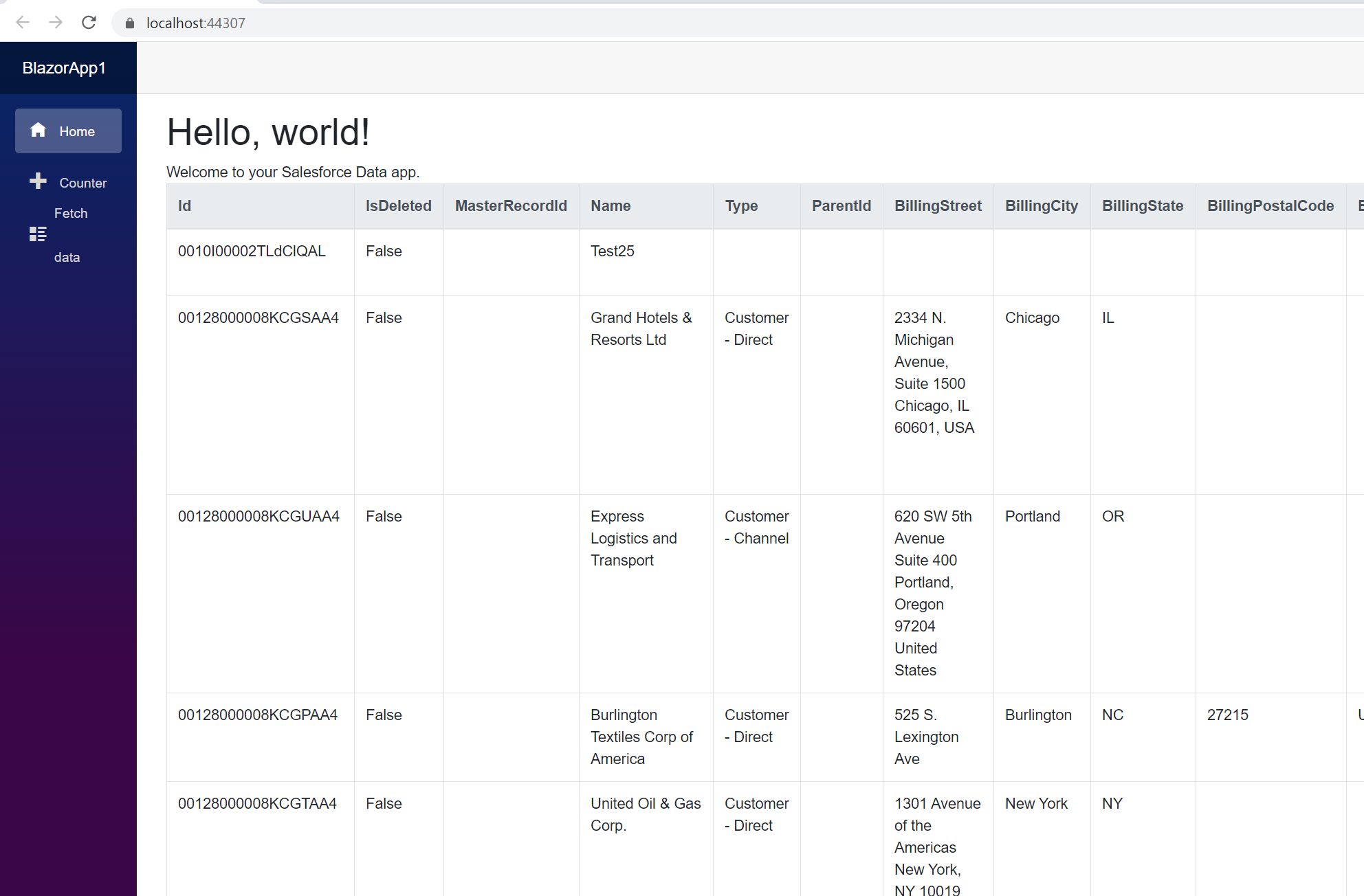
At this point, you have a PDFMonkey-connected Blazor app, capable of working with live PDFMonkey data just like you would work with a SQL Server instance. Download a free, 30-day trial and start working with live PDFMonkey data in your Blazor apps today.