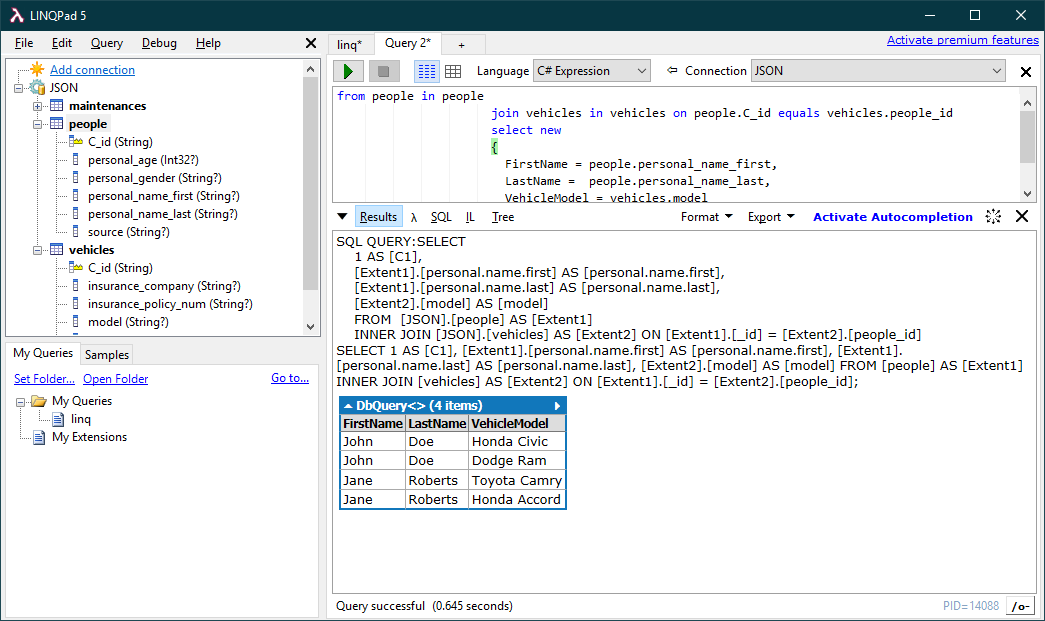
Working with Perigon Data in LINQPad

The CData ADO.NET Provider for Perigon enables you to use standard ADO.NET interfaces like LINQ and the Entity Framework to work with Perigon data. This article will demonstrate the process of establishing a connection from LINQPad and executing LINQ queries.
Create the Data Model
After downloading and installing both the provider and LINQPad, create a new class library project within Visual Studio.
See the help documentation for a guide to setting up an EF 6 project to use the provider.
Right-click your project and click Add -> New Item -> ADO.NET Entity Data Model. In the resulting dialog, select Code First from database. Click New Connection and specify the connection string options in the resulting wizard.
Using API Key Authentication
To use the Perigon API, you need to obtain an API key from your Perigon account. Navigate to the Perigon dashboard and generate an API key from your account settings.
After setting the following connection properties, you are ready to connect:
- AuthScheme: Set this to APIKey.
- APIKey: Set this to your Perigon API key.
Example connection string:
Profile=C:\profiles\Perigon.apip;AuthScheme=APIKey;ProfileSettings="APIKey=your_api_key"
Available Tables
The Perigon profile provides access to the following tables:
- Articles - News articles retrieved from the Perigon news intelligence API
- Headlines - Story clusters grouping related headline articles
- Sources - News sources tracked by the Perigon news intelligence API
- Journalists - Journalist profiles tracked by the Perigon news intelligence API
Below is a typical connection string:
Profile=C:\profiles\Perigon.apip;AuthScheme=APIKey;ProfileSettings="APIKey=your_api_key"
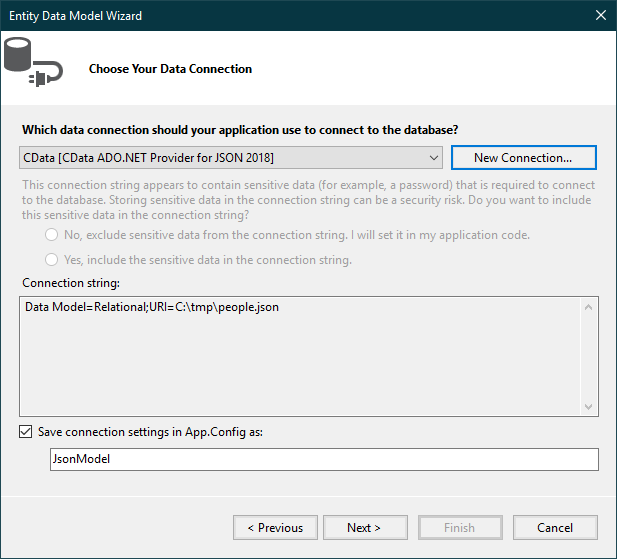
Select the desired tables and views and click Finish to create the data model.
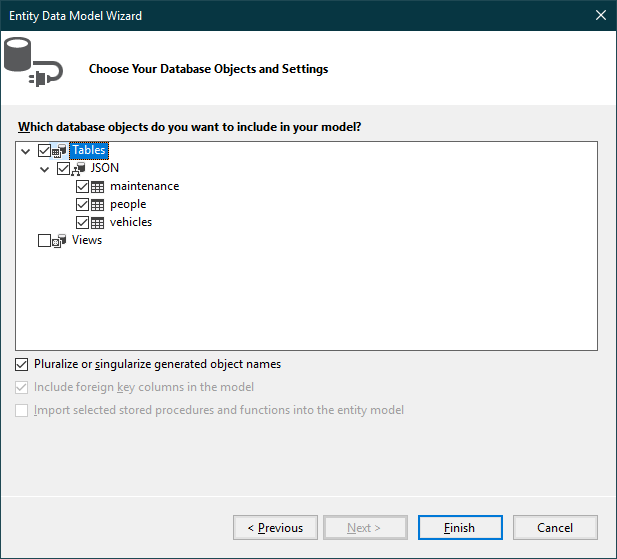
- Build the project. The generated files can be used to create the Perigon connection in LINQPad.
Connect to Perigon Data in LINQPad
After you have obtained the required connection properties and created the data model assembly, follow the steps below to start using the data model in LINQPad.
Open LINQPad and click Add Connection.
Select the "Use a typed data context from your own assembly" option.
Select Entity Framework DbContext.
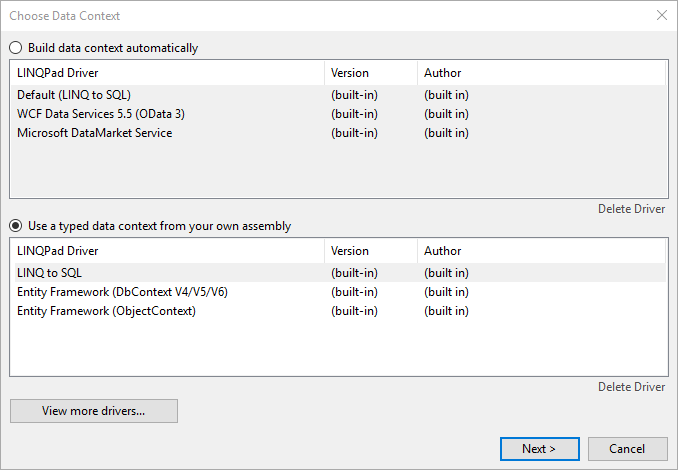
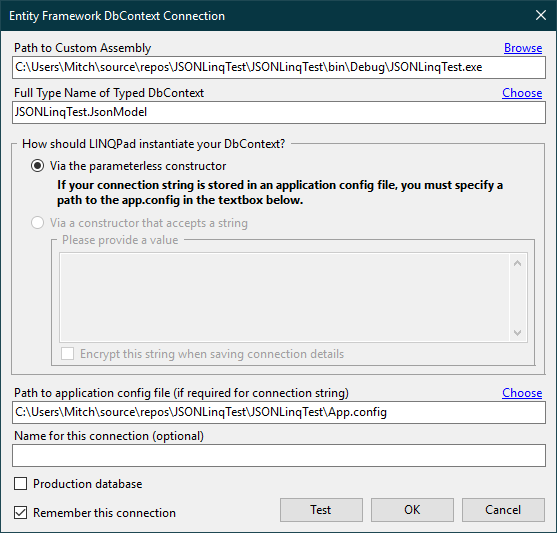
Click Browse next to the Path to Custom Assembly box and browse to your project folder. Browse to the .dll or .exe under the bin folder.
- Select the name of the DbContext.
- If you saved your connection string in App.Config, specify the path to the App.config.
You can now query Perigon data through LINQPad. For examples of the supported LINQ queries, see the "LINQ and Entity Framework" chapter in the help documentation.