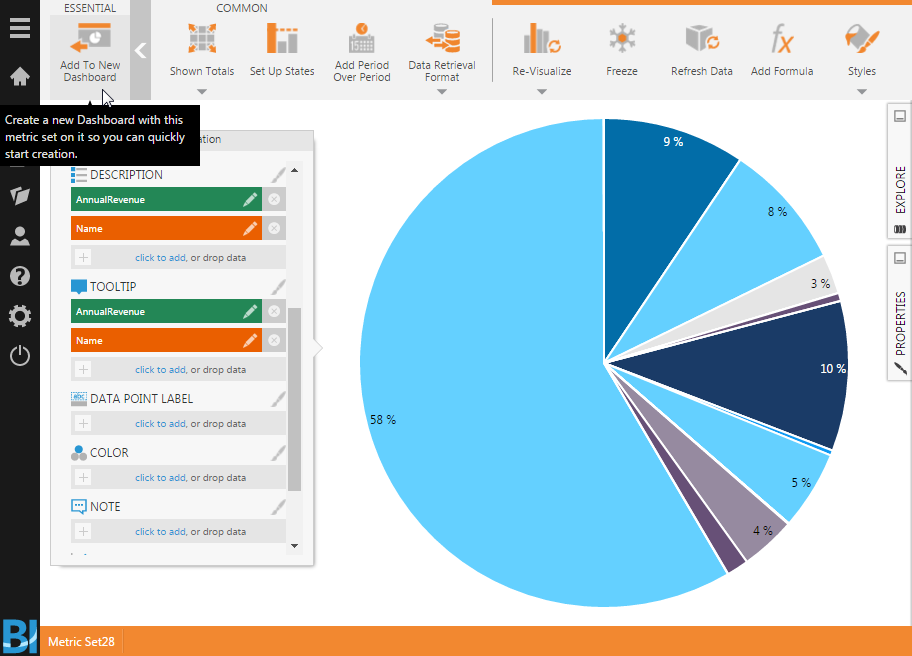
Build Dashboards with PhantomBuster Data in Dundas BI

The CData ODBC Driver for PhantomBuster enables access to live data from PhantomBuster under the ODBC standard, allowing you work with PhantomBuster data in a wide variety of BI, reporting, and ETL tools and directly, using familiar SQL queries. This article shows how to connect to PhantomBuster data as a generic ODBC Data Provider and create charts, reports, and dashboards based on PhantomBuster data in Dundas BI.
Connect to PhantomBuster Data
- If you have not already done so, provide values for the required connection properties in the data source name (DSN). You can configure the DSN using the built-in Microsoft ODBC Data Source Administrator. This is also the last step of the driver installation. See the "Getting Started" chapter in the Help documentation for a guide to using the Microsoft ODBC Data Source Administrator to create and configure a DSN.
Using API Key Authentication
To use the Phantombuster API, you need to obtain an API key from your Phantombuster account settings. Navigate to phantombuster.com, click your profile icon, select Settings, and copy the API key from the API section.
After setting the following connection properties, you are ready to connect:
- AuthScheme: Set this to APIKey.
- APIKey: Set this to your Phantombuster API key from the account settings page.
Multi-Organization Accounts
If your API key is associated with multiple organizations, you can target a specific organization by setting the OrganizationId connection property to the desired organization identifier. When set, it is sent as the X-Phantombuster-Org request header.
Example connection string:
Profile=C:\profiles\Phantombuster.apip;AuthScheme=APIKey;ProfileSettings="APIKey=your_api_key_here"
When you configure the DSN, you may also want to set the Max Rows connection property. This will limit the number of rows returned, which is especially helpful for improving performance when designing reports and visualizations.
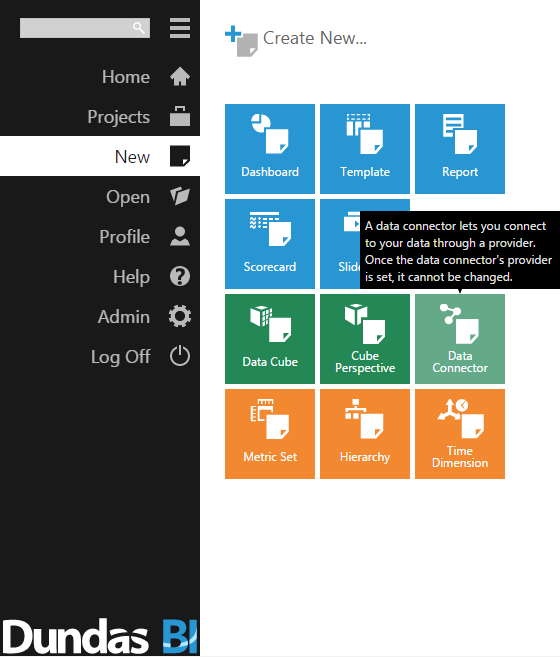
- Open the Dundas BI interface, open the menu, and click New Data Connector.
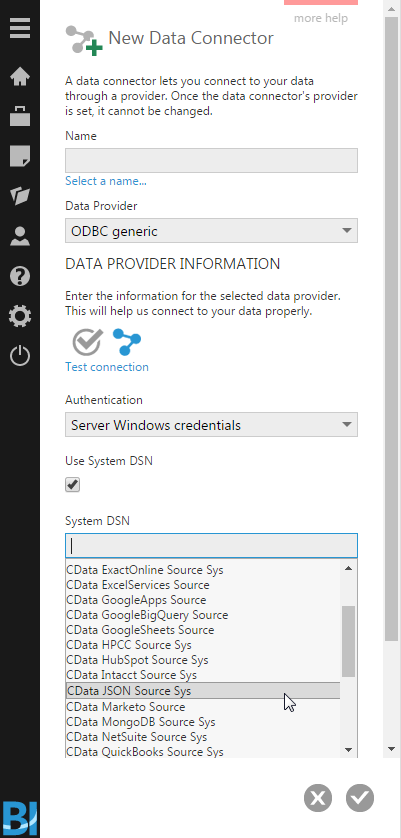
- Configure the Dundas BI Data Connector:
- Name the Data Connector.
- Select "ODBC generic" as the Data Provider.
- Check the "Use System DSN" checkbox.
- Select the appropriate System DSN.
Add PhantomBuster Data to a Dashboard
You are now ready to create a dashboard with PhantomBuster data.
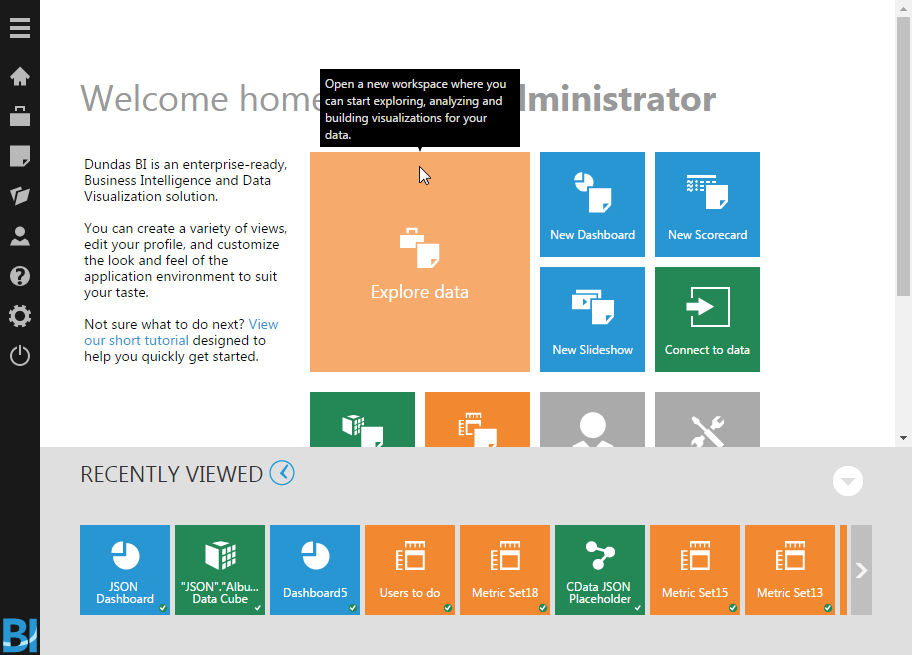
- Navigate to the Home page.
- Click Explore Data.
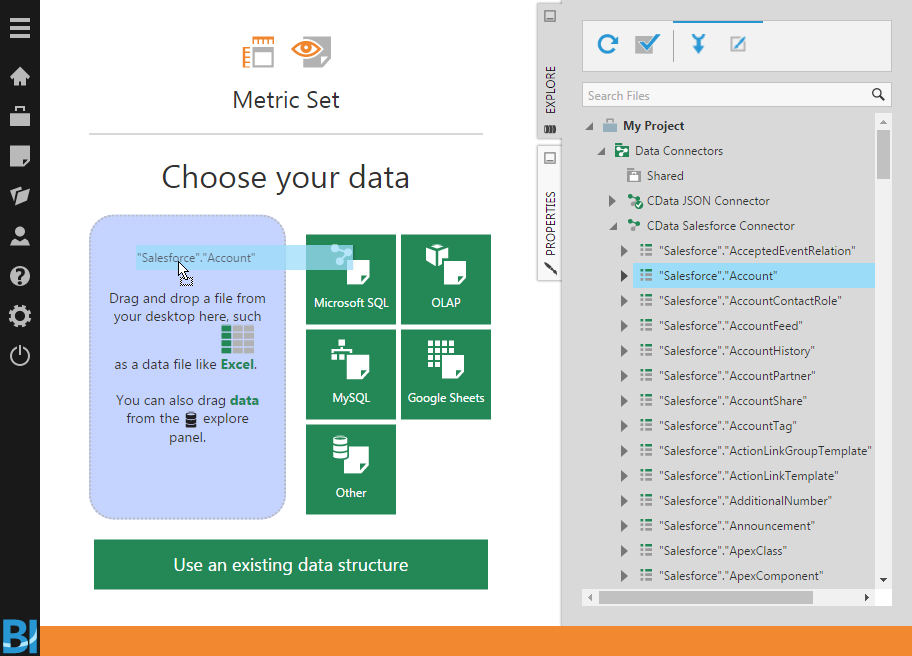
- Expand the appropriate Data Connector.
- Drag the relevant data from the Connector to the panel.
- You can select an entire "table" to add, but you may need to remove Measures/Rows from the Metric Set to build an appropriate visualization. Alternatively, you can select only the fields you wish to include in the visualization.
- With the fields selected, you can add any filters or conditions on the Measures and Rows, further customizing the visualization.
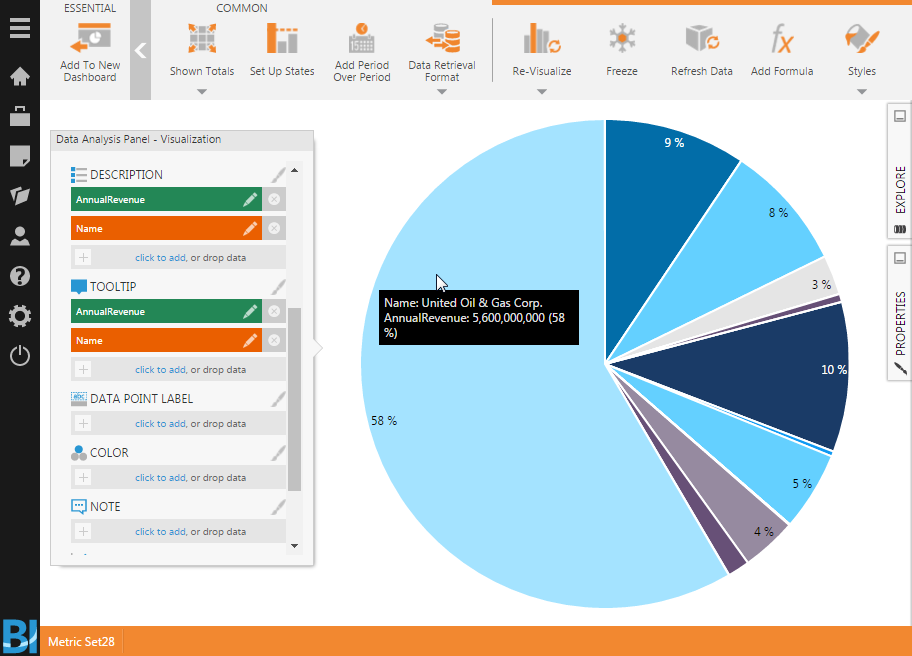
- Click Re-visualize from the menu bar and select the appropriate visualization for the data.
- Click Add To New Dashboard to add the visualization to a new dashboard.
- Configure the dashboard, creating dynamic visualizations of PhantomBuster data.