Query PivotalTracker Data in ColdFusion

The CData JDBC driver for PivotalTracker seamlessly integrates connectivity to PivotalTracker data with the rapid development tools in ColdFusion. This article shows how to connect to PivotalTracker data in ColdFusion and query PivotalTracker tables.
Create a JDBC Data Source for PivotalTracker in ColdFusion
The JDBC data source enables you to execute SQL from standard ColdFusion tags like cfquery and CFScript like executeQuery.
-
Copy the driver JAR and .lic file from the installation directory onto the ColdFusion classpath. For example, copy the files into C:\MyColdFusionDirectory\cfusion\wwwroot\WEB-INF\lib. Or, open the Java and JVM page in the ColdFusion Administrator and enter the path to the files in the ColdFusion Class Path box.
The JAR and license for the driver are located in the lib subfolder of the installation directory.
Restart the server after this step.
-
Add the driver as a data source:
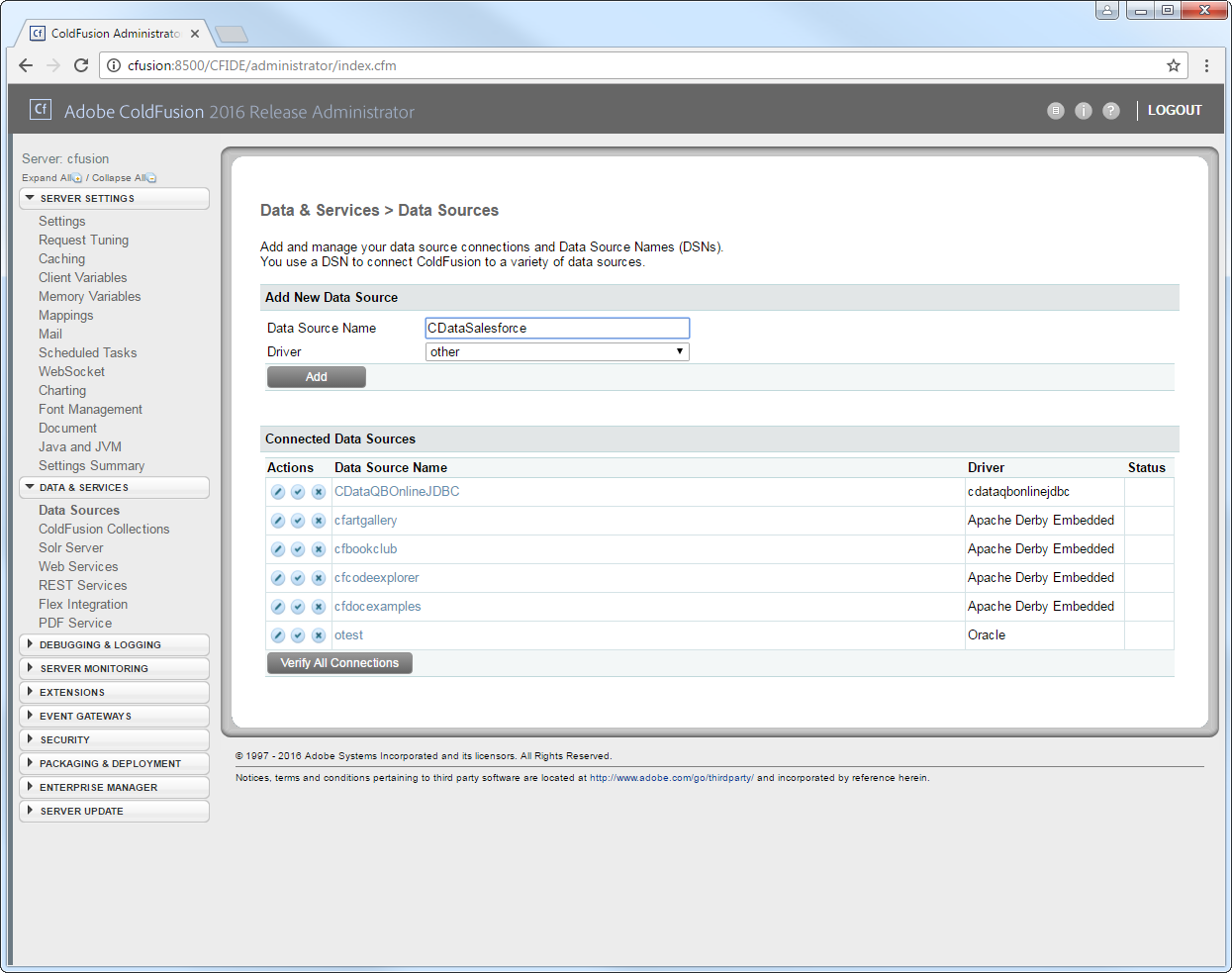
From the ColdFusion administrator interface, expand the Data & Services node and click Data Sources. In the Add New Data Source section, enter a name for the data source and select Other in the Driver menu.
-
Populate the driver properties:
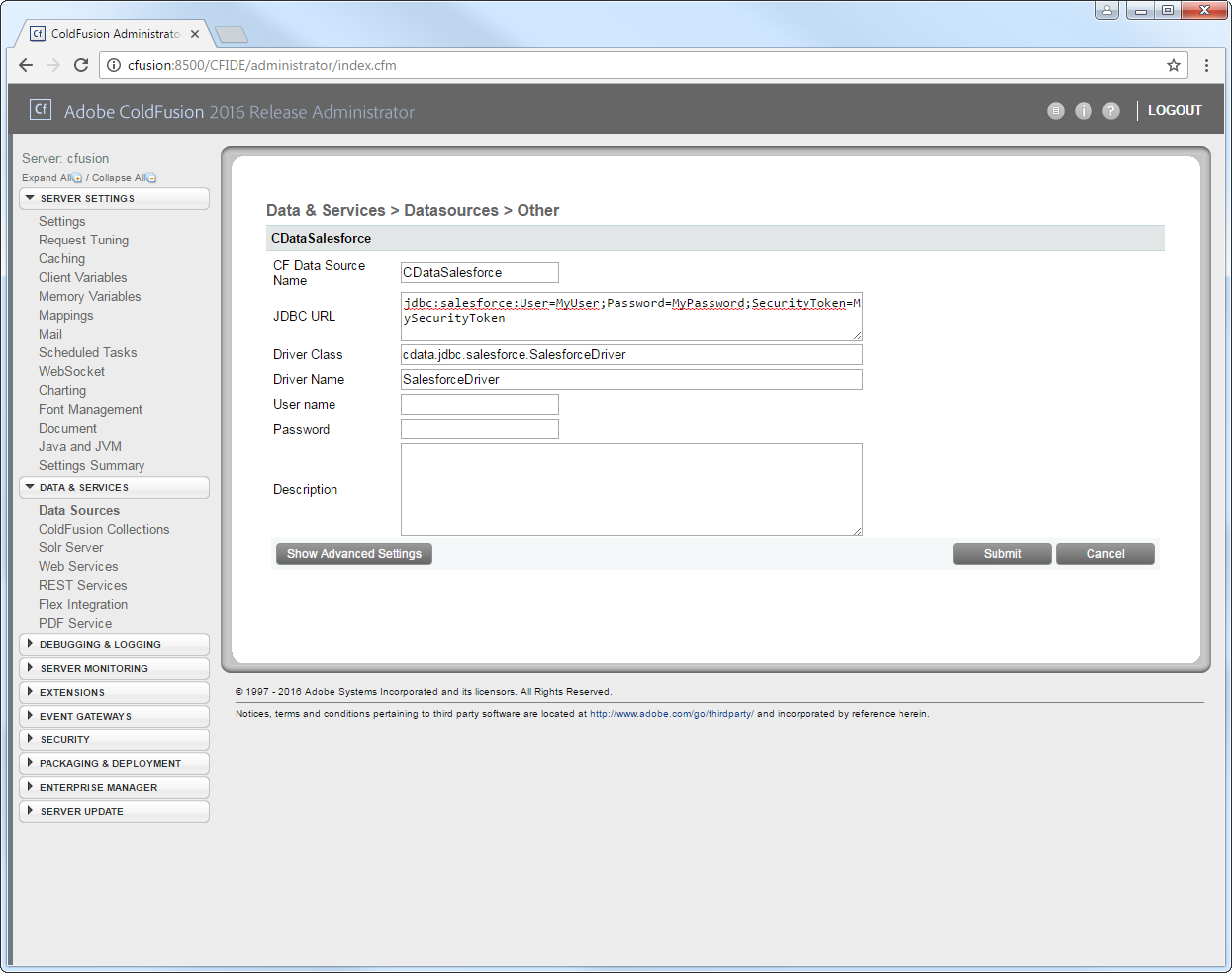
JDBC URL: Enter connection properties in the JDBC URL. The JDBC URL begins with jdbc:api: and is followed by the connection properties in a semicolon-separated list of name=value pairs.
Start by setting the Profile connection property to the location of the PivotalTracker Profile on disk (e.g. C:\profiles\PivotalTracker.apip). Next, set the ProfileSettings connection property to the connection string for PivotalTracker (see below).
PivotalTracker API Profile Settings
Navigate to your Pivotal Tracker Profile settings and locate the API token section to copy your unique API token.
Built-in Connection String Designer
For assistance in constructing the JDBC URL, use the connection string designer built into the PivotalTracker JDBC Driver. Either double-click the JAR file or execute the jar file from the command-line.
java -jar cdata.jdbc.api.jar
Fill in the connection properties and copy the connection string to the clipboard.

A typical JDBC URL is below:
jdbc:api:Profile=C:\profiles\PivotalTracker.apip;ProfileSettings='APIKey=your_api_token';
- Driver Class: Enter the driver class. The driver class is cdata.jdbc.api.APIDriver.
- Driver Name: Enter a user-defined name for the driver.
- Username: Enter the username used to authenticate.
- Password: Enter the password used to authenticate.
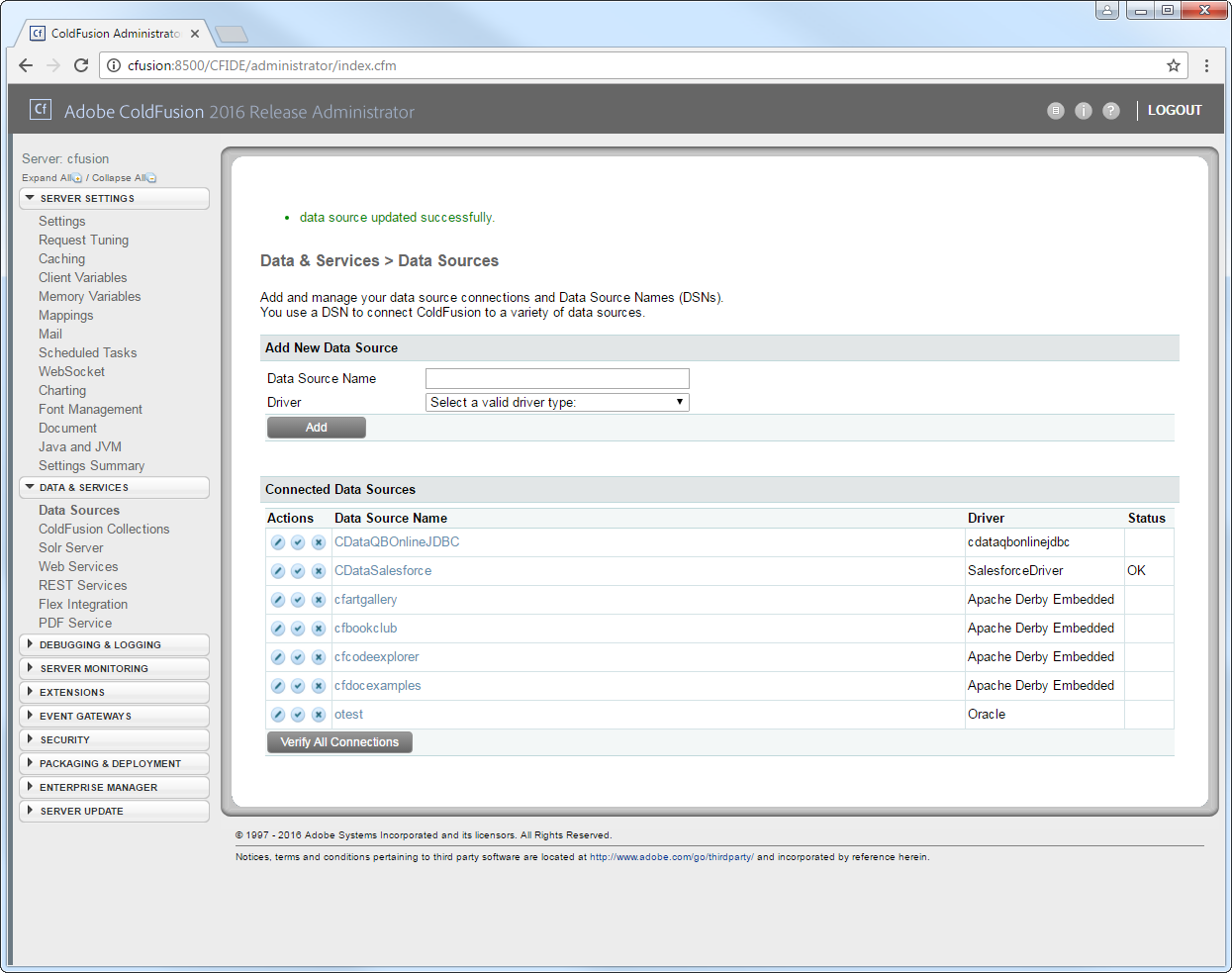
You can now test the connection by enabling the CData PivotalTracker data source in the Actions column. After reporting a status of OK, the PivotalTracker data source is ready for use.
Execute Queries
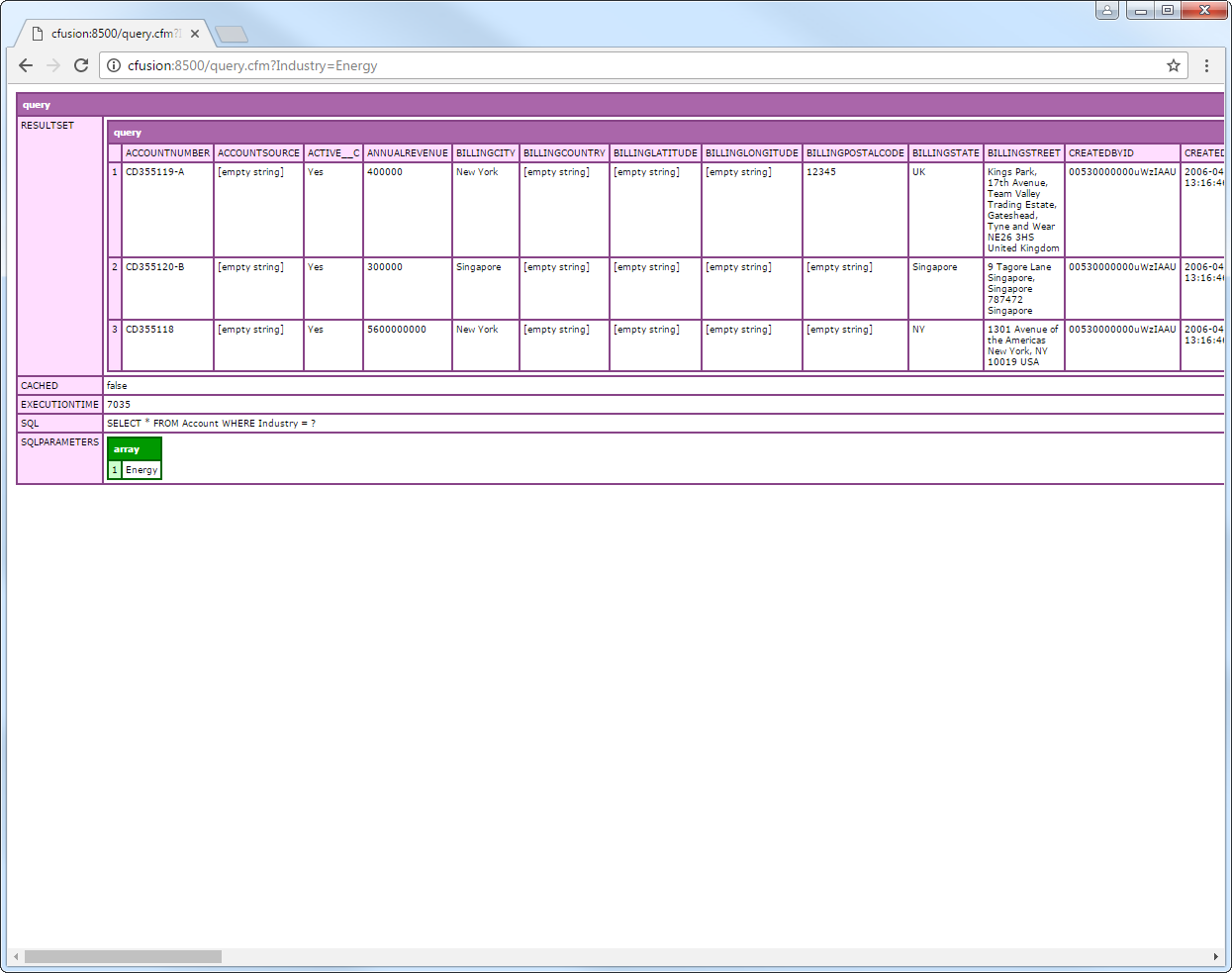
The cfquery tag can pass SQL statements to PivotalTracker. Use the cfqueryparam tag to create parameterized queries and prevent SQL injection through the query string.
Note: To use the cfquery and cfscript, create a .cfm file. Inside the .cfm file, write the code to execute the query (see below). Place the file directly in the root directory of your web server (e.g., wwwroot in Adobe ColdFusion). Restart the service after placing the file for the changes to take effect.
<cfquery name="APIQuery" dataSource="CDataAPI">
  SELECT * FROM AccountMemberships WHERE Admin = <cfqueryparam value="#Admin#" cfsqltype="cf_sql_varchar">
</cfquery>
<cfdump var="#APIQuery#">
Below is the equivalent in CFScript:
<cfscript>
result = queryExecute(
  "SELECT * FROM AccountMemberships WHERE Admin = ?",
  [
    { value="true", cfsqltype="cf_sql_varchar" }
  ],
  { datasource="CDataAPI" }
);

writeDump( var= result );
</cfscript>
You can then make requests to your .cfm like the following:
http://MyServer:8500/query.cfm?Admin=true