






Analyze RabbitMQ Data with Power Pivot

The ODBC protocol is used by a wide variety of Business Intelligence (BI) and reporting tools to get access to different databases. The CData ODBC Driver for RabbitMQ brings the same power and ease of use to RabbitMQ data. This article uses the driver to import RabbitMQ data into Power Pivot.
Connect to RabbitMQ as an ODBC Data Source
If you have not already, first specify connection properties in an ODBC DSN (data source name). This is the last step of the driver installation. You can use the Microsoft ODBC Data Source Administrator to create and configure ODBC DSNs.
About RabbitMQ Management HTTP API
RabbitMQ is an open-source message broker that supports multiple messaging protocols. The RabbitMQ Management HTTP API provides HTTP-based access to management and monitoring data for a RabbitMQ server. The API exposes information about virtual hosts, exchanges, queues, bindings, connections, channels, consumers, users, permissions, policies, and cluster-wide statistics.
The Management plugin must be enabled on the RabbitMQ server for the HTTP API to be available. By default, the management interface listens on port 15672.
Using Basic Authentication
RabbitMQ Management HTTP API uses HTTP Basic authentication. You must supply the username and password of a RabbitMQ management user.
To enable access to the management API:
- Ensure the RabbitMQ Management plugin is enabled on your server (rabbitmq-plugins enable rabbitmq_management).
- Use an existing management user or create one with the appropriate management tag (management, policymaker, monitoring, or administrator).
- Note the full base URL of your RabbitMQ Management HTTP API (e.g., http://localhost:15672).
After configuring your RabbitMQ server, set the following connection properties to connect:
- AuthScheme: Set this to Basic.
- URL: Set this to the base URL of your RabbitMQ Management HTTP API (e.g., http://localhost:15672).
- User: Set this to your RabbitMQ management username (e.g., guest).
- Password: Set this to your RabbitMQ management password.
Example connection string:
Profile=C:\profiles\RabbitMQ.apip;AuthScheme=Basic;URL=http://localhost:15672;User=guest;Password=guest;
Available Tables
The RabbitMQ profile provides access to the following tables:
- Overview - Cluster-wide statistics and information about the RabbitMQ node
- Nodes - Information about individual nodes in the RabbitMQ cluster
- NodeMemory - Detailed memory usage breakdown for a specific cluster node
- Connections - List of all open AMQP connections to the broker
- Channels - List of all open AMQP channels across all connections
- Consumers - List of all consumers registered across all queues
- Exchanges - List of exchanges declared across all virtual hosts
- Queues - List of queues declared across all virtual hosts
- Bindings - List of all bindings between exchanges and queues
- VirtualHosts - List of virtual hosts configured on the broker
- VhostPermissions - User permissions within a specific virtual host
- Users - List of all RabbitMQ users
- Permissions - Permission records for all users across all virtual hosts
- TopicPermissions - Topic-level permission records for all users
- Policies - List of policies applied to queues and exchanges in virtual hosts
- OperatorPolicies - List of operator policies applied to queues in virtual hosts
- Parameters - List of component parameters (e.g., federation, shovel) per virtual host
- GlobalParameters - List of global parameters that apply across all virtual hosts
- VhostLimits - Resource limits configured for specific virtual hosts
- UserLimits - Resource limits configured for specific users
- FeatureFlags - List of feature flags and their enabled/disabled state on the node
- DeprecatedFeatures - List of deprecated features and their usage state
- AuthAttempts - Authentication attempt statistics for the node
- ClusterName - The name of the RabbitMQ cluster
- WhoAmI - Information about the currently authenticated management user
- ExchangeBindingsSource - Bindings for which a specific exchange is the source
- ExchangeBindingsDestination - Bindings for which a specific exchange is the destination
- QueueBindings - Bindings for a specific queue within a virtual host
Connect from Power Pivot
Follow the steps below to connect to the DSN in Power Pivot.
- In Excel, click the Power Pivot Window icon on the Power Pivot tab to open Power Pivot.
- Launch the Table Import Wizard: Click the Get External Data from Other Data Sources button.
- Select the OLEDB/ODBC source option.
- Click Build to open the Data Link Properties dialog.
- In the Provider tab, select the Microsoft OLEDB Provider for ODBC Drivers option.
- In the Connection tab, select the Use Data Source Name option and then select the RabbitMQ DSN in the menu.
Select and Filter Tables and Views
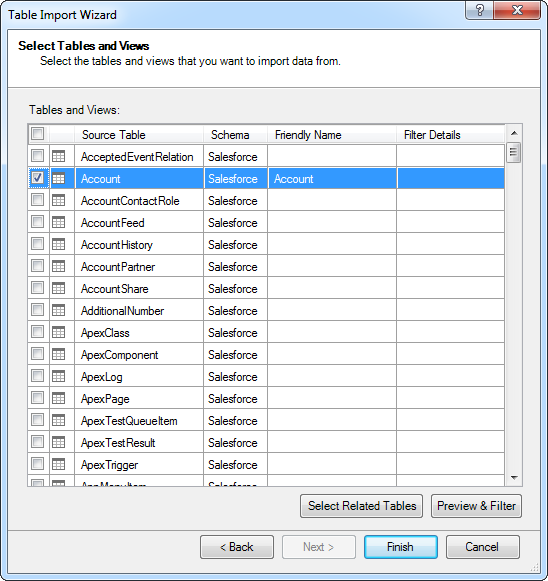
Follow the steps below to use the wizard to import RabbitMQ tables. As you use the wizard to select, filter, and sort columns of RabbitMQ tables, Power Pivot generates the query to be executed.
-
After selecting the DSN in the Table Import Wizard, select the option to select from a list of tables.
Click Preview & Filter to select specific columns, sort data, and visually build filters. To include or exclude columns, select and clear the option next to the column name.
To filter based on column values, click the down arrow button next to the column name. In the resulting dialog, select or clear the column values you want to filter. Alternatively, click Number Filters or Text Filters and then select a comparison operator. In the resulting dialog, build the filter criteria.
- Return to the Select Tables and Views page of the wizard. You can access filters by clicking the Applied Filters link in the Filter Details column.
Import and Filter with SQL
You can also import with an SQL query. The driver supports the standard SQL, allowing Excel to communicate with RabbitMQ APIs.
- After selecting the DSN in the Table Import Wizard, select the option to write a query.
In the SQL Statement box, enter the query. Click Validate to check that the syntax of the query is valid. Click Design to preview the results and adjust the query before import.
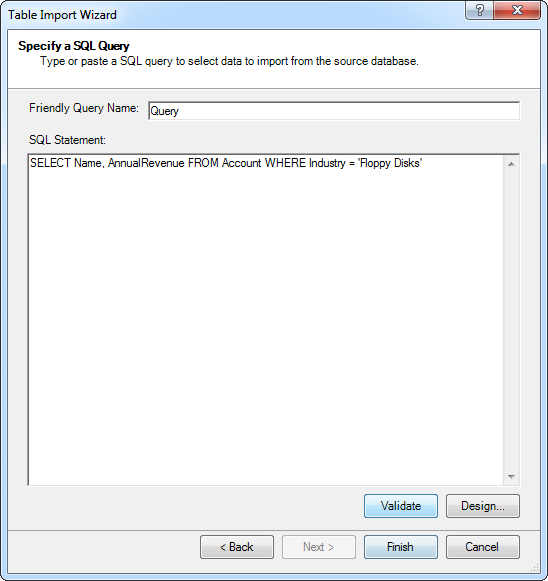
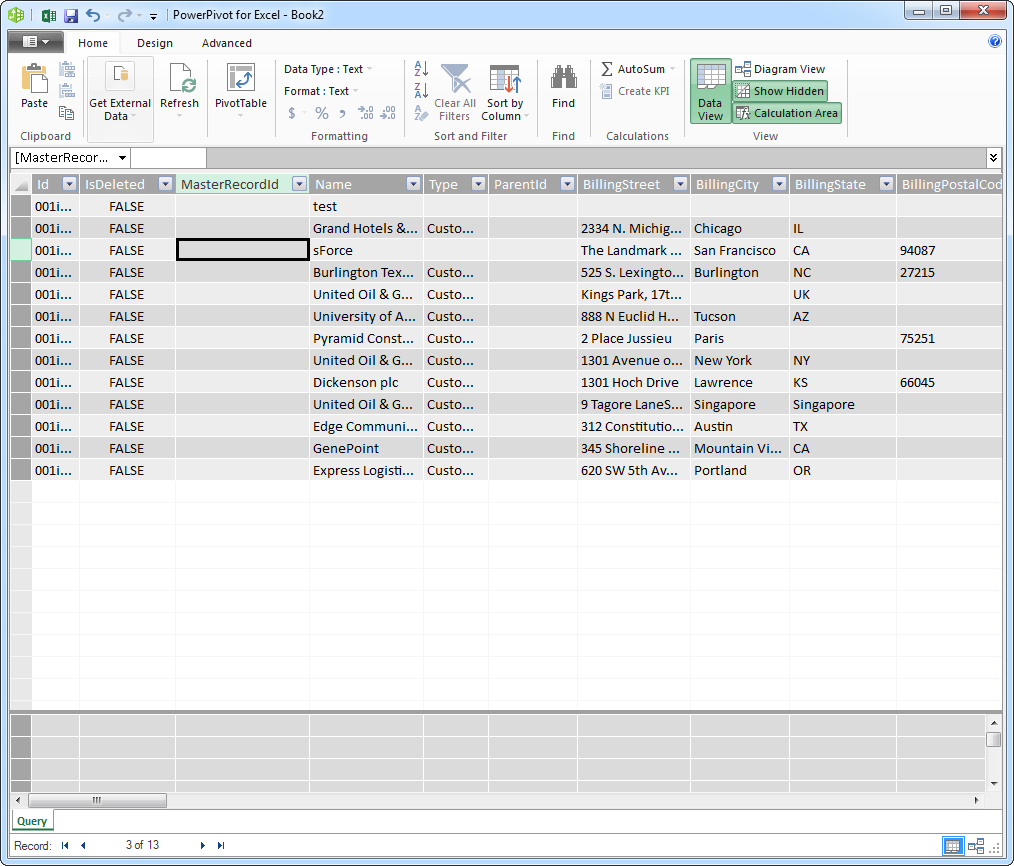
- Finish the wizard to import the data for your chosen query.
Refresh On Demand
Connectivity to RabbitMQ APIs enables real-time analysis. To immediately update your workbook with any changes, click Refresh.