






Automated Continuous RabbitMQ Replication to Google Cloud SQL

Always-on applications rely on automatic failover capabilities and real-time data access. CData Sync integrates live RabbitMQ data into your Google Cloud SQL instance, allowing you to consolidate all of your data into a single location for archiving, reporting, analytics, machine learning, artificial intelligence and more.
Configure Google Cloud SQL as a Replication Destination
Using CData Sync, you can replicate RabbitMQ data to Google Cloud SQL. To add a replication destination, navigate to the Connections tab. Then select the appropriate destination based on your Google Cloud SQL service (MySQL, PostgreSQL, or SQL Server).
MySQL
- Click Add Connection.
- Select MySQL as a destination.
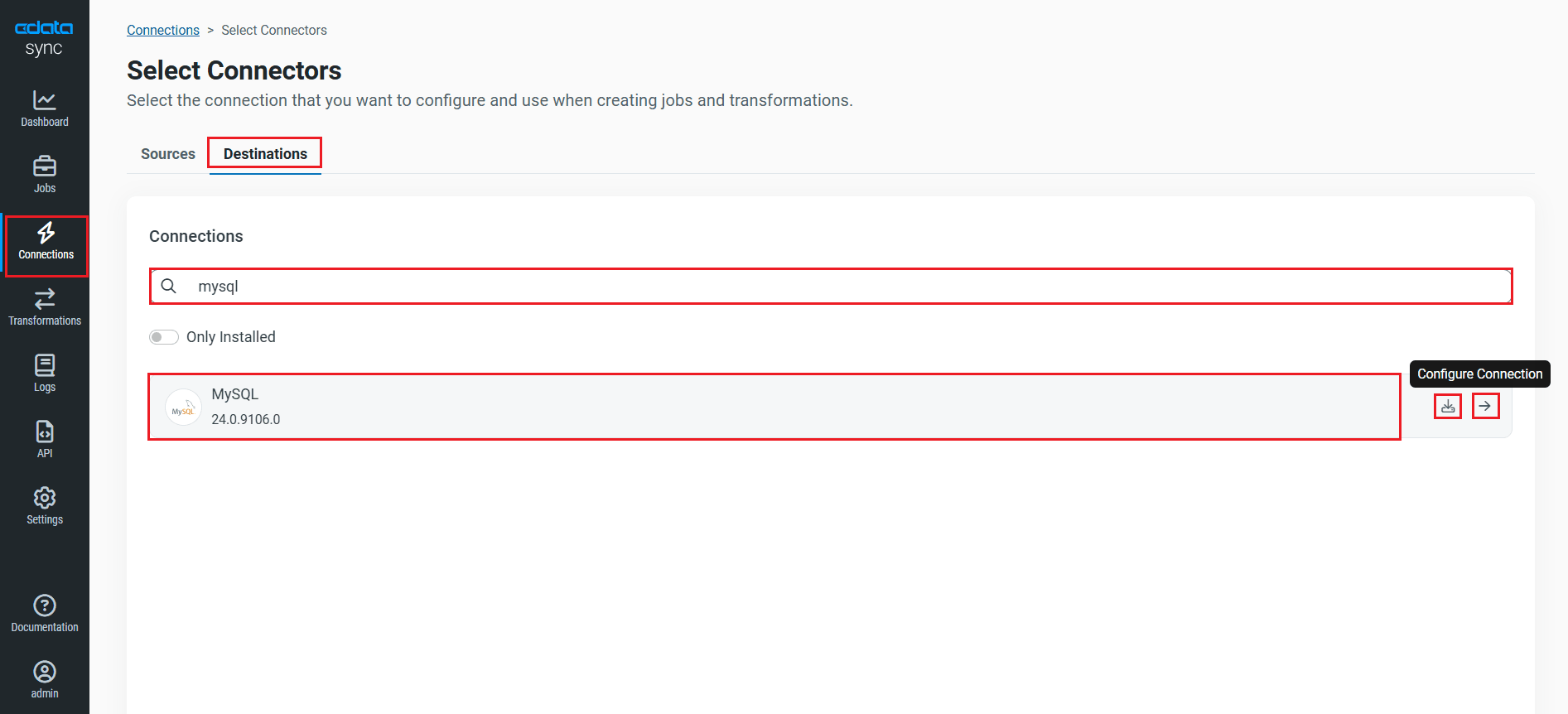
- Enter the necessary connection properties. To connect to MySQL, set the following:
- Server: The IP address or domain name of the server you want to connect to.
- Port: The port where the server is running.
- User: The username of a user with read/write access to the database.
- Password: The password of a user with read/write access to the database.
- Database: The name of the database.
- Click Test Connection to ensure that the connection is configured properly.
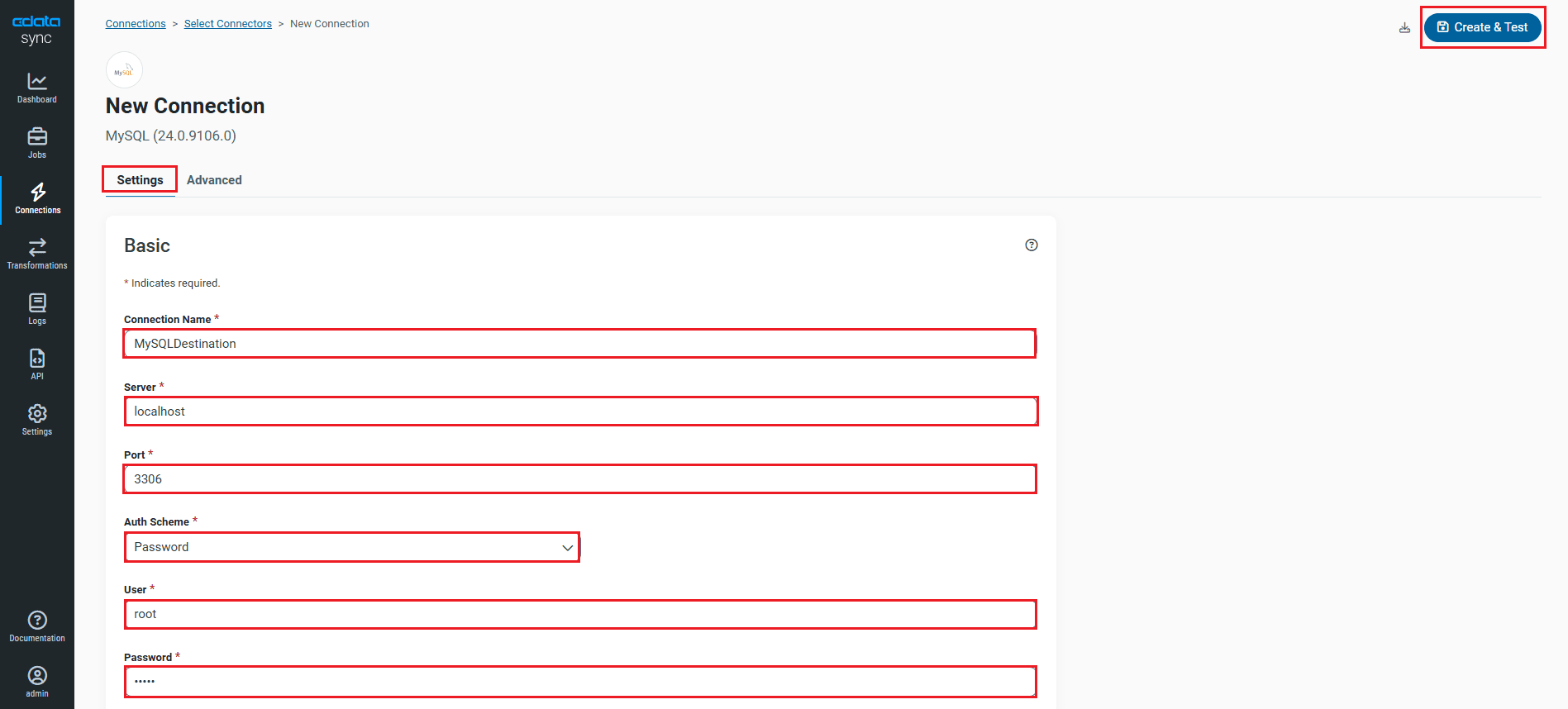
- Click Save Changes.
Jump to configuring the RabbitMQ connection.
PostgreSQL
- Click Add Connection.
- Select PostgreSQL as a destination.
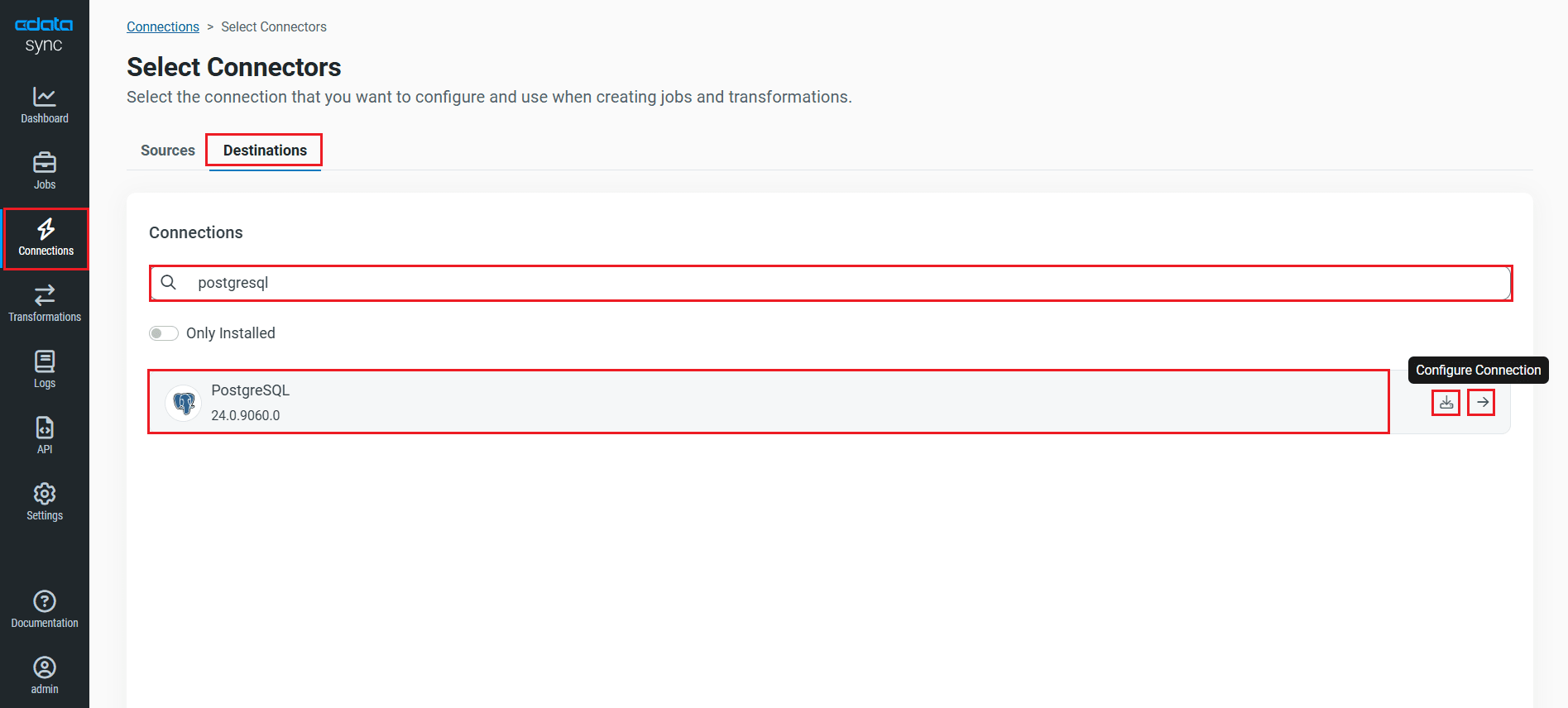
- Enter the necessary connection properties. To connect to PostgreSQL, set the following connection properties (CData Sync ships with the Npgsql ADO.NET Provider for PostgreSQL):
- Server: The address of the server hosting the PostgreSQL database.
- Port: The port used to connect to the server hosting the PostgreSQL database.
- User: The user ID provided for authentication with the PostgreSQL database.
- Password: The password provided for authentication with the PostgreSQL database.
- Database: The name of the database.
- Click Test Connection to ensure that the connection is configured properly.
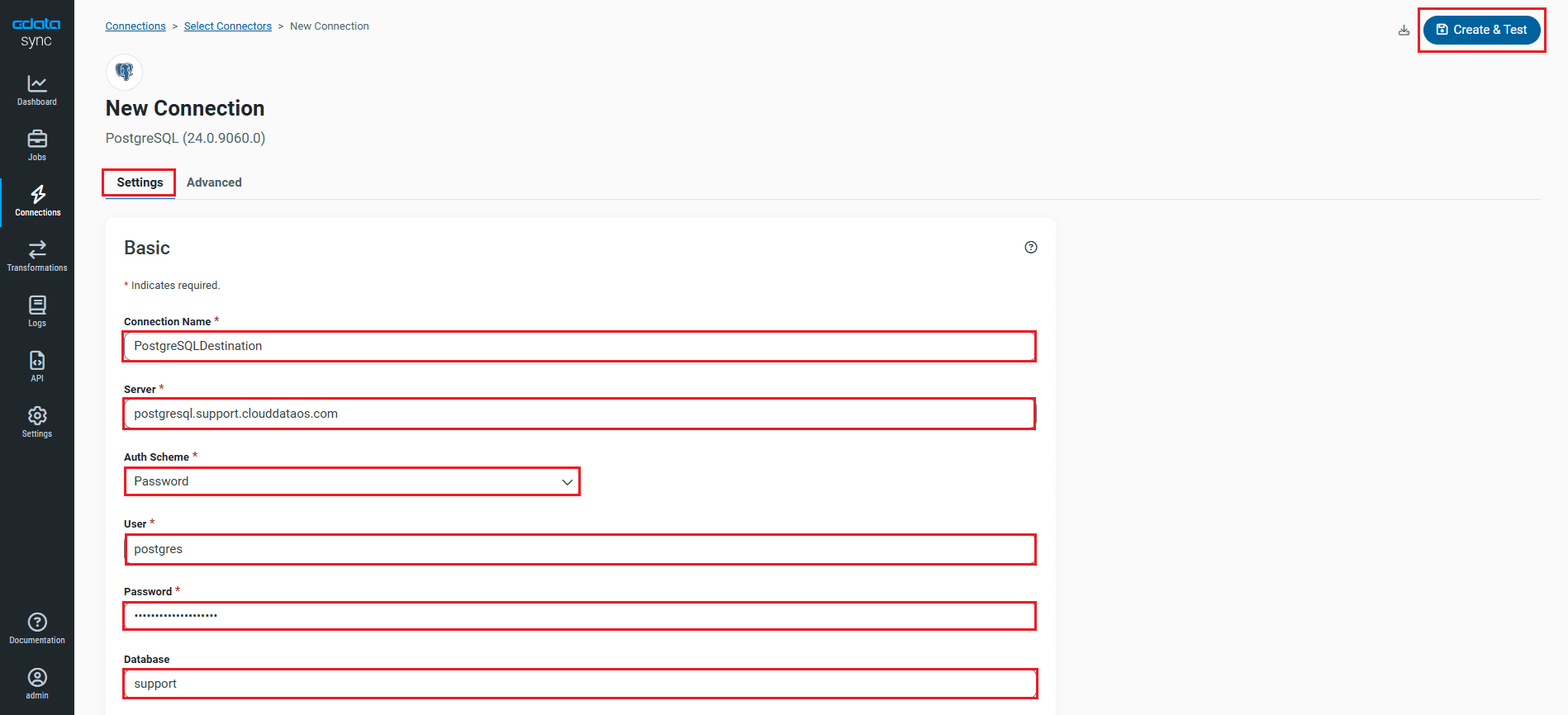
- Click Save Changes.
Jump to configuring the RabbitMQ connection.
SQL Server
- Click Add Connection.
- Select SQL Server as a destination.
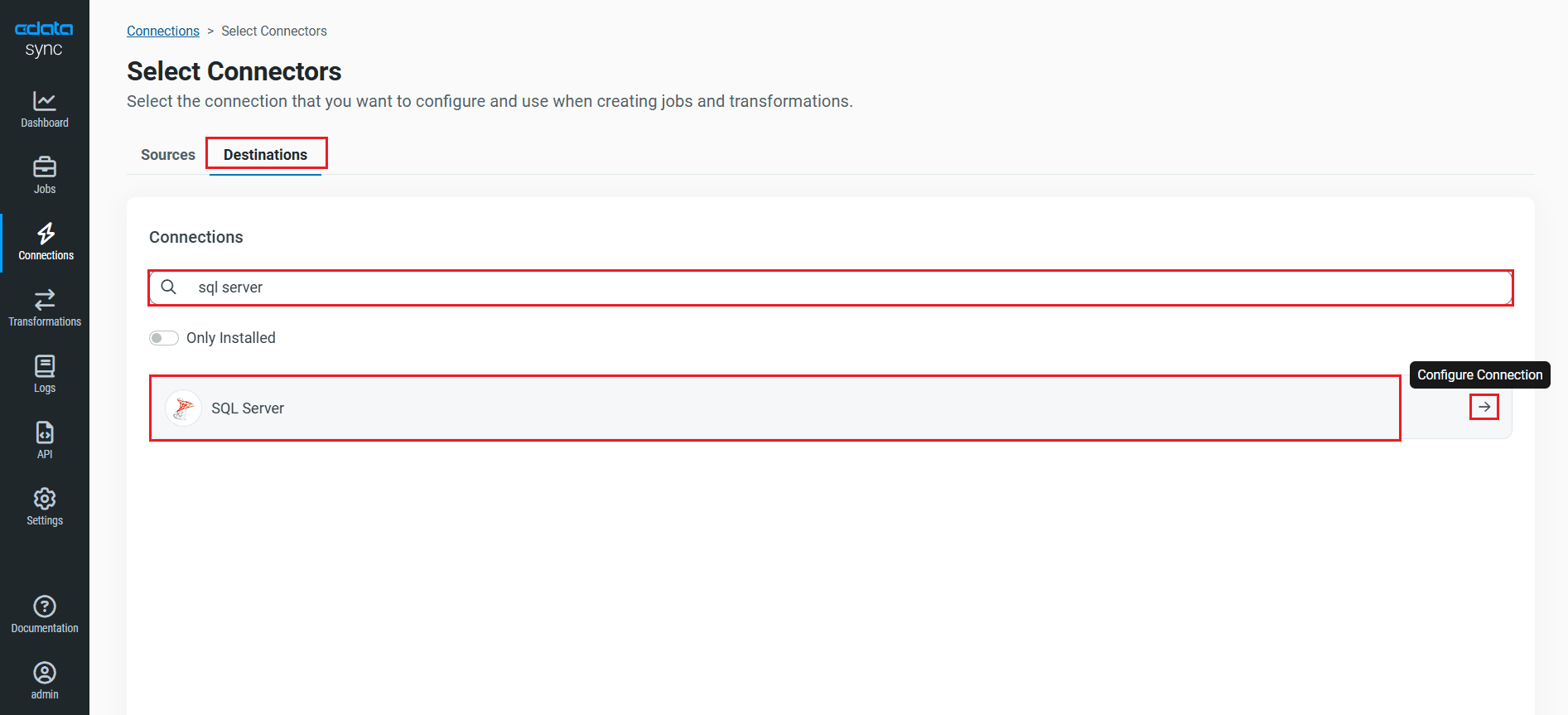
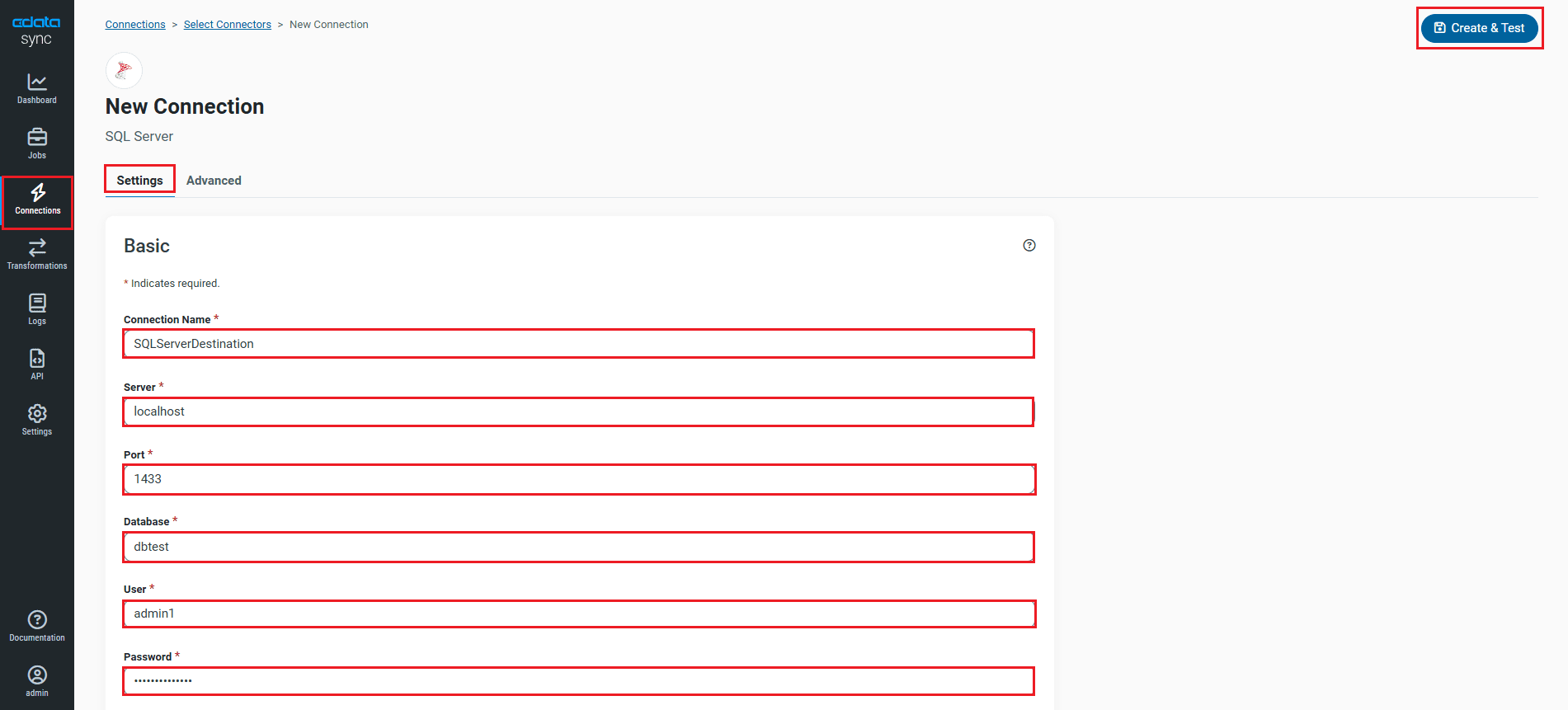
- Enter the necessary connection properties. To connect to SQL Server, set the following:
- Server: The name or network address of the computer running SQL Server.
- User: The username provided for authentication with SQL Server, if using forms authentication.
- Password: The password provided for authentication with SQL Server, if using forms authentication.
- Database: The name of the SQL Server database.
Java Edition
The Java version requires the Microsoft SQL Server JDBC driver, which can be downloaded from the Microsoft Download Center. Copy the JDBC driver to the lib folder of your Java Web server to make a connection.
- Click Test Connection to ensure that the connection is configured properly.
- Click Save Changes.
Jump to configuring the RabbitMQ connection.
Configure the RabbitMQ Connection
You can configure a connection to RabbitMQ from the Connections tab. To add a connection to your RabbitMQ account, navigate to the Connections tab.
- Click Add Connection.
- Select a source (RabbitMQ).
- Configure the connection properties.
About RabbitMQ Management HTTP API
RabbitMQ is an open-source message broker that supports multiple messaging protocols. The RabbitMQ Management HTTP API provides HTTP-based access to management and monitoring data for a RabbitMQ server. The API exposes information about virtual hosts, exchanges, queues, bindings, connections, channels, consumers, users, permissions, policies, and cluster-wide statistics.
The Management plugin must be enabled on the RabbitMQ server for the HTTP API to be available. By default, the management interface listens on port 15672.
Using Basic Authentication
RabbitMQ Management HTTP API uses HTTP Basic authentication. You must supply the username and password of a RabbitMQ management user.
To enable access to the management API:
- Ensure the RabbitMQ Management plugin is enabled on your server (rabbitmq-plugins enable rabbitmq_management).
- Use an existing management user or create one with the appropriate management tag (management, policymaker, monitoring, or administrator).
- Note the full base URL of your RabbitMQ Management HTTP API (e.g., http://localhost:15672).
After configuring your RabbitMQ server, set the following connection properties to connect:
- AuthScheme: Set this to Basic.
- URL: Set this to the base URL of your RabbitMQ Management HTTP API (e.g., http://localhost:15672).
- User: Set this to your RabbitMQ management username (e.g., guest).
- Password: Set this to your RabbitMQ management password.
Example connection string:
Profile=C:\profiles\RabbitMQ.apip;AuthScheme=Basic;URL=http://localhost:15672;User=guest;Password=guest;
Available Tables
The RabbitMQ profile provides access to the following tables:
- Overview - Cluster-wide statistics and information about the RabbitMQ node
- Nodes - Information about individual nodes in the RabbitMQ cluster
- NodeMemory - Detailed memory usage breakdown for a specific cluster node
- Connections - List of all open AMQP connections to the broker
- Channels - List of all open AMQP channels across all connections
- Consumers - List of all consumers registered across all queues
- Exchanges - List of exchanges declared across all virtual hosts
- Queues - List of queues declared across all virtual hosts
- Bindings - List of all bindings between exchanges and queues
- VirtualHosts - List of virtual hosts configured on the broker
- VhostPermissions - User permissions within a specific virtual host
- Users - List of all RabbitMQ users
- Permissions - Permission records for all users across all virtual hosts
- TopicPermissions - Topic-level permission records for all users
- Policies - List of policies applied to queues and exchanges in virtual hosts
- OperatorPolicies - List of operator policies applied to queues in virtual hosts
- Parameters - List of component parameters (e.g., federation, shovel) per virtual host
- GlobalParameters - List of global parameters that apply across all virtual hosts
- VhostLimits - Resource limits configured for specific virtual hosts
- UserLimits - Resource limits configured for specific users
- FeatureFlags - List of feature flags and their enabled/disabled state on the node
- DeprecatedFeatures - List of deprecated features and their usage state
- AuthAttempts - Authentication attempt statistics for the node
- ClusterName - The name of the RabbitMQ cluster
- WhoAmI - Information about the currently authenticated management user
- ExchangeBindingsSource - Bindings for which a specific exchange is the source
- ExchangeBindingsDestination - Bindings for which a specific exchange is the destination
- QueueBindings - Bindings for a specific queue within a virtual host
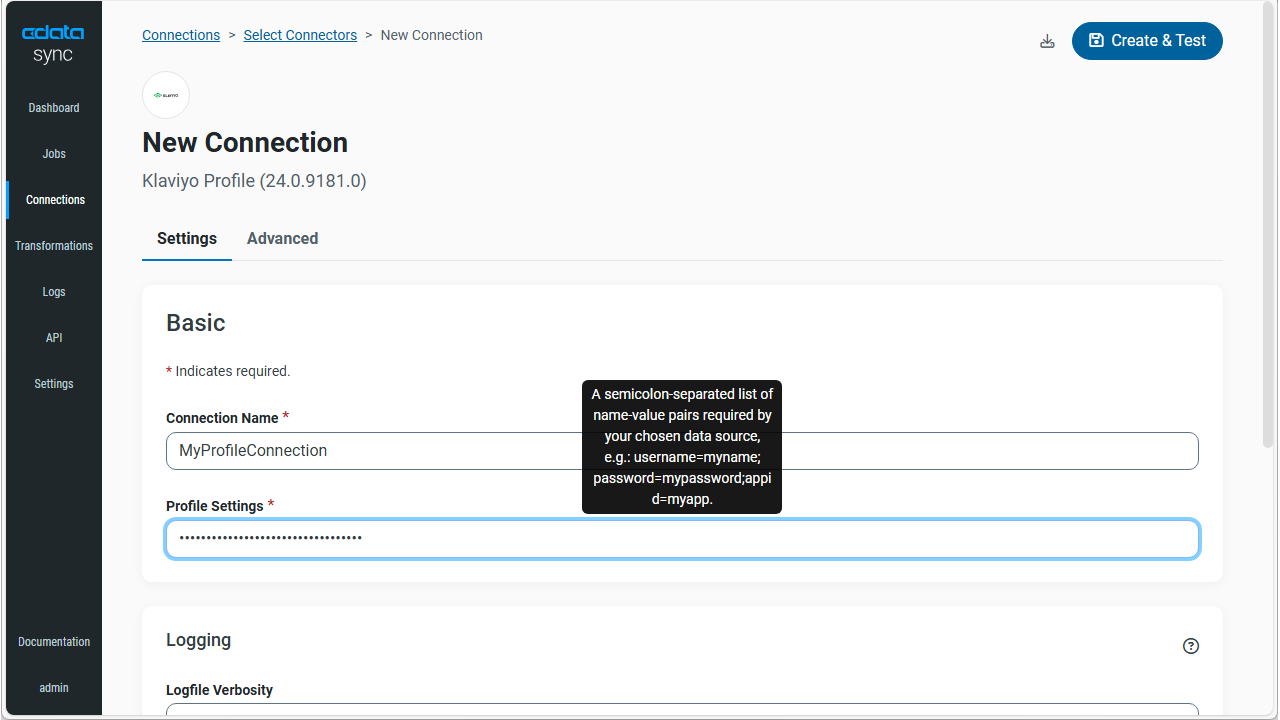
- Click Connect to ensure that the connection is configured properly.
- Click Save Changes.
Configure Replication Queries
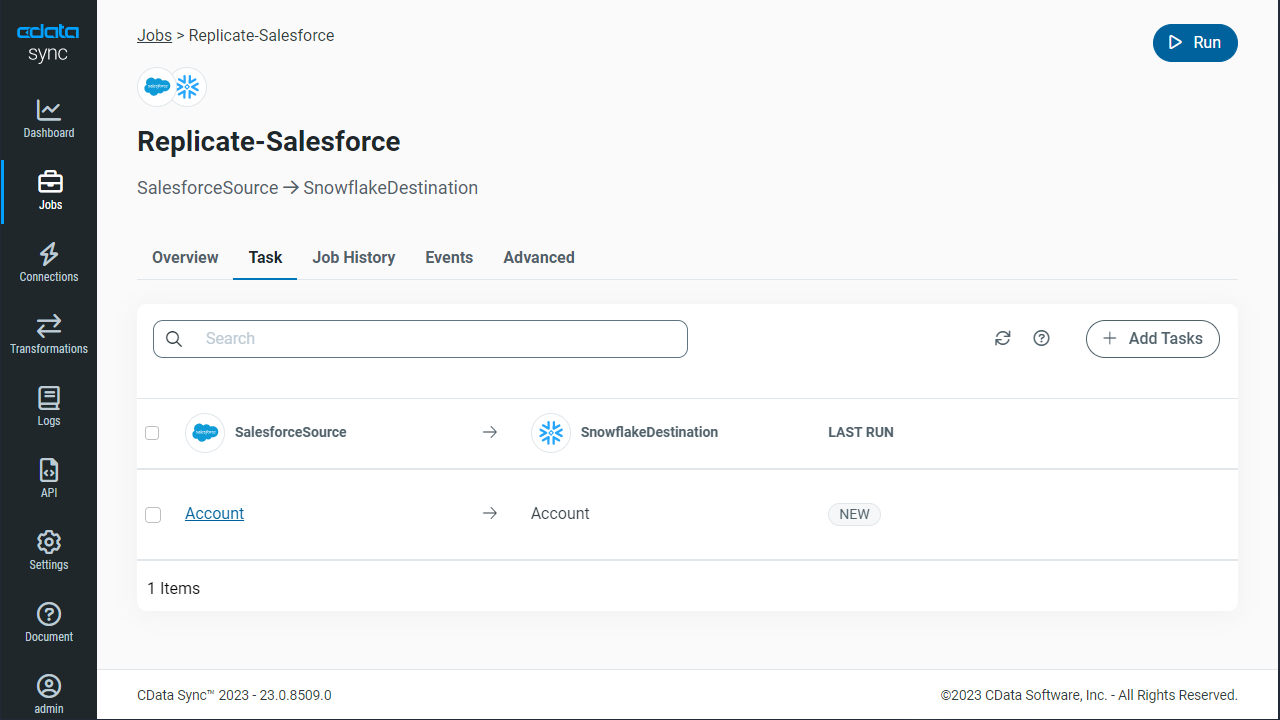
CData Sync enables you to control replication with a point-and-click interface and with SQL queries. For each replication you wish to configure, navigate to the Jobs tab and click Add Job. Select the Source and Destination for your replication.
Replicate Entire Tables
To replicate an entire table, click Add Tables in the Tables section, choose the table(s) you wish to replicate, and click Add Selected Tables.
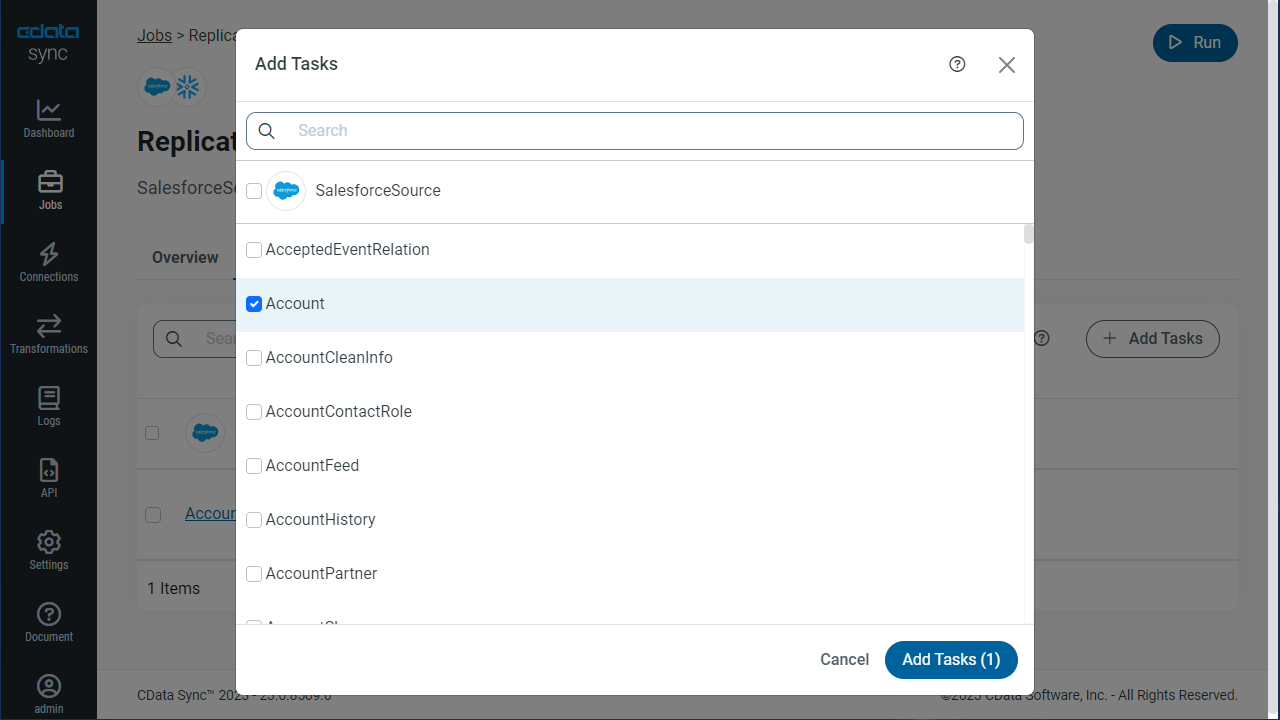
Customize Your Replication
You can use the Columns and Query tabs of a task to customize your replication. The Columns tab allows you to specify which columns to replicate, rename the columns at the destination, and even perform operations on the source data before replicating. The Query tab allows you to add filters, grouping, and sorting to the replication.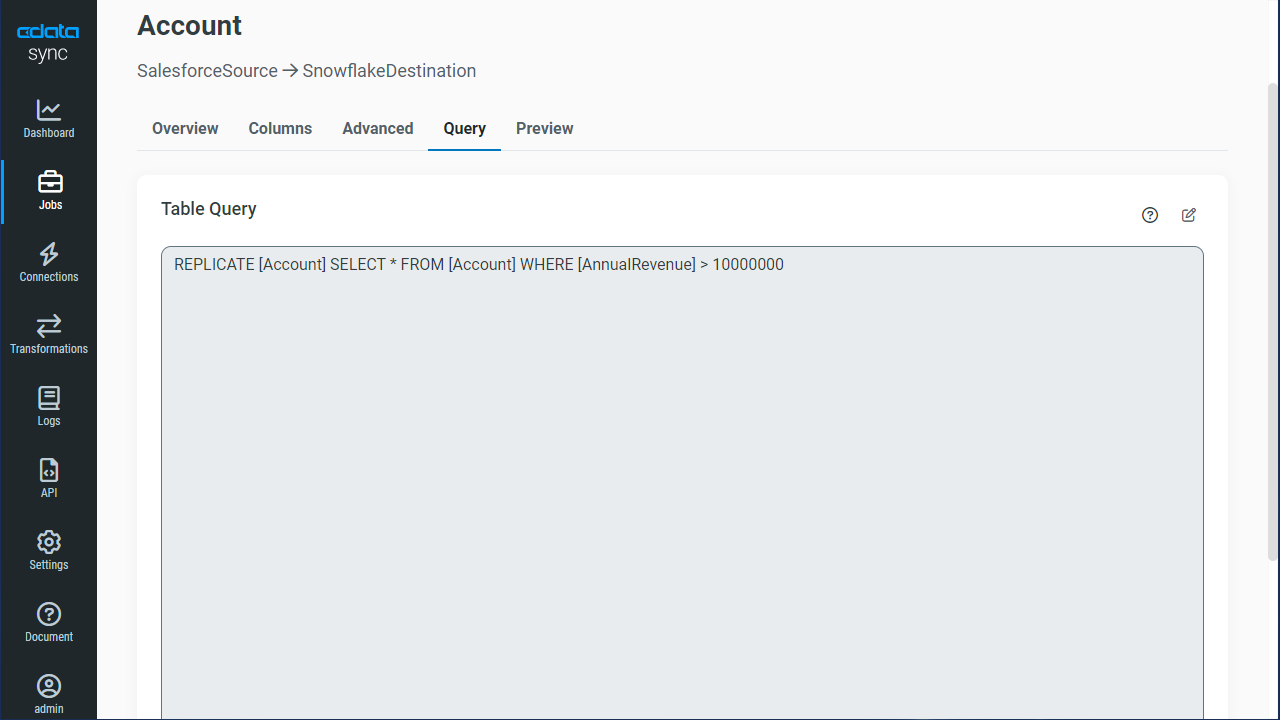
Schedule Your Replication
In the Schedule section, you can schedule a job to run automatically, configuring the job to run after specified intervals ranging from once every 10 minutes to once every month.
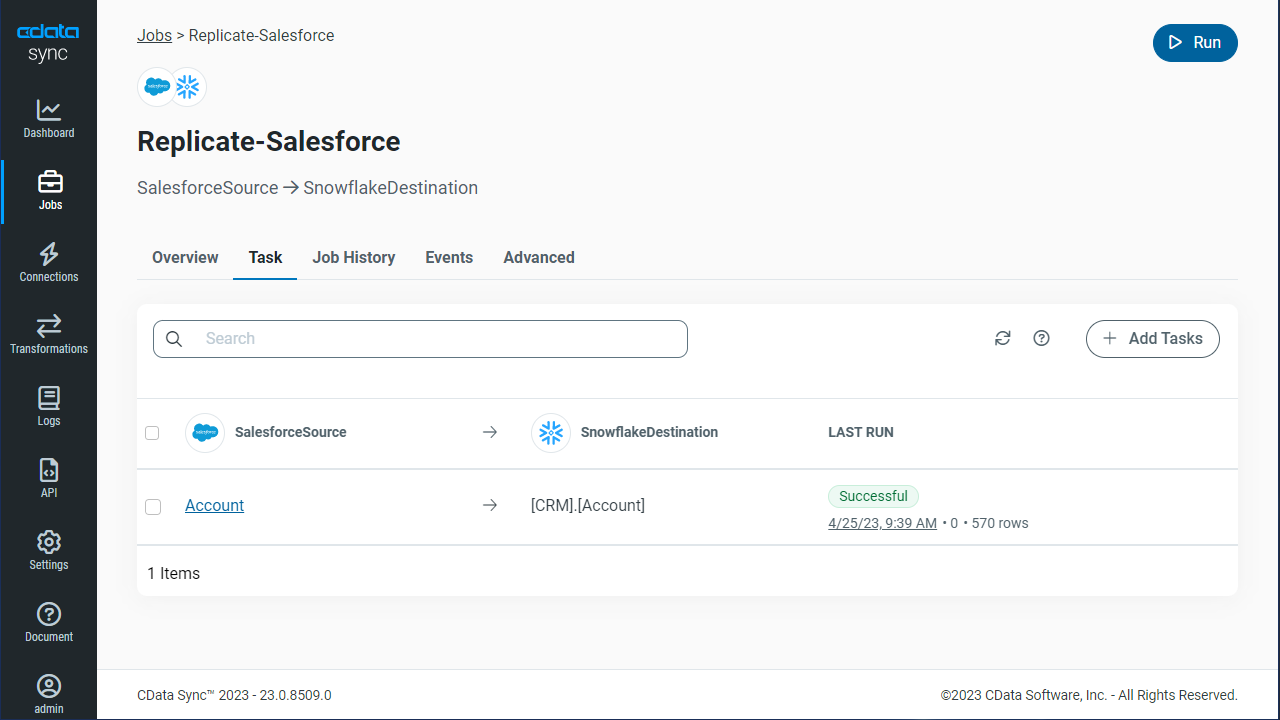
Once you have configured the replication job, click Save Changes. You can configure any number of jobs to manage the replication of your RabbitMQ data to Google Cloud SQL.