






Back Up Reply.io data to SQL Server through SSIS

This article illustrates using the Reply.io ADO.NET Data Provider within a SQL Server SSIS workflow for the direct transfer of Reply.io data to a Microsoft SQL Server database. It's worth noting that the identical process detailed below is applicable to any CData ADO.NET Data Providers, enabling the direct connection of SQL Server with remote data through SSIS.
- Open Visual Studio and create a new Integration Services project.
- Add a new Data Flow task from the toolbox onto the Control Flow screen.
In the Data Flow screen, add an ADO.NET Source and an OLE DB Destination from the toolbox.
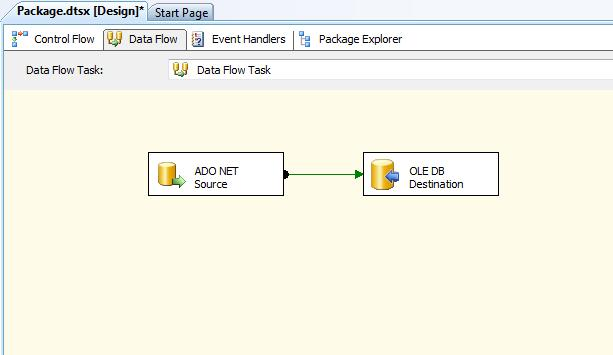
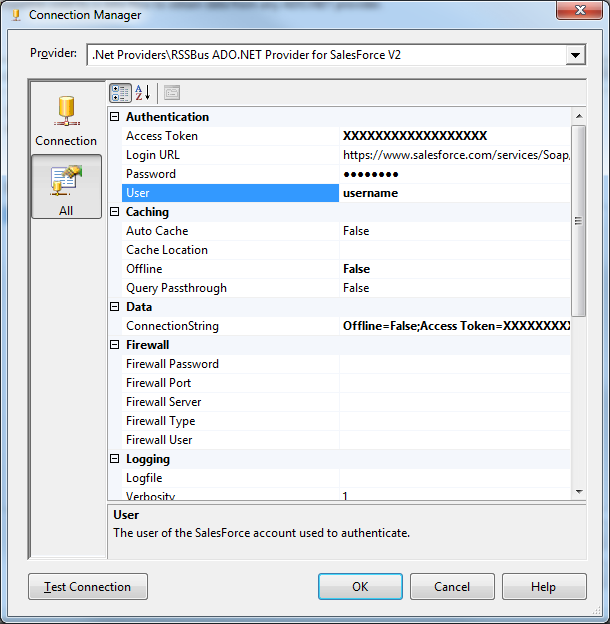
- Add a new connection and select .NET Providers\CData ADO.NET Provider for Reply.io.
In the connection manager, enter the connection details for Reply.io data.
The Reply.io API uses API Key authentication via the x-api-key request header.
Using API Key Authentication
Your Reply.io API key is required to create a connection. To obtain your API key:
- Log into your Reply.io account.
- Click your profile icon and select Settings.
- Navigate to the API section.
- Copy your API Key.
After obtaining your API key, set the following connection properties:
- AuthScheme: Set this to APIKey.
- APIKey: Set this to your Reply.io API key.
- UserEmail (optional): Set this to the email address of the Reply.io user on whose behalf requests are made.
Example connection string:
Profile=C:\profiles\ReplyIO.apip;AuthScheme=APIKey;ProfileSettings='APIKey=your_api_key';
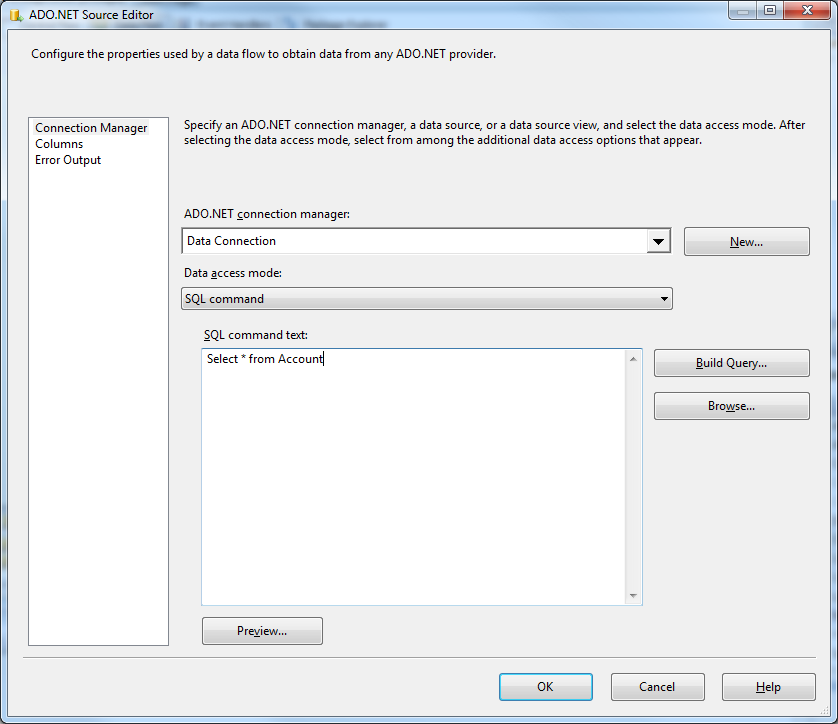
Open the DataReader editor and set the following information:
- ADO.NET connection manager: In the Connection Managers menu, select the Data Connection you just created.
- Data access mode: Select 'SQL command'.
- SQL command text: In the DataReader Source editor, open the Component Properties tab and enter a SELECT command, such as the one below:
SELECT , FROM BillingInfo WHERE = ''
- Close the DataReader editor and drag the arrow below the DataReader Source to connect it to the OLE DB Destination.
Open the OLE DB Destination and enter the following information in the Destination Component Editor.
- Connection manager: Add a new connection. Enter your server and database information here. In this example, SQLExpress is running on a separate machine.
- Data access mode: Set your data access mode to "table or view" and select the table or view to populate in your database.
Configure any properties you wish on the Mappings screen.
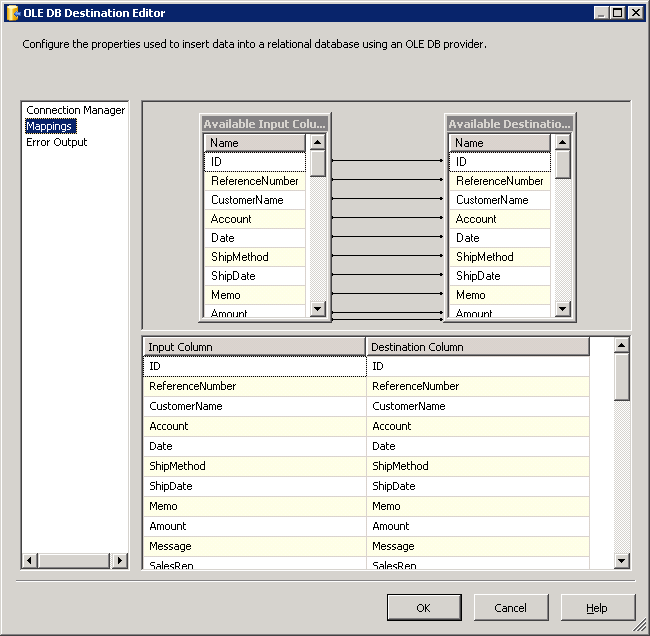
- Close the OLE DB Destination Editor and run the project. After the SSIS task has finished executing, your database will be populated with data obtained from Reply.io data.